How To Improve Poor Garden Soil Naturally: Best Tips 2026
Add compost, mulch, cover crops, and gentle minerals to rebuild living soil.
If your beds are hard, sandy, or just tired, you are not stuck with poor harvests. I have spent years testing small city plots and big rural beds. This guide shows how to improve poor garden soil naturally, with steps that work in real yards. Stay with me and you will learn how to improve poor garden soil naturally with simple, proven habits you can start today.

What “poor soil” really means and how to diagnose it
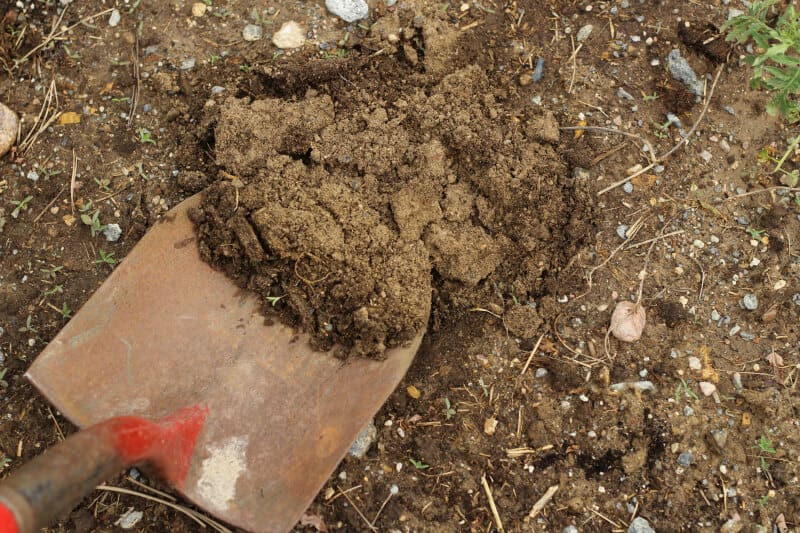
Poor soil is not one thing. It can be low in organic matter, tight like brick, or loose like beach sand. It can drain too fast or hold water for days. It may also have the wrong pH or salts or little biology.
Start with simple tests you can do today. Grab a handful of moist soil. Squeeze it. If it will not hold shape, it may lack clay or organic matter. If it makes a hard ball that does not break, it may be compacted. Try an infiltration check. Pour one cup of water in a small ring on bare soil and time the soak. Slow soak hints at compaction or high clay.
Use pH strips or a basic meter. A lab test is even better. It checks nutrients, salts, and pH. Many extension services offer low cost tests. This data guides how to improve poor garden soil naturally with accuracy.
Core principles of how to improve poor garden soil naturally
You improve soil by working with life. Add carbon. Keep soil covered. Feed soil life. Avoid harsh inputs. Plant roots often. These habits fix most problems over time.
Think of soil as a city. Organic matter is the housing. Mulch is the roof. Roots are the roads. Water is the transit. Microbes and worms are the workers. When you support the workers, the city thrives. That is how to improve poor garden soil naturally without guesswork.

Build organic matter fast with compost
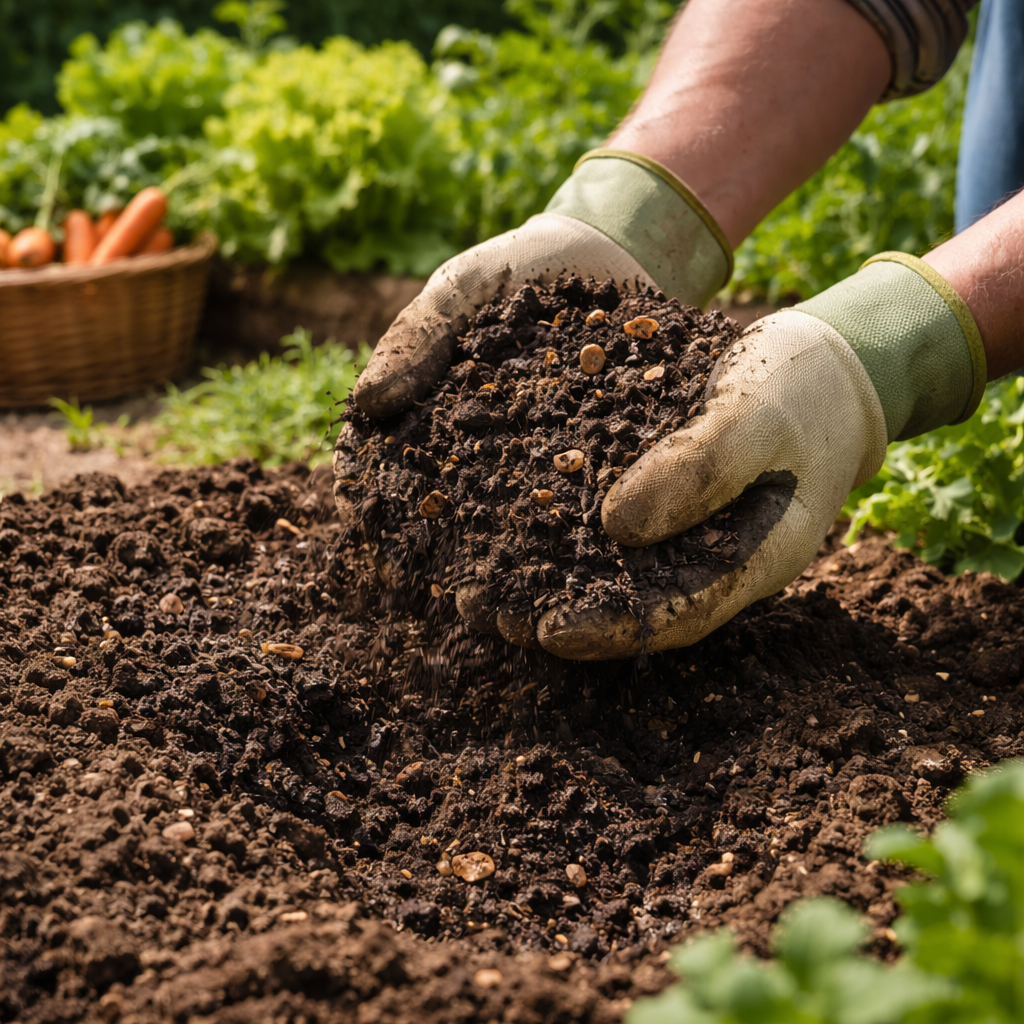
Compost is the best fix I know. It adds stable carbon, gentle nutrients, and microbes. Good compost smells like forest soil. It is dark, crumbly, and not slimy. If it smells sharp or like ammonia, let it finish first.
How much should you add? For most beds, spread one to two inches of compost on top each season. Do not till it deep. Rain and worms will pull it down. I once turned a lifeless clay strip into a tomato patch with two inches of compost and leaf mulch. It took one season to see strong growth and better flavor.
Use homemade or trusted bagged compost. Blends with varied inputs are best. You can brew compost extract and drench beds, but results vary. Solid compost gives more reliable gains.

Mulch for moisture, weeds, and life
Mulch shields soil from heat and rain impact. It slows water loss and feeds fungi. It also cuts weeds, which keeps nutrients for your crops.
Use what you have. Leaves, straw, shredded branches, or wood chips work well. Grass clippings work in thin layers. Keep mulch two to three inches deep in active beds. Keep it four to six inches in paths and around perennials. Pull it a few inches back from stems to prevent rot.
I like a leaf and straw mix in spring. It warms fast and breathes. In summer, I switch to wood chips in paths. This slow food for fungi makes soil soft over time.

Use cover crops and green manures
Cover crops are living mulch. They add roots, biomass, and nutrients. They protect soil when you are not growing food. This is a key step in how to improve poor garden soil naturally.
Pick by season and goal. For quick summer gaps, sow buckwheat. For fall into spring, use a mix of cereal rye and crimson clover. For tight clay, add daikon radish to bio drill. For sandy soil, oats and peas add structure and nitrogen.
Mow or crimp them at bloom. Leave the cut plants on top as mulch. You can plant transplants right through this mat. Seedlings need small cleared strips. Cover crop cycles build depth and tilt fast.

Feed the soil food web
Healthy soil is a web of bacteria, fungi, protozoa, and worms. They cycle nutrients and build crumbs that hold air and water. Your job is to feed them and avoid harm.
Add diverse organic matter. Use leaf mold, compost, and aged manure. In beds for perennials, a wood chip mulch boosts fungi. In annual beds, mix leaves and straw to keep a good balance. When you plant, dust roots with mycorrhizal inoculant for many crops. Research shows it helps early root growth, especially in poor soils.
Go easy on tillage. Deep tilling breaks fungal networks. Use a fork or broadfork to loosen without flipping. Avoid strong salt fertilizers and broad pesticides. These can burn microbes. This is one of the biggest lessons I have learned in the field.

Balance pH and key minerals the natural way
pH sets the stage for nutrient uptake. Most veggies like pH 6.0 to 7.0. Blueberries and azaleas like it lower. Test first. Then adjust slowly. This careful step is vital in how to improve poor garden soil naturally.
If pH is low, use garden lime. If it is high, elemental sulfur can help. Use gypsum to add calcium without raising pH. It can also help with sodic or very tight clay soils. Rock phosphate, rock dust, and kelp meal add trace minerals. Use modest rates and retest each year. Overshooting pH is hard to fix.

Fix drainage and compaction without heavy digging
Compaction starves roots of air. Water sits on top. Plants sulk. You can fix this without a rototiller.
Use a garden fork or broadfork. Slide it in and rock back to crack, not flip. Work in a grid. Add compost on top and mulch. Plant deep rooted cover crops like daikon and rye. They open channels as they grow and decay.
If your site floods, shift to raised beds. Start with twelve inches deep if you can. Fill with a mix of compost, topsoil, and coarse materials. Keep paths mulched to avoid mud. This change alone can turn failure to success.
Water better to help soil heal
Water is not just about volume. It is about rhythm. Soak the root zone. Then let the surface dry a bit. This pulls in air. Roots need that air to thrive.
Use drip lines or soaker hoses under mulch. Water in the early morning. Collect rainwater if you can. Wet soil for weeks signals drainage issues. Fix that first. Watering well is a core part of how to improve poor garden soil naturally.
Natural amendments for common problems
Different soils need different boosts. Choose simple, gentle inputs that build long term health.
Sandy soil needs sponge power. Add compost, biochar charged with compost tea or urine, and seaweed meal in small doses. Clay soil needs crumbs. Add compost, leaves, gypsum if sodium or crusting is present, and deep rooted cover crops. Salty soil needs leaching plus gypsum if sodium is high. Urban soil may have contaminants. Grow in raised beds with clean mixes. Test when in doubt.
Use aged manure in fall so it can mellow. Alfalfa meal adds nitrogen and growth hormones. Fish hydrolysate feeds microbes. Avoid raw wood chips mixed into beds. Use them on top only.
Step-by-step seasonal plan for how to improve poor garden soil naturally
Follow a simple cycle. It works in most climates. Tweak by your frost dates and rainfall.
Spring
- Test soil pH and nutrients. Set a baseline.
- Spread one to two inches of compost. Rake smooth.
- Plant crops. Add mycorrhizal inoculant at root tips.
- Mulch around plants after the soil warms.
Summer
- Top up mulch to keep soil cool.
- Side dress heavy feeders with compost.
- Sow quick cover crops in open gaps. Buckwheat works well.
- Water deeply with drip or soaker hoses.
Fall
- Remove crop debris. Chop and drop where healthy.
- Sow a fall cover crop mix. Use rye and clover or oats and peas.
- Add leaves as a blanket over beds.
- Test soil if you made big changes.
Winter
- Let roots and mulch protect soil.
- Plan next year’s cover crop and compost needs.
- Hot compost kitchen scraps if your pile can stay active.
This rhythm is my main method for how to improve poor garden soil naturally over time.
Mistakes to avoid when trying to improve poor garden soil naturally
Some common moves set you back. Skip these and you save a season.
- Over tilling every spring. It burns organic matter and breaks soil life.
- Using raw manure in spring. It can burn plants and add pathogens. Apply in fall.
- Piling mulch against stems. This invites rot and pests. Leave a gap.
- Mixing wood chips into the soil. They tie up nitrogen at first. Keep them on top.
- Overusing Epsom salt. It adds magnesium but can throw off balance.
- Using vinegar or baking soda on soil. These are not safe pH fixes for beds.
Proof it works: simple success metrics
You need signs that your efforts pay off. Track a few easy metrics.
Check worm counts. Dig a spade full. More than five worms is a good sign. Do the infiltration test again. Faster soak means better structure. Smell the soil. A sweet, earthy smell beats sour or rotten. Track yields and leaf color. Healthier plants mean you are on the right path.
I log these in a small notebook. It keeps me honest and shows trends. This habit supports how to improve poor garden soil naturally with real feedback.
Frequently Asked Questions of how to improve poor garden soil naturally
How long does it take to improve bad soil?
You can see changes in one season with compost and mulch. Major gains in structure and fertility often take one to three years.
Can I improve soil without tilling?
Yes. Add compost on top, keep beds mulched, and grow cover crops. A fork or broadfork can loosen without turning.
Is biochar worth it?
It helps most in sandy or low organic soils when pre charged with compost or urine. Use small amounts at first and watch results.
What if my soil is very acidic?
Test first. If pH is low, add garden lime in modest doses, then retest in six months.
Are wood chips safe in veggie beds?
Yes, on the surface as mulch. Do not mix them into the soil and keep a gap around stems.
Can coffee grounds improve soil?
In small amounts, yes, as part of compost or covered under mulch. Do not pile them thick, as they can crust.
Conclusion
Great soil is built, not bought. Add compost, keep a mulch blanket, grow cover crops, and use gentle minerals with a plan. Water well, avoid harsh inputs, and let biology lead. That is how to improve poor garden soil naturally and keep it thriving for years.
Pick one bed and start today. Spread compost, add two inches of mulch, and plant a quick cover crop in open spots. Share your wins and questions below, subscribe for more practical guides, and keep growing smarter every season.

Laura Bennett is a gardening writer at MyGardenLabs who creates beginner-friendly guides focused on solving common plant care and gardening problems.