

What Does A Hand Trowel Do: Uses And Gardening Tips
A hand trowel digs small holes, moves soil, plants seedlings, removes weeds, and handles many close-up garden tasks.
Knowing what does a hand trowel do helps you choose the right tool and use it without harming roots or wasting effort. This small garden tool may look simple, but its pointed blade, curved scoop, and comfortable grip make it one of the most useful tools for containers, flower beds, raised beds, and small repairs. In this guide, you will learn how a hand trowel works, what jobs it handles best, how to use it safely, and which features matter when buying one.
What Does a Hand Trowel Do?
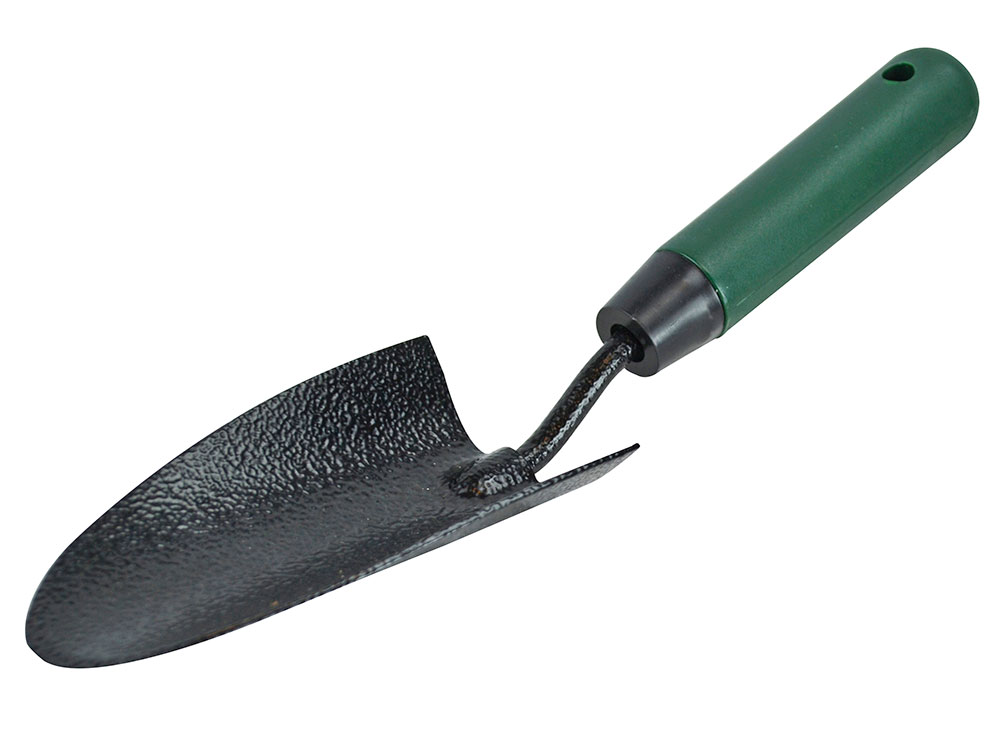
A hand trowel is a small digging tool with a narrow metal blade and a short handle. It is designed for detailed work where a full-size shovel would be too large or too rough.
The main purpose of a hand trowel is to dig, lift, move, and shape small amounts of soil. Gardeners often use it for:
• Digging holes for flowers, herbs, and vegetable seedlings
• Transplanting young plants
• Moving potting mix into containers
• Removing small weeds
• Mixing compost or fertilizer into the top layer of soil
• Dividing small plants
• Scooping soil from bags
• Loosening soil around roots
So, what does a hand trowel do in simple terms? It gives you control. You can work close to stems, roots, stones, and container walls with much more care than you can with a shovel.
Main Parts of a Hand Trowel
Understanding the parts of a hand trowel makes it easier to compare tools and use them correctly. Each part has a clear job.
Blade
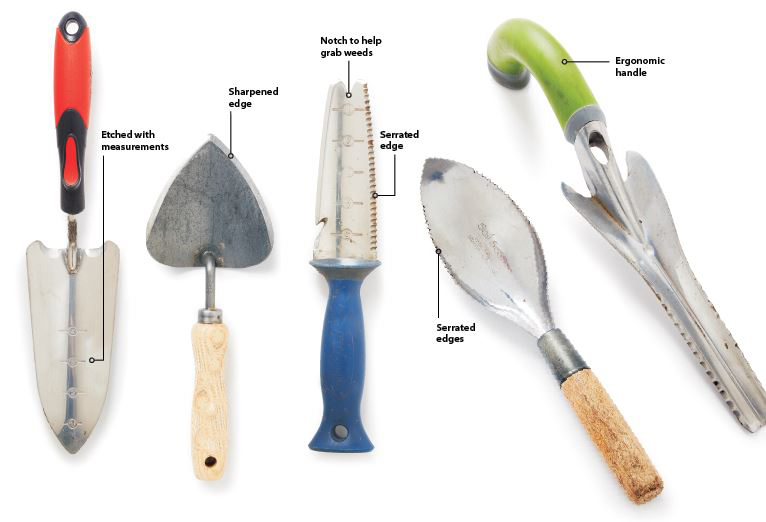
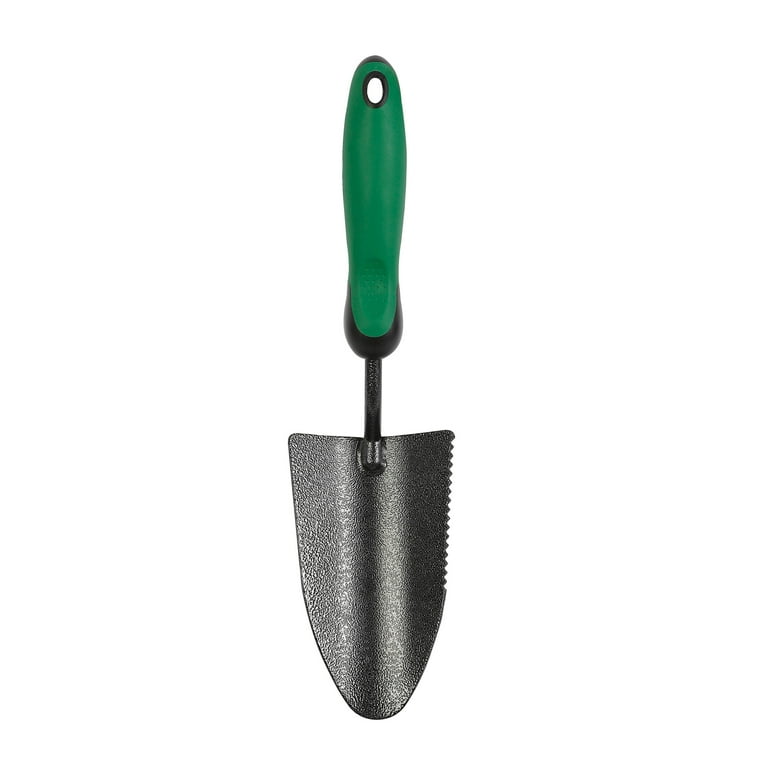
The blade is the metal part that enters the soil. It may be narrow, wide, pointed, rounded, or marked with depth lines.
A pointed blade works well in firm soil because it cuts into the ground with less force. A wider blade carries more soil and is useful for planting in loose potting mix. Stainless steel and carbon steel are common blade materials.
Handle
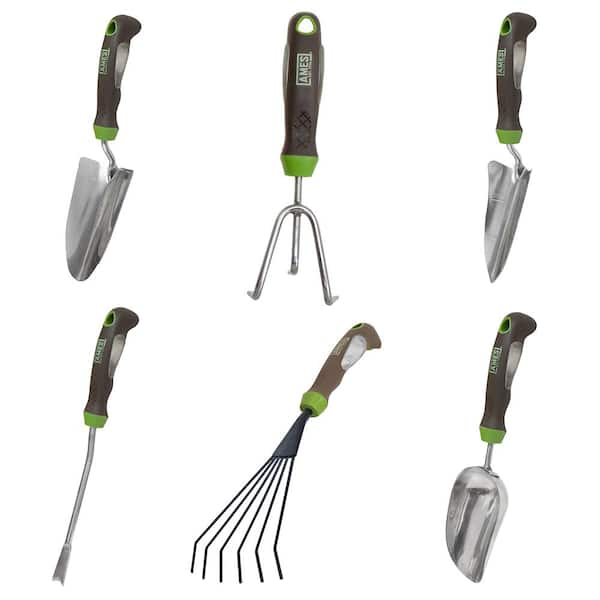
The handle gives you control and comfort. It may be made from plastic, wood, rubber, fiberglass, or metal.
A soft, shaped grip can reduce pressure on your fingers and palm. This matters if you garden for long periods or have hand or wrist pain. A smooth wooden handle feels natural, while a rubber grip often gives better control in wet conditions.
Tang and Neck
The tang connects the blade to the handle. A full tang extends through much or all of the handle and usually offers better strength.
The neck is the area where the blade meets the handle. A strong neck helps prevent bending when you work in compact soil. This is one place where low-cost tools often fail.
Depth Markings
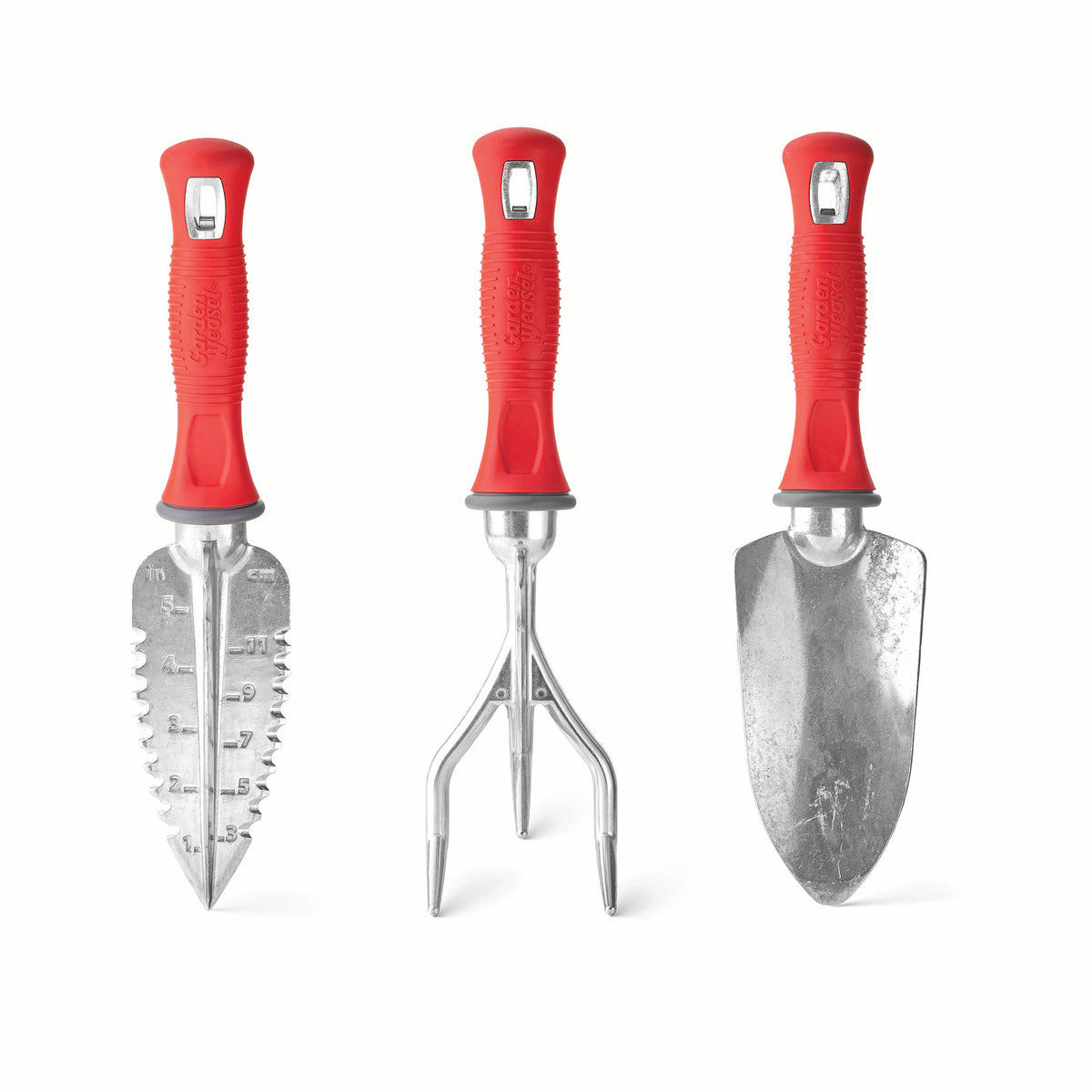
Some hand trowels have measurement marks on the blade. These marks help you plant bulbs, seedlings, and small plants at the correct depth.
Depth lines are useful, but they are not a substitute for plant-specific instructions. Planting depth varies by species, soil type, and climate.

Common Uses for a Hand Trowel
The answer to what does a hand trowel do becomes clearer when you see how many everyday jobs it can handle. It is a small tool, but it works like a precision instrument in the garden.
Planting Flowers and Vegetables
Use the trowel blade to make a hole that is slightly wider than the plant’s root ball. Place the plant at the correct depth, then fill the space with soil.
For annual flowers, a hand trowel lets you create evenly spaced holes quickly. For vegetables such as lettuce, onions, and herbs, it helps you plant without disturbing nearby seedlings.
Transplanting Seedlings
A hand trowel can lift seedlings from trays or crowded beds. Push the blade into the soil several inches away from the stem. Then lift from below the roots.
Avoid pulling a plant by its leaves or stem. Leaves can tear, and stems can break. A careful lift protects the root system and improves the plant’s chance of adapting.
Digging in Containers
Container soil is often compacted near the edges. A small trowel fits inside pots where a shovel cannot.
You can use it to add fresh potting mix, create a planting hole, or remove a small amount of old soil. Work gently around roots because container plants have limited space.
Removing Weeds
A hand trowel can loosen weeds with shallow or spreading roots. Slide the blade under the root crown and lift the plant from the soil.
For deep-rooted weeds, a weeding fork or long weeder may work better. What does a hand trowel do best in this case? It helps remove small weeds in tight areas without disturbing the whole bed.
Mixing Soil Amendments
You can use a hand trowel to blend compost, worm castings, or other approved soil amendments into a small planting area. Mix only as deeply as needed.
Always follow the product label for fertilizer rates. More fertilizer is not always better. Excess nutrients can harm plants and move into waterways.
How to Use a Hand Trowel Correctly
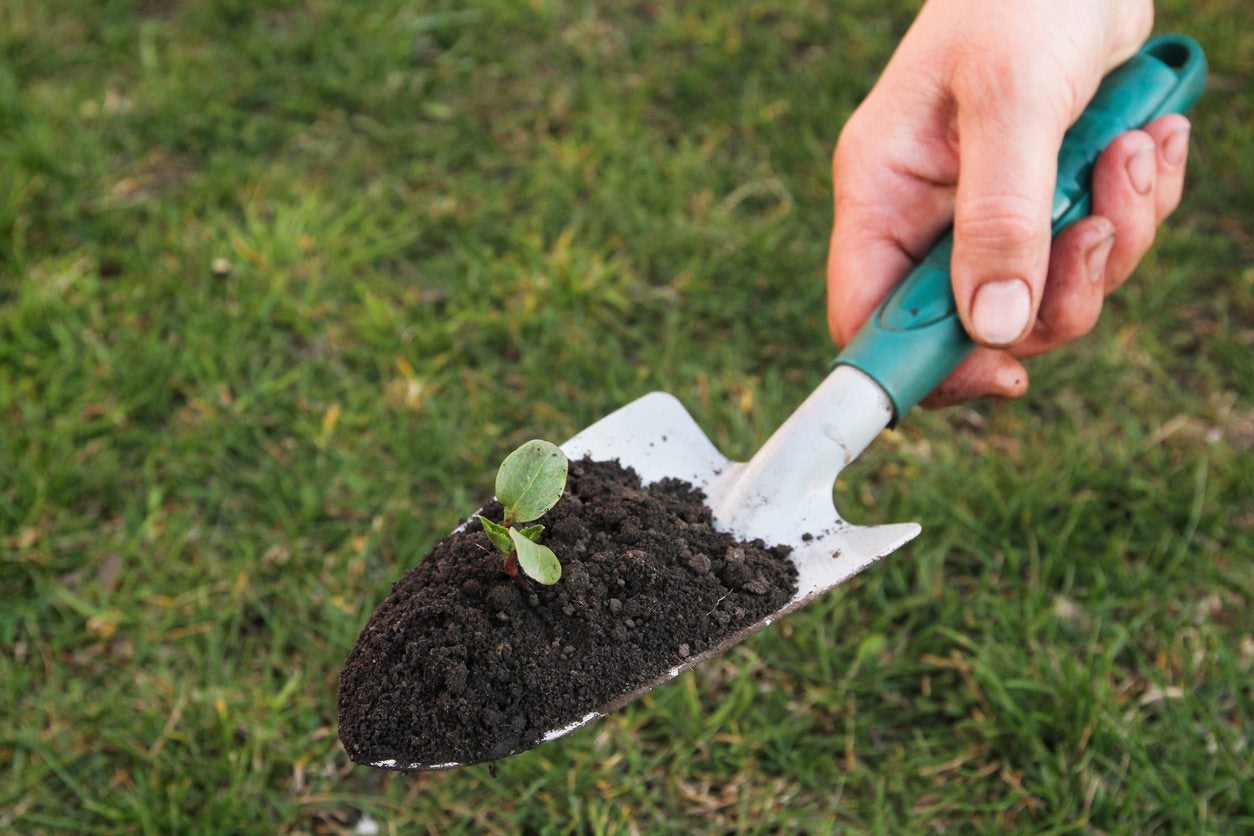
Using a hand trowel looks easy, but good technique protects both your plants and your body. The goal is to let the blade do the work instead of forcing it with your wrist.
- Hold the handle with a relaxed but firm grip.
- Place the blade tip where you want to dig.
- Push the blade into the soil with your palm or the heel of your hand.
- Rock the blade slightly if the soil is firm.
- Lift a small amount of soil at a time.
- Place the soil beside the hole instead of scattering it.
- Set the plant at the correct depth.
- Fill the hole and press the soil gently around the roots.
- Water the plant if needed.
Do not twist the tool sharply in hard, dry ground. That can bend the blade or strain your wrist. Watering the soil first often makes digging easier, especially in clay soil.
When I work near young roots, I use short movements and stop as soon as the soil feels loose. One common mistake is digging too close to the stem. This can cut feeder roots or loosen the plant’s support.
Hand Trowel vs. Garden Shovel
A hand trowel and a garden shovel both move soil, but they serve different purposes. Choosing the right tool saves time and reduces plant damage.
| Feature | Hand trowel | Garden shovel |
|---|---|---|
| Size | Small and easy to control | Large and built for heavier work |
| Best use | Planting, potting, weeding | Large holes, digging beds, moving soil |
| Precision | Very high | Lower in small spaces |
| Soil volume | Small amounts | Large amounts |
| Ideal setting | Containers and garden beds | Ground-level beds and landscape work |
A shovel is better for breaking new ground, moving compost by the wheelbarrow, or digging a large shrub hole. A hand trowel is better for placing one plant exactly where you want it.
What does a hand trowel do that a shovel cannot? It lets you work in narrow spaces with much greater accuracy. What does a hand trowel not do well? It does not replace a shovel for deep, large, or highly compacted digging.
How to Choose the Best Hand Trowel
The best hand trowel depends on your soil, plants, garden size, and comfort. A tool that feels good in your hand is more useful than one with the most features.
Choose the Right Blade Shape
Consider these common blade types:
• Pointed blade: Best for firm soil and root-filled beds
• Narrow blade: Useful for tight spaces and small pots
• Wide blade: Good for scooping soil and planting larger seedlings
• Rounded blade: Helpful for loose soil and general planting
• Serrated edge: Can cut through thin roots, but should be used with care
A narrow trowel may be ideal for balcony containers. A wider model may suit raised beds with loose soil.
Check the Material
Stainless steel resists rust and is easy to clean. Carbon steel is strong and can hold a sharp edge, but it needs more care to prevent rust.
Look for a blade that feels solid and does not flex easily. If the blade bends when you apply light pressure, it may not last in firm soil.
Consider Handle Comfort
Hold the tool before buying it if possible. Check whether the grip feels too thin, too large, or slippery.
A cushioned handle can help reduce fatigue. An ergonomic shape may also keep your wrist in a more natural position. People with arthritis or limited hand strength may benefit from a larger, padded grip.
Look for a Strong Connection
The blade should meet the handle with no visible gap or movement. A riveted or full-tang connection often provides better durability than a weak press-fit design.
This small detail matters. A loose handle can make a simple planting job frustrating and unsafe.

Hand Trowel Safety Tips
A hand trowel has a sharp metal edge, so basic safety habits matter. Most injuries happen when people rush, use excessive force, or leave tools in the wrong place.
• Wear gloves when handling rough soil, thorns, or sharp roots.
• Keep your free hand behind the blade.
• Do not use a trowel as a pry bar.
• Inspect the handle before use.
• Keep the blade clean and dry after gardening.
• Store the tool where children cannot reach it.
• Use eye protection when breaking hard soil or cutting roots.
• Stop if you feel wrist, hand, or shoulder pain.
Do not dig blindly in soil that may contain irrigation lines, electrical cables, or other buried objects. For larger digging jobs, contact the appropriate utility-locating service before you begin.
If the soil is frozen or extremely dry, wait for safer conditions. Forcing a hand trowel into hard ground can damage the tool and your joints.
How to Clean and Maintain a Hand Trowel
Proper care helps a hand trowel last for many seasons. Soil holds moisture against metal, and that moisture can cause rust.
After use, brush or rinse off the soil. Dry the blade fully before storing it. If the tool has a carbon steel blade, apply a thin coat of protective oil when needed.
Check the handle and neck for cracks, looseness, or bends. Tighten or repair the tool before using it again.
You can sharpen a dull edge with a small file, but remove only a little metal at a time. Wear gloves and eye protection, and keep the file moving away from your body. A sharp blade should cut soil cleanly without requiring extreme force.
A simple maintenance routine includes:
- Remove soil after each use.
- Dry the blade and handle.
- Inspect the connection.
- Oil carbon steel when needed.
- Store the tool in a dry place.
- Sharpen the edge only when it becomes dull.
One lesson I have learned from repeated garden work is that cleaning tools right away takes less than a minute. Leaving them in wet soil creates rust, stuck parts, and unnecessary repair work later.
Common Mistakes to Avoid
Even experienced gardeners can misuse a hand trowel. Avoiding a few common errors will protect your plants and extend the life of the tool.
Digging Too Close to Stems
A trowel blade can easily cut shallow roots near the base of a plant. Start farther away, then move inward only if needed.
Using Too Much Force
If the blade will not enter the soil, check whether the ground is too dry or compacted. Add water, loosen the area with a digging fork, or use a stronger tool.
Planting at the Wrong Depth
Some plants fail because they are planted too deep, not because they lack water. Follow the care instructions for the specific plant.
Leaving Soil on the Blade
Wet soil can speed up rust and make the blade rough. Clean the tool before storing it.
Choosing the Wrong Trowel
A wide blade may damage crowded seedlings. A narrow blade may take too long when you need to move a lot of potting mix. Match the blade to the task.
Frequently Asked Questions About What Does a Hand Trowel Do
What is a hand trowel used for?
A hand trowel is used for small digging, planting, transplanting, weeding, and moving soil. It is especially useful in containers, raised beds, and areas where a shovel is too large.
Can a hand trowel cut roots?
Some hand trowels can cut thin roots, especially those with a sharp or serrated edge. Use care because cutting healthy roots can stress or kill a plant.
Is a hand trowel the same as a transplanting trowel?
They are similar, but a transplanting trowel usually has a longer, narrower blade. That shape helps it reach deeper roots and work in tight spaces.
What material is best for a hand trowel?
Stainless steel is a strong, low-maintenance choice because it resists rust. Carbon steel can also be very durable, but it needs drying and occasional oiling.
How deep can a hand trowel dig?
Most hand trowels can dig several inches, depending on the blade length and soil condition. They are not designed for deep excavation or large planting holes.
Can you use a hand trowel in hard clay soil?
You can, but hard clay may bend a light tool or strain your hand. Moisten the soil first and choose a sturdy, pointed trowel with a strong connection.
How do you clean a hand trowel?
Brush or rinse away soil, dry the tool completely, and store it in a dry place. Apply a light coat of oil to carbon steel if rust is a concern.
Conclusion
A hand trowel is a small but powerful garden tool for digging planting holes, moving soil, transplanting seedlings, removing weeds, and working in containers. Its greatest strength is control, which helps you protect roots and handle detailed jobs with care.
Choose a trowel with a strong blade, comfortable handle, and secure blade-to-handle connection. Use gentle pressure, keep it clean, and match the tool to the soil and task. Now that you know what does a hand trowel do, try using one during your next planting job and share your favorite gardening tips in the comments.

Laura Bennett is a gardening writer at MyGardenLabs who creates beginner-friendly guides focused on solving common plant care and gardening problems.


