
Best Pruning Tools For Native Australian Plants: Top Picks
The best pruning tools for native Australian plants combine clean bypass blades, sturdy handles, and easy tool care.
A garden full of bottlebrush, grevillea, banksia, tea tree, or wattle can look wild in the best way. Still, dead twigs, crossing stems, and spent flowers need care. The wrong pruner can crush soft wood, spread disease, or tire your hand fast. I compared blade styles, grip comfort, cut range, and daily use to find the best pruning tools for native Australian plants. These picks suit light shaping, flower removal, bonsai work, and thicker branch cuts.
Modern Sprout Bypass Hand Pruners

The Modern Sprout Bypass Hand Pruners are a simple choice for routine garden work. Their bypass design lets one blade pass the other, much like scissors. That action suits live twigs, green stems, and small woody shoots on many Australian natives. I like this style because it leaves a cleaner cut than an anvil tool when the blade is sharp.
The sage finish gives these pruners a pleasant look, but the useful part is their compact shape. They are easy to carry while moving from a grevillea to a small bottlebrush. Use them to remove spent blooms, trim thin suckers, and cut damaged tips before they become larger problems. They are not a replacement for loppers or a pruning saw, yet they cover a large share of light garden tasks.
Pros:
- Bypass blades suit live stems and green growth
- Compact size works well in dense shrubs
- Useful for deadheading and light shaping
- Easy to keep close while walking through a garden
- Scissor-like action can reduce stem crushing
- Attractive sage color makes the tool easy to spot
Cons:
- Not intended for large or very hard branches
- Small tools may feel less powerful on thick stems
- Blade care is still needed after use on resinous plants
5-Piece Succulent and Mini Garden Tool Set
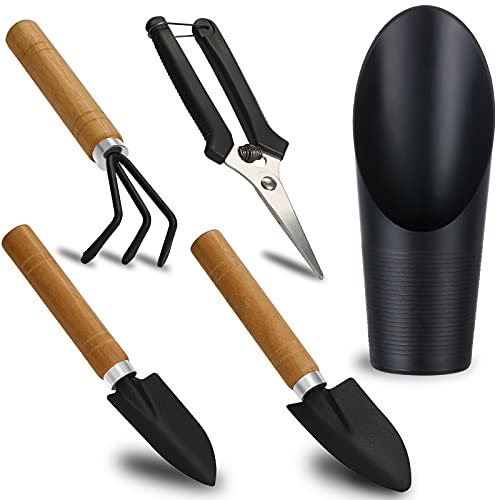
This five-piece set is aimed at small plants, but it has a useful place in a native plant collection. The narrow tools can help with seedlings, potted plants, herbs, and small native specimens. It is especially handy for gardeners who grow compact Australian plants on a balcony or patio. The set also gives new gardeners several basic tools without a large first purchase.
I would not use this kit for thick banksia branches or mature woody shrubs. Instead, think of it as a detail set for tight spaces and gentle tasks. The small format helps when you need to remove a dry leaf, guide a young stem, or clear soil from around a plant. For the best pruning tools for native Australian plants, this set works best as a companion rather than a main branch cutter.
Pros:
- Useful for small pots and young native plants
- Compact tools fit around crowded stems
- Good starter option for balcony gardeners
- Supports light planting, cleaning, and repotting work
- Easy to store in a small garden drawer
- Can complement a full-size bypass pruner
Cons:
- Not suited to mature woody branches
- Small handles may not suit large hands
- Some pieces are for planting rather than pruning
Hanafubuki Wazakura Japanese Bonsai Scissors

Hanafubuki Wazakura scissors bring a fine, controlled feel to close pruning work. Their seven-inch length gives more reach than tiny bonsai snips while staying precise. I see them as a strong fit for bonsai, young native shrubs, and detailed branch selection. The long, narrow blades can reach into places where broad pruner jaws may bump nearby growth.
These scissors reward a careful hand. They work best on thin stems, shoots, leaves, and small twigs rather than hard branch wood. On a compact tea tree or a native bonsai, that control can help you keep the plant’s natural form. Clean and dry the blades after use, especially if you trim sap-rich foliage or work in damp weather.
Pros:
- Long blades offer precise access in tight growth
- Well suited to bonsai and small native specimens
- Helps make selective cuts instead of broad trimming
- Light profile supports detailed shaping
- Useful for leaves, shoots, and thin stems
- Traditional design appeals to careful bonsai growers
Cons:
- Limited for thick or tough woody branches
- Requires more care than a rugged utility pruner
- Long blades may feel less convenient for fast bulk work
Fiskars Indoor Plant Care Three-Piece Set

The Fiskars Indoor Plant Care Set is designed for small, careful jobs. Its three-piece format can help with trimming, grooming, and routine care around potted plants. I would consider it for indoor Australian natives, young seedlings, and small patio specimens. The tools are easier to manage than a full-size garden kit when the plant sits on a desk or shelf.
This set has clear limits outdoors. Mature grevillea, banksia, and bottlebrush branches need a stronger bypass pruner or saw. Still, precision matters when you remove a dead leaf or trim a thin shoot near a healthy bud. If you want the best pruning tools for native Australian plants in a small-space garden, this set makes sense when your plants are young and your cuts are light.
Pros:
- Practical size for indoor and patio plants
- Three tools cover several light care tasks
- Easy for beginners to hold and control
- Useful around seedlings and small pots
- Simple option for regular plant grooming
- Fiskars is a familiar garden tool brand
Cons:
- Not made for thick native shrub branches
- Indoor focus limits heavy outdoor use
- Small tools may not suit large pruning jobs
Scotts Two-Piece Pruning Tool Set

The Scotts two-piece set is one of the most useful choices for mixed pruning work. It pairs an eight-inch bypass pruner with a seven-and-a-half-inch folding saw. That combination covers live stems and thicker branches without forcing one tool to do every job. I value this pairing because native gardens often contain both soft new growth and firm, aging wood.
Use the bypass pruner for small branch cuts, flower stems, and shaping. Bring out the folding saw when a branch is beyond the pruner’s safe capacity. The saw also folds for easier storage and transport, which helps when you work across a larger yard. As with any saw, support the branch and use steady strokes rather than twisting at the end of a cut.
Pros:
- Combines a bypass pruner and folding saw
- Handles more tasks than a single hand pruner
- Useful for live stems and thicker branches
- Folding saw stores neatly in a tool bag
- Good choice for mixed native plant gardens
- Can reduce the temptation to force a small pruner
Cons:
- Heavier to carry than one small pruner
- Still may not replace long-handled loppers
- Requires safe storage when the saw is open
VIVOSUN Six-and-a-Half-Inch Garden Scissors

The VIVOSUN garden scissors come as a two-pack, which is useful for gardeners who work in more than one area. Keep one pair near the house and one near the shed. Their compact shape suits flowers, herbs, thin stems, and light plant grooming. The bright orange handles are also easier to find in mulch or dense foliage.
I would use these scissors for small cuts on young Australian natives rather than for hard branch wood. They can help remove spent flowers from a potted grevillea or trim fine growth on a patio plant. Having two pairs can also save time when one pair needs cleaning. For clean results, make each cut with the full blade section and avoid twisting through a stem.
Pros:
- Two-pack offers useful backup value
- Bright handles are easy to locate
- Compact design suits fine plant work
- Helpful for flowers, herbs, and thin stems
- Easy to place in separate garden areas
- Good option for light and frequent trimming
Cons:
- Not suitable for thick branches
- Scissors may need frequent cleaning with sticky sap
- Small handles may feel tight during long jobs
GROWNEER Three-Pack Garden Scissors Kit

The GROWNEER three-pack focuses on hand comfort and light pruning. Multiple scissors give you options for small stems, flowers, and plant maintenance. This can help if you care for many pots or share garden tasks with another person. It also offers a practical way to keep a clean pair ready while another pair is being washed.
I see the kit as a useful value pick for routine trimming, not as a heavy-duty native branch tool. The scissors can make fine cuts on soft growth and help reduce the strain of repeatedly using a large pruner. Gardeners with weak hands may appreciate having a lighter tool for detail work. For tough wood, switch to a bypass pruner or saw so you do not bend the blades or overwork your wrist.
Pros:
- Three-piece format offers strong everyday value
- Useful for gardeners with many small plants
- Light scissors can reduce hand fatigue
- Good for flowers, herbs, and thin stems
- Allows a clean spare pair to stay available
- Supports detail work in crowded foliage
Cons:
- Not designed for thick woody native growth
- Several small tools may be more than one gardener needs
- Scissors require cleaning after resin-heavy cuts
Corona ClassicCUT Forged Bypass Pruner

The Corona ClassicCUT is the serious hand pruner in this group. Its forged bypass design targets live branches and garden stems, with a stated cutting capacity of up to one-half inch. That makes it a better match for established shrubs than tiny scissors. I often look for a forged body when I want a pruner that feels stable during repeated outdoor work.
This tool is a strong candidate for grevillea, bottlebrush, tea tree, and similar plants when the branch size stays within its safe range. The bypass action can make a clean cut when you approach the stem at the correct angle. Do not force it through a branch that feels too hard or thick. A folding saw or lopper is safer when the cut needs more power than your hand can provide.
Pros:
- Forged construction supports demanding garden use
- Bypass blade suits live native plant stems
- Half-inch capacity covers many routine branch cuts
- Strong choice for established shrubs
- Stable feel can improve cutting control
- Useful for pruning, shaping, and removing damaged wood
Cons:
- May feel heavier than compact scissors
- One-half-inch capacity does not cover large limbs
- Needs regular cleaning and sharpening for best results
Garden Guru Extra-Long Stainless Pruner

The Garden Guru Extra-Long Stainless Pruner is built for reach and detailed cuts. Its straight blade profile can help you reach between leaves, flowers, and narrow stems. I would consider it for roses, herbs, fruit plants, bonsai, and fine work on compact native plants. Stainless steel also offers a useful advantage in wet climates when you dry and store the tool correctly.
Long blades can act like a small pair of garden shears, but they need a steady hand. Use them on thin stems and avoid turning them into a branch cutter. They are especially useful when a short pruner cannot reach a hidden shoot without disturbing nearby growth. For gardeners building the best pruning tools for native Australian plants, this model fills the precision and reach gap.
Pros:
- Extra-long blades reach hidden stems
- Useful for close work in dense foliage
- Stainless steel supports regular garden use
- Good for bonsai, herbs, flowers, and fruit plants
- Can make selective cuts near healthy growth
- Helpful when short blades cannot reach comfortably
Cons:
- Not suitable for thick woody branches
- Long blades need careful handling in tight spaces
- May be more specialized than most home gardeners need
Garden Guru Titanium Bypass Hand Pruner
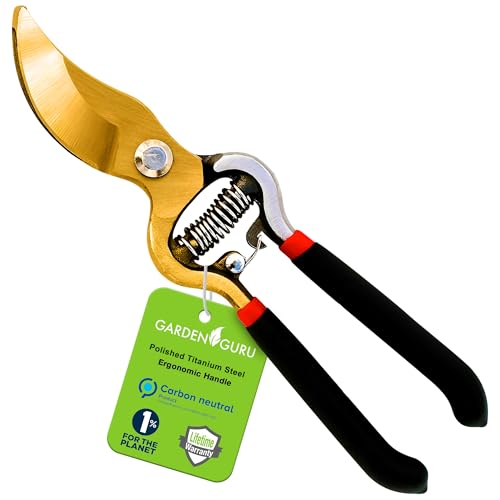
The Garden Guru Titanium Bypass Hand Pruner aims to combine a durable blade with a comfortable grip. Its bypass format is suitable for live stems, green shoots, and small woody growth. The blade coating may also make sap cleanup easier than with a plain, neglected blade, though all pruners still need care. I like this type of design for gardeners who spend long sessions trimming shrubs.
The comfort grip matters when you make many cuts in one day. It can help take the edge off hand strain, but it cannot replace good technique. Keep your wrist straight, let the blade do the work, and stop when a branch exceeds the tool’s capacity. Among the best pruning tools for native Australian plants, this is a sensible all-rounder for regular shrub maintenance.
Pros:
- Bypass action suits live plant tissue
- Titanium-coated blade may resist surface wear
- Comfort grip supports longer pruning sessions
- Good for routine shrub and garden maintenance
- Useful for green shoots and small woody stems
- Professional-style design offers broad garden use
Cons:
- Still needs cleaning after resinous native plants
- Not a substitute for a saw on large branches
- Grip size may not suit every hand
How I Choose Pruners for Australian Native Plants
Native Australian plants often have a tough character, but that does not mean every branch needs force. Many respond best to selective pruning that keeps their natural shape. I look for a sharp bypass blade for live wood, a firm grip, and a tool size that matches the branch. A clean cut is like a neat stitch: it gives the plant a better chance to seal the wound.
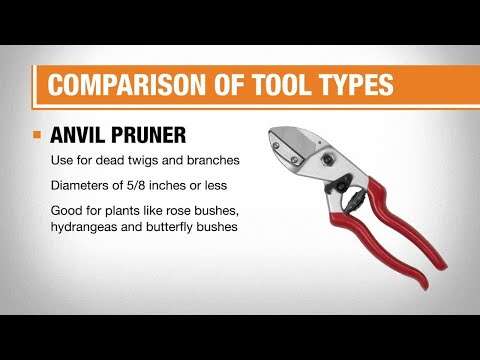
Blade style matters first. Bypass pruners use a curved cutting blade that passes a thicker support blade. This design usually suits live stems and fresh growth. Anvil pruners press the stem against a flat surface, so they may work better on dry wood, but they can crush green tissue if used carelessly.
Cut capacity matters just as much. Never judge capacity by force alone. If the handles need a hard squeeze, the branch is likely too large for that tool. Use a folding saw for thicker limbs and make a clean, controlled cut. This protects both the plant and your hand.
Comfort is not a small detail. Australian gardens can need repeated work after wind, heat, or strong seasonal growth. A handle that fits your palm can help you keep control and avoid awkward wrist angles. If you have arthritis or low hand strength, choose a lighter tool for small cuts and save heavy work for a saw or lopper.
Pruning Tips for Native Australian Plants
Start by checking the plant’s growth habit. Some natives form flowers on new growth, while others need more time after flowering before you trim them. Local climate also changes the best pruning window. In general, prune after flowering when possible, and avoid cutting heavily during heat, frost, or drought stress.
Make cuts just above a healthy node or side branch. Do not leave a long stub, and do not cut so close that you damage the bud. Remove dead, broken, crossing, or diseased wood first. Then step back and assess the shape before making more cuts.
Clean your blades between plants, especially when you suspect disease. Wipe away sap and plant scraps, then use a suitable disinfectant according to its label. Dry the tool before storage. Sharp, clean blades reduce drag and help prevent rough cuts.
Take care around wildlife. Australian native gardens can provide food and shelter for birds, insects, and small animals. Look for active nests before pruning and check local rules if the work involves protected vegetation. A careful gardener shapes the plant without stripping away its value to the wider habitat.
My Recommendation
For most home gardeners, I would choose the Scotts two-piece set as the broadest solution. The bypass pruner handles daily cuts, while the folding saw covers thicker branches. If you want one durable hand tool, the Corona ClassicCUT is the stronger traditional pick. For bonsai and close detail work, the Hanafubuki scissors offer better control than a bulky pruner.
| Best for | Why |
|---|---|
| Mixed native gardens | The Scotts set covers small live stems and thicker branches with two tools. |
| Heavy routine shrub pruning | The forged Corona ClassicCUT offers a strong bypass design for suitable branch sizes. |
| Bonsai and fine detail | The Hanafubuki scissors reach narrow spaces and support selective cuts. |
How to Get Better Results From the Best Pruning Tools for Native Australian Plants
Even the best pruning tools for native Australian plants cannot fix a poor cut. Hold the tool so the cutting blade faces the part of the branch you plan to keep. This helps reduce crushing on the retained side. Make one smooth cut instead of rocking the handles back and forth.
Do not use hand pruners as wire cutters, root cutters, or general-purpose pliers. Those jobs can nick the blade and throw it out of alignment. Keep a small brush and cloth near your storage spot. A few minutes of care can protect the tool for many seasons.
Sharpening also matters. A dull blade needs more pressure and can tear bark. Follow the tool maker’s sharpening guidance, or use a qualified garden tool service if you are unsure. After sharpening, apply a light protective oil where appropriate and keep the blades closed.
Store every tool in a dry place. Avoid leaving pruners in wet grass, direct rain, or hot car trunks. Heat can affect grips and storage cases, while moisture can lead to rust on exposed metal. Good storage is a quiet form of insurance for your garden gear.
FAQs Of best pruning tools for native australian plants
What type of pruner is best for Australian native plants?
A bypass pruner is usually the best starting point for live stems and green growth. It makes a scissor-like cut and can reduce crushing when the blade is sharp. Use a pruning saw for branches beyond the pruner’s safe capacity.
Can I use bonsai scissors on bottlebrush or grevillea?
Yes, but only for thin shoots, flowers, leaves, and fine detail work. Bonsai scissors are not made for thick woody branches. Choose a sturdy bypass pruner when the stem begins to resist.
When should I prune native Australian plants?
The right time depends on the species and your local climate. Many gardeners prune after flowering and avoid severe heat, drought, frost, or active wildlife nesting. Check the needs of the exact plant before making a major cut.
How do I stop pruning tools from spreading disease?
Clean and disinfect the blades between plants, especially after cutting diseased tissue. Remove sap and plant debris, then dry the tool well. Store it clean and lightly protected from moisture.
Do native plants need heavy pruning?
Most do not need heavy pruning every year. Remove dead, damaged, crossing, or unwanted growth first. Light shaping often preserves a native plant’s natural form better than hard shearing.
Final Verdict: Which Should You Buy?
The Scotts two-piece set is my top pick because it covers both small stems and thicker branches. The Corona ClassicCUT is best for a strong single hand pruner, while Hanafubuki suits bonsai detail. Together, these choices represent the best pruning tools for native Australian plants for different garden needs.
Match the tool to the branch, keep the blade clean, and prune with patience. The right cut protects plant health and keeps your native garden natural, neat, and full of life.

Laura Bennett is a gardening writer at MyGardenLabs who creates beginner-friendly guides focused on solving common plant care and gardening problems.