How To Repot Plants Without Damaging Roots: Safe Guide 2026
Loosen the root ball gently, pot up one size, and keep soil airy.
If you want a clear guide on how to repot plants without damaging roots, you are in the right place. I have repotted hundreds of houseplants and garden starts, and I know what stress looks like the day after a move. In this step-by-step guide, I will show you a calm, proven method that protects fine feeder roots, limits shock, and sets your plants up to thrive.

Tools and materials for a stress‑free repot
Set up first. A smooth setup keeps you calm and gentle with roots.
- A pot with drainage holes
- Fresh potting mix suited to your plant
- Perlite or pumice for air flow
- Clean pruning shears and a small knife
- A chopstick or pencil for teasing roots
- A trowel and gloves
- Isopropyl alcohol to sterilize tools
- A watering can with a soft rose
- A mesh or coffee filter to cover the drain hole
Tip from the bench: I lay out a tray or a big bag to catch soil. I prep the mix in a bowl with a splash of water. It should feel like a wrung-out sponge.
Knowing how to repot plants without damaging roots starts with the right tools and a calm plan.

When to repot and the best timing
Watch for these signs. They tell you the plant wants new space.
- Roots circle the pot or grow from the drain holes
- Water runs straight through the soil
- Soil pulls from the pot sides or turns crusty
- Growth slows, leaves shrink, or the plant gets top-heavy
- White crust or stains form on the soil or pot rim
Best seasons:
- Spring to early summer is ideal for most plants.
- Late spring for succulents and cacti.
- Avoid deep winter unless it is an emergency, like root rot.
Water the plant one day before the move. A hydrated plant handles stress better. These small steps are part of how to repot plants without damaging roots.

Choose the right pot and soil
Size matters. Go one pot size up, about 1–2 inches wider. Big jumps keep soil wet for too long and can rot roots.
Pot options:
- Terracotta breathes and dries fast.
- Glazed ceramic or plastic holds moisture longer.
- Always choose drainage holes.
Soil basics:
- Use a fresh, high-quality potting mix, not garden soil.
- For aroids like monstera or pothos: mix potting soil with perlite and bark.
- For succulents and cacti: use a gritty mix with sand or pumice.
- For orchids: use bark or a bark blend, not regular soil.
Pre-moisten the mix so it is slightly damp, not soggy. Matching pot and mix is a quiet win in how to repot plants without damaging roots.
.webp)
Step-by-step: how to repot plants without damaging roots
Follow this gentle process. It is steady, safe, and kind to fine roots.
- Prepare the new pot. Cover the drain hole with mesh. Add a thin base layer of mix.
- Hydrate. Water the plant the day before. Do not repot bone-dry or sopping-wet roots.
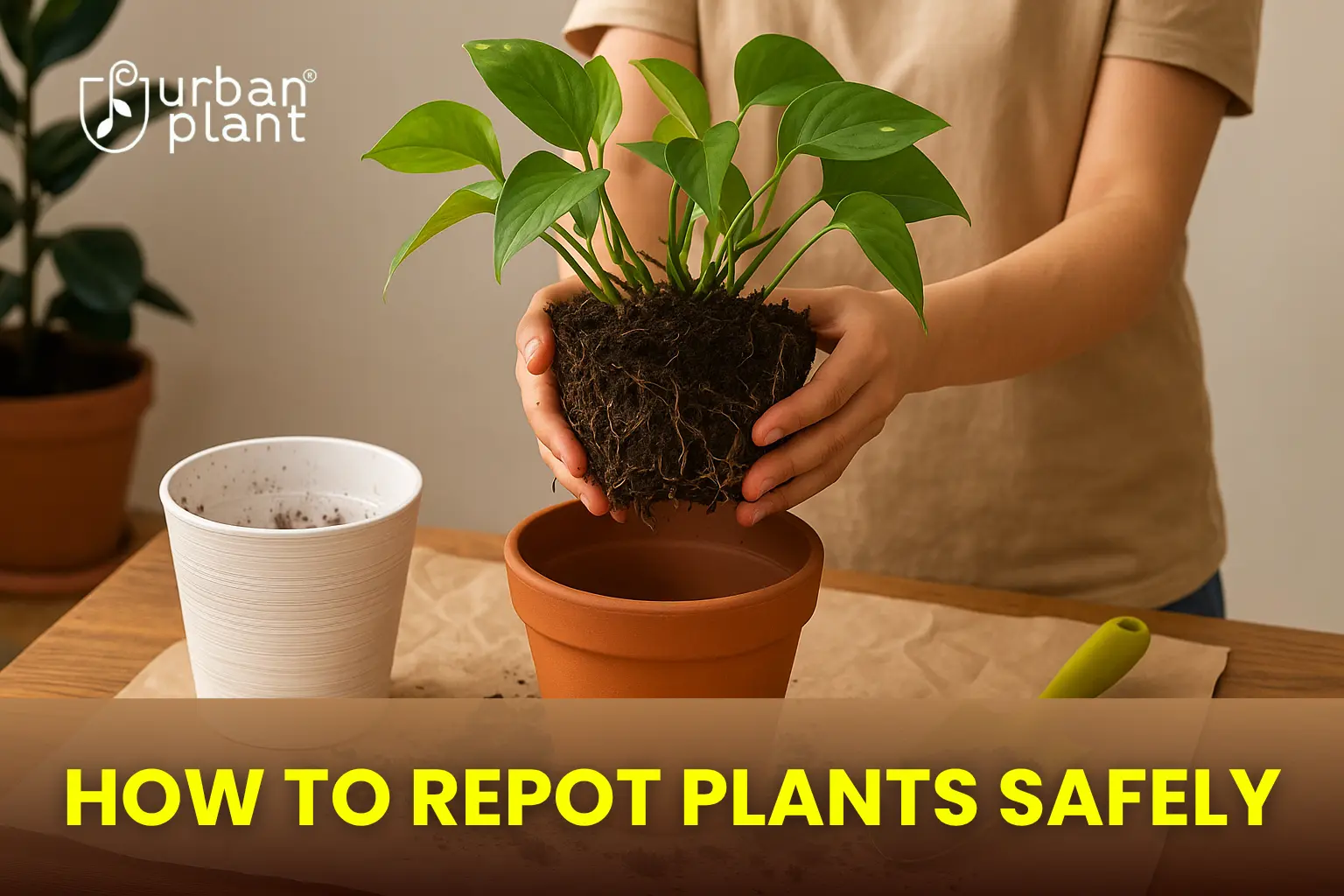
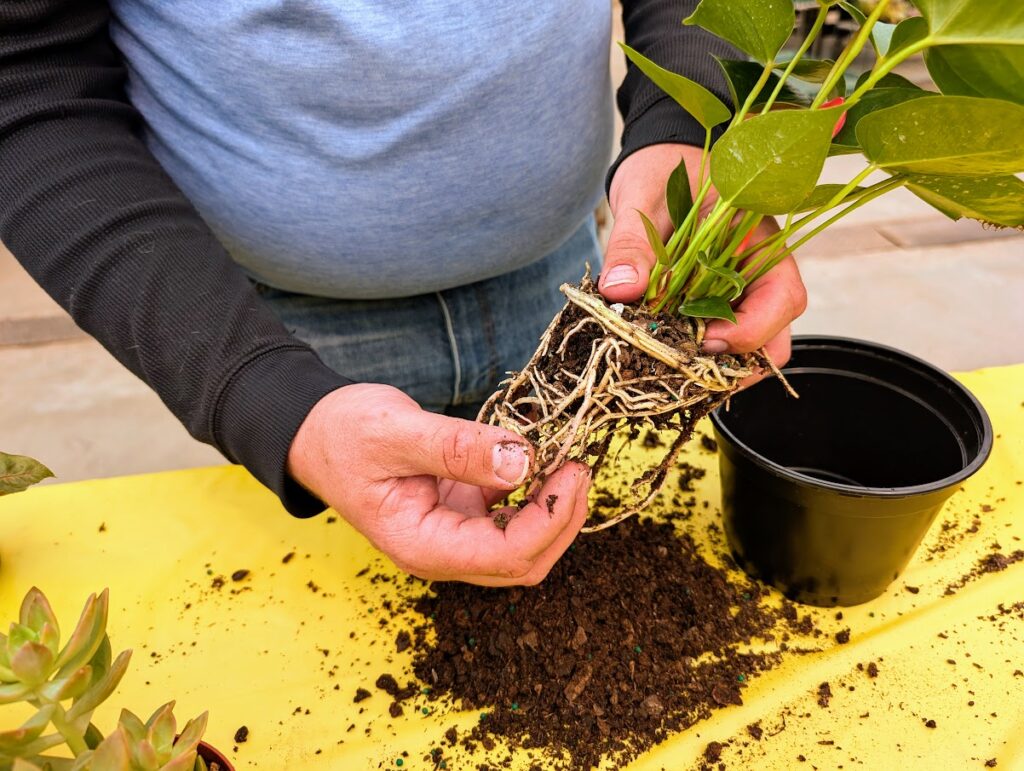
- Loosen the plant. Tip the pot, support the base, and tap the sides. Never yank the stem.
- Inspect the roots. Healthy roots are firm and white to tan. Trim mushy, dark, or foul-smelling roots with sterilized shears.
- Tease the root ball. Use a chopstick to free circling roots at the bottom and sides. Be patient. Keep as many fine roots as you can.
- Set the plant. Place it so the crown sits at the same depth as before. Do not bury the stem.
- Backfill gently. Add mix around the root ball. Tap the pot to settle soil. Avoid hard packing. Keep air pockets small, not crushed.
- Water to settle. Water until it drains from the holes. Add a bit more mix if the level drops.
- Label and place. Add the name and date. Set the plant in bright, indirect light.
I learned this flow while saving a root-bound rubber plant. A soft chopstick and small root cuts freed it without shock. This is the heart of how to repot plants without damaging roots.

Root care techniques that protect growth
Think of roots like lace. Strong but easy to snag. Go slow.
Teasing roots:
- Focus on the bottom third first.
- Free tight circles so new roots can explore.
- Work with damp roots. Dry roots snap.
Root pruning:
- Remove dead or mushy roots only.
- For pot-bound plants, make 3–4 shallow vertical cuts up the sides. Keep cuts short and spaced.
- Do not remove more than 15–20% of the root mass at once.
Cleaning:
- Shake off old, exhausted soil if it is compacted.
- Keep some native soil for sensitive plants. It holds helpful microbes.
These gentle touches are key in how to repot plants without damaging roots.
Watering, light, and aftercare
Right after repotting:
- Give a deep, even drink.
- Let the pot drain fully. Never leave it sitting in water.
- Place the plant in bright, indirect light for a week.
For the first 2–3 weeks:
- Keep soil slightly moist for tropicals, then allow a light dry-out.
- For succulents, wait 3–5 days to water, then water deep and let dry.
- Hold fertilizer for 4–6 weeks. Fresh mix has enough nutrients.
Reduce stress:
- Avoid hot sun and strong wind right after the move.
- Use a stake for tall, wobbly plants.
- Keep leaves clean and dry.
Proper aftercare is a quiet power move in how to repot plants without damaging roots.

Special cases and plant-specific tips
Succulents and cacti:
- Use a gritty mix. Keep the crown dry.
- Do not water right away. Let cuts callus for a few days.
Aroids like monstera and philodendron:
- Use an airy mix with bark and perlite.
- Add a moss pole before you backfill to avoid future root damage.
Orchids:
- Use bark. Cut dead, hollow roots. Keep crown above the bark line.
- Water by soaking, then drain well.
Ferns, calatheas, and peace lilies:
- Use a moisture-holding yet airy mix.
- Keep steady moisture and higher humidity after the move.
Woody and large houseplants:
- Use a dolly or a tarp slide to move the pot.
- Root-prune in small steps across seasons.
These plant-by-plant tweaks refine how to repot plants without damaging roots.

Common mistakes to avoid
Small changes prevent big problems.
- Choosing a pot that is far too large
- Packing soil tight, which chokes air from roots
- Burying the stem or crown too deep
- Adding gravel at the bottom for drainage (this is a myth; it can raise the water table)
- Repotting during full bloom without need
- Watering with cold water right after repotting
- Fertilizing right away in fresh mix
Skip these traps and you will master how to repot plants without damaging roots.
Troubleshooting repot shock
Wilting or droop:
- Shade the plant and raise humidity for a few days.
- Check soil moisture. Water if dry; wait if damp.
Yellow leaves:
- A few older leaves may drop. That can be normal.
- If many leaves yellow, check roots for rot or dryness.
Slow growth:
- Give it time. New growth often starts in 2–4 weeks.
- Confirm the plant has enough light.
Fungus gnats:
- Let the top inch of soil dry between waterings.
- Use sticky traps and improve airflow.
Brown tips:
- Check for salts from old soil. Flush with clean water.
- Review humidity and watering habits.
These checks close the loop on how to repot plants without damaging roots.
Frequently Asked Questions of how to repot plants without damaging roots
How often should I repot houseplants?
Most houseplants need repotting every 1–2 years. Fast growers may need it yearly, while slow growers can wait longer.
Can I repot while a plant is flowering?
It is better to wait, since blooms take energy. If it is urgent, repot gently and remove spent flowers to help recovery.
Should I water before or after repotting?
Water the day before, then water to settle soil after repotting. Avoid repotting when the soil is bone-dry or waterlogged.
Do I need to trim roots every time?
No. Trim only dead, mushy, or circling roots. Keep as many fine feeder roots as possible to limit shock.
What size pot should I choose?
Go up one size, about 1–2 inches wider. Big jumps keep soil wet and can cause root rot.
Conclusion
Repotting is a fresh start for your plant. Use the right pot, a matching mix, and a slow hand. Tease, trim only what is dead, and water well. With steady aftercare, your plant will settle fast and push new growth.
You now know how to repot plants without damaging roots and how to keep stress low at each step. Try one plant this week. Share your results, ask a question, or subscribe for more plant care guides.

Laura Bennett is a gardening writer at MyGardenLabs who creates beginner-friendly guides focused on solving common plant care and gardening problems.