How To Repot A Bonsai Tree: Step-By-Step Guide
Repot a bonsai every 2 to 5 years with root pruning, new soil, and the right pot.
I’ve worked with bonsai for years and repotted dozens of trees. This guide shows exactly how to repot a bonsai tree from start to finish. You will learn when to repot, what tools to use, how to prune roots, how to choose soil and pots, and how to care for your tree after repotting. Read on for clear, step-by-step instructions, real-life tips, and common pitfalls to avoid.

Why repot a bonsai tree
Repotting keeps a bonsai healthy. Bonsai grow in small containers. Roots can fill the pot fast. Old soil breaks down and loses nutrients. Repotting refreshes soil and checks root health. It also helps control growth. That is why learning how to repot a bonsai tree is essential for any grower.
Benefits of repotting
- Restores fresh nutrients and better drainage.
- Prevents root bound problems and rot.
- Gives a chance to reshape the root system.
- Improves overall vigor and leaf quality.
Limitations and things to know
- Repotting stresses the tree temporarily.
- Some species tolerate repotting less often.
- Timing is key to avoid shock.

When to repot a bonsai tree
Most bonsai are best repotted in early spring. This is when growth restarts. For tropical species, late winter can also work. For deciduous trees, wait until buds swell but before leaves open. Always check the tree’s growth cycle.
Signs your tree needs repotting
- Roots circling the pot bottom.
- Water runs straight through with little absorption.
- Soil compacts and drains poorly.
- Tree top looks weak or growth has slowed.
PAA-style questions
When is the best time to repot a bonsai tree?
Early spring is best for most bonsai because the tree is entering active growth and recovers faster.
How often should you repot a bonsai tree?
Young trees need repotting every 1 to 3 years. Mature trees often need it every 3 to 5 years, depending on growth and pot size.

Tools and supplies you need to repot a bonsai tree
Having the right tools makes the job smooth. Here is a simple kit to keep handy.
Essential tools
- Bonsai pot or new pot with drainage holes.
- Bonsai soil mix or suitable inorganic mix.
- Root rake or chopstick for soil removal.
- Concave cutters for root and branch work.
- Scissors or shears for small roots.
- Wire mesh and drainage screen.
- Wire for anchoring the tree.
- Bucket, gloves, and newspaper for clean work.
My tip: I keep a tray and a spray bottle nearby. It helps control mess and keeps roots moist while I work.

Step-by-step: how to repot a bonsai tree
Follow these steps to repot a bonsai tree safely. Read them all before you begin.
-
Prepare your work area and tools
- Work in shade or indoors.
- Lay out tools and soil.
- Fill a container with fresh soil mix.
-
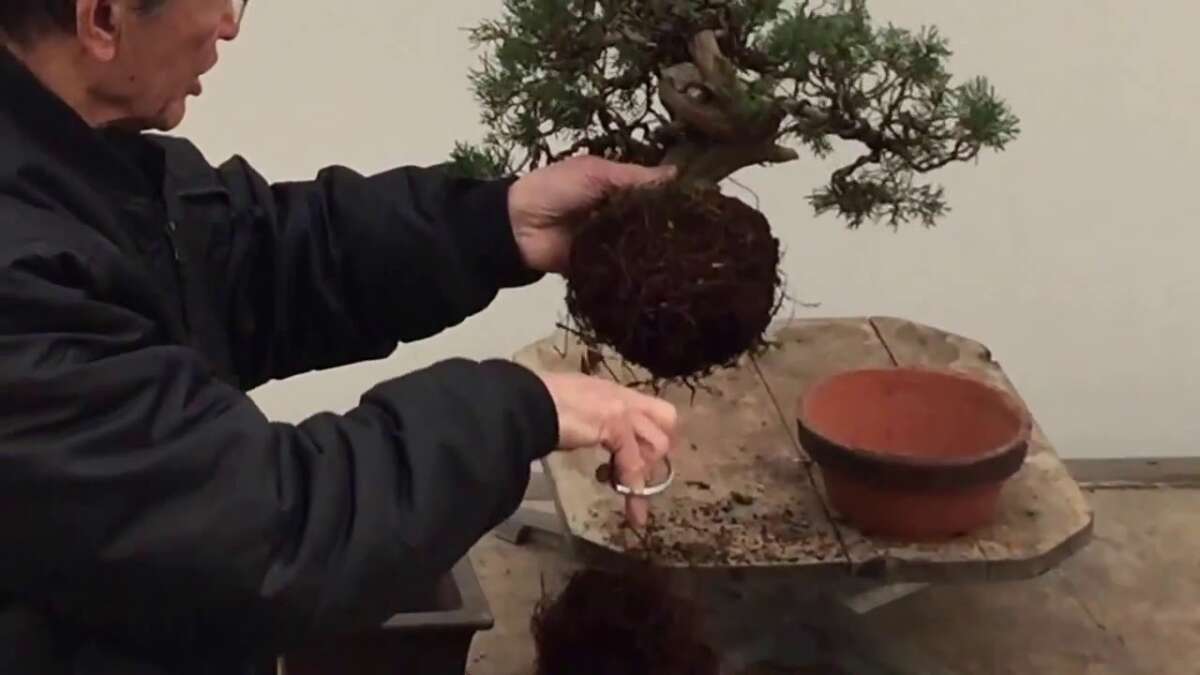
Remove the tree from its pot
- Gently turn the pot on its side.
- Loosen the soil at the edge with a root rake or chopstick.
- Pull the trunk slowly while easing soil away.
-
Inspect and prune the roots
- Remove about one-third of the root mass for young trees.
- For mature or wired bonsai, prune less—about 10–20%.
- Trim circling roots and long tap roots.
-
Clean and prepare the pot
- Add mesh over drainage holes.
- Place a base layer of coarse soil or grit.
- Position the tree and anchor it with wire if needed.
-
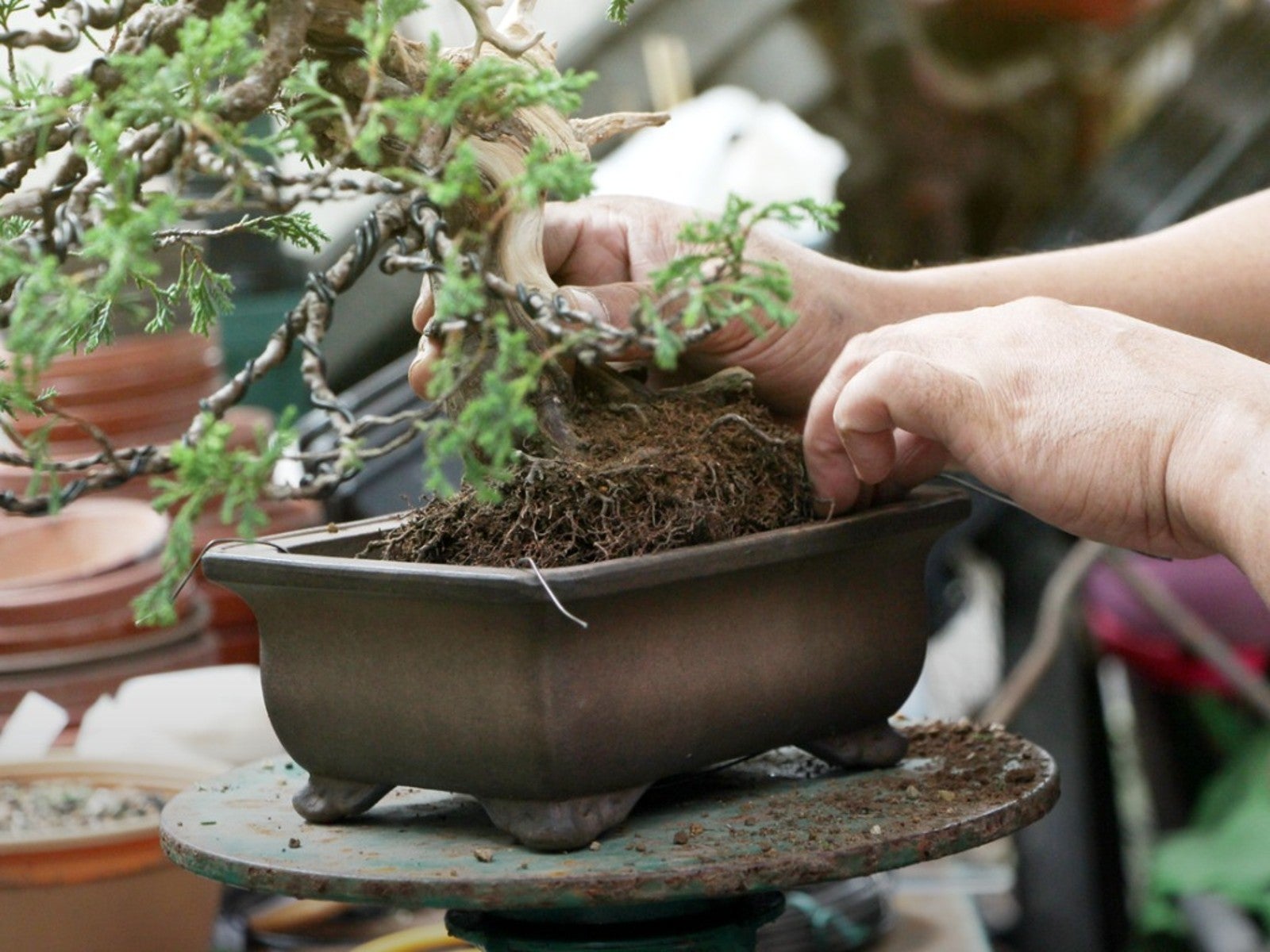
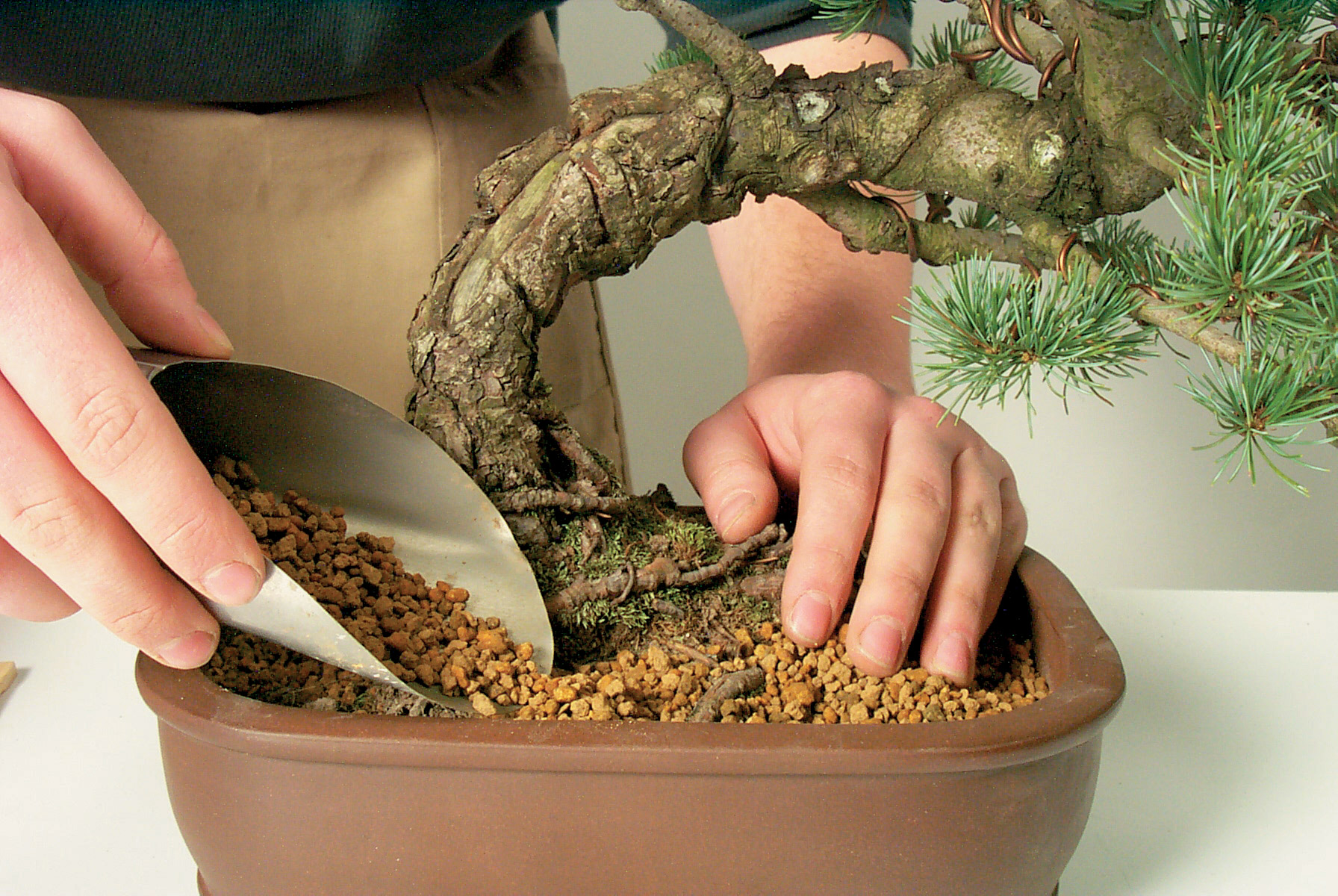
Add soil and settle the tree
- Add soil evenly around roots.
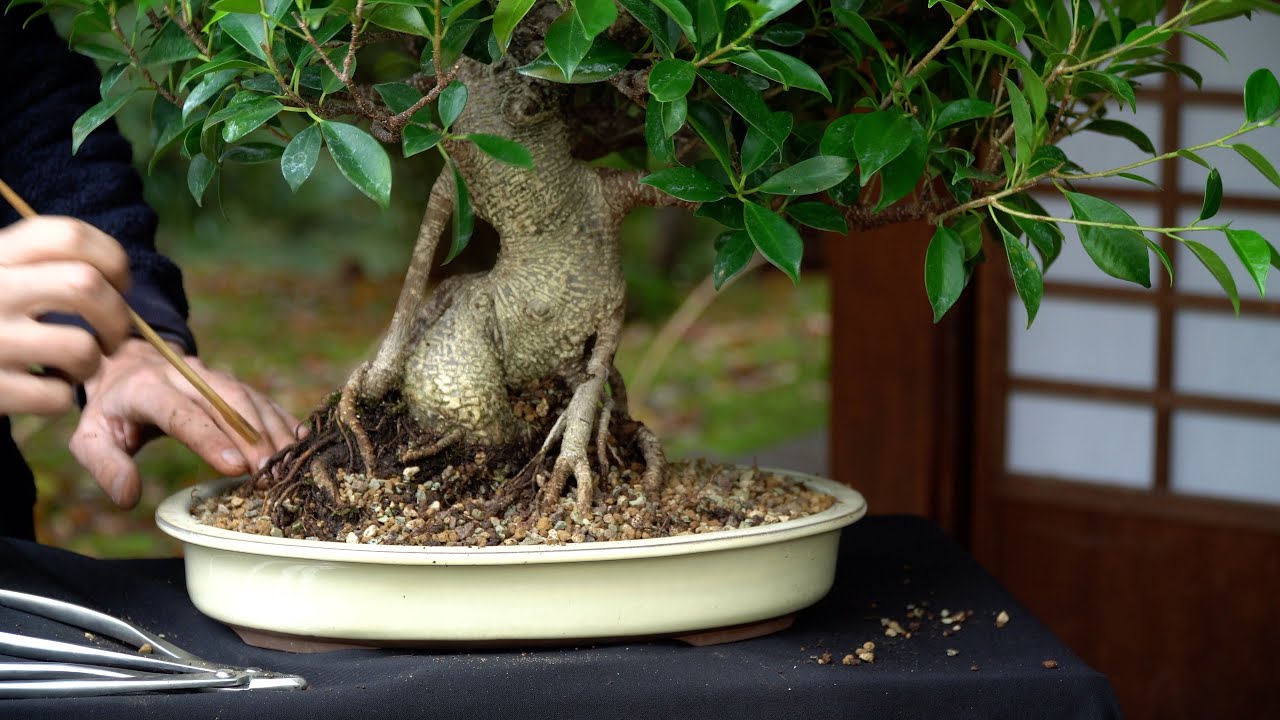
- Use a chopstick to work soil into gaps.
- Gently press to remove large air pockets.
-
Final checks and watering
- Ensure trunk sits at the correct angle and height.
- Water thoroughly until water runs from the drainage holes.
- Place the tree in shade for a few weeks to reduce stress.
Personal note: I once repotted a maple and used too-fine soil. The tree suffered from poor drainage. Since then I always mix a fast-draining substrate. That fixed the problem fast.

Choosing soil and pots for repotting
Soil choice matters a lot. The right mix drains well. It also holds enough moisture. Use a mix that fits your species and climate.
Common bonsai soil components
- Akadama or calcined clay for water retention and structure.
- Pumice for aeration and slow moisture release.
- Lava rock or grit for drainage.
- Organic component like pine bark for water retention in some mixes.
Pot selection tips
- Use a pot with drainage holes.
- Choose size so roots have some room but not too much.
- Shallow pots limit root growth and keep the bonsai small.
- Match pot style to tree species and design.
Example mixes
- Conifers: 50% pumice, 30% lava, 20% akadama.
- Deciduous: 40% akadama, 30% pumice, 30% organic bark.
- Indoor tropicals: increase organic content slightly but keep good drainage.

Aftercare: what to do after repotting a bonsai tree
Aftercare helps recovery. The tree needs gentle treatment for several weeks.
Immediate aftercare
- Keep the tree in shade for 2–3 weeks.
- Avoid fertilizer for 4–6 weeks.
- Water frequently but avoid waterlogging.
- Watch for signs of stress like drooping or leaf drop.
Longer-term care
- Gradually return the tree to normal light.
- Start light feeding after the recovery period.
- Monitor root growth at the next repotting cycle.
Real-life tip: After a repot, I use a misting routine for the first week. It reduces leaf stress and keeps humidity stable.
Common mistakes and troubleshooting
Mistakes happen. Here are common ones and how to fix them.
Over-pruning roots
- Problem: Cutting too many roots can shock or kill a tree.
- Fix: Prune conservatively. Give the tree time to recover.
Using the wrong soil
- Problem: Soil that holds too much water causes root rot.
- Fix: Add more pumice or grit for drainage.
Repotting at the wrong time
- Problem: Repotting during active heat or deep dormancy stresses the tree.
- Fix: Repot in early spring or the species’ recovery window.
Not anchoring the tree
- Problem: The tree wobbles and roots do not reconnect to soil.
- Fix: Use wire to secure the trunk until new roots form.
Troubleshooting wilting or yellow leaves
- Check soil moisture first. Too wet or too dry can cause similar symptoms.
- Inspect roots for rot or damage. Adjust watering and light as needed.
Related topics and advanced tips
These ideas help you refine your technique. Try them when you are comfortable with basics.
Techniques to try later
- Root-over-rock planting for dramatic style.
- Partial repotting to reduce stress on mature trees.
- Using semi-hydroponic systems for consistent moisture control.
Advanced care
- Tailor repotting intervals by species and growth rate.
- Use slow-release fertilizers in the pot for steady nutrition.
- Keep a repotting log: date, soil mix, root changes, and results.
Frequently Asked Questions of how to repot a bonsai tree
How often should I repot a young bonsai?
Young bonsai often need repotting every 1 to 3 years to encourage balanced root growth and fresh soil.
Can I repot my bonsai in summer?
Repotting in summer is risky because heat stresses the tree. Stick to early spring or the species’ recovery window when possible.
How much root should I cut when repotting a bonsai tree?
Cut about one-third of the root mass for young trees. For mature trees, prune more conservatively, around 10–20 percent.
Do I need special bonsai soil to repot a bonsai tree?
Special bonsai soil is best because it drains well and holds structure. You can mix pumice, akadama, and lava or use a premixed blend.
Should I fertilize right after I repot a bonsai tree?
No. Wait 4 to 6 weeks after repotting before resuming fertilizer to let roots recover.
How do I know if my bonsai is root-bound?
If roots circle the pot, grow out of drainage holes, or the soil dries very quickly, your bonsai is likely root-bound.
Can indoor bonsai be repotted the same way as outdoor bonsai?
The steps are similar but indoor bonsai may need gentler root pruning and different soil mixes suited to indoor humidity and light.
Conclusion
Repotting is one of the most important skills for bonsai care. It keeps roots healthy, refreshes soil, and helps you shape the tree. Follow the steps here and you will know how to repot a bonsai tree with confidence. Start small, plan your repot, and learn from each attempt. Try repotting one tree this season and watch the improvement. Leave a comment about your experience or subscribe to get more bonsai tips.

Laura Bennett is a gardening writer at MyGardenLabs who creates beginner-friendly guides focused on solving common plant care and gardening problems.