Best Hand Pruners For Fruit Trees: Top Pruning Picks
The best hand pruners for fruit trees make clean cuts, reduce strain, and help trees grow stronger each season.
A heavy branch blocks sunlight, a ripe apple hangs just beyond reach, or a thorny rose needs a careful trim. That is where the right pruner earns its place. I reviewed these tools for reach, cut size, grip, blade design, weight, and daily comfort. Some are true hand shears, while others add a short or telescoping pole for higher branches. The best hand pruners for fruit trees should match your tree size and cutting task, not simply look impressive in a product photo.
GARTOL 4.2-Foot Cut and Hold Pole Pruner

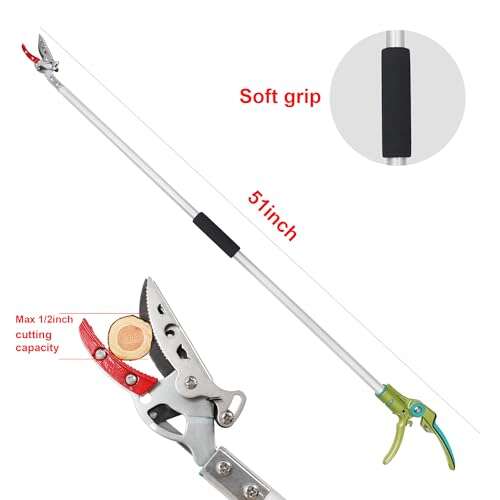
The GARTOL 4.2-foot cut and hold pole pruner is a handy middle ground between short shears and a tall tree pole. Its SK5 steel blade is rated to cut branches up to 1/2 inch thick. That size covers many young shoots, water sprouts, thin pear twigs, and small apple branches. I also like the 180-degree rotating handle because it lets you approach a branch from a better angle.
The cut-and-hold feature helps keep removed stems from dropping into the canopy. That sounds like a small detail, but it matters when you are pruning around delicate fruit or working over a flower bed. The tool also gives you extra reach without forcing you onto a ladder for every small cut. For homeowners seeking the best hand pruners for fruit trees in a compact long-reach design, this model is a practical choice.
Pros:
- 4.2-foot reach helps with low and mid-level branches
- SK5 steel blade suits fine branch and shoot removal
- Cut-and-hold action keeps cut stems from falling
- 180-degree rotating handle improves cutting angles
- Useful for fruit trees, shrubs, roses, and vines
- Shorter pole is easier to control than a very long model
Cons:
- 1/2-inch capacity is not meant for mature limbs
- It may feel less useful on very tall trees
- Reach tools can take practice for precise cuts
My Recommendation
I recommend this GARTOL model for gardeners who maintain dwarf apple, peach, plum, and citrus trees. It works best when most cuts fall above shoulder height but below the upper canopy. The cut-and-hold head is especially useful for people who dislike picking fallen twigs out of shrubs. Among the best hand pruners for fruit trees, it offers a good mix of reach, control, and modest weight.
GARTOL Telescopic Pruner, 3.67 to 5.45 Feet
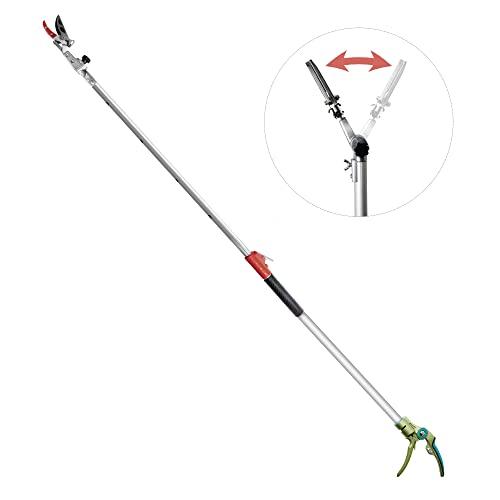
This GARTOL telescopic pruner extends from about 3.67 to 5.45 feet, giving it more flexibility than a fixed short pole. The blade is designed to cut branches up to 1 inch, which covers a useful range of fresh and moderately mature wood. Its rotating blade head helps you line up the bypass cut instead of twisting your wrists into awkward positions. The aluminum handle keeps the tool lighter than many all-steel reach pruners.
I see this as a strong option for routine pruning on small backyard trees. You can shorten it for close work, then extend it when a branch sits just beyond your normal reach. The cut-and-hold design also makes cleanup easier around mulch and ground cover. Still, a 1-inch rating is a limit, not a challenge; I would use a saw for thick, hard, or dead limbs.
Pros:
- Adjustable length suits several pruning heights
- Up to 1-inch cutting capacity handles larger young branches
- Rotating blade head supports cleaner alignment
- Aluminum shaft helps reduce arm fatigue
- Cut-and-hold design helps remove branches neatly
- Useful for small trees, shrubs, and climbing roses
Cons:
- Extended length can feel less steady in wind
- Not a replacement for a pruning saw on large limbs
- Telescoping joints need regular cleaning and care
My Recommendation
This is one of the best hand pruners for fruit trees for homeowners who want one adjustable tool for several jobs. It suits small orchards, backyard peach trees, and young branches that sit between hand level and head height. I would choose it over the shorter GARTOL when you need extra reach but do not want a very tall pole. It delivers good value when kept clean, dry, and within its stated capacity.
39-Inch Cut Pole Pruner with Snip and Grip

This 39-inch cut pole pruner focuses on simple, controlled reach. Its snip-and-grip design allows you to cut a small branch and hold the piece instead of letting it drop. That feature helps when you are thinning fruit trees over patios, ponds, or dense ground plants. The length also gives you a little more distance from thorns, sap, and insects.
A tool like this feels most useful during light seasonal work. It can remove thin shoots, dead twigs, and misplaced growth without the bulk of a long telescoping pole. I would not ask it to tackle old hardwood or a branch near its maximum size. Used within its range, it can make a tedious task feel more like picking fruit than wrestling with a tool.
Pros:
- 39-inch length adds useful reach without much bulk
- Snip-and-grip action helps control removed branches
- Good fit for thin shoots and light fruit-tree pruning
- Helps keep hands away from thorns and rough bark
- Easier to maneuver in crowded canopies than a long pole
- Useful for cleanup above beds, patios, and walkways
Cons:
- Limited reach compared with telescoping models
- Best for smaller cuts rather than thick branches
- Users may need a few tries to master the grip action
My Recommendation
I recommend this model for gardeners who want a compact reach pruner for frequent touch-ups. It is a good match for berry bushes, dwarf fruit trees, and branches that are just outside normal arm reach. It also suits users who value control more than maximum height. If your pruning jobs are light and regular, this can be among the best hand pruners for fruit trees for simple day-to-day care.
VOTREK 8.5-Inch Bypass Pruning Shears

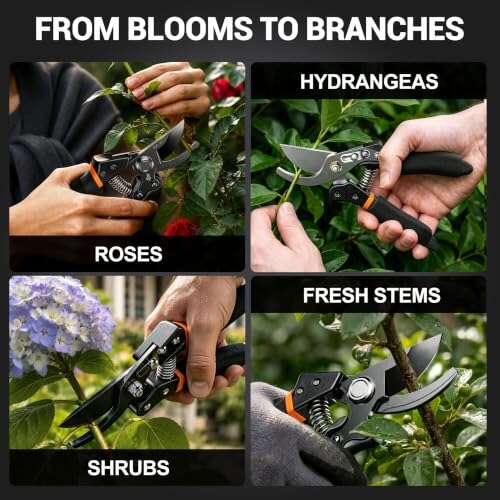
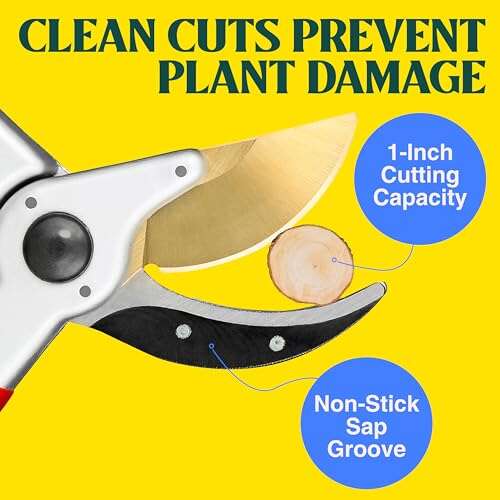
The VOTREK 8.5-inch bypass pruning shear is the most traditional hand tool in this group. Its bypass blades pass one another like scissors, which is the style I prefer for live fruit-tree twigs. The jam-proof spring is designed to keep the handles opening smoothly during repeated cuts. This makes the shears useful for detail work where a pole pruner would feel clumsy.
These shears belong in every serious garden tool kit because they bring the blade close to your eyes and hands. That close view helps you find the branch collar and make a clean, targeted cut. Use them for young growth, suckers, water sprouts, and small stems rather than forcing them through thick wood. In the search for the best hand pruners for fruit trees, a dependable bypass shear remains essential even if you also own a pole tool.
Pros:
- Bypass blade style suits live twigs and fresh growth
- Compact shape offers excellent cutting control
- Jam-proof spring supports repeated use
- Useful for detailed cuts inside dense tree canopies
- Easy to carry in a garden pouch or tool bucket
- Works well for flowers, herbs, vines, and fruit trees
Cons:
- Short reach requires you to approach each branch closely
- Not intended for large or very hard branches
- Hand strength still affects comfort during long sessions
My Recommendation
This is the best fit for gardeners who want a standard hand pruner for close, accurate cuts. I would choose it for shaping young trees and removing shoots that crowd fruiting spurs. It is also a smart companion to a pole pruner because no reach tool offers the same close control. For many users, these shears define what the best hand pruners for fruit trees should feel like: direct, sharp, and easy to guide.
SKGPOLE 26-Foot Reach Pole Saw and Pruner
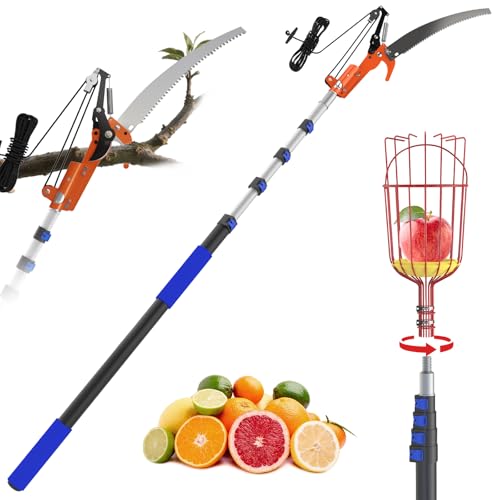
The SKGPOLE reach system is built for height. Its telescoping design can extend from roughly 5 to 20 feet, with a stated reach of up to 26 feet when the user’s height is included. It combines a sharp steel saw blade with pruning scissors, so it can address both larger limbs and smaller twigs. That makes it more versatile than a simple hand shear, especially on mature backyard trees.
Long reach brings a clear benefit, but it also demands care. A fully extended pole can feel heavy and less precise, so I would use the shortest length that safely reaches the branch. Keep the cutting head away from power lines, people, pets, and unstable footing. This tool is not the lightest choice, yet it may be one of the best hand pruners for fruit trees when ladder-free height matters most.
Pros:
- Very long reach helps access high tree branches
- Includes both a saw and pruning scissors
- Steel blade supports larger branch removal
- Telescoping sections allow adjustable working height
- Can reduce the need for repeated ladder use
- Useful for mature fruit trees, palms, and tall shrubs
Cons:
- Fully extended length can be tiring to control
- Large size needs more storage space
- High branches still require careful safety planning
- Not ideal for delicate, close-detail pruning
My Recommendation
I recommend the SKGPOLE for owners of tall fruit trees who need serious reach. It is best for high apple, pear, citrus, and plum branches that sit beyond short pole tools. I would pair it with close bypass shears for fine cuts near the trunk and fruiting spurs. If height is your main problem, this model deserves attention among the best hand pruners for fruit trees, but use it with patience and a clear safety zone.
GARTOL 32-Inch Cut and Hold Pole Pruner
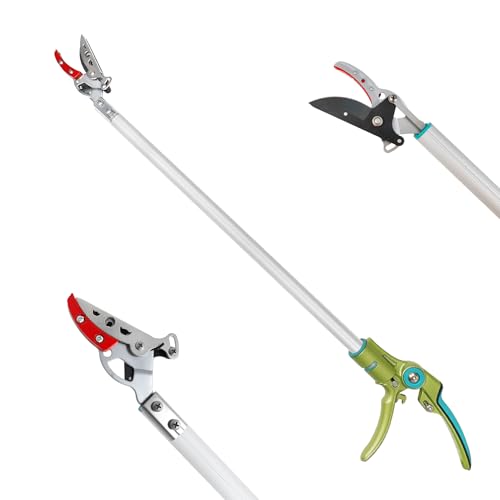
The GARTOL 32-inch cut-and-hold pruner is made for one-hand operation and quick access to branches above normal reach. Its snip-and-grip action can hold a cut piece after the blade passes through it. The tool has a stated cutting capacity of 1/2 inch, so it is aimed at small wood, shoots, roses, and fruit-picking tasks. At 32 inches, it is long enough to help but short enough to store with ordinary garden tools.
I like this style for trees with dense growth because it gives you better visibility than a very tall pole. It can also help users avoid bending into thorny bushes or reaching through prickly leaves. The trade-off is simple: you gain control and low weight, but you give up the capacity and height of larger tools. For routine pruning on small trees, it is a sensible and approachable option.
Pros:
- 32-inch length adds reach with good maneuverability
- One-hand design can simplify quick cuts
- Cut-and-hold feature helps collect removed pieces
- 1/2-inch capacity suits small branches and shoots
- Useful around roses, persimmons, shrubs, and vines
- Compact size is easier to store and transport
Cons:
- Not suitable for branches larger than its rated capacity
- Fixed length cannot reach high canopies
- Long sessions may still tire one hand
My Recommendation
This GARTOL is a strong choice for gardeners who value light handling and one-hand control. It fits dwarf trees, low branches, and crowded shrubs where a large pole would get in the way. I would also consider it for users with limited reach who need a simple tool for light pruning. It is one of the best hand pruners for fruit trees when comfort and branch control matter more than height.
GARTOL Telescopic Pruner, 6.23 to 10.5 Feet

This larger GARTOL telescopic pruner extends from about 6.23 to 10.5 feet. It uses a rotating blade head and a cut-and-hold design, with a stated cutting capacity of up to 1 inch. That combination makes it suitable for higher branches on small and medium fruit trees. The aluminum construction aims to keep the extended tool manageable while still providing useful overhead reach.
The extra length changes how you work. Rather than stepping onto a ladder for every branch, you can stand on solid ground and trim from below. I suggest beginning at the shortest setting, learning the head angle, and extending only as needed. As with any long reach pruner, this tool works best when you plan each cut and avoid twisting the pole against stubborn wood.
Pros:
- 10.5-foot maximum length reaches higher branches
- Up to 1-inch capacity handles many young limbs
- Rotating head helps line up cuts overhead
- Cut-and-hold system supports cleaner branch removal
- Aluminum shaft balances reach with lower weight
- Useful for apple, pear, peach, and citrus trees
Cons:
- Extended pole may feel tiring over time
- Less precise than hand shears for fine inner growth
- Requires a larger storage area
- Should not be used near electrical lines
My Recommendation
I recommend this model for gardeners with medium-height fruit trees and branches that a 4-foot pruner cannot reach. It is a useful step below an extreme long-reach pole saw. The adjustable length gives you more control than a fixed 10-foot tool, while the 1-inch capacity covers many seasonal cuts. In my view, it ranks among the best hand pruners for fruit trees for ladder-free work on a home orchard.
Original LÖWE 14.104 Bypass Pruner

The Original LÖWE 14.104 is a compact bypass pruner made in Germany. Its design suits roses, twigs, branches, and cut flowers, making it a natural fit for detailed fruit-tree work. The bypass action supports a clean cut on live wood when you place the blade near the branch collar. Its compact body also gives you a close view of each cut.
This is the kind of pruner I reach for when shape matters more than reach. It can help remove a water sprout without damaging nearby buds, and it feels more exact than a pole tool in a crowded canopy. As with every hand shear, sharpness and clean blades matter greatly. A quality close-cut pruner can stay useful for years if you wipe off sap and keep the cutting edge protected.
Pros:
- Bypass design is well suited to live twigs
- Compact size supports precise branch placement
- Useful for fruit trees, roses, flowers, and hedges
- Made in Germany with a focused garden-tool design
- Good visibility around buds and branch collars
- Easy to carry during long pruning sessions
Cons:
- Short handles provide no extra reach
- Not the right tool for thick mature limbs
- Premium construction may cost more than basic shears
My Recommendation
I recommend the LÖWE for careful gardeners who want a precise hand shear for live twigs. It is especially good for shaping young fruit trees and making selective cuts near buds. Pair it with a reach pruner when branches sit overhead. For close work, this tool shows why the best hand pruners for fruit trees need clean bypass action, comfortable control, and a blade that follows your intent.
Altdorff 32-Inch Cut and Hold Pruner Set

The Altdorff cut-and-hold set combines a 32-inch long-reach pruner with an 8.3-inch hand pruner. That pairing gives you two ways to approach a fruit tree: use the long tool for branches just beyond reach, then switch to the small shear for close detail. The long pruner uses one-hand operation and a rotating cut-and-hold action. It is designed for branch pruning, fruit picking, prickly plants, and roses.
I find combination sets useful because pruning rarely stays at one height. A pole tool can reach into the canopy, while a hand shear can make a cleaner final cut close to the branch junction. The two-tool setup also gives you a backup if one tool needs cleaning or adjustment. It may not replace a full-size saw, but it covers many light and medium garden tasks in one purchase.
Pros:
- Includes both long-reach and close-cut pruners
- 32-inch tool helps reach low and mid-level branches
- 8.3-inch shear supports detailed hand pruning
- Cut-and-hold action helps manage removed stems
- Useful for roses, fruit picking, and thorny growth
- One set covers more tasks than a single pruner
Cons:
- Neither tool is intended for large hardwood limbs
- Two tools need more storage space than one shear
- Long-reach cuts may require practice for accuracy
My Recommendation
This set is best for new gardeners who want a flexible starting kit. It suits small orchards, rose gardens, and yards with both reachable and slightly elevated branches. I like it for users who do not want to buy a separate hand pruner right away. If you want broad coverage at a reasonable level of complexity, this combination is a strong candidate for the best hand pruners for fruit trees.
KSEIBI 3.5-Foot Cut and Hold Bypass Pruner

The KSEIBI 143010 is a 3.5-foot cut-and-hold bypass pruner made with a lightweight aluminum shaft. Its stated maximum cut is 1/4 inch, so it targets thin twigs, shoots, and precise garden maintenance. The rust-resistant build is helpful for outdoor storage and damp garden conditions. An ergonomic grip can make repeated small cuts more comfortable.
This tool is not trying to be a tree saw, and that is part of its appeal. It is light, simple, and easy to guide around low branches and shrubs. The cut-and-hold feature helps keep tiny pieces from falling into beds or onto paths. I would choose it for detail work and routine cleanup, then switch to a stronger pruner or saw for anything thicker.
Pros:
- Lightweight aluminum construction reduces fatigue
- 3.5-foot reach helps with low and mid-level growth
- Rust-resistant design suits outdoor garden use
- Cut-and-hold function helps collect thin cuttings
- Ergonomic grip supports repeated light pruning
- Good for twigs, shoots, flowers, and small shrubs
Cons:
- 1/4-inch capacity limits it to small growth
- Not suitable for mature fruit-tree branches
- Fixed length offers less range than a telescoping tool
My Recommendation
I recommend the KSEIBI for gardeners who perform careful, light pruning and want a tool that does not feel bulky. It works well on young fruit trees, small shoots, and low branches. Users who often prune roses or thin shrubs may get even more value from it. It is one of the best hand pruners for fruit trees only when your typical cuts are thin; choose a larger model for heavy seasonal renovation.
What I Look For in the Best Hand Pruners for Fruit Trees
A good pruner is more than a sharp blade. I first look at the branch size the tool can handle, then I consider whether that rating fits real garden work. A tool that cuts 1/2 inch with ease may be better than one that claims 1 inch but feels weak or awkward. The best hand pruners for fruit trees should make a clean cut without crushing live wood.
Blade style matters, too. Bypass blades work like scissors and usually suit live branches, green shoots, and fruit-tree twigs. Anvil blades press the branch against a flat surface and can help with dry wood, but they may crush fresh tissue if used poorly. For most pruning cuts on healthy fruit trees, I prefer a sharp bypass design.
Reach is the next question. A short hand shear gives the best control and visibility. A 32- to 42-inch tool adds reach while staying fairly easy to guide. A telescoping pruner helps with higher limbs, but it becomes harder to hold steady as it extends. I always advise choosing the shortest tool that safely reaches the branch.
How to Choose a Pruner for Your Fruit Tree
Start with the tree, not the product label. Dwarf trees often need a close hand shear and a short reach pruner. Medium trees may benefit from a 5- to 10-foot telescoping model. Tall trees can require a pole saw, professional help, or a different pruning plan. Do not use a light shear as a substitute for a saw on thick limbs.
Next, check the branch type. Live shoots and young branches call for a sharp bypass blade. Dead wood can be harder and may need a saw. If you plan to remove many small branches, a cut-and-hold head can save cleanup time. If you need to shape a young tree, a standard hand shear usually gives you the best view of each cut.
Think about your hands and shoulders as well. A long pole may solve a reach problem but create a weight problem. Aluminum shafts usually feel easier to carry than heavy steel poles, yet any extended tool can become tiring. A comfortable grip, smooth spring, and simple control can matter more than a large maximum length.
How I Use Hand Pruners on Fruit Trees
I begin by walking around the tree before making a cut. This lets me see dead wood, crossing branches, weak shoots, and growth that blocks light. I remove damaged or diseased wood first, then work toward shape and spacing. This slow start prevents the common mistake of cutting healthy branches simply because they are easy to reach.
For a small live branch, I place the bypass blade just outside the branch collar. I avoid leaving a long stub, but I also avoid cutting into the trunk or parent limb. The cut should be clean and smooth. If the blade tears bark or crushes the stem, I stop and sharpen or change tools.
I clean the blade between trees when disease may be present. A simple wipe removes sap and plant residue. For a more serious disease concern, follow local extension guidance for disinfecting garden tools. Clean tools protect the next cut and also work with less drag.
I never use a pole pruner near power lines. I also keep people and pets away from the drop zone. Even a small branch can cause injury when it falls from height. A stable stance and clear view are more important than speed.
Best For Comparison
| Best for | Why |
|---|---|
| Close, precise twig cuts | VOTREK and LÖWE bypass shears give strong control near buds and branch collars. |
| Small and medium trees | The GARTOL telescoping pruners add adjustable reach for branches above shoulder height. |
| High branches and mixed jobs | SKGPOLE combines long reach, pruning scissors, and a saw for broader tree care. |
Care Tips for Longer Pruner Life
Wipe the blade after each session. Sap can harden like glue and make the next cut rough. A dry cloth removes light residue, while a suitable tool cleaner can help with stubborn sap. Always dry the tool before storage.
Check the blade edge and moving parts from time to time. A dull blade needs more force, and extra force can damage both the tool and the branch. Tighten loose fasteners, inspect pole joints, and make sure the grip still feels secure. If the cutting head no longer closes evenly, repair or replace it before the next pruning job.
Store pruners in a dry place away from soil and rain. Keep the blade closed or protected when possible. Do not leave a telescoping pole fully extended for long periods if the design recommends retraction. Small care habits can keep the best hand pruners for fruit trees working smoothly for many seasons.
FAQs Of best hand pruners for fruit trees
What type of pruner is best for fruit trees?
A sharp bypass pruner is usually best for live twigs and young branches. It makes a scissor-like cut that can reduce crushing. Use a pole pruner for branches beyond arm reach and a saw for larger limbs.
Can I use hand pruners to cut thick fruit-tree branches?
Only if the branch falls within the tool’s stated capacity. Never force a shear through thick or hard wood. A pruning saw is safer and usually makes a cleaner cut on larger limbs.
Are pole pruners safe for tall fruit trees?
They can be useful when used from stable ground with a clear drop zone. Keep all poles away from electrical lines. Do not climb an unstable ladder while handling a long, heavy tool.
Should fruit-tree pruners have a cut-and-hold feature?
A cut-and-hold feature is helpful when you want to collect small branches as you work. It can reduce cleanup and prevent pieces from falling into plants. It is helpful, but it does not replace a sharp blade or correct cutting technique.
How often should I clean pruning shears?
Wipe them after each use, especially when cutting sap-heavy plants or diseased wood. Clean and dry blades stay sharper and move more freely. Follow local horticulture guidance when disinfecting tools between trees.
Final Verdict: Which Should You Buy?
For most homes, I would choose the GARTOL telescopic pruner with 1-inch capacity. It offers useful reach, a rotating head, and enough strength for many small and medium branches. For close cuts, add the VOTREK or LÖWE bypass shear.
The best hand pruners for fruit trees match your tree height, branch size, and comfort. Choose a sharp bypass shear for detail, a pole pruner for reach, and a saw for thick limbs. Check current Amazon availability before buying.

Laura Bennett is a gardening writer at MyGardenLabs who creates beginner-friendly guides focused on solving common plant care and gardening problems.