
Best Moss For Aquarium Bonsai: Top Easy Care Picks
Java Moss (Taxiphyllum Barbieri) is the best moss for aquarium bonsai for most hobbyists.
I’ve stood at the tank light, hands wet, wondering which moss will make my tiny bonsai come to life. Choosing the wrong moss means slow growth, fuzzy clumps, or constant trimming. The right moss gives you a lush, natural bonsai look, hides wiring and glue, and stays healthy under aquarium conditions. I’ll walk you through the best moss for aquarium bonsai options, how each performs, and which fits your skill level and tank setup.
Java Moss (Taxiphyllum Barbieri)

Java Moss is the classic choice for aquarium bonsai. It attaches easily to driftwood or stone and forms a dense carpet or flowing drape as you train it. I use it on bonsai trunks because it ties in well with glue, thread, or fine fishing line. It tolerates low light and a range of water parameters, so it is forgiving for beginners.
Growth can be slow at first, but patience pays. I trim it to shape and encourage denser growth by pinning it closer to the base. Java Moss is also shrimp- and fry-friendly; they hide and graze among the threads. For an aquarium bonsai, its texture mimics real lichen and aged bark well.
Pros:
- Very easy to attach and shape for bonsai trunks and branches
- Tolerant of low light and wide water chemistry ranges
- Provides shelter for shrimp and fry
- Creates a natural, aged bonsai look
- Low maintenance once established
Cons:
- Can trap debris if not trimmed occasionally
- Less structured than some carpet mosses for formal bonsai tops
My Recommendation
I recommend Java Moss for most aquascapers who want a reliable, forgiving plant for aquarium bonsai. It is best for beginners and those who value low effort and a natural look. Java Moss adapts well to different mounting methods and looks great with a bonsai trunk. Overall, it offers high visual payoff with modest upkeep and is widely available as the best moss for aquarium bonsai.
| Best for | Why |
|---|---|
| Beginners | Very tolerant and easy to attach |
| Shrimp tanks | Provides hiding spots and grazing surfaces |
| Natural bonsai look | Soft texture mimics lichen and bark |
Penn-Plax Moss Patch (Resin)

This Penn-Plax Moss Patch is a resin piece with embedded glosso seeds for quick coverage. It’s a hybrid decor-plant option that gives instant texture and is easy to place in a bonsai layout. I like it when I need immediate visual impact without waiting weeks for moss growth. It’s also safe and stable, which is great for heavy-flow tanks.
The resin base holds shape and provides a platform for other plants to root or brace. While not fully live moss, it reduces the initial effort to shape a bonsai silhouette. If you want a ready-made moss patch look combined with glued live moss spots, this item speeds the process. It blends well with small driftwood bonsai trunks.
Pros:
- Instant moss-like coverage without waiting for growth
- Durable and stable for aquascape placement
- Combines well with live moss for hybrid displays
- Safe for freshwater tanks and small fish
- Low maintenance—no trimming required
Cons:
- Not a fully live moss, so lacks ecological benefits
- Can look artificial up close if not paired with live plants
My Recommendation
I suggest the Penn-Plax Moss Patch for hobbyists who need fast, reliable texture in their aquarium bonsai. It’s best for those staging tanks or creating quick displays. Pair it with small live moss clumps for a blended, natural effect and to add biological benefits. For a fast solution, it’s a practical part of your best moss for aquarium bonsai toolkit.
| Best for | Why |
|---|---|
| Quick staging | Instant coverage, no wait time |
| Low-maintenance setups | Durable resin piece needs no trimming |
| Hybrid displays | Pairs easily with live moss accents |
Marcus Java Moss 2g
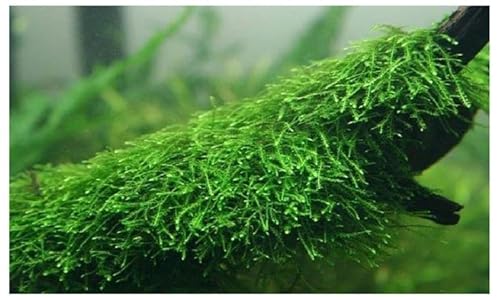
The Marcus Java Moss pack is a convenient, live option for hobbyists building small aquarium bonsai. It arrives ready to tie down or glue and works well in narrow tanks. I found this size ideal for small trunks and bonsai crowns. It’s a budget-friendly way to add classic Java Moss to your layout.
Growth follows the usual Java patterns—slow to start, quicker once pinned and trimmed. I recommend occasional gentle brushing to prevent debris build-up. It looks natural when given a bit of time and light. For anyone crafting the best moss for aquarium bonsai, this product is straightforward to use.
Pros:
- Live and ready to attach to bonsai structures
- Affordable for small projects
- Easy to shape with thread or glue
- Compatible with low-tech tanks
- Helps create a natural bonsai canopy over time
Cons:
- Small quantity may require multiple packs for larger designs
- Shipping live plants can stress them if transit is long
My Recommendation
Pick the Marcus Java Moss if you want live, easy-to-use moss for a compact aquarium bonsai. It’s best for small builds where a little live moss goes a long way. Use it to fill gaps or accent branches for the best moss for aquarium bonsai appearance. It’s a cost-effective starter choice that grows into the look you want.
| Best for | Why |
|---|---|
| Small bonsai projects | Right-sized portions for tight spaces |
| Budget builds | Affordable live moss option |
| Low-tech tanks | Thrives with minimal care |
Christmas Moss (Vesicularia Montagnei)

Christmas Moss has a branching structure that looks like tiny fir branches—perfect for miniature bonsai foliage. I favor it when I want a fuller, tree-like canopy with defined branch tips. It creates a more sculpted bonsai head than Java Moss. The texture reads well as needles from a distance.
It grows in layers and responds well to trimming for shape. I clip it to maintain compact growth and train it along small wire frames. It prefers moderate light and benefits from steady water parameters. For a realistic tiny tree silhouette, Christmas Moss often tops my list of best moss for aquarium bonsai.
Pros:
- Branching texture mimics miniature tree foliage
- Holds shape well when trimmed
- Good for sculpted bonsai tops
- Attractive, dense growth over time
- Works well with wiring and frames
Cons:
- May need slightly higher light than Java Moss
- Can grow leggy if not pruned
My Recommendation
Choose Christmas Moss if you want a tree-like, needle texture for your aquarium bonsai. It’s best for hobbyists who trim and shape regularly to keep a dense canopy. Christmas Moss shines in crafted, sculpted designs and earns its place among the best moss for aquarium bonsai when you want a pronounced foliage look. It provides excellent visual structure for miniature trees.
| Best for | Why |
|---|---|
| Sculpted bonsai | Branch-like texture holds shape |
| Trimming enthusiasts | Responds well to pruning for dense growth |
| Mid-light tanks | Performs nicely with stable lighting |
Novelsite Bonsai Tree Faux Moss

This Novelsite faux moss bonsai decor gives an instant aesthetic with zero plant care. I use it in quarantine tanks, cold setups, or when I want a perfect look without the risk of algae. It is a resin piece with faux moss that resists fading. It gives a neat bonsai silhouette every time.
Because it’s artificial, it won’t host the microfauna live moss does. I place it as a backdrop or accent where live moss would be too fussy. It’s ideal for show tanks or when you want a durable, maintenance-free bonsai centerpiece. It plays well with live foreground plants and hides filters neatly.
Pros:
- Zero maintenance and instant bonsai look
- Durable and fade-resistant resin material
- No risk of plant collapse or algae takeover
- Safe for most freshwater aquariums
- Good for staging or decorative displays
Cons:
- Lacks the living benefits of live moss
- Can look artificial in close-up macro photos
My Recommendation
Use Novelsite faux moss if you need a maintenance-free bonsai focal point. It is best for staged tanks, quarantine tanks, or hobbyists who avoid live plants. While not live, it helps achieve the bonsai silhouette immediately and pairs well with live best moss for aquarium bonsai accents. It’s a solid decorative option when reliability matters.
| Best for | Why |
|---|---|
| Staging tanks | Instant attractive focal point |
| Low-maintenance owners | No trimming or care needed |
| Quarantine setups | Safe and stable décor for temporary tanks |
KINGRUI Bonsai Tree Resin

The KINGRUI resin bonsai ornament gives a lifelike tree silhouette with faux moss accents. I place it in community tanks where live moss might be disturbed by curious fish. The piece is lightweight and hides behind plants or rockwork. It’s a reliable decorative centerpiece for immediate bonsai style.
It resists fading and won’t leach anything into your water if rinsed before use. I recommend it for tanks with herbivorous fish that graze on live moss. KINGRUI is an easy way to achieve the bonsai look while keeping maintenance minimal. It pairs well with a live moss carpet to soften the artificial look.
Pros:
- Instant bonsai silhouette with minimal effort
- Durable resin build resists fading
- Safe for a variety of freshwater tanks
- Good for tanks with moss-eating fish
- Complements live plants for mixed aesthetics
Cons:
- Not live—no biological benefits
- Design may appear artificial to close observers
My Recommendation
I recommend KINGRUI resin bonsai for tanks where live moss is impractical. It’s best for community tanks with grazers or show tanks needing a perfect shape. Use it as a fast way to emulate the best moss for aquarium bonsai look without live plant care. It’s a practical decorative tool in many aquascapes.
| Best for | Why |
|---|---|
| Grazing fish tanks | Durable alternative to live moss |
| Show displays | Consistent, perfect bonsai shape |
| Mixed aquascapes | Pairs well with live foreground plants |
Live Moss Variety Pack 8×8

This live moss variety pack offers multiple species in one set, giving flexibility for bonsai work. I like having options—Java, cushion, and other textures—to mix for a layered canopy. It speeds experimentation and helps me find the right look for each bonsai trunk. The variety also helps me learn different care needs quickly.
When building the best moss for aquarium bonsai, variety matters. I plant different mosses on different branches to simulate seasonal variation and depth. The pack brings instant diversity and makes it easier to craft lifelike mini-trees. With proper care, each variety will establish and create a richer final piece.
Pros:
- Multiple moss types to mix and match
- Great for experimentation and layered looks
- Speeds learning which moss suits your tank
- Can create diverse textures on one bonsai
- Good for realistic, multi-tonal foliage
Cons:
- Different species may need varied care
- Some varieties can be fragile in transit
My Recommendation
Buy the live moss variety pack if you want choices for your aquarium bonsai. It’s best for tinkerers and those who enjoy mixing textures and tones. Use the pack to experiment and discover which moss becomes your go-to for the best moss for aquarium bonsai appeal. It’s a learning-friendly option with high creative payoff.
| Best for | Why |
|---|---|
| Experimenters | Multiple species to test and pair |
| Layered designs | Create depth with diverse textures |
| Learning hobbyists | Discover what thrives in your tank |
Novelsite Bonsai Rocks Faux Moss

These Novelsite bonsai rock pieces combine faux moss with textured stone bases. I use them to anchor a visual line in the aquascape or to frame a bonsai trunk. They are compact and easy to move while arranging. The faux moss gives a soft look against hard stone shapes.
They pair well with live moss carpets or small stem plants. I like them when I want a balanced scene that looks mature from day one. The pieces add structure and visual weight to a bonsai composition. They’re particularly useful in nano tanks where live moss may be scarce.
Pros:
- Combines rock and faux moss for instant maturity
- Easy to position and rearrange
- Low maintenance—no trimming
- Useful in small tanks where live moss is limited
- Durable material that resists breakdown
Cons:
- Not a living substrate for beneficial microfauna
- May look artificial on close inspection
My Recommendation
I recommend Novelsite bonsai rocks for hobbyists who want instant composition without live plant chores. It’s best for small tanks and staged displays. Use them to complement live elements or to anchor a bonsai trunk when live moss is impractical for the best moss for aquarium bonsai visuals. They give reliable structure and balance.
| Best for | Why |
|---|---|
| Nano tanks | Compact, polished look for small spaces |
| Staged aquascapes | Instant mature appearance |
| Low-care setups | No trimming or plant care needed |
Marimo Moss Balls 4-Pack
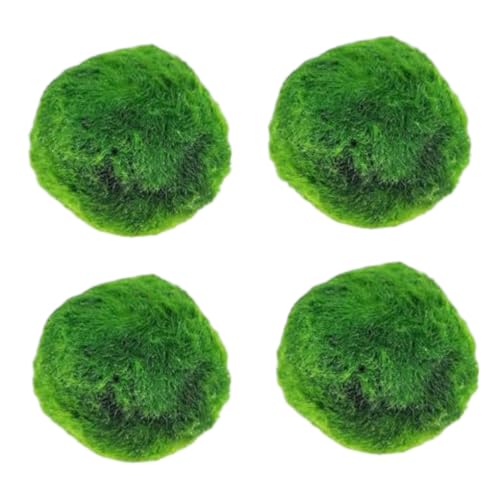
Marimo moss balls are unique spherical algae growths that add charm as bonsai pot accents or foreground ornaments. I use them as moss “boulders” around a bonsai trunk to add contrast. They’re low-maintenance and easy to keep rolling for even growth. Their buoyant, soft shape offers a nice counterpoint to structured bonsai trunks.
Although not a bonsai foliage replacement, Marimo provides a living accent that is hard to overrule. I rotate them occasionally to keep them rounded and healthy. They thrive in low to moderate light and cooler water. Add them when you want playful, living contrast in your best moss for aquarium bonsai composition.
Pros:
- Low-maintenance and long-lived living accent
- Unique spherical form adds visual interest
- Easy care: rotate occasionally and rinse
- Safe with most freshwater fish and shrimp
- Good contrast to structured bonsai trunks
Cons:
- Not a foliage substitute for bonsai canopy
- Can collect debris if tank is dirty
My Recommendation
I like Marimo moss balls as playful accents in aquarium bonsai layouts. They are best for hobbyists seeking living contrast rather than foliage replacement. Place them near trunks or at the base for a soft touch that complements the best moss for aquarium bonsai elements. They are whimsical, low-care, and add charm.
| Best for | Why |
|---|---|
| Accents | Soft living contrast to bonsai trunks |
| Low-maintenance hobbyists | Very easy to care for |
| Cooler tanks | Thrive in lower temperatures |
Large Live Moss Pebbles

Live moss pebbles give the look of small moss-covered rocks—perfect for planting around bonsai bases. I use them to create natural-looking outcrops at the roots of my bonsai trunks. They settle easily into substrate and add micro-habitats for shrimp. The rounded moss balls soften the hard edges of stones and trunk bases.
They establish quickly under gentle flow and moderate light. I place them strategically to simulate natural forest floor clumps. For creating the best moss for aquarium bonsai composition, these pebbles act like ready-made mini-islands of greenery. They are simple to move and groom with tweezers if needed.
Pros:
- Look like moss-covered stones—great for roots and bases
- Live and provide habitat for microfauna
- Easy to position and rearrange
- Quick to establish in moderate conditions
- Enhances natural appearance of bonsai scenes
Cons:
- May require occasional cleaning of trapped debris
- Can drift if not gently anchored in substrate
My Recommendation
Use large live moss pebbles to add natural clumps around your bonsai base. They are best for realistic root-zone texture and microhabitats. When combined with pinned backbone moss, they enhance the best moss for aquarium bonsai aesthetic by adding layers and interest. They’re a practical, living decoration for many setups.
| Best for | Why |
|---|---|
| Root zone detail | Simulates moss on stone and roots |
| Shrimp habitats | Provides shelter and grazing areas |
| Natural scenes | Adds realistic clumps and islands |
Christmas Moss (Vesicularia Montagnei) – Extra
I included an extra Christmas Moss listing because this species often appears in multiple forms and sellers. The quality can vary, and I recommend buying from reputable sellers for the best results. I’ve seen dense, lush batches and thin, patchy ones—so check reviews and photos. Good Christmas Moss will fill in and shape beautifully.
When it arrives healthy, it’s one of the fastest ways to get that pine-tree effect on a bonsai crown. I condition new moss in a separate tub before attaching it if shipment looks stressed. This step helps the moss recover and reduces die-off once placed on your bonsai. It’s a top contender among options I use when making the best moss for aquarium bonsai.
Pros:
- Excellent texture for bonsai treetops
- Strong visual impact when healthy
- Responds well to shaping and pruning
- Adds depth and nuance to the canopy
- Versatile across many aquascape styles
Cons:
- Quality varies by seller—inspect reviews
- Needs care right after shipment to recover well
My Recommendation
Get high-quality Christmas Moss for a realistic bonsai canopy. It’s best when you buy from trusted sellers and condition pieces before mounting. This moss often defines the best moss for aquarium bonsai crowns and gives you the textured look you want. A little care at arrival pays off in long-term beauty.
| Best for | Why |
|---|---|
| Canopy realism | Mimics needles and fine branches |
| Experienced hobbyists | Responds well to shaping and pruning |
| Mixed media bonsai | Pairs well with driftwood and rocks |
Marcus Java Moss (Alternate)
This alternate Marcus Java Moss listing mirrors the starter Java I often use for training trunks. I treat it as a workhorse moss—reliable and simple to manage. It’s ideal if you need a backup supply for larger bonsai projects. I keep a few packs on hand for repairs and infill work.
When I build large compositions, having extra Java Moss saves time. It’s easy to attach and grows into a dense covering with light and patience. I recommend it as part of any kit aimed at creating the best moss for aquarium bonsai. Keep multiples if you plan large or multiple bonsai builds.
Pros:
- Good value and easy to use
- Reliable in many conditions
- Fast to integrate into larger works
- Low light tolerant
- Great for repairs and infill
Cons:
- May need several packs for large displays
- Not as sculptural as Christmas Moss
My Recommendation
Keep spare Marcus Java Moss for repair and expansion of bonsai projects. It’s best for builders who plan large or multiple installations. Use it to top up areas and ensure your best moss for aquarium bonsai stays lush and even. It’s a practical backup that hobbyists will appreciate.
| Best for | Why |
|---|---|
| Backup supply | Simple and reliable for repairs |
| Large builds | Useful when multiple clumps are needed |
| Low-light tanks | Performs well with minimal lighting |
Fresh Real Live Moss Variety – Leucobryum
Leucobryum and similar cushion moss types offer plush, bright-green texture that works well as a bonsai mound or accent. I use this style for soft hillocks around trunk bases where a thicker, cloud-like texture is desirable. It revives quickly with misting and moderate humidity. Its cushion effect looks fantastic in miniature landscapes.
While not traditional for submerged aquascapes, certain cushion moss types can be used in paludariums or low-submerged edges. I test small pieces first to see how they handle submersion. For hybrid setups, they provide a soft, alive feeling that enhances the best moss for aquarium bonsai composition. They’re especially useful in terrarium-style or semi-submerged displays.
Pros:
- Plush, cushion appearance adds softness
- Great for paludariums and semi-submerged displays
- Revives quickly with humidity
- Good as accent mounds around trunks
- Creates a lush, miniature landscape vibe
Cons:
- Not ideal for fully submerged tanks without adaptation
- Needs humidity management in open tanks
My Recommendation
Use Leucobryum-style cushion moss for paludariums or semi-submerged bonsai accents. It’s best for soft, lush mounds that suggest moss beds in a tiny landscape. When you blend it with submerged moss species, you craft a richer best moss for aquarium bonsai presentation. Treat it gently and use it where humidity favors its growth.
| Best for | Why |
|---|---|
| Paludariums | Thrives with partial submersion and humidity |
| Accents | Adds plush texture around trunks |
| Mini landscapes | Creates soft, cloud-like mounds |
FAQS Of best moss for aquarium bonsai
What is the easiest moss to use for aquarium bonsai?
Java Moss is the easiest. It attaches well, tolerates low light, and is forgiving of water changes. Java makes shaping simple for beginners building the best moss for aquarium bonsai.
Can I glue moss to bonsai wood?
Yes. Use superglue gel or aquarium-safe glue and hold moss in place until secure. I often tie or pin it for extra security while it roots. This method is common when making the best moss for aquarium bonsai.
How do I keep moss from turning brown or fuzzy?
Keep water clean and ensure gentle flow. Trim dead parts, improve lighting slightly if needed, and dose nutrients modestly. Regular maintenance prevents detritus buildup and keeps moss healthy for the best moss for aquarium bonsai look.
Which moss looks most like tiny tree foliage?
Christmas Moss has a branching, needle-like look that mimics small tree foliage well. It trims nicely and gives a realistic bonsai canopy—one reason I recommend it when building the best moss for aquarium bonsai.
Are faux moss decorations a bad idea?
No—faux moss is practical for show tanks, quarantine, or when live plants won’t survive. It provides the bonsai silhouette without care, but it lacks the microhabitat benefits of live moss. Use it strategically alongside live moss to balance appearance and ecology.
Final Verdict: Which Should You Buy?
For most hobbyists, Java Moss (Taxiphyllum Barbieri) is the best moss for aquarium bonsai due to ease of use, tolerance, and natural look. Christmas Moss is my pick if you want a sculpted, tree-like canopy for a more polished bonsai effect.
Choose based on your tank conditions and patience level—the best moss for aquarium bonsai is the one you can keep healthy and shape with confidence. Start with Java or Christmas Moss and build from there.

Laura Bennett is a gardening writer at MyGardenLabs who creates beginner-friendly guides focused on solving common plant care and gardening problems.