When To Trim A Bonsai: Best Timing And Tips
Trim bonsai in active growth: prune lightly year-round; major cuts in late winter or early spring.
I have trained and pruned dozens of bonsai over the last decade, and I can tell you that knowing when to trim a bonsai makes the difference between a healthy tree and a stressed one. This guide covers timing, seasonal calendars, species differences, step-by-step trimming, tools, mistakes to avoid, and real-world tips from my workshop. Read on to get clear, practical answers and feel confident the next time you pick up your shears.
Why timing matters for bonsai health and style
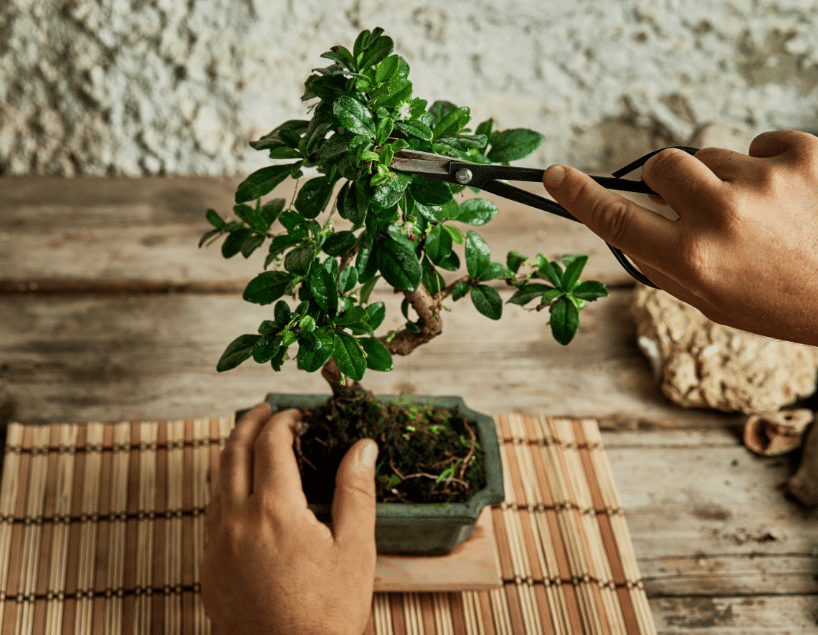
Timing affects how a tree heals, where new shoots grow, and how energy moves through the tree. Trim at the right time and branches thicken where you want them. Trim at the wrong time and you risk weak growth, dieback, or reduced flowering. When to trim a bonsai ties directly to the tree’s growth cycle, dormancy, and species-specific habits.
- Correct timing boosts ramification and branch taper.
- Correct timing reduces stress and pest issues.
- Correct timing helps keep bonsai in style without harming vigor.
I often remind students: pruning is as much about patience as it is about skill. Learn your tree’s rhythm and trim with intent.
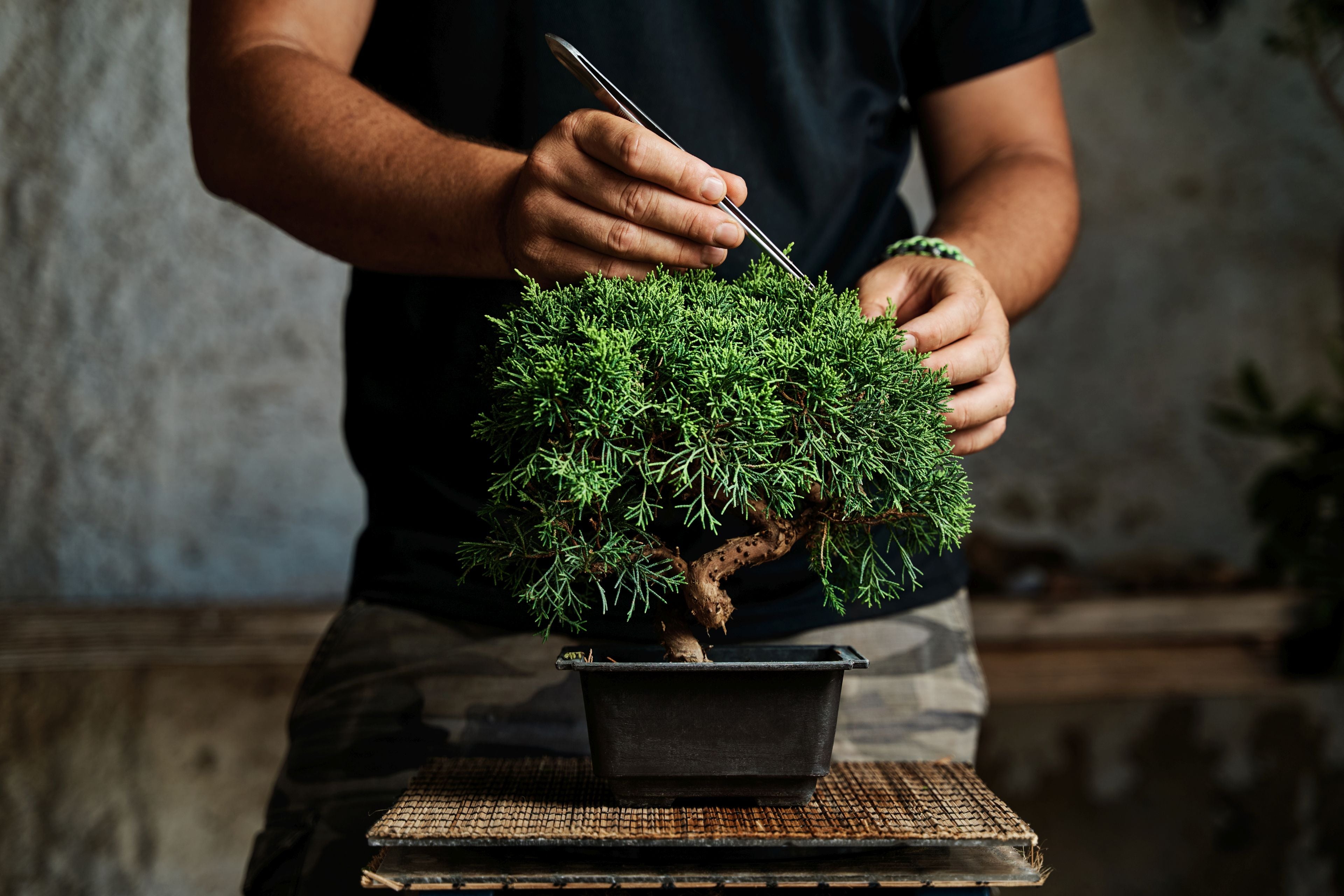
General timing guidelines: what to trim and when
There are two main pruning types: maintenance (light) pruning and structural (major) pruning. Each has a better time window.
Maintenance pruning
- Do year-round for many species.
- Remove long shoots, unwanted leaves, and small twigs.
- Best done during active growth so cuts heal fast.
Structural pruning
- Reserve for late winter to early spring for most temperate species.
- Works well when buds are starting but before strong leaf-out.
- Avoid heavy cuts in late fall or in mid-summer heat.
Bonsai on an indoor schedule behave differently. When to trim a bonsai indoors depends on light and growth, not strict season. Trim lightly when the tree grows actively and never after a big stress like repotting.

Seasonal schedule and simple calendar
Spring
- Major structural cuts and wiring before leaf flush.
- Remove crossing branches and shape main silhouette.
Summer
- Maintain shape with trimming and leaf reduction.
- Pinch back shoot tips to encourage ramification.
Autumn
- Reduce late heavy pruning. Focus on light shaping.
- Prepare for hardening off; cut back on fertilizer after mid-autumn.
Winter
- Dormant species: best for big cuts and carving.
- Tropical/indoor: prune lightly if growth continues.
A seasonal plan helps answer when to trim a bonsai without guessing. Mark your calendar around growth spurts and flowering times.
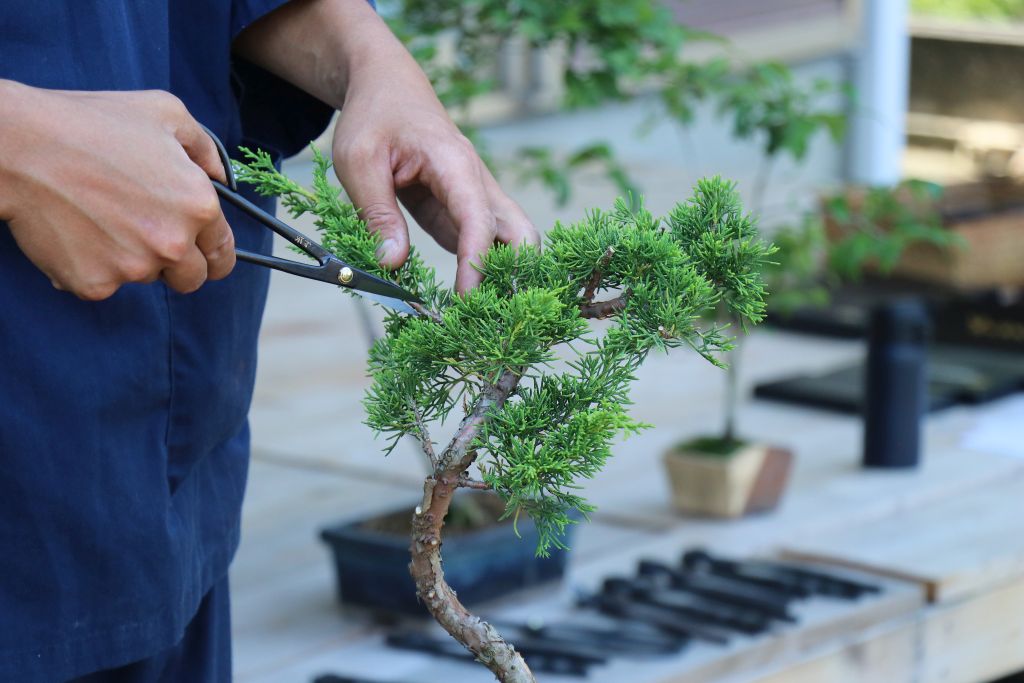
Trimming by bonsai type: special cases
- Best for big cuts in late winter.
- Maintenance pruning in early summer to refine shape.
- Leaf pruning in mid-summer for some maples to improve ramification.
Conifers
- Timing depends on species. Many respond well to summer trimming.
- Pinch new candle growth in late spring to control length.
- Avoid heavy cuts in winter for many pines.
Flowering and fruiting bonsai
- Trim after flowering for trees that bloom in spring.
- Fruit trees often benefit from pruning right after harvest or flowering.
Tropical/indoor bonsai
- Trim year-round when they show active growth.
- Avoid major cuts if light or humidity are low.
When to trim a bonsai depends on the species’ growth habit. Know your tree type and follow species cues for best results.

How to trim: step-by-step practical guide
- Observe first
- Look for long shoots, crossing branches, and crowded areas.
- Decide if you need maintenance or structural pruning.
- Remove dead or diseased wood
- Cut back to healthy tissue.
- Sanitize tools between cuts.
- Structural cuts (late winter/early spring)
- Remove large unwanted branches at the collar.
- Make clean cuts; avoid leaving stubs.
- Maintenance pruning (during growth)
- Pinch or snip new shoot tips.
- Reduce leaf size with selective defoliation on suitable species.
- Finish and care
- Inspect cuts for sap loss and pests.
- Delay heavy fertilizing for a couple weeks if you made large cuts.
My experience: start small on the first try. It is easier to remove more later than to fix an overcut. When to trim a bonsai becomes clearer after a few pruning sessions.

Tools, sanitation, and aftercare
Essential tools
- Sharp bonsai shears for small cuts.
- Concave cutters for branch removal.
- Wire cutters and branch benders for shaping.
Sanitation
- Clean blades with alcohol or diluted bleach before and after use.
- Disinfect between trees to prevent disease spread.
Aftercare
- Keep the tree well-watered but avoid waterlogging after big cuts.
- Protect fresh cuts from harsh sun or frost.
- Use wound sealers sparingly; many trees heal well on their own.
I once pruned a large ficus heavily in late fall and got weak regrowth because I did not adjust watering. Timing and aftercare go hand in hand.
Common mistakes and troubleshooting
Mistake: trimming at the wrong season
- Fix: Learn your species’ growth cycle and move cuts to safe windows.
Mistake: heavy pruning after repotting
- Fix: wait several months after repotting before making big cuts.
Mistake: cutting without plan
- Fix: sketch goals, work from trunk outward, and take photos before cutting.
Mistake: using dull tools
- Fix: sharpen and clean tools; dull blades tear tissue and slow healing.
If buds fail to break after a major cut, check light, water, and root health. Often timing was not matched to the tree’s energy reserves. When to trim a bonsai ties to those energy reserves.

PAA-style questions within the article
What is the best season to do major bonsai pruning?
- For most temperate species, late winter to early spring is best, before strong leaf-out. This timing lets cuts heal as growth resumes.
Can you trim bonsai in summer?
- Yes. Light maintenance and pinching are common in summer, but avoid heavy structural cuts in hot, dry spells.
How often should you prune a bonsai?
- Maintenance pruning can be done several times during the growth season. Structural pruning is typically annual or every few years based on the tree’s needs.
Is it okay to trim after repotting?
- Avoid major cuts right after repotting. Give the tree time to recover and re-establish roots, usually a few months.
How does species affect when to trim a bonsai?
- Each species has its own growth rhythm. Pines, maples, elms, and tropicals differ, so match pruning to the tree’s cycle.
Personal tips and lessons from my bonsai bench
- Start with small cuts. I once removed a main branch too early. The tree took years to hide the scar.
- Photograph before and after. I use images to track how the tree responds over seasons.
- Watch the buds. Bud swell is your sign to prune major limbs.
- Learn one species at a time. I focused on junipers for two years before working with maples.
Real care beats theory. Trust your observations and adjust when the tree signals stress or vigor. When to trim a bonsai becomes intuitive with practice.
Frequently Asked Questions of when to trim a bonsai
When is the best time to prune bonsai for shape?
Prune for major shaping in late winter or early spring for most temperate trees. Light shaping is fine during active growth.
Can I trim bonsai in winter?
Avoid heavy pruning in deep winter for trees that are fully dormant. For indoor tropical bonsai, light pruning can continue if they are actively growing.
How soon after repotting can I trim my bonsai?
Wait several months after repotting before major pruning. Let roots re-establish and the tree regain vigor first.
Should I trim a bonsai after it flowers?
Trim light shaping after flowering to avoid cutting next season’s flower buds. For spring bloomers, cut right after they finish blooming.
How do I know if I trimmed too much?
If growth is weak, leaves turn yellow, or buds die back, you likely cut too much or at the wrong time. Reduce stress with proper watering and light, and avoid further heavy cuts until recovery.
Conclusion
Timing your cuts is as important as how you cut. Match trims to growth cycles, follow species rules, and keep care consistent. Start with light maintenance, plan structural cuts for late winter or early spring, and always watch your tree’s response. Take action today: pick one bonsai, note its growth stage, and plan your next safe pruning session. Share your progress or questions below, and subscribe for seasonal tips and step-by-step demos.

Laura Bennett is a gardening writer at MyGardenLabs who creates beginner-friendly guides focused on solving common plant care and gardening problems.