Best Shovel For Digging Up Bushes: Top Picks
The best shovel for digging up bushes has a sharp root-cutting blade, strong shaft, and comfortable grip.
You know the scene: a bush has outgrown its bed, but its roots hold tight like old ropes. A weak shovel bends, slips, or leaves half the root ball behind. The right digging shovel makes this hard job far easier. I looked at blade shape, shaft strength, handle comfort, reach, and control to find useful options for small shrubs, thick roots, tight beds, and large landscape jobs. These picks suit both new gardeners and people who work outdoors often.
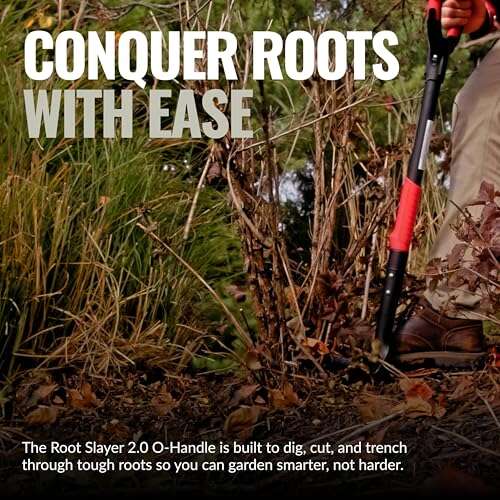
Root Slayer RS220 Heavy-Duty Shovel

The Root Slayer RS220 is built for jobs where roots are the main problem. Its serrated blade gives you more bite than a plain round-point shovel. That edge can help cut through smaller woody roots as you work around a shrub. The compact shape also gives you good control in a crowded flower bed.
I would choose this model when a bush has a tight root mass but does not need a full-size spade. The blade lets you saw into roots instead of only pushing against them. Its heavy-duty build should feel more capable than a light planting shovel. Still, use steady pressure rather than wild swings to protect both the tool and nearby plants.
Pros:
- Serrated edge helps cut through stubborn roots
- Compact profile works well in tight garden beds
- Heavy-duty design suits repeated digging
- Good control around nearby plants and edging
- Useful for dividing and moving established shrubs
Cons:
- Shorter design may require more bending
- Serrated teeth need careful storage and handling
- May feel small for very large root balls
My Recommendation
The RS220 is best for gardeners who need a root-cutting shovel in narrow beds. It is especially useful for old bushes with roots that resist a normal blade. I see it as a strong choice when control matters more than moving a large amount of soil. For many small and medium shrubs, it may be the best shovel for digging up bushes in this group.
| Best for | Why |
|---|---|
| Small and medium bushes | The compact blade gives precise control. |
| Woody roots | Serrated teeth help break through tough roots. |
| Tight garden beds | The narrow working area limits plant damage. |
Fiskars 57-Inch Garden Digging Shovel

This Fiskars digging shovel offers the reach many gardeners want for deep work. Its long handle helps you stand more upright while opening a hole around a bush. The steel construction is suited to hard soil, mulch, and ordinary landscape work. Its straight handle also gives the tool a familiar feel for users who prefer classic garden tools.
The 57-inch length can make a real difference when you must dig around a broad shrub. I like a long-handled shovel for loosening soil before I attack the root ball. It also gives you leverage when the ground is firm. However, a long shaft needs room, so it is less handy in a packed bed with many plants close together.
Pros:
- Long reach reduces repeated bending
- Steel blade handles firm garden soil
- Useful leverage for large shrubs
- Familiar straight-handle design feels natural
- Works for digging, transplanting, and general yard care
Cons:
- Long length can feel awkward in tight spaces
- Not designed as a dedicated root saw
- May feel heavy during long digging sessions
My Recommendation
I recommend this Fiskars model for homeowners moving medium or large bushes in open beds. It is a practical choice if you want one long-handled shovel for many garden tasks. It does not have the root-cutting focus of the Root Slayer, but it offers reach and useful leverage. If back comfort and general digging matter most, this is a dependable best shovel for digging up bushes option.
| Best for | Why |
|---|---|
| Large open beds | The long handle provides reach and leverage. |
| Users who bend less | The 57-inch shaft supports a taller stance. |
| General yard work | The steel digging design handles many jobs. |
33-Inch Heavy-Duty D-Grip Shovel
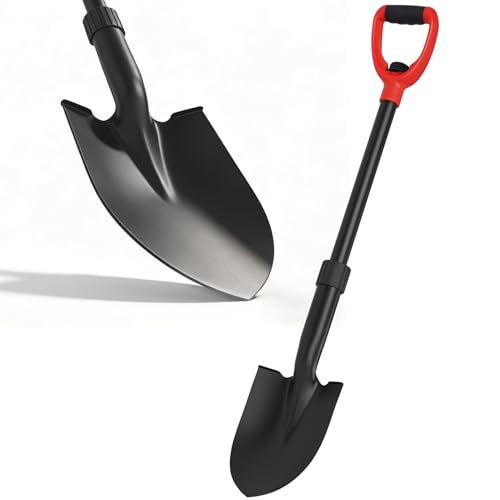
This 33-inch shovel sits between a full garden shovel and a small hand tool. Its D-grip gives you two-handed control when you push into soil or pull back on the handle. The fiberglass shaft keeps the tool useful for garden work without the feel of a very long spade. Its smaller size also helps when you need to work close to a fence, wall, or neighboring plant.
I see this shovel as a flexible choice for people who want power but do not enjoy a tall, long-handled tool. The shorter shaft makes it easier to aim the blade around a bush. It can also fit in a vehicle for community garden work or small landscaping jobs. A tradeoff remains: you will bend more than you would with a 57-inch model.
Pros:
- D-grip offers firm two-hand control
- Fiberglass shaft resists common outdoor wear
- Short size works in restricted spaces
- Light enough for transport and storage
- Useful for edging, camping, and garden digging
Cons:
- Short handle may strain taller users
- Less leverage than a full-size shovel
- Not the best match for huge root balls
My Recommendation
This model suits gardeners who need a portable digging shovel for small and medium bushes. It is also a good fit for people who work beside walls or in narrow side yards. The D-grip makes controlled cuts easier, while the fiberglass shaft helps keep weight manageable. For compact landscapes, it can be the best shovel for digging up bushes when storage and maneuverability are key.
| Best for | Why |
|---|---|
| Small yards | The shorter shaft turns easily in tight areas. |
| Portable garden work | Its size is easier to carry and store. |
| Controlled digging | The D-grip supports two-handed pressure. |
41-Inch Round-Point D-Handle Shovel
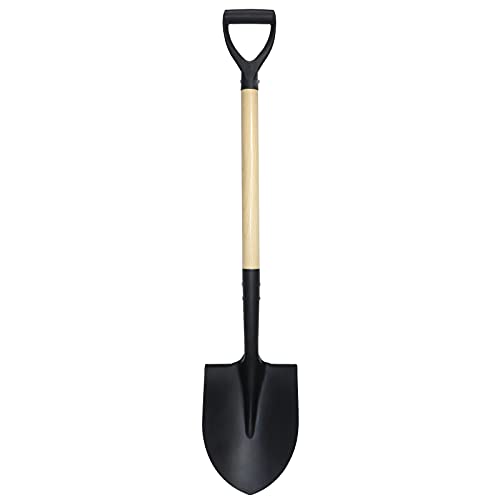
A round-point shovel is a safe all-purpose style for digging around shrubs. The curved blade enters loose and mixed soil with less snagging than a flat spade. This 41-inch model adds a D-handle for grip and control. Its mid-length design gives a useful balance between reach and close-up handling.
I would use it to loosen soil around a bush before lifting the plant. It can scoop soil, widen a planting hole, and clear loose material from a root ball. The wooden handle gives the tool a traditional look and feel. Because the blade is round rather than serrated, it may take more effort when you meet thick, mature roots.
Pros:
- Round point suits general digging tasks
- 41-inch length balances reach and control
- D-handle supports a secure grip
- Useful for soil, mulch, sand, and snow
- Simple design is easy for new gardeners to use
Cons:
- Plain edge is slower on woody roots
- Wood may need more care than fiberglass
- Not as compact as a short transplanting shovel
My Recommendation
This round shovel is best for everyday garden owners who want one tool for several chores. It works well when the soil is the main obstacle and the roots are not unusually thick. I like its middle length for normal shrub removal and planting work. It may be the best shovel for digging up bushes for a buyer who values simple, broad use over a specialized root blade.
| Best for | Why |
|---|---|
| Everyday garden work | The round point handles common soil tasks. |
| New gardeners | The classic shape is simple to control. |
| Loose soil and mulch | The curved blade scoops material well. |
Root Slayer RS241 Long-Handle Shovel

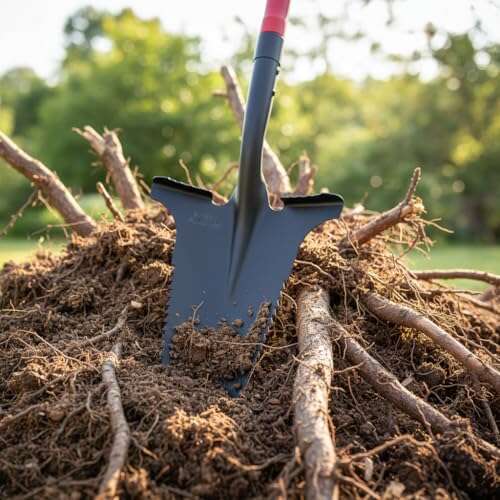
The Root Slayer RS241 combines a long handle with a blade made for demanding soil work. That combination is appealing when a bush has spread roots beyond its original planting hole. The extra reach helps you work around the plant while standing in a more natural position. A root-focused blade can also reduce the need to switch between a shovel and a separate hand saw.
This is the model I would consider first for stubborn shrubs in an open area. Its longer format gives you leverage, while the Root Slayer design helps address roots directly. It should make a cleaner attack on a root ball than a basic round shovel. It may feel like more tool than needed for a small plant, so match its size to the job.
Pros:
- Long handle helps reduce deep bending
- Root-oriented blade suits stubborn bushes
- Good leverage for established plants
- Useful in open lawns and landscape beds
- Can handle demanding digging beyond light planting
Cons:
- May feel oversized for small containers or beds
- Requires more storage space
- Higher cutting power demands careful foot placement
My Recommendation
The RS241 is best for homeowners tackling medium or large bushes with firm root systems. It offers the reach of a full-size shovel and the cutting focus of a root tool. I would choose it when back comfort, leverage, and root control all matter. For difficult landscape removals, this is one of the strongest candidates for the best shovel for digging up bushes.
| Best for | Why |
|---|---|
| Established shrubs | The long handle gives useful leverage. |
| Open landscape beds | There is room to use its full length. |
| Root-heavy soil | The blade targets roots as well as soil. |
Jardineer 45-Inch Serrated Root Shovel
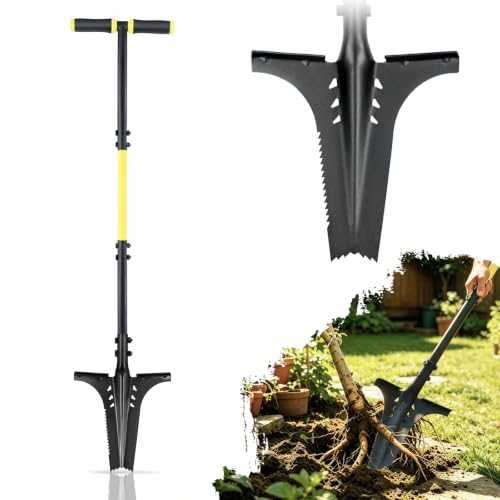
The Jardineer root shovel targets the part of bush removal that frustrates most people: tough roots. Its serrated digging edge can help you saw through roots as you work down the sides of a plant. The 45-inch length gives a good working height for many adults. Its thickened construction is aimed at users who want a serious landscape tool rather than a light transplanting spade.
I like this style for cutting a trench around a shrub before lifting it. The teeth can create small points of entry that a smooth blade may not find. A long shaft also lets you put body weight behind the cut without crouching as much. Use care near irrigation lines, cables, and valued plants because a sharp root blade can cut more than you expect.
Pros:
- Serrated edge helps attack woody roots
- 45-inch length supports a taller working stance
- Thickened build suits demanding garden work
- Useful for trenching around root balls
- Good choice for repeated shrub removal
Cons:
- Serrated edge needs careful handling
- May be too aggressive for delicate plants
- Long shaft needs open space to swing and press
My Recommendation
I recommend the Jardineer for people who regularly remove bushes from hard ground. It is especially suitable when a smooth blade struggles with roots but a full saw feels too slow. The combination of reach and teeth gives it a clear purpose. If root cutting is your top concern, it could be the best shovel for digging up bushes for heavy garden work.
| Best for | Why |
|---|---|
| Hard root systems | Serrated teeth help cut through resistant roots. |
| Deep trenching | The long shaft supports downward pressure. |
| Frequent landscaping | The thickened design suits repeated use. |
Cyrico 28-Inch D-Handle Shovel
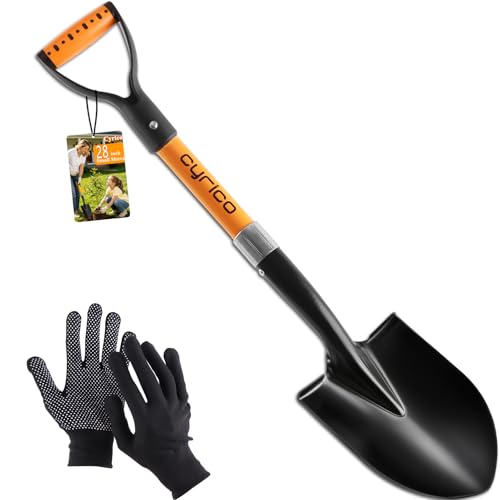
The Cyrico is a short, portable shovel for gardeners who want close control. Its 28-inch length makes it easy to carry, store, and use in narrow spots. The D-handle gives you a stable grip when you push into soil or pull out loose material. It can also serve as a useful backup tool for camping, snow, beach work, and vehicle emergencies.
For bush removal, I would use this shovel on small plants or during the final lift around a root ball. It is easier to aim than a long spade when branches block your movement. The compact size also helps people who do not have room for large tools. Its main limit is leverage, so large, deeply rooted bushes will demand more time and effort.
Pros:
- Very easy to carry and store
- D-handle improves close-up control
- Works well in narrow planting spaces
- Useful for gardens, cars, and camping
- Good match for small bushes and light soil
Cons:
- Short length causes more bending
- Limited leverage on large roots
- Small blade may require more passes
My Recommendation
The Cyrico is best for apartment gardeners, small yards, and people who need a shovel that stores easily. It makes sense for small bushes, soft soil, and close work near borders. I would not choose it for a large woody shrub unless portability matters more than speed. For compact jobs, it can still be the best shovel for digging up bushes because it is easy to control.
| Best for | Why |
|---|---|
| Small shrubs | The short size provides close control. |
| Small storage areas | It takes less room than a full shovel. |
| Multi-use buyers | It works for garden and outdoor tasks. |
PLACHIDAY 18.5-Inch Folding Shovel

The PLACHIDAY folding shovel is the most portable option in this review. Its compact format is convenient for a car kit, camping bag, shed, or small balcony garden. A high-carbon steel blade gives it more purpose than a simple plastic hand tool. The folding design also makes storage easy when every inch of space counts.
This shovel can help with a small bush, loose soil, or root work in a container. It is not the tool I would bring to remove a mature landscape shrub. Its short handle limits leverage, and its small working area means more digging strokes. Still, it can be a smart backup when you want a compact emergency tool that can also handle light garden work.
Pros:
- Folds for simple storage and transport
- Fits car emergency kits and camping bags
- High-carbon steel blade suits light digging
- Useful for pots, planters, and small beds
- Lightweight design reduces carrying effort
Cons:
- Too small for most mature bushes
- Short handle gives limited leverage
- Folding joints need proper care and cleaning
My Recommendation
Choose the PLACHIDAY if portability is your first priority. It is best for container bushes, small garden repairs, and backup use rather than major landscape removal. I would keep one in a vehicle or outdoor kit, but I would pair it with a full-size shovel for heavy work. It is not the overall best shovel for digging up bushes, yet it offers good value when space matters.
| Best for | Why |
|---|---|
| Container plants | The small blade fits pots and planters. |
| Camping and cars | The folding body stores with little fuss. |
| Emergency use | It provides a handy compact digging tool. |
WIKER 45-Inch Drain Spade

The WIKER is a narrow spade made for planting, trenching, and precise digging. Its slim blade can enter the soil beside a bush without opening a wide hole. That shape is helpful when you want to preserve the root ball or avoid disturbing nearby plants. The 45-inch fiberglass handle also provides useful reach for deep, narrow cuts.
I would use this tool to trace around the outside of a shrub before switching to a broader shovel for lifting. It is also handy for dividing tight spaces and cutting a clean trench. The narrow profile gives control, but it will not move as much soil per scoop as a round-point shovel. Its sharp-spade format rewards careful work rather than brute force.
Pros:
- Narrow blade makes precise trenches
- Good for crowded beds and borders
- Long fiberglass handle supports reach
- Useful for planting and root-ball tracing
- Sharp spade shape enters firm soil well
Cons:
- Narrow blade moves less soil per scoop
- Not ideal for very wide root balls
- May need a second shovel for lifting
My Recommendation
The WIKER is best for gardeners who need clean, narrow cuts around a bush. It makes sense in crowded beds, along paths, and near fences where a broad blade can cause damage. I would pair it with a larger shovel for final removal of a heavy root ball. For precise root tracing, it is a strong best shovel for digging up bushes alternative.
| Best for | Why |
|---|---|
| Crowded flower beds | The narrow blade limits unwanted disturbance. |
| Trenching | The spade shape creates deep, clean cuts. |
| Root-ball tracing | Its slim profile follows the plant edge well. |
Fiskars Ergo Garden Trowel

The Fiskars Ergo Garden Trowel is a hand tool, not a full replacement for a long shovel. Its small blade excels at close work around young bushes, shallow roots, and container plants. The ergonomic handle can make repeated hand digging more comfortable. It is also easy to keep nearby for planting, soil checks, and small root adjustments.
I would use this trowel when a bush is small or when I need to expose roots without harming the plant. It gives far more precision than a full-size shovel in a pot or narrow planter. However, it cannot provide the leverage needed for an established shrub in the ground. Think of it as a finishing tool or a companion to a larger shovel.
Pros:
- Excellent control for small planting spaces
- Ergonomic grip supports repeated hand work
- Easy to store in a small shed or drawer
- Useful for containers and young bushes
- Helps expose small roots with care
Cons:
- Not suitable for large bushes
- Limited leverage compared with a full shovel
- Hand digging takes longer in firm ground
My Recommendation
The Fiskars trowel is best for small shrubs, pots, raised beds, and delicate root work. It belongs in a gardener’s tool set, but I would not select it alone for a large bush removal project. Use it to finish edges, loosen soil, or free small roots after a bigger shovel opens the area. For tiny plants, it may be the best shovel for digging up bushes because precision matters more than power.
| Best for | Why |
|---|---|
| Container bushes | The small blade fits pots and planters. |
| Delicate root work | The hand size gives careful control. |
| Finishing tasks | It clears soil near roots with precision. |
How to Choose the Best Shovel for Digging Up Bushes
The right shovel depends on the bush, soil, and space around it. A large shrub in clay needs more leverage than a small plant in a raised bed. Start by looking at the root system, not just the plant height. Thick, woody roots call for a serrated blade or a separate root saw.
Blade shape matters
A serrated blade is useful when roots are tough and fibrous. A round-point blade works well for general soil removal and scooping. A narrow spade creates clean cuts in tight beds. A hand trowel gives the most control around small roots, but it cannot replace a full-size digging shovel for a large bush.
Handle length affects comfort
Long handles offer reach and leverage. They can also help reduce bending during a deep dig. Short handles are easier to control in tight spaces and are simpler to store. If you are tall or have back pain, a 45- to 57-inch shovel may feel better. If your bed is crowded, a 28- to 33-inch tool may be easier to guide.
Check the shaft and grip
The shaft transfers your force to the blade. Fiberglass often offers a light, weather-resistant feel. Steel can feel very strong but may add weight. Wood gives a classic feel, yet it needs protection from long exposure to rain. A D-grip can help you press down and pull up with both hands.
Match the shovel to the soil
Moist soil is usually easier to cut than dry, packed soil. Do not dig when the ground is soaking wet because soil can smear and compact. Water the area lightly a day before digging if the ground is hard and dry. If you meet a large root, use controlled cuts and check for utility lines before going deeper.
How I assess digging tools
I focus on practical traits rather than bright labels. The blade should enter soil without excessive flex. The handle should give steady control when the root ball resists. The grip should remain comfortable after many strokes. I also consider whether the tool fits the real setting, since the strongest shovel is not useful if it cannot move between nearby plants.
Safe Bush Removal Tips
Before you dig, mark the bush’s new location or prepare a disposal plan. Check for underground irrigation pipes, electrical lines, and other buried items. In the United States, contacting the national 811 service before digging is a wise step for projects that may reach utility depth. Wear gloves, sturdy shoes, and eye protection when roots may snap or soil may fly.
Start by watering lightly if the soil is dry. Cut back long branches only when needed for safe handling, and avoid removing more plant material than necessary if you plan to transplant the bush. Dig a circle around the plant, then work inward and under the root ball. Do not use the handle as a lever if it bends or feels unstable.
When the bush moves, lift from below the root ball instead of pulling hard on the stems. Keep the root mass covered and damp if you plan to replant it. Extension guidance commonly stresses quick replanting and careful root protection. These simple steps often matter as much as choosing the best shovel for digging up bushes.
FAQs Of best shovel for digging up bushes
What type of shovel is best for removing bushes?
A serrated root shovel is often best for bushes with thick roots. A round-point shovel works well for general soil and smaller plants. Choose a narrow spade when nearby plants limit your working space.
Is a serrated shovel better than a smooth shovel?
A serrated shovel can cut roots more easily. A smooth shovel is often better for scooping loose soil and mulch. Many gardeners benefit from using both styles during a large removal job.
How long should a bush-digging shovel be?
A 45- to 57-inch shovel offers good reach for open areas. A 28- to 33-inch shovel gives better control in tight beds. Pick the length that suits your height, strength, and available space.
Can I use a garden trowel to remove a bush?
A trowel works for small bushes, pots, and shallow roots. It lacks the leverage needed for an established shrub. Use it as a companion tool for close work after a full-size shovel opens the soil.
Should I water the ground before digging?
Light watering can soften dry soil and make digging easier. Avoid digging in very wet soil because it can compact and smear. Let the water soak in before you begin.
Final Verdict: Which Should You Buy?
For most difficult bush removals, I recommend the Root Slayer RS241. Its long handle and root-focused blade offer strong reach, leverage, and cutting power. For tight beds, the RS220 is a smarter compact pick.
The best shovel for digging up bushes depends on root size and garden space. Choose a serrated model for tough roots, a round shovel for general work, or a trowel for small plants and containers.

Laura Bennett is a gardening writer at MyGardenLabs who creates beginner-friendly guides focused on solving common plant care and gardening problems.