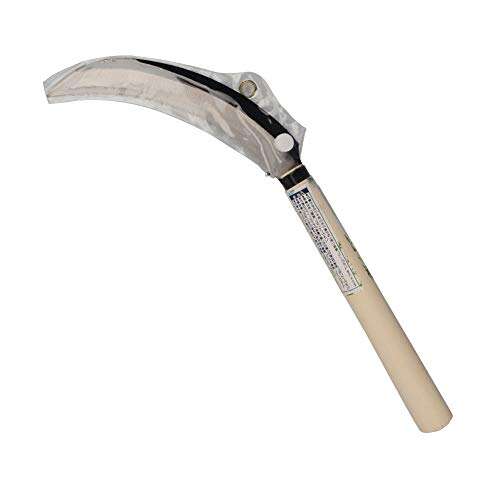
Best Tool For Cutting Back Ornamental Grasses: Top Tools
For most gardeners, long-handle grass shears offer the cleanest, safest, and easiest cut.
If your ornamental grasses turn into a dry, tangled mound each winter, spring cleanup can feel like wrestling a hay bale. The right tool makes the job faster and helps protect nearby plants, your hands, and your back. I compared these cutters by blade style, reach, grip, control, and likely use around a home garden. My top pick for most small beds is a sharp grass sickle, while rotating grass shears suit gardeners who want a tidy edge with less bending. Always wear gloves and eye protection, since dry grass leaves can be surprisingly sharp.
KEYI Grass Sickle
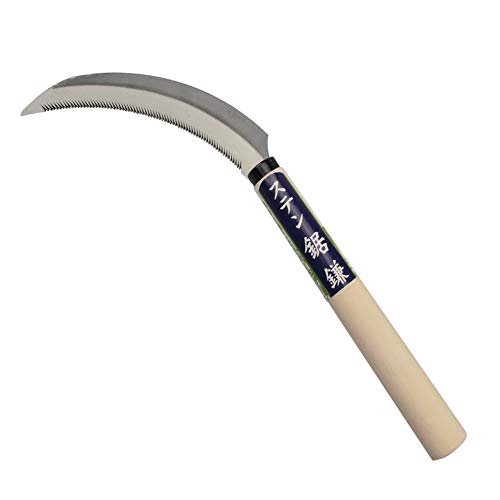
The KEYI Grass Sickle is the closest match to what I look for in the best tool for cutting back ornamental grasses. Its 6.5-inch stainless steel blade uses light serration to grip dry stems instead of sliding over them. The short blade gives good control in crowded beds. Its wooden handle also keeps the tool simple, light, and easy to carry.
I would use this sickle to cut clumps of fountain grass, maiden grass, switchgrass, and other medium-size plants. A pulling cut works well: hold a small bundle with one hand and draw the blade through the stems with the other. The tool is not a power cutter, so it needs a steady hand and a little patience. Still, for a few garden clumps, it can make a clean cut with less noise and less mess than a trimmer.
Pros:
- Sharp serrated edge grips dry grass stems
- Compact size gives precise control
- Wood handle feels natural in the hand
- Stainless steel blade resists normal garden moisture
- Works well in tight beds and around shrubs
- Does not need batteries, fuel, or charging
Cons:
- Short blade requires repeated strokes on large clumps
- Manual cutting can tire the hand during a large cleanup
- Open blade needs careful storage and handling
My Recommendation
I recommend the KEYI sickle for gardeners who have several small or medium ornamental grass clumps and want the best tool for cutting back ornamental grasses without using a motor. It gives better control than a long blade when plants grow close to paths, stones, or flowers. It also works well for gardeners who prefer a quiet hand tool. For a large planting of mature Miscanthus, I would choose a powered cutter or a heavier long-reach shear instead.
Its main value comes from its simple design. There are no moving parts to jam and no cord to manage. Keep the blade clean, dry it after use, and sharpen it when the cut starts to crush stems. At the time of writing, this type of tool is commonly available online and offers strong value for small seasonal jobs.
Garden Weasel Edger Chopper
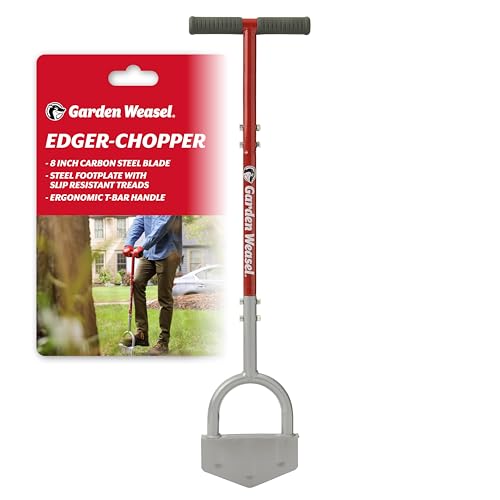
The Garden Weasel Edger Chopper is built more for borders, beds, and ground work than for cutting a whole grass clump. Its long form lets you work from a standing position. That can help when you need to clear grass that leans over a sidewalk or grows along a hard edge. It may also help chop through light growth at the soil line.
I see this as a support tool rather than the best tool for cutting back ornamental grasses in every situation. It can make a crisp edge around a bed after the grass has been cut. It may also help separate unwanted runners or trim growth that has crept into a path. Use care near crowns, roots, drip lines, and irrigation tubing, since a chopper can cause damage if pushed too deep.
Pros:
- Long design reduces the need to kneel
- Useful for cleaning bed edges after grass cutting
- Can break light soil and shallow roots
- Helpful around sidewalks, patios, and borders
- Offers leverage for small edging tasks
- Manual design avoids fuel and battery upkeep
Cons:
- Not designed for fast cutting of thick grass bundles
- Can damage roots if used too close to the plant crown
- May feel heavy for delicate edge work
My Recommendation
I recommend this Garden Weasel tool for gardeners who need to shape the ground around ornamental grasses as well as clean up the plants. It is best for bed edges, paths, and areas where grass has spread into soil or mulch. It is not my first choice for cutting tall, dry leaves. For that task, a sickle or grass shear gives more direct control.
The tool offers the most value as part of a two-tool cleanup plan. Cut the grass first, then use the edger to restore a clean line. If your garden has firm soil or many shallow roots, work slowly. A good edge protects the bed from foot traffic and gives the entire planting a finished look.
Garden Guru Patio Crack Weeder

The Garden Guru Patio Crack Weeder is a narrow hand tool made for weeds in cracks, joints, and tight spaces. It is not a true grass cutter, but it can help remove stray grass around pavers and concrete. Its slim stainless steel tip reaches places where broad blades cannot. The ergonomic handle should also make short cleanup jobs easier on the hand.
I would not use it as the best tool for cutting back ornamental grasses. Instead, I would keep it nearby for detail work after the main cut. It can scrape out grass growing between stones and remove small seedlings from a patio edge. That small final step matters because loose growth can make a carefully cut grass bed look untidy.
Pros:
- Fits narrow cracks and joints
- Useful for detail cleanup around hard surfaces
- Stainless steel construction resists rust
- Ergonomic grip supports short weeding sessions
- Light weight makes it easy to carry
- Works without chemicals or powered parts
Cons:
- Too narrow for cutting an ornamental grass clump
- Requires kneeling or bending in many areas
- May not remove deep roots in hard soil
My Recommendation
This tool suits a gardener who wants clean paths around ornamental grass beds. It is especially useful when dry leaves fall across pavers and small weeds fill the joints. I would pair it with a sickle, pruner, or long grass shear. Used on its own, it cannot handle the volume of a mature grass plant.
The Patio Crack Weeder has good value for detail work because it solves a narrow problem well. It can help finish a spring cleanup and keep hardscape lines sharp. Just remember that it is a weeder, not the best tool for cutting back ornamental grasses.
Jenlis Weed Razer Express Cutter
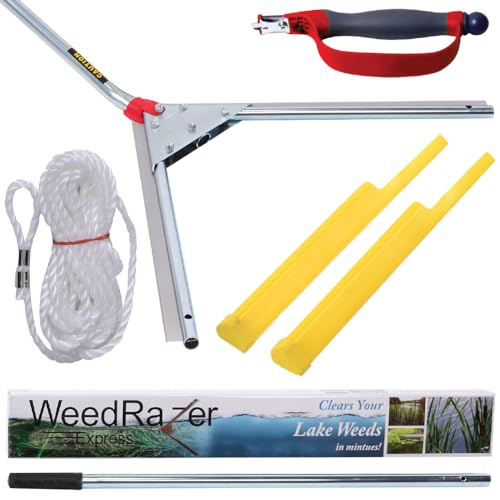
The Jenlis Weed Razer Express is a long-distance weed cutter made for ponds and lake edges. Its wide cutting area and throw rope target aquatic growth rather than garden beds. The design is useful when a person needs to cut weeds from shore without entering the water. That reach is its main strength.
For ordinary ornamental grass, this product is a poor fit. It is too large and specialized for most landscape beds. It may have a use for very large wetland-style plantings or grass-like reeds near a pond, but users must consider wildlife, water safety, and local rules. I would not call it the best tool for cutting back ornamental grasses in a typical yard.
Pros:
- Long throw rope gives access from the bank
- Wide cutting path covers aquatic growth
- Useful for pond and lake weed control
- Reduces the need to enter shallow water
- Designed for large open areas
- Can help reach vegetation beyond normal hand-tool range
Cons:
- Not practical for standard ornamental grass beds
- Requires open space for a safe throw
- Heavy or awkward for close landscape work
- Needs extra care near people, pets, and wildlife
My Recommendation
I recommend the Jenlis Weed Razer only for pond owners who need to cut aquatic weeds from shore. It may suit a large water garden better than a small flower bed. For dry ornamental grass, choose a hand sickle or rotating grass shear instead. Matching the tool to the plant is the key to safe and efficient work.
This cutter has value in its intended setting, but it is not a general garden solution. Before using any aquatic cutter, check local rules and avoid cutting plants that shelter fish, birds, or other wildlife. For most readers searching for the best tool for cutting back ornamental grasses, this product should be lower on the list.
maudibozz Lawn Repair Garden Knife

The maudibozz Lawn Repair Garden Knife has a long stainless steel blade made for sod, lawn repair, and garden cutting. Its double-sided design may help with both slicing and sawing tasks. A nylon sheath adds a useful safety feature when the knife is stored or carried. The blade length gives more reach than a small pocket-style garden knife.
This tool can cut individual thick stems and help open a narrow line through dense growth. It may also work for trimming sod near a grass bed or separating a clump from a path. However, a knife demands careful technique. I would cut away from my body, wear cut-resistant gloves, and avoid using it when the plant is too dense to see what lies behind it.
Pros:
- Long blade reaches thick stems and sod
- Double-sided edge supports different cutting motions
- Stainless steel offers good corrosion resistance
- Nylon sheath improves storage safety
- Useful for lawn repair and garden tasks
- Can make controlled cuts in narrow spaces
Cons:
- Requires more safety care than enclosed shears
- Not ideal for cutting a large bundle at once
- Sharp blade can harm roots, hoses, or hidden wires
My Recommendation
I recommend this garden knife for experienced gardeners who need one tool for sod repair, thick stems, and small grass jobs. It can be the best tool for cutting back ornamental grasses when the clump is small and you need a firm slicing edge. It is less suitable for a beginner who wants a forgiving tool. A sickle with a guarded grip or long shears may feel safer for routine spring work.
The knife offers good versatility, but versatility comes with responsibility. Keep the sheath on whenever the knife is not in use. Clean plant sap from the blade and store it away from children. For careful users, it can earn a useful place in a garden tool kit.
Krewey 2-in-1 Grafting Tool Kit

The Krewey 2-in-1 kit is designed for grafting branches, vines, and fruit trees. It includes cutting parts shaped for V, omega, and U grafts. Those profiles can make matching cuts in small woody stems. The included scissors may also handle light pruning and fine plant work.
This is not the best tool for cutting back ornamental grasses. Dry grass leaves are long, fibrous, and often packed into wide clumps. Grafting cutters work best on small stems, not a season’s worth of dead foliage. Still, the kit may help after the main cleanup when you need to trim thin vines or remove small damaged shoots nearby.
Pros:
- Supports several grafting cut styles
- Useful for fruit trees and small woody stems
- Compact kit fits a garden bench or tool box
- Scissors offer extra value for fine cuts
- Can create more uniform graft surfaces
- Helpful for gardeners who grow fruit plants
Cons:
- Not suited to broad ornamental grass leaves
- Small cutting area limits large cleanup work
- Requires practice for accurate grafting
My Recommendation
I recommend the Krewey kit for gardeners who graft fruit trees or vines and only need occasional fine pruning. I would not buy it as the best tool for cutting back ornamental grasses. Its value comes from its specialist grafting shapes, not from heavy seasonal cleanup. Choose a sickle or grass shear for the grass, then keep this kit for careful plant propagation.
If you already graft plants, this kit may save space by combining several small tools. Clean the blades between plants to reduce the spread of disease. For ornamental grass care, use a tool with a wider blade and a grip designed for repeated cuts.
Edward Tools Swivel Hedge Shears

The Edward Tools Swivel Hedge Shears bring a useful feature to hand cutting: a head that rotates through 360 degrees. That movement lets you change the blade angle without twisting your wrists as much. Hardened stainless steel blades are suited to light hedge work, grass edges, and shaping. A safety lock also helps during storage.
These shears can work well on ornamental grass edges and smaller clumps. I like the idea of turning the head to match a low, side, or upright cut. The blades may struggle with thick, woody stems, but they should handle many soft dry leaves when kept sharp. They are a strong option for gardeners who want the best tool for cutting back ornamental grasses while standing or sitting in a more natural position.
Pros:
- 360-degree swivel head supports several cutting angles
- Helps reduce wrist twisting
- Hardened stainless steel blades resist rust
- Useful for grass edges and light hedge shaping
- Safety lock helps protect the blade during storage
- Manual action gives quiet, precise control
Cons:
- May not handle very dense mature grass clumps
- Repeated cuts can tire the hands
- Swivel parts need cleaning to keep movement smooth
My Recommendation
I recommend these shears for gardeners who value wrist comfort and want to cut from more than one angle. They are especially useful around curved borders, raised beds, and grass planted near paths. The swivel head can make the work feel less awkward. For very tall grass, pair them with a hand sickle or use a longer-reach cutter.
Among the listed options, these shears are one of the most practical choices for routine ornamental grass maintenance. They combine control with a useful ergonomic feature. Keep the blades clean and lightly lubricated, and avoid forcing them through stems that are too thick. With normal care, they can provide good seasonal value.
Woodland Tools Rotating Grass Shears
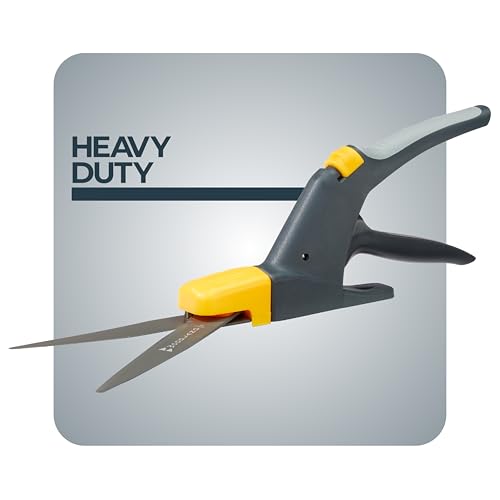
The Woodland Tools Rotating Grass Shears are made for trimming grass around beds, walkways, and lawn edges. Their head pivots through 180 degrees, so the user can change the cutting angle without turning the whole tool. Nonstick steel blades may reduce sap and dry leaf buildup. The ergonomic grip is designed for repeated manual cuts.
This is my strongest all-around choice when a gardener wants the best tool for cutting back ornamental grasses by hand. The shears suit short edging jobs and moderate clumps. The pivot helps when the plant sits below a raised border or beside a wall. They will still require patience with a huge mature clump, but their design is better matched to landscape grass than the specialized tools in this list.
Pros:
- 180-degree pivot gives flexible cutting positions
- Nonstick blades may reduce plant buildup
- Made for grass, beds, paths, and edges
- Ergonomic grip supports repeated cuts
- Manual operation is quiet and easy to control
- Useful for gardeners who want less bending
Cons:
- Manual shearing takes time on large clumps
- May not cut woody or very thick stems cleanly
- Pivot mechanism needs care and occasional cleaning
My Recommendation
I recommend the Woodland Tools shears for most homeowners with small to medium ornamental grasses. They offer the best mix of reach, angle control, and grass-focused design in this comparison. The 180-degree pivot can reduce strain and help you approach a clump from the side. For many beds, this is the best tool for cutting back ornamental grasses without fuel, cords, or loud motor noise.
These shears are also a good fit for gardeners who want a neat finish around paths. Cut in small bundles rather than forcing the blades through a large mass. If the stems bend instead of cutting, stop and sharpen or switch to a heavier tool. That simple habit protects the plant and extends blade life.
Sancat Pond Rake and Aquatic Cutter

The Sancat Pond Rake is a specialized aquatic tool with a 37-inch body, adjustable cutting angles, stainless steel blades, and a long throw rope. It is made to shear cattails, reeds, algae, and other water plants. The adjustable head gives the user more control in a pond or lake. Its long reach can reduce the need to step into shallow water.
That design makes sense for aquatic planting, but it does not translate well to a normal garden bed. The rake is too broad and awkward for close cuts around flowers or shrubs. It may suit a large pond margin where reed-like plants grow in wet soil. For dry ornamental grasses, a grass shear is safer, lighter, and much easier to aim.
Pros:
- Long 30-foot rope reaches distant aquatic growth
- Adjustable cutting angles add flexibility
- Sharp stainless steel blades suit pond plants
- Can cut cattails, reeds, algae, and weeds
- Helps keep users out of shallow water
- Wide head covers more aquatic growth per pass
Cons:
- Too specialized for most landscape grasses
- Awkward to use in tight garden beds
- Requires careful handling near wildlife and swimmers
- May be too large for small ponds
My Recommendation
I recommend the Sancat tool only for pond owners who need aquatic plant control. It can be useful for tall reeds and cattails at the water’s edge. It is not the best tool for cutting back ornamental grasses in a dry landscape. Buyers should confirm that cutting is allowed and avoid disturbing nesting areas or useful pond cover.
The tool gives strong reach for its intended job. That reach becomes a drawback in a flower bed. Select it for water work, not for spring pruning of fountain grass, blue fescue, or Miscanthus. A lighter hand shear will provide better control and cleaner results on land.
Edward Tools V-Nose Weeding Tool
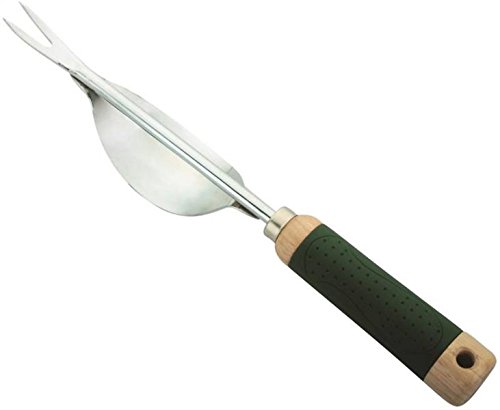
The Edward Tools V-Nose Weeding Tool is made for digging and removing weeds by the root. Its sharp V-shaped nose can enter firm soil around small plants. A metal base adds leverage, which may make stubborn weeds easier to pull. The stainless steel body is designed for repeated garden use.
This tool has a clear role during ornamental grass maintenance, but cutting is not that role. It can remove unwanted grass seedlings outside the main clump. It may also help clear runners from a bed edge before they spread. I would not use it to cut dead leaves, since digging tools can disturb the crown and nearby roots.
Pros:
- Sharp V nose reaches weed roots
- Leverage base helps with stubborn weeds
- Stainless steel resists rust
- Useful for removing stray grass growth
- Compact shape offers good soil control
- Helps reduce the need for chemical weed control
Cons:
- Cannot replace a grass shear or sickle
- Can disturb ornamental grass roots if used carelessly
- Less useful in very hard, dry soil
My Recommendation
I recommend this weeding tool as a companion to the best tool for cutting back ornamental grasses. It suits gardeners who want to remove stray runners and weeds near a grass clump. It is especially useful for keeping a clean border after cutting. For the actual foliage, use shears, a sickle, or a garden knife.
The V-nose design gives good leverage for small weeds. Work when the soil is slightly damp, but not wet and muddy. Keep the tool outside the plant crown so you do not cut healthy roots. It offers solid value as a cleanup tool, even though it is not a grass cutter.
How I Choose the Best Tool for Cutting Back Ornamental Grasses
I judge grass-cutting tools by more than blade sharpness. The best tool for cutting back ornamental grasses must match the plant’s size, the dryness of the stems, and the space around the clump. A tool that works on a thin fountain grass may fail on a wide Miscanthus. A tool that cuts fast may also be too rough for a crowded perennial bed.
For dry, cool-season cleanup, I look for a blade that slices instead of crushing. Clean cuts reduce tearing and make the work feel lighter. I also check grip comfort because spring cleanup often means hundreds of repeated strokes. A safe handle matters just as much as a sharp edge.
University extension guidance commonly advises cutting many deciduous ornamental grasses in late winter or early spring, before new growth starts. The exact time depends on the plant and local climate. Leaving old foliage through winter can protect the crown and provide habitat, so I avoid cutting too early when wildlife value matters. I also check plant labels and local advice before removing healthy evergreen foliage.
How to Cut Back Ornamental Grasses Safely
First, tie tall grass into a bundle with twine or a soft strap. This keeps loose leaves together and makes disposal easier. Cut the bundle a few inches above the crown unless the plant label gives different advice. Never cut directly into the crown, because new shoots can emerge from that central growing point.
Wear thick gloves, long sleeves, and eye protection. Many grass leaves have rough edges that can cause small cuts. I also check for hidden garden lights, irrigation lines, stones, and animal nests before I start. If the area has nesting birds or other sheltering wildlife, wait and inspect the clump with care.
Use a sickle with a smooth pulling motion, or use grass shears with short, controlled squeezes. Do not force a blade through a bundle that is too thick. A dull blade bends stems and makes the job slower. After cutting, rake the loose leaves away from the crown so air can reach the new growth.
Which Tool Fits Which Type of Grass?
Small clumps of blue fescue and low fountain grass usually need only light shears. A rotating grass shear offers good control around edging and stones. Medium clumps of fountain grass, switchgrass, and Japanese forest grass can suit a sickle or strong hand shears.
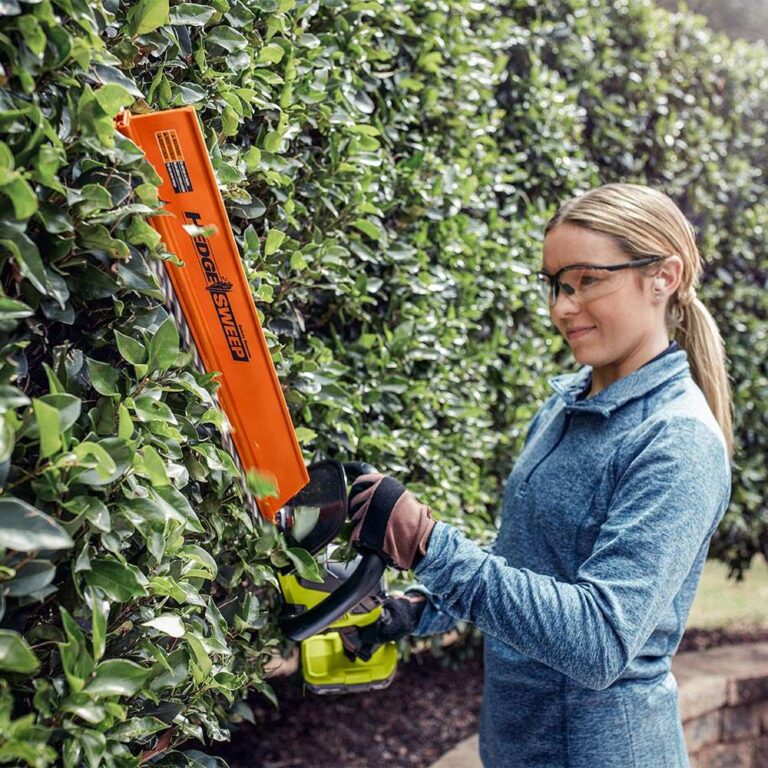
Large Miscanthus and mature pampas grass can be more difficult. Their dry leaves may be tough, sharp, and tightly packed. A sickle can work if you cut small bundles, but a powered hedge trimmer may save time for a large planting. Use powered tools only when you can control the blade and keep people, pets, and hard objects away.
For ornamental grasses near a pond, first decide whether the plant is truly a landscape grass or an aquatic reed. Pond cutters are designed for water access and open space. They are not a good choice for a crowded flower bed. The best tool for cutting back ornamental grasses is usually the simplest tool that can make a clean cut without harming nearby plants.
Best For Comparison
| Best for | Why |
|---|---|
| Small to medium dry grass clumps | The KEYI sickle gives precise control and a serrated edge that grips stems. |
| Grass edges and repeated hand cuts | Woodland Tools rotating shears offer angle control and a grass-focused blade. |
| Gardeners who want wrist-friendly trimming | Edward Tools swivel shears let you change the blade position with less wrist twisting. |
FAQs Of best tool for cutting back ornamental grasses
What is the best tool for cutting back ornamental grasses?
For most home gardens, a sharp grass sickle or rotating grass shear is the best choice. A sickle works well on bundled, dry stems. Rotating grass shears give better control around borders and nearby plants. Choose based on clump size, reach, and your comfort.
Can I use hedge trimmers on ornamental grasses?
Yes, hedge trimmers can cut large clumps, especially when the stems are dry and dense. Use them with care and keep the blade away from soil, stones, wires, pets, and people. For a small bed, hand shears often give a cleaner and safer result.
When should I cut back ornamental grasses?
Many deciduous ornamental grasses are cut in late winter or early spring, just before new growth begins. The best time varies by climate and plant type. Leave old foliage through winter when it protects the crown or provides wildlife shelter.
How short should I cut ornamental grass?
Most plants can be cut several inches above the crown. Avoid cutting into the crown or new shoots. Check the plant label, since some evergreen grasses need only light grooming rather than a full cutback.
How do I keep ornamental grass blades from hurting my hands?
Wear thick garden gloves, long sleeves, and eye protection. Tie the grass into a bundle before cutting. Work in small sections and keep the blade moving away from your body.
Final Verdict: Which Should You Buy?
For most gardeners, the Woodland Tools Rotating Grass Shears are the best tool for cutting back ornamental grasses. They offer useful angle control, a grass-focused design, and a comfortable manual cut. The KEYI sickle is my value pick for small, dense clumps.
Choose the tool that matches your grass size and garden layout. With a sharp blade, safe gloves, and the right timing, ornamental grass cleanup becomes quick, neat, and far less stressful.

Laura Bennett is a gardening writer at MyGardenLabs who creates beginner-friendly guides focused on solving common plant care and gardening problems.