Best Tool For Removing Weeds From Cracks: Top Picks
The best tool for removing weeds from cracks is a sturdy crevice weeder with a sharp, narrow stainless steel blade.
If weeds keep popping through your driveway, patio, or sidewalk, you know how tiring this job can be. Pulling them by hand often leaves roots behind, while a wide garden hoe cannot reach the narrow gap. The right crack weeder works like a tiny pry bar. It slips into the joint, cuts below the crown, and lifts the weed with less bending and scraping. I reviewed the most useful manual weed pullers, brushes, and long-handle tools for this task. My goal is to help you find a safe, durable, and practical way to clear cracks without relying on spray alone.
BARAYSTUS Long-Handle Crack Weeder

The BARAYSTUS long-handle crack weeder is built for people who want to clear pavement gaps without kneeling. Its narrow, L-shaped stainless steel head can reach into joints between pavers, along curbs, and beside concrete slabs. The long shaft gives you more reach and helps reduce strain on your back and knees. For many homes, this design is a strong candidate for the best tool for removing weeds from cracks.
The metal edge is suited to shallow weeds, grass shoots, moss, and loose soil packed into cracks. I like the simple manual design because it does not need batteries, fuel, or chemical spray. Use a firm downward push, then pull toward you to loosen the root. The tool works best when the soil is damp but not muddy, such as after light rain or watering.
Pros:
- Long handle helps limit bending and kneeling
- Narrow L-shaped head reaches tight pavement joints
- Stainless steel construction resists common garden moisture
- Manual design needs no batteries or fuel
- Useful for sidewalks, patios, driveways, and garden edges
- Simple head shape is easy to rinse and store
Cons:
- May need repeated passes for deep, woody roots
- Long handles can feel less precise in very small spaces
- It does not collect loosened weeds or soil
BARAYSTUS 61-Inch Weed Puller

This BARAYSTUS model adds more reach and a second function to the basic crack weeder. Its 61-inch adjustable handle is designed for upright work, while the detachable head can serve as a weed rake and crevice tool. That makes it a useful choice for someone who clears both pavement cracks and open lawn areas. The two-in-one layout may save storage space.
The crack-weeding head is made for narrow spaces around pavers, sidewalks, and patios. The rake side can help gather loose weeds, leaves, and surface debris after you pull the plants. Adjustable parts are helpful when more than one person uses the tool, though you should check the connection before applying strong force. As a larger tool, it is better for wide outdoor areas than for delicate work around small pots.
Pros:
- 61-inch handle supports upright weeding
- Two-in-one design handles cracks and loose yard debris
- Detachable head helps with storage and transport
- Long reach covers driveways, paths, and lawn borders
- Useful for people with limited bending ability
- Can reduce the need for several separate hand tools
Cons:
- More parts mean more connections to inspect
- Large size may feel awkward in tight garden beds
- A rake head cannot replace a dedicated heavy garden rake
Garden Guru Patio Crack Weeder

The Garden Guru patio crack weeder takes a compact approach to unwanted growth. It has a narrow stainless steel head and an ergonomic handle that fits comfortably in the hand. This format works well when you want close control along a patio edge or between individual pavers. It is also easy to keep near the back door for quick touch-ups.
A short hand tool gives you better feedback than a long handle when the crack is shallow or irregular. You can angle the blade around a plant without scraping a large area of nearby soil. The trade-off is that you must kneel, squat, or bend while working. If you only need to manage a small patio or a few driveway seams, this compact option can be a practical best tool for removing weeds from cracks.
Pros:
- Compact shape offers good control in narrow gaps
- Ergonomic handle helps reduce hand discomfort
- Stainless steel head resists rust in normal use
- Easy to carry around a patio or small yard
- Suitable for paver joints and sidewalk edges
- Simple construction makes cleaning quick
Cons:
- Requires bending or kneeling during use
- Short handle provides less leverage on hard roots
- Not the best choice for clearing a large driveway
PIMEKOY Multi-Head Crack Weeder Set
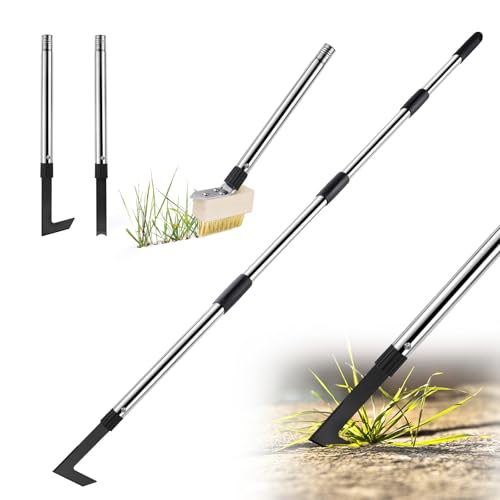
The PIMEKOY crack weeder set is aimed at gardeners who want more than one head style. The set includes three different weed-removal heads for paver joints and other hard-to-reach areas. Different shapes can help when one crack holds soft grass while another contains moss, sand, or a firm taproot. This flexibility is the main reason to consider it.
Multi-head sets can also help you match the tool to the surface. A pointed edge may enter a narrow seam, while a broader scraper can remove packed dirt from a wider joint. I recommend tightening each attachment before use and cleaning the heads after wet work. The set is a good fit for detail work, but it may take longer to change heads than to use one fixed tool.
Pros:
- Three head styles offer more task flexibility
- Useful for pavers, patios, and narrow hardscape seams
- Lets you choose a head for weeds, moss, or packed soil
- Compact tools are easy to store
- Good option for detail-focused gardeners
- Can reduce the need to buy separate small tools
Cons:
- Changing heads can slow down larger jobs
- Small tools still require bending or kneeling
- Attachment points need regular inspection and cleaning
BARAYSTUS 13-Inch Crack Weeder

This 13-inch BARAYSTUS crack weeder offers the direct feel of a hand tool without the tiny size of a pocket weeder. Its L-shaped puller is designed to enter narrow cracks and lift growth from below. The short shaft gives you more control than a long pole, especially around steps, planters, and uneven pavers. It is a useful middle ground for small to medium jobs.
The stainless steel construction should handle normal outdoor exposure when you rinse and dry it after use. I would use it with a steady pull rather than a hard twist, since sideways force can damage a stubborn root or loosen a weak joint. It works well for regular maintenance before weeds become mature. For a small patio, this may be the best tool for removing weeds from cracks when precision matters more than standing comfort.
Pros:
- 13-inch length balances control and reach
- L-shaped head fits common pavement cracks
- Stainless steel design suits outdoor maintenance
- Easy to use around steps and raised edges
- Light enough for quick spot treatment
- Does not require chemicals or power
Cons:
- Users must bend or kneel for most tasks
- May struggle with thick, established root crowns
- Short reach is not ideal for a long driveway
Fiskars Ergo Hand Weeder

The Fiskars Ergo hand weeder is a general garden tool rather than a purpose-built pavement hook. Still, its pointed design and strong shaft can help remove weeds and roots from soil near pavers, garden borders, and walkway edges. The ergonomic handle gives the hand a comfortable grip during repeated pulls. It is especially useful if you also need a tool for flower beds and lawn weeds.
This tool is less specialized for very thin cracks than an L-shaped crevice blade. It excels when a weed grows at the edge of a crack and has roots extending into loose soil. I would not choose it as the first option for a dense line of weeds trapped between concrete slabs. However, its broader garden use can make it a better value for homeowners who want one hand weeder for several jobs.
Pros:
- Versatile tool for beds, borders, and walkway edges
- Ergonomic handle supports repeated pulling
- Heavy-duty build suits routine garden work
- Pointed end can reach below many weed crowns
- Useful beyond crack cleaning
- Easy to carry and store
Cons:
- Not shaped specifically for narrow pavement joints
- May not scrape moss from a flat crack
- Hand use requires bending during extended jobs
VITAINTE 3-in-1 Long-Handle Weeder
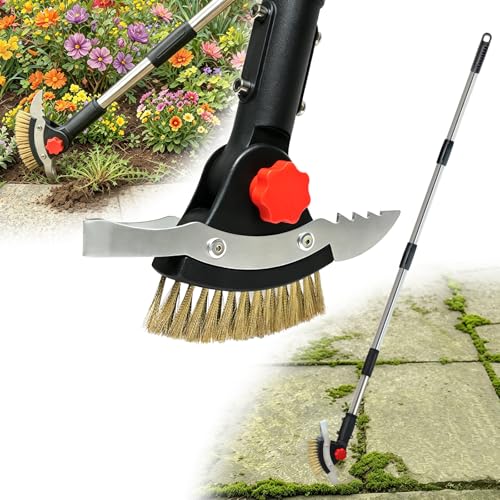
The VITAINTE 3-in-1 crack weeder is made for homeowners who want upright reach and several cleaning functions. A long handle can make a clear difference when a driveway or walkway has dozens of weed-filled seams. The tool design combines a crevice function with attachments intended to scrape or brush debris. This helps turn a messy crack into a clean joint in fewer steps.
Long-handled tools work best when you use the weight of the head instead of forcing the pole. Start at the edge of the weed, press down, and pull along the seam. The brush or scraper can then remove loose soil that would otherwise feed new growth. Like other multi-use tools, it deserves a quick check for tight fittings before each session.
Pros:
- Long handle reduces bending and knee strain
- Three functions support weeding and surface cleanup
- Useful for long patios, walks, and driveways
- Brush and scraper action can remove loose debris
- Manual operation is quiet and simple
- Good choice for regular hardscape maintenance
Cons:
- Multiple functions may not match a heavy single blade
- Long handles offer less close control than hand tools
- Attachments may need cleaning after muddy work
Soil Grove 3-in-1 Crack Weeder
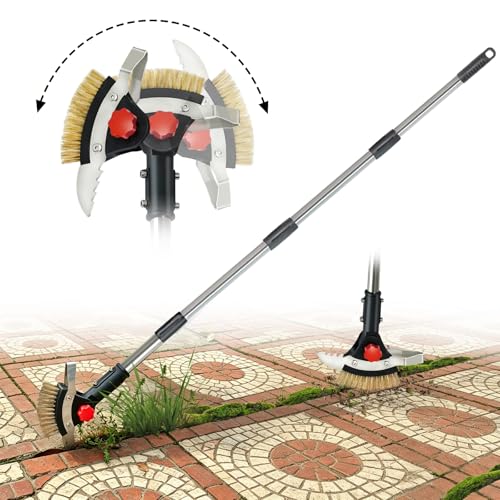
The Soil Grove 3-in-1 crack weeder pairs a long handle with a scraper and weed brush. That combination is useful because removing the plant is only half the job. Seeds and damp soil often remain in the joint, and a brush can sweep away that material. The tool is aimed at patios, walkways, decks, and other hard outdoor surfaces.
I see this model as a maintenance tool rather than a root-extraction tool for very large weeds. Its value comes from covering three steps: loosen, pull, and brush. Use it after rain for easier root release, then let the surface dry before sweeping the crack clean. This routine can slow repeat growth, although no manual tool can prevent every weed seed from landing.
Pros:
- Combines a scraper, weed puller, and brush
- Long handle supports upright cleaning
- Helps remove both weeds and loose crack debris
- Useful on patios, paths, decks, and driveway edges
- Good fit for routine seasonal maintenance
- Can reduce the need to switch between tools
Cons:
- Brush action may not remove deep woody roots
- Long tools can be harder to guide around obstacles
- Loose debris still needs to be swept or collected
Juxifyron 67-Inch Crack Weeder

The Juxifyron crack weeder stands out with a 67-inch handle and two brush heads. It is designed for large surface areas where bending over would quickly become tiring. The long shaft can reach across a patio or along a driveway while keeping your hands at a comfortable height. The brush heads are useful for moss, dirt, and light plant growth in surface seams.
This tool is a good match for users who want to maintain hardscape often. A brush can be gentler than a sharp blade on some surfaces, but it may need several passes when weeds have thick roots. Use the head that best fits the joint, and avoid pushing with excessive force against fragile pavers. For older adults or anyone with back concerns, the upright design can make crack care far more manageable.
Pros:
- 67-inch handle supports standing work
- Two brush heads provide cleaning flexibility
- Useful for moss, dirt, and light weeds
- Well suited to long paths and broad patios
- Can reduce repeated bending and squatting
- Manual design operates quietly
Cons:
- Brush heads may need more effort on strong roots
- Extra length can feel less precise near delicate plants
- Large tools need more storage space
Heavy-Duty 58-Inch Carbon Steel Weeder

This heavy-duty crack weeder uses a 58-inch handle and a carbon steel blade. The design is made for users who need more leverage than a small hand tool can provide. A firm blade can break through compact soil and help pull weeds from sidewalk, paver, patio, and deck gaps. Its long reach also makes it easier to cover a larger area while standing.
Carbon steel can deliver strong cutting power, but it needs sensible care. Wipe away moisture after use and store the tool in a dry place to help limit corrosion. I would choose this style for established weeds and packed joints, not for delicate surfaces that can scratch easily. With careful handling, it can be a strong best tool for removing weeds from cracks for demanding cleanup jobs.
Pros:
- Carbon steel blade offers strong leverage
- 58-inch handle reduces the need to bend
- Useful for established weeds and packed joints
- Works across sidewalks, pavers, patios, and decks
- Good fit for large outdoor cleanup tasks
- Long shaft helps reach deep along an edge
Cons:
- Carbon steel needs drying and storage care
- Rigid blade may scratch delicate surfaces if forced
- Heavy weeds may still require a second pass
My Recommendation
After comparing these designs, I would start with the BARAYSTUS long-handle crack weeder for most homeowners. Its narrow L-shaped head targets the exact space where weeds grow, while its long handle helps keep your back upright. It is simple, quiet, and easy to use without chemicals. For small patios, the Garden Guru or 13-inch BARAYSTUS offers better close control. For a long driveway, the 61-inch BARAYSTUS, VITAINTE, Soil Grove, or Juxifyron provides more reach.
The best tool for removing weeds from cracks depends on the surface, weed size, and your comfort. Pick a hand tool when you need precision. Pick a long-handle model when you need speed and less bending. Pick a multi-head tool when you also want to brush out moss and packed dirt. Whichever model you choose, clear the joint before weeds mature, remove as much root as possible, and rinse the head after each job.
| Best for | Why |
|---|---|
| Small patios and close detail work | The Garden Guru and 13-inch BARAYSTUS models offer precise control in tight joints. |
| Large driveways and less bending | Long-handle models such as the 61-inch BARAYSTUS and Juxifyron cover more ground while standing. |
| Weeds plus moss and loose debris | The VITAINTE and Soil Grove 3-in-1 designs add scraper and brush functions for cleanup. |
How to Choose the Best Tool for Removing Weeds From Cracks
The right tool should match the width and depth of the crack. A narrow metal hook works well in a thin joint between concrete or pavers. A brush helps with moss and fine growth on the surface. A broad scraper can remove soil, but it may not reach the root below. Think of the crack as a small trench. The best tool enters that trench without damaging the hardscape around it.
Handle length also matters. A hand weeder gives excellent control, but it may force you to kneel. A long handle lets you work while standing, which is often better for a wide driveway. Yet long tools can feel less exact around garden borders. If you care for several surfaces, a tool with a detachable head or multiple functions may offer better value.
Blade Shape
An L-shaped blade is useful because it can slide down one side of a crack and pull the plant toward you. A pointed hook can pierce compact soil and loosen a taproot. A brush head works best for moss, dust, and shallow seedlings. No single shape wins every job. The best tool for removing weeds from cracks is the one that matches the growth you face most often.
Handle Comfort
Look for a grip that feels secure when wet. A comfortable handle matters because crack cleaning uses many short pulls. A long shaft should feel stable, not loose at the joint. If the tool has adjustable or detachable parts, tighten them before use. Small movement at the connection can waste force and make the work harder.
Material and Care
Stainless steel is popular for outdoor tools because it handles moisture well and cleans easily. Carbon steel can be strong, but it needs more care after rain or washing. Rinse away soil, dry the metal, and store the tool under cover. Do not leave a weeder buried in wet soil or standing in a bucket of water.
How I Test Crack Weeding Tools
I judge a crack weeder by more than its product label. I look at how easily the head enters a joint, how well it holds its line, and whether the handle transfers force without flexing too much. I also consider comfort, storage, cleaning, and the amount of bending needed. These details matter because a tool can look strong but still feel tiring after ten minutes.
I compare tools on dry cracks and slightly damp soil. Damp soil often releases roots more easily, while dry soil shows whether the blade can enter a firm joint. I test around pavers and concrete edges with care. A good tool should remove growth without forcing you to chip the surface or disturb nearby plants.
I also review the tool’s role in long-term maintenance. Removing a weed today helps, but cleaning the loose soil from the joint can reduce fast regrowth. A brush or scraper earns extra value when it helps finish the job. Still, I do not treat any manual weeder as a complete weed-prevention system. Wind, birds, water, and new soil can always bring fresh seeds.
How to Remove Weeds From Sidewalk and Patio Cracks
Start by choosing a cool, dry day if possible. If the soil is very hard, water the area lightly or work after rain. Avoid flooding the joint, since muddy soil can make the tool slip. Put on gloves and closed shoes before you begin.
Place the narrow blade beside the weed crown. Push down into the seam, then pull along the crack. Try to lift the root rather than only tearing off the leaves. If the plant breaks, make a second pass and remove the remaining crown.
After pulling, use a brush or broom to clear loose soil and plant pieces. Sweep the area clean so seeds and damp debris do not remain in the joint. Rinse the tool, dry the metal, and store it in a covered place. This simple routine protects the tool and makes the next job easier.
Manual Weeding Versus Chemical Weed Killer
Manual removal gives you direct control over where you work. It does not leave a spray on the surface, and it avoids the drift risk that can come with liquid products. This matters near pets, children, storm drains, vegetable beds, and ornamental plants. A sharp crack tool also works right away.
Chemical products can be useful in some settings, but always read the label first. The U.S. Environmental Protection Agency states that pesticide labels provide legal directions for use, storage, and disposal. Do not mix products or apply them near water unless the label permits it. For a few cracks, manual removal is often the simpler choice.
Heat and boiling water are other options, but they require caution. Hot water can burn skin and harm nearby plants. A flame tool can create fire risk and may damage dry vegetation or surface materials. A manual weeder usually offers a safer level of control for routine home maintenance.
Ways to Slow New Weed Growth
Weeds return when a crack holds soil, moisture, and light. After removal, sweep out loose dirt when it is safe to do so. Repairing a wide or damaged joint can also reduce the space where seeds settle. For pavers, replace lost joint sand with a suitable product made for that surface.
Keep nearby lawn growth trimmed so runners do not spread across the edge. Clear leaves from patios and walks before they turn into wet compost. Check the area every few weeks during the growing season. Small seedlings are much easier to remove than mature weeds with thick roots.
Do not seal a crack that needs structural repair. A joint may be a sign of movement, drainage trouble, or damaged concrete. If the gap is widening or the slab is uneven, address the surface problem first. A weed tool can clean the seam, but it cannot fix the cause of a damaged walkway.
Safety Tips for Crack Weeding
Wear gloves to protect your hands from sharp edges, thorns, and rough concrete. Safety glasses are wise when you scrape dry soil or use a stiff brush. Keep your feet clear of the blade path, and pull the tool toward a safe open area. Never swing a crack weeder like a hoe.
Check the surface before applying force. Loose pavers can shift, and damaged concrete can break under pressure. Use short controlled movements instead of twisting hard. If a root will not release, loosen the soil from both sides or use a stronger tool suited to the task.
Store tools where children and pets cannot reach them. Clean metal heads after use, especially if they contact salty winter residue or fertilizer. These small habits protect both the user and the tool.
FAQs Of best tool for removing weeds from cracks
What is the best tool for removing weeds from cracks?
A narrow L-shaped crack weeder is the best all-around choice for many sidewalks, patios, and driveways. It reaches into the joint and pulls weeds from below the crown. Choose a long handle if you want to work while standing.
Are crack weeders safe to use between pavers?
Yes, when used with light, controlled force. Place the blade in the joint rather than against the paver edge. Avoid twisting hard, since excessive force may loosen or chip weak pavers.
Should I remove weeds when the soil is wet or dry?
Slightly damp soil is usually best. It softens the root area and makes pulling easier. Avoid very muddy conditions because the tool can slip and the joint may become messy.
Can a crack weeder remove moss?
Many can remove light moss, especially models with a brush or scraper head. Thick moss may need several passes. Clear the surface debris after brushing so the crack does not hold extra moisture and soil.
How can I stop weeds from growing back in cracks?
Remove the root, sweep out loose soil, and inspect the joint often. Repair wide gaps when needed, and keep leaves from collecting on the surface. No method blocks every new seed, so regular checks work best.
Final Verdict: Which Should You Buy?
For most homes, I recommend the BARAYSTUS long-handle crack weeder. Its narrow stainless steel head reaches pavement joints, and its long shaft reduces bending. It is a strong best tool for removing weeds from cracks during routine patio, sidewalk, and driveway care.
Choose a hand model for precision or a brush-equipped tool for moss and debris. With the right match and steady upkeep, crack weeding becomes a quick task instead of a constant chore.

Laura Bennett is a gardening writer at MyGardenLabs who creates beginner-friendly guides focused on solving common plant care and gardening problems.