Best Tool For Weeding Decomposed Granite: Top Picks
The best tool for weeding decomposed granite is a sharp crack weeder that reaches deep roots without scattering the gravel.
If weeds keep popping through your decomposed granite path, you are not alone. Tiny seeds settle in the fine rock, then rain helps roots grip below the surface. A flat hoe may move the granite but leave the root behind. I prefer a narrow stainless steel crack weeder for tight spots, plus a long-handle option for large paths. Below, I compare practical tools for patios, walkways, driveways, and garden borders so you can find the best tool for weeding decomposed granite without wasting time or damaging the surface.
GREBSTK Crack Weeder, Short Handle

The GREBSTK short-handle crack weeder has the shape I want for weeds growing along edging, pavers, and compacted decomposed granite. Its narrow stainless steel blade can slip into a small gap without moving a large amount of stone. That matters when you want to remove a weed while keeping the path neat. The light hand-tool design also gives you better control than a broad garden hoe.
I would use this tool with a pull-and-lift motion. First, loosen the soil beside the stem, then hook below the crown and pull slowly. This method helps remove young weeds before they seed across the granite. It is a strong candidate for the best tool for weeding decomposed granite when precision matters more than speed.
Pros:
- Narrow blade reaches tight cracks and seams
- Stainless steel resists common garden moisture
- Light weight reduces hand fatigue
- Good control around pavers and edging
- Useful for removing small weeds at the root
- Easy to store in a small garden tool box
Cons:
- Short handle requires bending or kneeling
- Not the fastest choice for a large driveway
- Very hard, dry ground may need water first
GREBSTK Crack Weeder, Compact Blade

This second GREBSTK crack weeder offers the same basic type of tool in a compact form. I like this style for weeds that sit where decomposed granite meets a wall, curb, or concrete step. The pointed metal end can break a thin crust around the weed. Its small profile also helps you work slowly when the granite borders a plant or decorative stone.
A crack weeder does not simply scrape the top. Used at a low angle, it can travel down beside the root and pull the plant out from below. I would keep one near the front door for quick touch-ups after rain. For small areas, this may be the best tool for weeding decomposed granite because it removes weeds with little surface disturbance.
Pros:
- Works well in narrow joints and border lines
- Sharp, slim head supports careful root removal
- Small size makes it simple to carry
- Helps preserve the look of clean granite
- Useful for patios, steps, and walkways
- Can handle small grass clumps and broadleaf weeds
Cons:
- Requires kneeling for long weeding sessions
- Limited reach for deep roots
- May feel slow on a wide gravel area
Grampa’s Weeder Stand-Up Puller

Grampa’s Weeder uses a long bamboo handle and a claw-style head to pull weeds while you stand. That upright posture can make a big difference for anyone with sore knees or a large outdoor area. The tool is best suited to weeds with a visible crown and a root system that sits in softer material. It can be useful beside a decomposed granite path, especially after rain loosens the soil.
This is not a classic crack tool, so I would not force it into a thin seam between stones. Instead, place the claws around the weed, press down, and pull with steady leverage. It may disturb a small circle of granite, which you can smooth with your shoe or a rake. For homeowners who value comfort, this stand-up puller can be the best tool for weeding decomposed granite around wider edges and open sections.
Pros:
- Lets you weed while standing upright
- Reduces bending, kneeling, and back strain
- Long handle gives useful leverage
- Good for larger weeds with visible roots
- Bamboo handle feels warm and natural in hand
- Helpful for routine yard maintenance
Cons:
- Claw head may disturb loose granite
- Less effective in very narrow cracks
- Young weeds without a clear crown can be hard to grip
CKLT 2-in-1 Garden Hoe and Weed Puller

The CKLT 2-in-1 tool combines a garden hoe with a weed-pulling rake on a long handle. This design suits broad decomposed granite paths where you need to cover ground instead of picking out one weed at a time. The 60-inch reach helps you work while standing. It also lets you loosen a shallow layer and gather weeds in one pass.
I would use the hoe side for young seedlings and the puller side for tougher stems. Work lightly, since aggressive raking can move the fine granite away from its intended area. This tool is a practical choice for people who maintain driveways, side yards, or long garden paths. It may be the best tool for weeding decomposed granite when reach and multi-use function matter most.
Pros:
- Long handle supports upright work
- Two working ends offer more flexibility
- Useful for large paths and open beds
- Can loosen shallow soil and pull weeds
- Helps collect loose plant debris
- Spring-steel construction is suited to regular yard work
Cons:
- Broad action can scatter decomposed granite
- Not ideal for narrow paver joints
- May require more control around small plants
3-in-1 Garden Weeding Tool Set
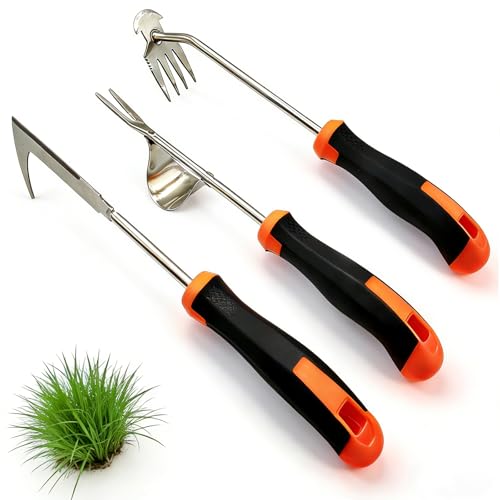
This 3-in-1 set gives you several ways to tackle weeds in decomposed granite. The set includes a weed puller, a crack and crevice tool, and a scratch-style implement. That mix is useful because no single head handles every weed. I would use the narrow tool in seams, the puller on rooted plants, and the scratch tool for small seedlings.
A set can also help a new gardener build a simple maintenance kit without buying three separate tools. The hand-tool format offers close control around flowers and shrubs. It does require more bending than a long-handle weeder, so take breaks during a large job. For mixed surfaces, this kit can be the best tool for weeding decomposed granite because it covers more than one type of problem.
Pros:
- Three tool styles cover common weed types
- Crack tool reaches seams and narrow gaps
- Puller helps remove weeds with deeper roots
- Scratch tool works on small surface growth
- Useful for gardens, patios, and paths
- Good starter set for basic hand weeding
Cons:
- Hand tools require bending or kneeling
- More pieces need storage and cleaning
- May be more than needed for one small crack
5-Pack Stainless Steel Weed Puller Set

This five-piece stainless steel set is aimed at gardeners who want several small tools for different hand positions and root shapes. Multiple puller styles can make it easier to work in decomposed granite, raised beds, containers, and borders. A small tool is often better than a large hoe when a weed grows close to a plant. The set also gives you a spare if one tool is left outside or misplaced.
For granite paths, I would choose the narrowest head first and test it on a small patch. Pull weeds after light rain, but avoid working when the surface is muddy, since wet fines can cling to tools and shift more easily. Stainless steel is simple to rinse and dry after use. This set is a strong value pick for anyone who wants the best tool for weeding decomposed granite plus tools for the rest of the yard.
Pros:
- Five tools provide several working shapes
- Stainless steel is easy to clean
- Useful for weeds of different sizes
- Good choice for shared household use
- Includes practical tools for beds and containers
- Spare tools can reduce downtime during yard work
Cons:
- Small handles are not ideal for long sessions
- Tool quality may vary across a multi-piece set
- Requires a storage spot for all five pieces
BARAYSTUS 13-Inch Crack Weeder

The BARAYSTUS 13-inch crack weeder uses an L-shaped blade to reach under weeds in crevices. That shape can hook a stem or root and give you a firm pull. The longer hand grip offers more reach than a tiny pick while still keeping the blade easy to guide. It is a good match for decomposed granite beside concrete, brick, stone, and patio edges.
I like this type of tool for routine inspection work. Walk the path, stop at each weed, push the blade below the crown, and lift. The process feels less like fighting the yard and more like removing loose threads from cloth. It will not replace a broad tool for a large field of weeds, but it is a reliable candidate for the best tool for weeding decomposed granite in cracks and seams.
Pros:
- L-shaped head can hook roots and stems
- 13-inch length adds useful hand reach
- Works well beside concrete and masonry
- Stainless steel handles normal outdoor use
- Less surface disruption than a wide hoe
- Good for spot treatment and weekly upkeep
Cons:
- Still requires bending for ground-level work
- Not designed for broad areas
- Large woody roots may need a stronger digging tool
GREBSTK 36-Inch Long-Handle Weeder

The GREBSTK 36-inch crack weeder brings a narrow crevice blade to a long handle. That combination solves one of the main problems with hand weeding: constant bending. You can reach weeds along a path while standing, yet the slim head remains more precise than a rake. The long shaft is especially useful for older gardeners or anyone managing a large granite walkway.
Use a light touch and let the blade do the work. Push it down beside the weed, angle it under the root, then pull toward your feet. Avoid sweeping the tool across the whole surface, because that can move the granite and expose more soil. In my view, this is one of the strongest options for the best tool for weeding decomposed granite when comfort and narrow access are both important.
Pros:
- 36-inch handle allows upright weeding
- Narrow head reaches path seams
- Reduces stress on knees and lower back
- More precise than a broad garden rake
- Useful for long walkways and driveways
- Helps maintain a tidy surface with less bending
Cons:
- Less compact to store than a hand tool
- Long handles can feel awkward in tight spaces
- Very compacted ground may resist the narrow blade
BARAYSTUS Long-Handle Crack Weeder

This BARAYSTUS long-handle model uses a crevice-style head for weeds along hard surfaces. It offers a useful middle ground between a hand weeder and a full-size hoe. You get standing reach without giving up the narrow blade that decomposed granite paths often need. The L-shaped tip is suited to pulling weeds from joints, edges, and compact pockets.
I would choose this model for a homeowner who wants to keep maintenance simple. Use it after rain, when roots release more easily, and clean the blade after each session. If a weed snaps at the surface, make a second pass and search for the crown. For many users, this may be the best tool for weeding decomposed granite because it combines reach, control, and a focused working end.
Pros:
- Standing design helps limit back strain
- Long handle reaches deep path edges
- L-shaped blade supports root hooking
- Good for cracks near patios and driveways
- More focused than a standard garden hoe
- Suitable for regular maintenance rounds
Cons:
- May not fit very narrow or crowded plant areas
- Long tool needs more storage space
- Hard, dry soil can make insertion difficult
The Original Soil Scoop

The Original Soil Scoop is not a dedicated crack weeder, but it can play an important role in decomposed granite maintenance. Its scoop shape helps move, lift, and place loose soil or stone. That makes it useful when you need to expose a weed crown, remove a small root ball, or return displaced granite after pulling. It can also help refill a shallow bare spot after cleanup.
I would pair this scoop with a narrow weeder rather than use it as the only tool. A scoop excels at handling material, while a crack weeder excels at reaching roots. Together, they make a tidy system for small repairs and garden borders. It is not the best tool for weeding decomposed granite by itself, but it is a useful support tool for a polished finish.
Pros:
- Moves loose soil and decomposed granite with control
- Useful for covering small bare spots
- Helps remove exposed roots and debris
- Supports planting and garden bed work too
- Can tidy the surface after weeding
- Useful as a companion to a crack weeder
Cons:
- Does not hook roots like a dedicated weeder
- Less useful for tight cracks
- May move more granite than needed during spot work
What Makes a Good Weeding Tool for Decomposed Granite?
Decomposed granite looks simple, but it has a mixed texture. Some areas stay loose and easy to rake. Other areas become firm after rain, foot traffic, or vehicle use. The best tool for weeding decomposed granite must match that texture and the weed type.
I look for five core features: a narrow working end, enough strength to enter firm soil, a shape that can reach below the crown, a handle that fits the job, and simple care. A sharp point helps start the cut. A hooked or angled tip helps pull the root. A long handle improves comfort, while a short handle offers close control.
Blade Shape
A crack weeder usually has a narrow, pointed, or L-shaped blade. This shape works well in joints because it enters one small point instead of scraping a wide area. It also helps protect nearby granite and plants. A broad hoe is better for surface seedlings across a large open patch.
Handle Length
Short tools offer accuracy. Long tools offer comfort. If your granite path is small, a hand tool may feel faster. If you maintain a long driveway, a 36-inch or 60-inch tool can save your back. The best tool for weeding decomposed granite is often the one you will use each week, not the one with the biggest head.
Material and Care
Stainless steel is a useful choice for outdoor hand tools because it resists rust better than plain steel. It still needs care. Rinse off grit, dry the blade, and store the tool under cover. Do not leave a sharp weeder buried in wet soil. A clean blade enters the ground with less force.
How I Weed Decomposed Granite Without Making a Mess
I start by checking the weather. A short time after light rain is often ideal because the root zone softens while the surface remains workable. I avoid very wet conditions because the granite can shift and stick together. On dry days, a small amount of water around a stubborn weed can help.
Next, I place the blade beside the weed instead of directly on the stem. I push down as far as the ground allows, then angle the tip beneath the crown. A slow pull gives the root a better chance of coming out whole. Fast jerks often break the stem and leave the root behind.
After removal, I shake the root over a bucket or a hard surface. I do not leave pulled weeds on the path because they may carry seeds. Then I use my hand or a soil scoop to return loose granite to the spot. This last step keeps the surface level and reduces new spaces where seeds can settle.
Short Handle or Long Handle: Which Is Better?
A short handle is best when the weed grows beside a delicate plant or inside a narrow joint. You can see the blade clearly and control each movement. The trade-off is that you must kneel, squat, or bend. That may be fine for a small patio but tiring on a long path.
A long handle is best for open walkways and people who want to work while standing. It reduces strain and makes routine maintenance easier. The trade-off is less close control. You should keep the blade away from plant stems and use gentle pressure near loose stone.
If you are unsure, choose a long-handled crack weeder for the main path and keep a short tool for detail work. This two-tool plan covers most home landscapes. It also prevents you from using a large hoe where a narrow blade would do a cleaner job.
My Recommendation
For most homeowners, I recommend the GREBSTK 36-inch long-handle crack weeder as the best tool for weeding decomposed granite. It gives you standing reach, a narrow working head, and better control than a broad rake. Choose the short GREBSTK or BARAYSTUS 13-inch model if you need close work around pavers or plants. Choose the CKLT for a large open area where a hoe and puller can save time.
| Best for | Why |
|---|---|
| Long granite paths | The GREBSTK 36-inch model lets you work upright while reaching narrow cracks. |
| Small joints and edges | The short GREBSTK or BARAYSTUS 13-inch weeder offers close control with less surface disturbance. |
| Large open areas | The CKLT 2-in-1 tool covers more ground with its long handle, hoe, and puller design. |
For the best value, match the tool to the size of your space and your comfort needs. A focused crack weeder is usually the safest starting point for decomposed granite. Availability and pricing can change, so check the current Amazon listing before ordering.
Tips to Keep Weeds Out of Decomposed Granite
Good tool choice helps, but prevention makes the work easier. Keep the granite at a steady depth and repair thin spots when they appear. Bare soil under a thin layer of rock gives seeds a welcome landing place. A soil scoop can help move material back into those spots.
Remove weeds before they flower. One mature plant can spread many seeds across a path. Walk the area once a week during warm, wet growth periods. Small seedlings often pull free with one light pass.
Do not grind weeds into the surface with a mower or string trimmer when seed heads are present. Cutting the top may make the area look clean for a day, but the root remains. A crack weeder gives you a better chance of removing the entire plant.
Landscape fabric may reduce weed pressure below new granite, but it does not stop seeds from landing on top. Organic debris can also build a thin soil layer over time. Sweep or blow leaves away when practical, and remove dirt from edges before it becomes a seed bed.
Safety and Maintenance Advice
Wear gloves and closed shoes when using a sharp weeder. Decomposed granite can hide glass, metal, or sharp stone, especially near older paths and driveways. Keep your free hand away from the blade. Use steady pressure instead of swinging the tool.
Inspect the handle before each job. Stop if the head feels loose or the shaft shows a crack. After use, rinse grit from the blade and dry it well. Store long tools where children cannot reach them.
When using any tool near a plant, identify the plant first. Some desirable seedlings can look like weeds. If you use a chemical weed control product, follow the label and local rules. Manual removal is often the most direct choice near edible plants and water features.
FAQs Of best tool for weeding decomposed granite
What is the best tool for weeding decomposed granite?
A narrow crack weeder is usually the best choice for weeds in joints and edges. A long-handled version is better when you need standing reach. For broad areas, a 2-in-1 hoe and puller can work faster.
Can I use a regular garden hoe on decomposed granite?
Yes, but use a light touch. A broad hoe can scatter loose granite and may miss deep roots. It works best on young weeds in open areas, not tight cracks.
Should I weed decomposed granite when it is wet?
Work after light rain when the soil is soft but not muddy. Very wet granite can shift and cling to the blade. Avoid heavy foot traffic until the surface firms up.
How do I remove deep weed roots from granite?
Push a narrow blade beside the stem, angle it below the crown, and pull slowly. If the soil is hard, dampen the small area first. Repeat the pass if the stem breaks.
Will a crack weeder damage decomposed granite?
It can disturb a small amount if you use too much force. Insert the blade close to the weed and pull upward rather than sweeping across the surface. Return loose granite after removal.
Final Verdict: Which Should You Buy?
The GREBSTK 36-inch crack weeder is my top pick for the best tool for weeding decomposed granite. It combines standing comfort with the narrow control needed for cracks, edges, and paths.
Choose a short crack weeder for detail work or the CKLT for wide areas. With steady upkeep and early root removal, your granite surface can stay clean with less effort.

Laura Bennett is a gardening writer at MyGardenLabs who creates beginner-friendly guides focused on solving common plant care and gardening problems.