How To Remove Grass With Shovel: Easy Step-By-Step Guide
Introduction
To remove grass with a shovel, cut the lawn into small sections, slide a sharp spade under the roots, and lift the sod in strips. This method works well for small yards, garden beds, paths, and repair areas across the United States. It takes more effort than using a sod cutter, but it needs no fuel or special machine.
The best time depends on your local weather. In much of the U.S., cool-season grass is easier to cut in spring or early fall. Warm-season grass is often easier to remove during its active growing season. Avoid frozen soil, very dry ground, and mud.
Before you dig, call 811 or visit Call811.com to check for buried utility lines. This free service is a key safety step for any digging project in the United States.

What You Need Before Removing the Grass
Gather the right tools before you begin. A sharp, flat spade is the main tool, but a few simple items will make the work faster and safer.
Basic tools
- Sharp spade or square-point shovel
- Garden hose or watering can
- Measuring tape
- String, marking paint, or stakes
- Work gloves
- Knee pads
- Sturdy boots
- Garden fork
- Rake
- Wheelbarrow, tarp, or lawn bags
- Hand pruners for roots
- Landscape edger or half-moon edger
A flat spade makes clean cuts. A round shovel can work, but its curved blade may leave uneven edges. Sharpen the blade before you start. A sharp edge needs less force and is less likely to slip.
Check the soil first
Test the soil with the shovel. It should be damp enough to cut, but not wet enough to stick to the blade.
- If the shovel will not enter the ground, water the area.
- If mud clings to the blade, wait for the soil to dry.
- If the soil crumbles into dust, water it slowly and let it absorb.
Water the area about one day before digging when the soil is dry. Do not flood it. Wet soil can lose its structure and may become hard to level later.
Mark the removal area
Mark the exact area before cutting. Use paint, string, or a garden hose to create straight lines or smooth curves.
Small sections are easier to handle. A strip about 12 inches wide and 2 to 4 feet long is usually easier to lift than a large slab. The right size depends on the grass, soil, and your strength.
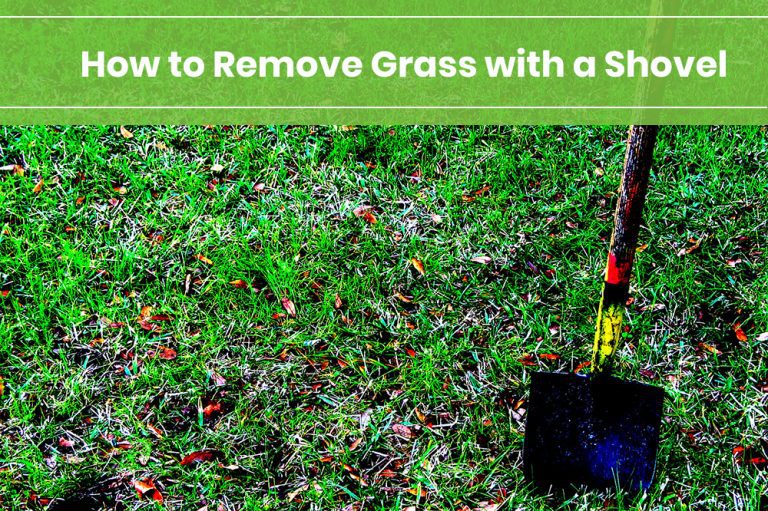
How to Remove Grass With a Shovel
Follow these steps to remove grass by hand without taking more soil than needed.
1. Mow the grass short
Mow the grass as low as your mower safely allows. Short grass is easier to see, cut, roll, and move.
Remove sticks, stones, toys, and other objects from the work area. Keep children and pets away while you work.
2. Cut the outside edge
Place the spade on the marked line. Push it straight down through the grass and roots.
Make cuts about 2 to 4 inches deep. Most turf roots are concentrated near the surface, but root depth varies with grass type, soil, irrigation, and age. If the grass does not separate, make a deeper cut.
For a straight edge, overlap each cut slightly. For a curved edge, use short cuts around the curve instead of forcing one long cut.
3. Divide the lawn into strips
Cut parallel lines through the grass. Keep the strips narrow enough to lift safely.
A strip that is 12 inches wide and 2 feet long contains about 2 square feet of turf. Its weight will vary greatly with soil moisture and soil type. Wet clay soil can make even a small strip heavy.
Score crosswise cuts every 1 to 2 feet. These cuts create smaller pieces that are easier to lift and carry.
4. Slide the shovel under the roots
Start at one end of a strip. Push the spade under the turf at a low angle.
Use your foot to drive the blade into the soil. Keep your back straight and bend your knees. Move along the strip and repeat the cut until the roots release.
A garden fork can help loosen stubborn areas. Insert it under the sod and lift gently. Do not twist hard if the handle bends or the soil is packed.
5. Lift, roll, or carry the sod
Lift each piece with both hands. Roll the turf with the grass side facing inward if you plan to reuse it.
Do not throw heavy sod onto a pile. Dropping it can damage your back, tools, or nearby plants. Place the pieces on a tarp or in a wheelbarrow.
If the sod will be reused, keep it moist and replant it soon. Do not leave it in a hot, dry pile for long.
6. Remove remaining roots
After lifting the sod, inspect the exposed soil. Pick out thick crowns, runners, rhizomes, and large roots.
Some grasses spread through underground stems called rhizomes. Others spread through above-ground runners called stolons. Small pieces of these stems may regrow in some conditions.
A garden fork helps loosen roots without removing large amounts of soil. Use hand pruners for woody roots from nearby shrubs or trees. Do not cut large tree roots without first getting advice from an arborist.
7. Rake and level the soil
Rake away loose roots and clumps. Then check the soil level with a straight board or a long level.
Add clean soil to low spots. Remove high spots with the shovel. Avoid removing too much topsoil, especially if you plan to plant flowers, vegetables, or shrubs.
For a new bed, loosen the top few inches of soil with a garden fork. Do not turn the soil deeply if it is wet. Deep digging in wet soil can create hard clods and compact layers.
How Deep Should You Dig?
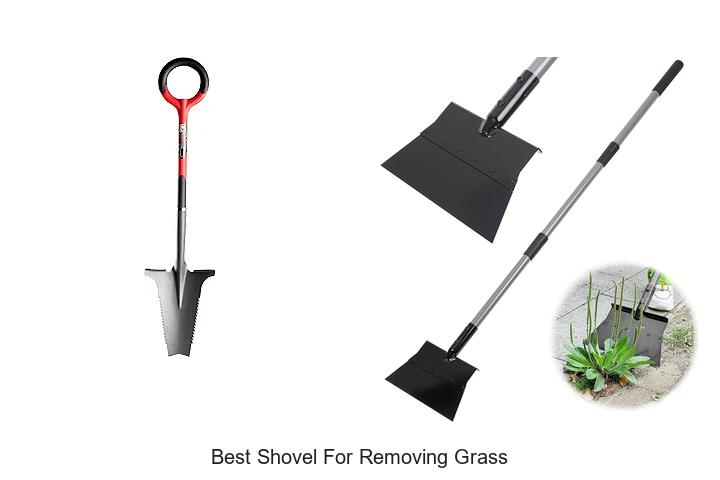
Remove enough soil to take out the grass crown and main root layer. In many lawns, a depth of about 2 to 4 inches works. The exact depth depends on the turf and soil.
Use a shallow cut first. Check whether the roots remain attached to the lifted piece. If many roots stay in the ground, cut a little deeper.
Avoid removing extra soil just to make the job seem complete. Excess soil removal can create several problems:
- It increases the weight of each piece.
- It leaves the area too low.
- It removes useful topsoil.
- It creates more fill or disposal waste.
- It may expose compacted or poor soil below.
The goal is not to remove every strand of root. The goal is to remove the living turf crown and enough roots to prevent easy regrowth.

What to Do If the Grass Will Not Come Up
Grass that will not lift usually has one of four causes: dry soil, compacted soil, deep roots, or an incomplete cut.
Dry soil
Water the area slowly. Wait several hours, or until the next day, and test it again. Watering just before digging can make the surface slippery and muddy.
Compacted soil
Use a garden fork to make holes in the turf. Push the fork down, rock it slightly, and repeat. Then return to the shovel.
Do not use excessive force. A slipping shovel can cause cuts or falls.
Deep-rooted or spreading grass
Make a deeper cut and divide the area into smaller sections. Remove visible runners and rhizomes by hand.
If the grass has spread into nearby beds, inspect the edges carefully. Leaving a small piece behind may allow it to grow back.
Thick thatch
Thatch is a layer of dead stems and roots near the soil surface. A thick layer can make the turf hard to cut cleanly. Use a garden rake or thatching rake after removing the main sod.
Tree or shrub roots
Stop if the shovel hits a large root. Cutting structural tree roots can weaken or harm a tree. If you are unsure whether a root is important, leave it in place and ask a qualified arborist.
How to Dispose of Removed Grass
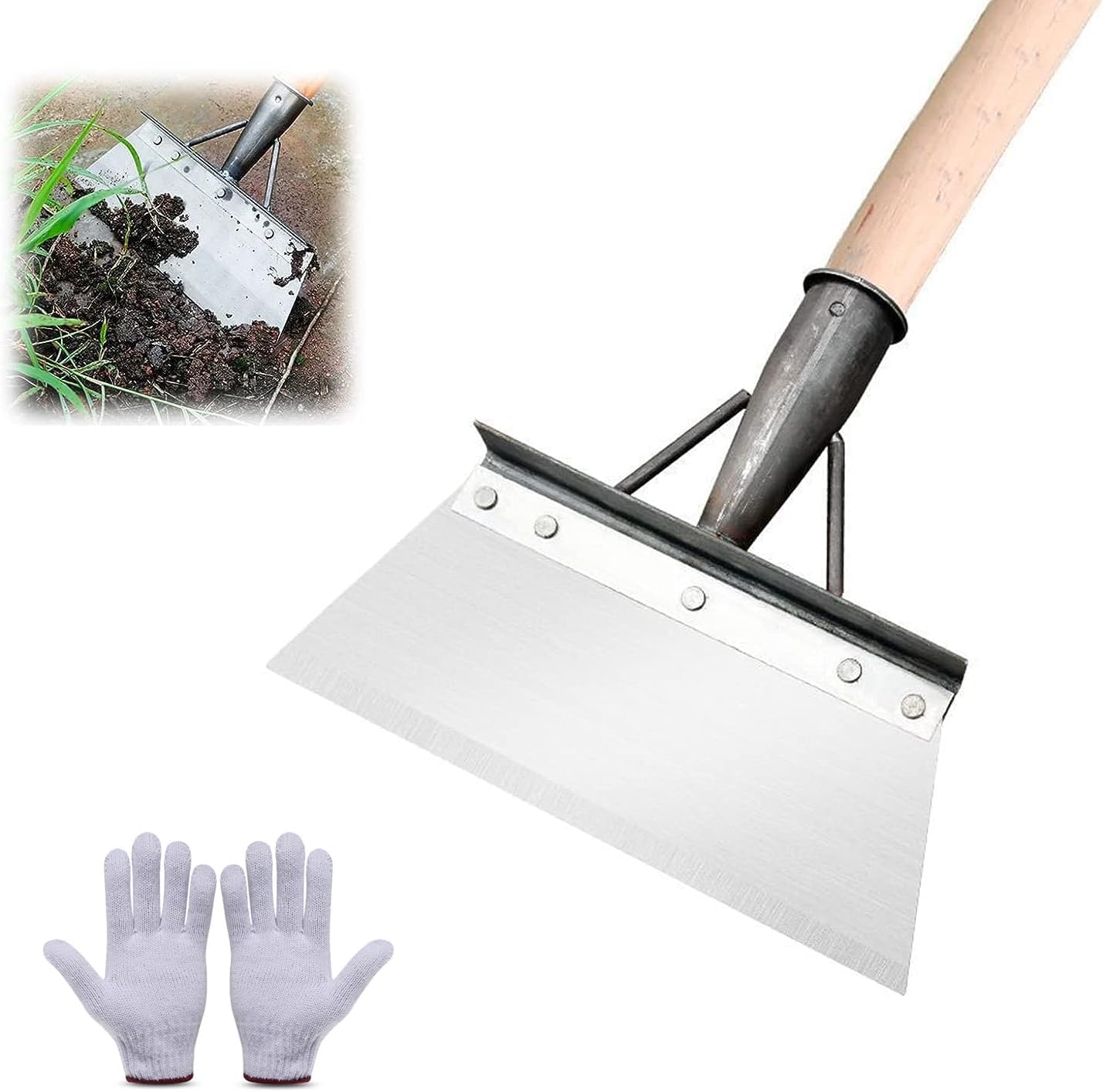
Removed sod contains grass, roots, soil, and sometimes weeds. Disposal rules differ by city and county, so check your local waste service before placing it at the curb.
Possible options include:
- Reusing healthy sod in another part of the yard
- Stacking sod grass-side-down to decompose
- Adding thin layers to a compost system
- Taking it to a municipal yard-waste site
- Using it to fill low spots, if it contains no invasive weeds
- Giving it away through a local gardening group
Do not compost grass that contains mature weeds, seeds, or invasive runners unless your compost pile reaches conditions that can destroy them. A home compost pile may not get hot enough for reliable weed control.
Avoid burying large slabs of living turf under a new bed. Grass may grow back through the soil. It can also create an uneven surface as the buried organic matter breaks down.

How to Prepare the Area After Grass Removal
The next step depends on what you plan to install.
For a garden bed
Remove large roots and stones. Test the soil if you plan to grow vegetables or plants with specific soil needs. Add compost or other amendments only when they suit the soil and plants you chose.
Do not add fertilizer just because the grass is gone. A soil test gives better guidance than guesswork.
For mulch
Create a clean edge around the bed. Level the soil, then add mulch according to the plant and local conditions.
Keep mulch away from the trunks of trees and shrubs. A thick mound against a trunk can hold moisture and create pest or disease problems.
For a path or patio
Remove enough soil for the planned base, surface material, and final height. The required depth varies by material and local drainage needs.
For a structural surface, follow the installation instructions for the selected material. A shallow grass removal alone may not provide a stable base.
For new lawn
Rake the soil smooth and remove loose roots. Keep the surface slightly below sidewalks, driveways, and other fixed edges if needed.
The correct soil preparation depends on whether you will use seed, sod, or plugs. Choose grass suited to your region, sun level, soil, and water supply.
Shovel Removal vs. Other Grass-Removal Methods
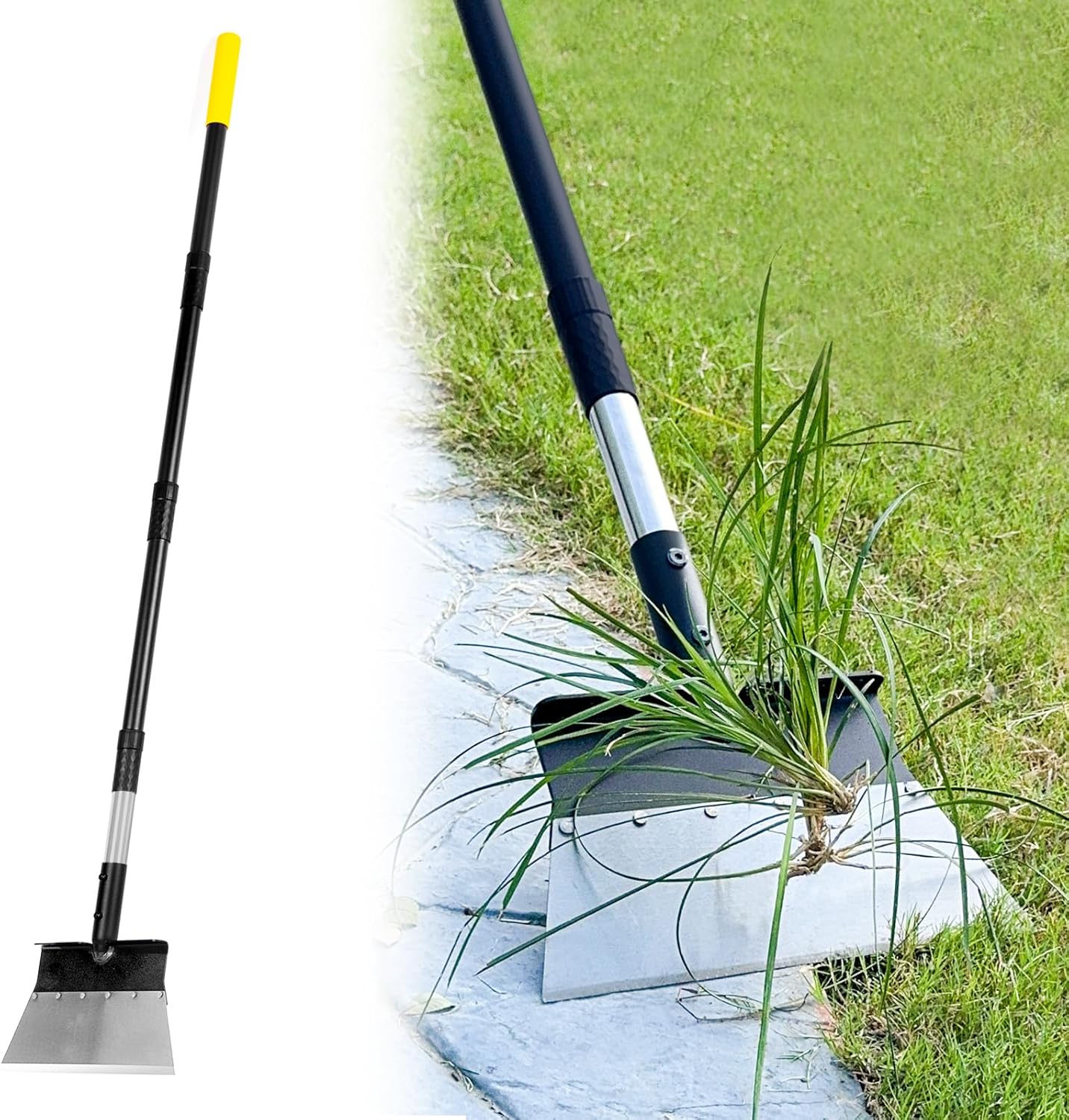
A shovel is practical for small areas, but it is not always the best choice.
| Method | Best for | Main benefit | Main drawback |
|---|---|---|---|
| Shovel and spade | Small areas and tight spaces | Low cost and precise | Slow and physically demanding |
| Sod cutter | Large, open lawn areas | Removes long, even strips | Requires rental, transport, and practice |
| Garden fork | Loose soil and root cleanup | Helps separate roots gently | Less effective in hard turf |
| Smothering | Areas where time is available | Little digging | Takes weeks or months |
| Sheet mulch | Future beds and paths | Can reduce digging | Needs proper layers and edge control |
| Herbicide | Certain site limits | May reduce manual labor | Product, timing, and replanting limits apply |
A sod cutter can save time on a large, flat lawn. A shovel gives better control near trees, fences, irrigation lines, and existing plants.
Smothering with cardboard or a tarp may work when immediate removal is not needed. It does not provide the same quick, clean result as lifting the sod. It also requires attention to edges, light gaps, and the time needed for the grass to die.

Common Mistakes to Avoid
Removing soil instead of sod
Deep digging makes the job harder and can lower the area too much. Check the root layer as you work.
Working in muddy soil
Mud sticks to tools and compacts easily. Wait until the soil is workable.
Making pieces too large
Large slabs may look efficient, but they are hard to lift. Small strips are safer and easier to move.
Leaving runners behind
Some grasses spread from stems above or below the soil. Inspect the area after lifting the main turf.
Ignoring buried utilities
Always contact 811 before digging. Private lines, such as some irrigation, lighting, and communications lines, may not be marked by the public utility service. Check your property records and contact the relevant private locator when needed.
Using poor lifting form
Keep the load close to your body. Bend your knees, avoid twisting, and ask for help with heavy pieces. Stop if you feel sharp back pain.
Removing grass near tree roots
Do not cut large roots with a shovel. Work around them and preserve the soil near the tree.
Leaving bare soil exposed
Bare soil can erode and support weeds. Cover it with mulch, plant it, or complete the next part of the project soon.
Key Takeaways
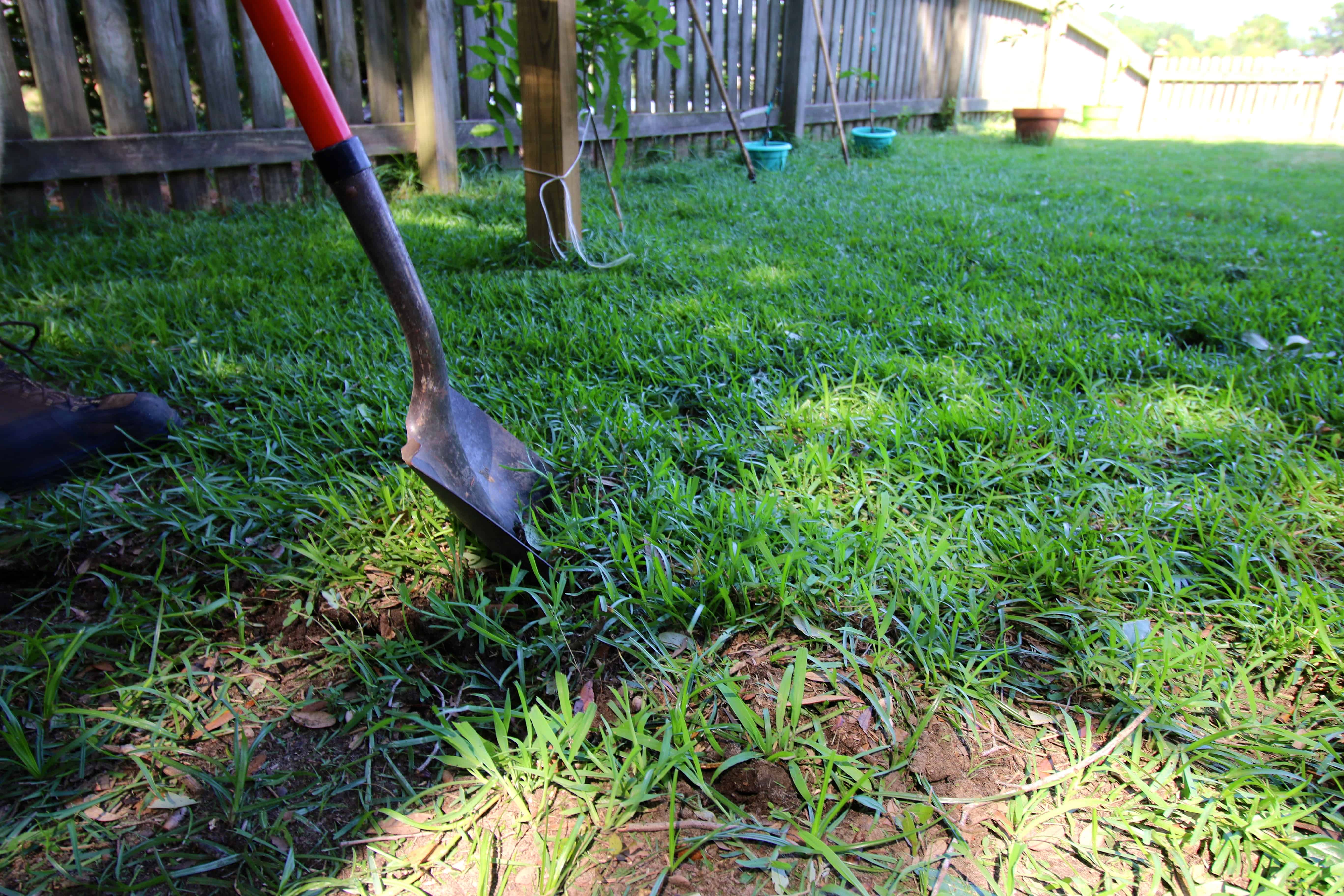
- Mark the area and call 811 before digging.
- Mow the grass short.
- Work when the soil is damp, not muddy.
- Cut the turf into small strips.
- Remove the grass crown and main root layer, usually about 2 to 4 inches deep.
- Check for runners, rhizomes, and leftover roots.
- Use safe lifting methods.
- Reuse, compost, or dispose of the sod according to local rules.
- Prepare the soil for its next use instead of removing extra topsoil.
FAQs About Removing Grass With a Shovel
Can I remove grass with a regular shovel?
Yes. A sharp, flat spade is usually easier than a round shovel because it makes straight cuts. A regular shovel can still work if the blade is sharp and the soil is workable.
Should I water the grass before removing it?
Water dry soil about one day before digging. Aim for damp soil. Avoid digging when the ground is muddy, frozen, or very dry.
How deep should I cut the sod?
Start at about 2 to 4 inches. Check whether the grass roots stay attached to the lifted piece. Cut deeper only when needed.
What is the easiest way to remove grass from a small area?
Mow it short, mark the edges, cut it into narrow strips, and lift each strip with a sharp spade. Small pieces are easier to carry and reduce strain.
Will grass grow back after I remove it?
It can. Regrowth is more likely when runners, rhizomes, crowns, or roots remain. Inspect the exposed soil and remove visible pieces before planting or mulching.
Can I put removed sod in a compost pile?
Healthy, weed-free sod may be composted in thin layers. Avoid adding sod with mature weeds, invasive runners, or seeds unless you can manage the pile well enough to control regrowth.
Can I remove grass around a tree?
You can remove shallow turf near a tree with care, but avoid cutting large roots or digging deeply. Keep the tree’s root zone intact when possible. Ask an arborist if you find major roots.
Conclusion
Removing grass with a shovel is simple when you control the size of each cut. Mow first, work in damp soil, cut shallow strips, and lift the sod with safe body mechanics. Then remove leftover runners, level the soil, and prepare the space for its next use.
For a small patch, a shovel is often all you need. For a large, open lawn, a rented sod cutter may save time and effort. In either case, check for underground utilities and protect nearby trees before you dig.

Laura Bennett is a gardening writer at MyGardenLabs who creates beginner-friendly guides focused on solving common plant care and gardening problems.