What Does A Bonsai Tree Look Like: Visual Guide
A bonsai tree looks like a full-sized tree in miniature, with a shaped trunk, branches, leaves, and roots.
To understand what does a bonsai tree look like, look beyond its small size. A bonsai has the visual balance of an old tree: a strong trunk, spreading branches, textured bark, and a carefully shaped crown. Its form comes from years of pruning, wiring, root care, and thoughtful training rather than from genetic dwarfing.
What Does a Bonsai Tree Look Like?
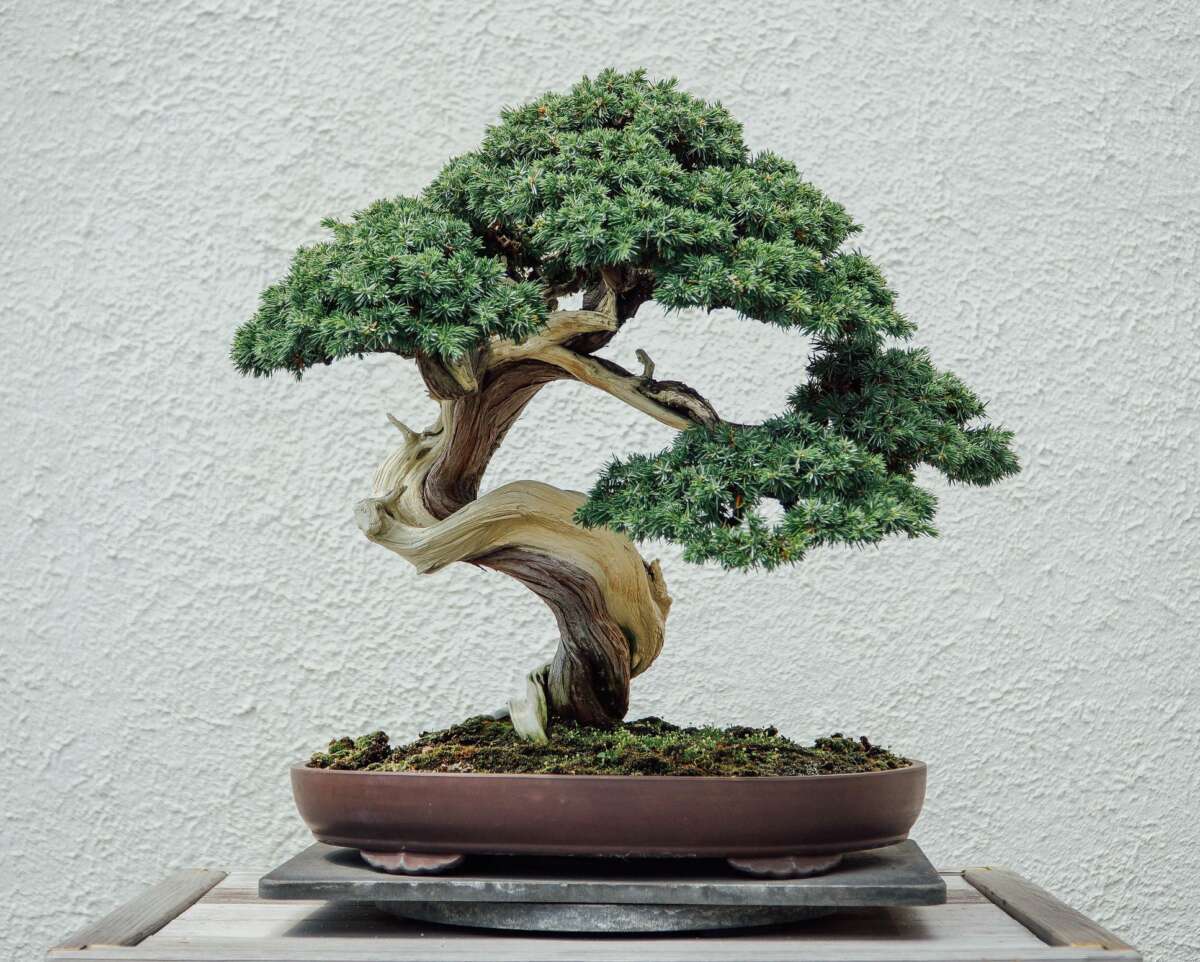
A bonsai tree looks like a mature tree reduced to a small scale. It may have a thick trunk, rough bark, graceful branches, and tiny leaves that create the illusion of age. Some bonsai trees stand only a few inches tall, while others can grow several feet high.
The exact look depends on the species, age, style, and training method. A juniper bonsai may have needle-like foliage and twisted deadwood. A ficus bonsai often has smooth bark, oval leaves, and strong aerial roots. A Japanese maple bonsai may show delicate leaves and bright color in fall.
Most bonsai trees share these visible traits:
• A tapered trunk that is wider near the soil and narrower near the top
• Branches arranged to create balance and depth
• A compact canopy with leaves, needles, or scales
• Exposed or visible surface roots in many styles
• A shallow container with drainage holes
• A natural shape that suggests wind, age, and survival
• Small foliage that matches the tree’s scale
A bonsai should not look like a simple houseplant in a small pot. It should suggest a real tree growing in a landscape. Think of it as a landscape painting made with living wood.

The Main Parts of a Bonsai Tree
Knowing the parts of a bonsai makes its appearance easier to understand. Each part supports the tree’s scale, balance, and sense of age.
Trunk
The trunk is often the most important visual feature. A good bonsai trunk usually has visible taper, meaning it becomes thinner as it rises. A straight trunk can look calm and formal, while a curved trunk may suggest wind, struggle, or movement.
Older bonsai trees may have cracked bark, scars, hollows, or deadwood. These marks can make the tree look older than its actual age. However, a young bonsai can also have a thick trunk if it has been grown and trained carefully.
Branches
Bonsai branches are placed to create a clear structure. The lowest branch is often the longest or strongest. Higher branches usually become shorter and finer.
Branches should not all point in the same direction. They may spread left and right, move toward the viewer, or recede into the background. This layered design gives the tree a three-dimensional look.
Leaves and Needles
The leaves of a bonsai are not always naturally tiny. Many species have regular-sized leaves that become smaller through careful pruning and repeated growth. This is one reason a bonsai tree can look like a miniature version of a much larger tree.
Leaf shapes vary widely:
• Ficus bonsai trees have broad, glossy leaves
• Juniper bonsai trees have scale-like or needle-like foliage
• Pine bonsai trees have long or short needles in clusters
• Maple bonsai trees have thin, lobed leaves
• Elm bonsai trees have small, toothed leaves
Roots
Some bonsai trees show roots spreading over the soil surface. These roots help anchor the tree and add visual age. In Japanese bonsai design, well-placed surface roots are called nebari.
Healthy roots should look firm and natural. They should not appear mushy, black, or severely tangled above the soil. A strong root base helps the tree look stable, like it could withstand wind and rain.

How Big Is a Bonsai Tree?
Bonsai trees come in many sizes. The word bonsai describes a method of growing and shaping trees, not one fixed size.
Common size groups include:
• Tiny bonsai, often less than 6 inches tall
• Small bonsai, usually 6 to 12 inches tall
• Medium bonsai, about 12 to 24 inches tall
• Large bonsai, roughly 24 to 36 inches tall
• Very large bonsai, more than 36 inches tall
Size names can vary between bonsai schools and clubs. A tree measured from the soil to the top may also look smaller or larger based on its trunk thickness and pot size.
A small bonsai can look old when it has a wide trunk and mature bark. A tall bonsai can look young if the trunk is thin and the branches are sparse. This is why size alone does not tell you what does a bonsai tree look like.
Bonsai artists often judge proportion instead. The pot, trunk, branches, leaves, and empty spaces should work together. A tree with a large leaf canopy in a tiny pot may look out of scale, while a tree with fine leaves and a strong trunk may look highly realistic.

Common Bonsai Tree Shapes and Styles
Bonsai trees are trained into classic styles. These styles help explain why two trees of the same species can look very different.
Formal Upright
The formal upright style has a straight trunk and clear taper. The branches become shorter as they rise, creating a triangular outline.
This style looks calm, balanced, and stable. It often suits trees with naturally upright growth, such as some pines and spruces.
Informal Upright
The informal upright style has a gently curved trunk. The top still grows above the base, but the trunk moves from side to side.
Many indoor bonsai trees use this shape because it looks natural and is easier to create. The curves should feel smooth rather than forced.
Slanting
A slanting bonsai has a trunk that leans to one side. The roots and lower branches often appear to brace the tree against the direction of the lean.
This style can look as if the tree has grown toward sunlight or faced strong wind. Its visual energy makes it popular with beginners and experienced growers.
Cascade
A cascade bonsai has branches that flow downward, often below the base of the pot. It resembles a tree growing over a cliff or steep slope.
A related style, called semi-cascade, drops below the soil level but does not extend as far down as a full cascade.
Windswept
A windswept bonsai looks as if strong, steady wind has shaped it. Most branches and foliage move in one direction, while the trunk may bend or twist.
The best windswept trees still look balanced. A random tree with branches removed from one side is not automatically a convincing windswept bonsai.
Broom
A broom-style bonsai has a straight trunk with many fine branches spreading outward near the top. The crown resembles an open fan or rounded broom.
Deciduous trees, such as elms, often suit this style because their fine twigs create a soft, elegant outline.
Literati
A literati bonsai has a thin, curved trunk and a small amount of foliage near the upper section. It looks simple and artistic, as though it survived in a difficult mountain setting.
This style uses empty space as part of the design. It may look less like a traditional miniature tree but still follows strong principles of balance and age.
:strip_icc()/GettyImages-598322873-409b66c4895d492eb28fde9e752d98ad.jpg)
Do Bonsai Trees Have Small Leaves?
Bonsai trees often have small leaves, but not every bonsai species does. Leaf size depends on the tree’s genetics, sunlight, pruning, nutrition, and growing conditions.
Regular pruning removes growing tips and encourages new branches. Over time, repeated growth can produce shorter shoots and smaller leaves. Strong light also helps many trees maintain compact growth.
Leaf reduction has limits. A tropical ficus may develop smaller leaves, but it will not always match the leaf size of a naturally small-leaved elm. Large-leaved plants may still look attractive as bonsai if the trunk and canopy are well proportioned.
A common mistake is to remove too many leaves in an attempt to make them smaller. Leaves feed the tree through photosynthesis, so aggressive defoliation can weaken it. Leaf reduction should match the species, season, and health of the tree.

What Does a Bonsai Tree Look Like Indoors?
An indoor bonsai tree usually looks compact, green, and decorative, but its appearance depends on the species. Ficus, jade, dwarf umbrella tree, and some tropical species can grow indoors near a bright window.