
Best Pots For Bonsai Plants: Top Picks For Healthy Trees
The best pots for bonsai plants offer strong drainage, a shallow shape, stable support, and enough room for healthy roots.
A bonsai can look unhappy even when you water it on time. The wrong pot may hold too much water, tip in the wind, or leave roots packed with no air. I have found that a good bonsai pot works like a well-made shoe: it supports the tree without hiding its beauty. The options below cover training pots, ceramic display pots, shallow planters, trays, and useful bonsai supplies for indoor and outdoor growers.
Bonsai Outlet Training Pots with Humidity Trays

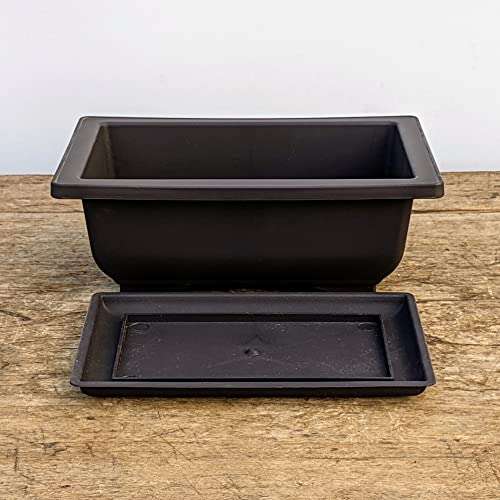
These Bonsai Outlet training pots suit growers who want a practical setup before moving a tree into a show pot. The set includes three six-inch planters made from shatter-resistant poly-resin. That material keeps the pots light and easier to handle than thick ceramic. Built-in mesh and humidity trays also make the set useful for cuttings, young trees, and recently repotted bonsai.
The shape gives roots room to spread while still keeping the plant low and balanced. The trays can catch excess water, but I would still empty standing water after irrigation. These are not fancy display pots, yet they solve the hard work of early bonsai training. For many growers, that makes them some of the best pots for bonsai plants during the first stages of development.
Pros:
- Set of three pots gives useful size flexibility
- Light poly-resin is easier to move than ceramic
- Shatter-resistant design suits busy work areas
- Built-in mesh helps keep soil from washing out
- Humidity trays support a tidy watering routine
- Good choice for training, cuttings, and young trees
Cons:
- Poly-resin does not have the classic look of clay
- Humidity trays may retain water if left full
- Six-inch size may not suit mature bonsai
My Recommendation
I recommend this set to new bonsai keepers, growers who repot often, and anyone building a small training collection. The light weight and three-pot format offer strong value for routine care. If your main goal is tree health and easy handling rather than a formal display, this is one of the best pots for bonsai plants available in a practical training style. Check the current Amazon listing for stock and pack details.
EPFamily 8-Inch Ceramic Bonsai Planter

The EPFamily eight-inch ceramic planter brings a cleaner display look to indoor bonsai and succulent arrangements. Its shallow profile keeps the visual focus on the trunk and canopy instead of a tall container. The glazed brown finish has a warm, simple style that works with wood shelves, desks, and neutral rooms. A drainage hole and bamboo saucer add useful function beneath the decorative surface.
Ceramic adds weight, which helps prevent a small tree from tipping when the canopy becomes broad. The glaze also makes the pot easier to wipe clean after watering. Still, ceramic can chip if you place it on a hard floor or move it without care. I would use a fast-draining bonsai mix and check the hole often, because the pot alone cannot correct a wet soil blend.
Pros:
- Shallow shape suits many compact bonsai styles
- Glazed finish gives a polished indoor display
- Bamboo saucer protects shelves from stray water
- Heavier ceramic body improves stability
- Drainage hole supports better root aeration
- Eight-inch width offers room for developing trees
Cons:
- Ceramic can chip or break if dropped
- Brown glaze may not fit every tree or room
- Saucer needs regular emptying after watering
My Recommendation
This planter is best for an indoor grower who wants a bonsai container that looks finished on a table or shelf. It is also a sensible gift for someone who already owns a small tree in a plain nursery pot. Among the best pots for bonsai plants, this model stands out for its blend of weight, drainage, and home-friendly design. I would choose it for a display tree rather than a rough training project.
G EPGardening 8-Inch Blue Bonsai Pot
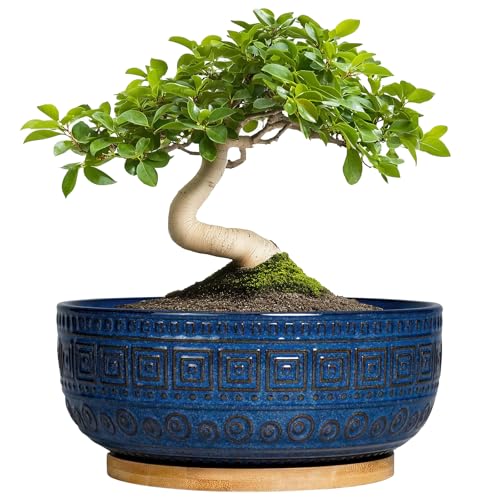
This blue G EPGardening planter adds color without turning the bonsai into a decoration first and a plant second. The round ceramic form and shallow bowl shape work well with compact trees, succulents, and small accent plants. Its drainage hole helps excess water leave the root zone. A matching saucer makes indoor use less stressful, especially on desks and plant stands.
The blue finish can create a strong contrast with dark bark and bright green leaves. I like that approach for trees with simple forms, where the pot provides a quiet frame with one clear color. The round design may not suit a formal upright tree that needs a rectangular pot, but it works nicely with informal shapes and rounded crowns. As with any ceramic container, handle it with both hands and avoid sudden temperature changes.
Pros:
- Blue finish creates a clear visual contrast
- Round, shallow form suits compact arrangements
- Ceramic weight helps keep the tree steady
- Drainage hole reduces the risk of trapped water
- Saucer makes indoor watering more convenient
- Useful for bonsai and small succulent displays
Cons:
- Bright blue may limit matching options
- Round shape is not ideal for every bonsai style
- Ceramic requires careful handling during repotting
My Recommendation
I suggest this pot for plant owners who want a lively color and a neat indoor display. It is especially appealing for a desk, windowsill, entry table, or small patio shelf. If you are comparing the best pots for bonsai plants by appearance as well as function, this blue EPGardening option deserves a close look. Pair it with gritty, quick-draining soil for the best result.
EPFamily 10-Inch Blue Bonsai Tree Pot

The ten-inch EPFamily pot gives larger bonsai and wider root systems more room than a small desktop planter. It uses a shallow ceramic shape, so the tree can still keep the low, grounded look that bonsai growers expect. The blue finish adds a bold accent, while the round body works well with many informal tree shapes. A drainage hole and saucer make it suitable for indoor or outdoor use when the weather is mild.
A larger pot does not mean you should plant a tiny tree in a huge volume of soil. Extra wet mix can stay damp for too long and may stress the roots. I would match this container with a tree that has a developed trunk, a broad canopy, or a root ball that has outgrown a smaller pot. The added ceramic weight is helpful, but always check the planting surface and lift the pot carefully when it is full.
Pros:
- Ten-inch size suits larger developing bonsai
- Shallow profile keeps the tree visually grounded
- Heavy ceramic body improves stability
- Drainage hole supports healthy root conditions
- Saucer helps protect floors and patio surfaces
- Blue finish provides a bold display accent
Cons:
- May be too large for young or small bonsai
- Full ceramic pot can become heavy to move
- Blue color may compete with some flowers or foliage
My Recommendation
I would choose this planter for an established indoor bonsai or a larger patio tree that needs a wider base. It is not the most efficient choice for seedlings or early cuttings. For shoppers seeking the best pots for bonsai plants in a larger display size, it offers useful space, steady support, and a strong decorative finish. Measure the tree’s root ball before ordering so the fit stays snug rather than oversized.
MUZHI 8-Inch Unglazed Ceramic Bonsai Pot

The MUZHI eight-inch pot takes a quieter path with plain, unglazed ceramic and a bamboo tray. Its natural surface has a soft pottery look that pairs well with aged bark and simple bonsai forms. The shallow profile gives the tree a balanced outline without making the container look too tall. A drainage hole helps keep the root area from turning into a soggy pocket.
Unglazed ceramic can absorb a little moisture through its porous wall, although drainage still depends mainly on the hole and soil mix. That natural texture may develop marks over time, which some growers enjoy as part of the pot’s character. The bamboo tray gives it a warm indoor look, but it should not sit in water for long periods. I recommend wiping the tray and letting it dry after watering.
Pros:
- Natural unglazed finish suits classic bonsai displays
- Shallow body supports a low visual profile
- Bamboo tray adds warmth to indoor décor
- Eight-inch size fits many small to medium trees
- Drainage hole helps protect delicate roots
- Plain design keeps attention on the bonsai
Cons:
- Unglazed ceramic may show mineral marks
- Bamboo tray needs care around standing water
- Pot can break if handled roughly
My Recommendation
This is my pick for growers who prefer a calm, natural look over a bright glaze. It fits a study, meditation space, office, or simple plant shelf. When people ask me to name the best pots for bonsai plants with a traditional feel, an unglazed ceramic model like this is often a strong answer. Use a free-draining mix and place it where the tree receives the light its species needs.
Bonsai Drainage Mesh, 100-Piece Assorted Pack

This 100-piece drainage mesh pack is not a pot, but it solves one of the most common bonsai pot problems. Small drainage holes can let soil escape during watering or repotting. A mesh screen covers the opening while still allowing water to pass. The assorted two-, three-, and four-inch sizes make it easier to work with several pot shapes.
I consider mesh a small item with a large effect on clean bonsai care. It keeps akadama, pumice, bark, and other mix parts in place, so the soil level stays more stable. The pieces can also reduce the chance of insects entering through an open hole, though they do not replace good sanitation. Remember that mesh should cover the hole, not block it with thick layers or packed roots.
Pros:
- Large 100-piece supply supports many repotting jobs
- Assorted sizes fit several common pot openings
- Helps prevent bonsai soil from washing away
- Supports cleaner watering and less mess
- Useful for ceramic, plastic, and training pots
- Low-cost accessory can extend potting convenience
Cons:
- Does not improve drainage if soil remains too dense
- Requires cutting or fitting for unusual holes
- It is an accessory, not a complete bonsai pot
My Recommendation
I recommend keeping this mesh pack in every bonsai tool box. It is best for anyone who repots trees, changes containers, or uses loose soil particles. While it is not one of the best pots for bonsai plants by itself, it can make almost any suitable pot work better. The large count is especially useful for collectors with several trees or for gardeners who repot each season.
Slow-Release Bonsai Fertilizer Pellets

Good bonsai care does not end when you select a pot. This gentle slow-release fertilizer helps provide food for indoor and outdoor bonsai trees in containers. Pellets can be easier for beginners than mixing liquid feed every week. They also fit a simple care plan for growers who want steady support during active growth.
A bonsai pot holds a small amount of soil, so nutrients can wash out faster than they do in garden beds. I still follow the package directions and consider the tree species, season, light, and recent repotting history. Fertilizer cannot fix poor drainage, root damage, or weak light. I would also avoid heavy feeding when a tree is stressed, dormant, or newly moved into a fresh pot.
Pros:
- Slow-release format simplifies routine feeding
- Suitable for many indoor and outdoor bonsai plants
- Five-ounce size can support several small trees
- Pellets reduce the need for frequent liquid mixing
- Useful partner for nutrient-poor bonsai soil mixes
- Helps new growers build a simple care routine
Cons:
- Incorrect use can still damage roots
- Not a substitute for proper light and watering
- Feeding needs vary by species and season
My Recommendation
This fertilizer is best for bonsai owners who want a low-effort feeding method after choosing one of the best pots for bonsai plants. It is especially handy for busy plant keepers and beginners who may forget liquid applications. Use it as directed and watch the tree rather than feeding by guesswork. The value is strongest when you pair nutrition with a suitable pot, open drainage, and species-correct light.
EPFamily 8-Inch Blue Ceramic Bonsai Planter

This EPFamily eight-inch bonsai pot offers the familiar shallow ceramic format in a bright blue finish. It is made for indoor or outdoor display and includes a drainage hole with a saucer. The bowl-like shape suits small bonsai, succulents, and other plants with modest root depth. Its color gives a plain tree more presence without requiring a large display stand.
The pot’s main strength is the balance between visual appeal and basic growing function. The saucer helps catch runoff, while the ceramic body gives the plant more weight than a thin plastic nursery container. I would place it in a sheltered outdoor spot rather than an area exposed to hard knocks or severe freeze and thaw cycles. Before planting, inspect the drainage hole and place mesh over it if the opening is wide enough for soil to escape.
Pros:
- Bright blue glaze creates an attractive plant display
- Shallow design fits many compact bonsai trees
- Drainage hole supports better moisture control
- Included saucer helps protect furniture and floors
- Heavy ceramic adds useful stability
- Works for indoor spaces and sheltered patios
Cons:
- Color may not suit formal or muted displays
- Pot can be fragile during transport and repotting
- Eight-inch size may limit larger root systems
My Recommendation
I recommend this model to shoppers who want a colorful gift or a cheerful home display. It is a good fit for a small tree with a rounded canopy and a simple trunk line. In a list of the best pots for bonsai plants, this one earns attention for its decorative value and useful drainage setup. I would not use it for a large tree or a high-risk outdoor location.
Bonsai Pots 3-Pack with Humidity Trays

This three-pack of six-and-a-half-inch plastic bonsai pots is aimed at practical plant care. Each pot includes a humidity tray, which can help keep the growing area neat when you water. Plastic is light, easy to clean, and less stressful to use during a first repot. The set makes sense for seedlings, young trees, and growers who want several matching containers.
Training pots should let roots develop while giving the grower easy access to water and soil. These pots do that without the cost or weight of thick ceramic. The trays are useful, but I would never leave the pot standing in a deep pool of water. If you grow bonsai in a dry room, the trays may add local moisture, but they do not replace proper humidity, light, airflow, or watering habits.
Pros:
- Three matching pots support a small collection
- Plastic design is light and easy to carry
- Humidity trays help contain excess runoff
- Six-and-a-half-inch size suits many young trees
- Less likely to break during beginner repotting
- Simple format works well for training use
Cons:
- Plastic looks less refined than handmade ceramic
- Trays can hold water if not emptied
- May not provide enough space for mature bonsai
My Recommendation
This set is best for beginners, budget-minded growers, classrooms, and anyone starting several bonsai at once. It gives you a safe place to train trees before investing in a decorative container. For shoppers comparing the best pots for bonsai plants on practical value, this three-pack is hard to overlook. I would use it for early growth and later move the strongest tree into a display pot.
How I Choose the Best Pots for Bonsai Plants
Choosing a bonsai pot is not only about color or shape. The container controls how quickly water leaves the soil, how much air reaches the roots, and how steady the tree feels. I start with the tree’s trunk size, root ball, species, and growing location. Then I compare the pot’s depth, width, drainage, weight, and material.
A good pot should support the tree without forcing the roots into a deep, wet space. Most bonsai containers are shallow because bonsai roots grow outward after regular pruning. However, not every tree needs the same depth. A young tree in training may need more room than an old tree prepared for display.
Drainage Comes First
Drainage is the first feature I check. A pot needs at least one open drainage hole, and larger containers often benefit from more than one opening. Water should leave the root zone soon after thorough watering. If the soil stays wet for too long, roots may lose air and become vulnerable to rot.
A drainage hole does not make poor soil safe. Dense garden soil can stay wet even in a pot with a large opening. I prefer a bonsai mix with mineral particles and enough structure to keep air spaces open. Mesh over the hole can stop soil loss, but it should never cover the opening so tightly that water cannot flow.
Choosing the Right Pot Size
The best bonsai pot size depends on the tree, not only its current leaves. A container should hold the root ball with a little room for fresh mix. A pot that is too small can dry too fast and leave no room for new roots. A pot that is too large can hold extra moisture and make the tree look visually lost.
For a display tree, growers often select a pot that matches the trunk and canopy. A broad tree needs a container with enough width and weight to balance it. A tall, narrow tree may look better in a longer rectangular pot, though the round products in this guide suit many casual and informal styles. Always measure before you order.
Ceramic, Plastic, or Resin?
Ceramic bonsai pots offer weight, style, and a finished look. Glazed ceramic gives you color and a smooth surface. Unglazed ceramic gives a softer, natural texture and may blend well with older trees. The tradeoff is weight and breakage risk.
Plastic pots cost less and handle drops better. They work especially well for training, propagation, and early development. Resin sits between plastic and ceramic in feel, since it can offer a sturdy body without the full weight of fired clay. For a beginner, a light training pot may be more useful than an expensive display pot.
Glazed Versus Unglazed Surfaces
Glazed pots are easy to wipe and come in many colors. They make sense for indoor displays where appearance matters. Unglazed pots offer a traditional look and can develop a natural patina. Neither finish automatically makes a better home for every bonsai.
I match the surface to the tree’s character. A bright blue pot can frame green leaves and dark bark. A plain brown or natural pot may look better with a flowering tree or a rugged trunk. The best pots for bonsai plants should support the tree’s story instead of competing with it.
Indoor and Outdoor Placement
A pot marked for indoor and outdoor use still needs sensible placement. Outdoor ceramic containers may face rain, wind, heat, and cold. A pot can become more fragile if water freezes inside tiny cracks. In cold regions, I move delicate ceramic pots to a protected area when hard freezes are expected.
Indoor bonsai still need strong light and airflow. A saucer protects a shelf, but it should not become a permanent water bowl. Empty it after watering. Good pot care is simple: keep the hole open, avoid standing water, and inspect the container during each watering check.
When to Use a Training Pot
A training pot is ideal when the tree is still building its trunk, branches, and root system. It gives you a lower-cost container for work that may change after one or two seasons. Training pots also make root pruning less stressful because you are not worried about damaging a valuable display piece.
I would use a plastic or resin pot for nursery stock, cuttings, and young trees. Once the trunk has the shape and size I want, I can choose a ceramic display pot. This two-step method saves money and lets the tree mature before I make a style choice.
How to Repot a Bonsai Into a New Pot
First, prepare the pot, mesh, soil, wire, and clean tools. Cover the drainage opening with mesh, but leave the water path open. Remove the tree carefully and inspect the roots. Trim only as much as the species and season allow.
Place a small layer of fresh mix in the pot. Set the tree at the planned angle, then add soil around the roots. Use a chopstick or similar tool to work mix into empty spaces. Secure the tree if it moves, water it well, and keep it in a protected spot while it recovers.
Do not fertilize a freshly repotted tree unless the product and tree care plan clearly support it. Fresh roots need time to settle. Watch the leaves, soil moisture, and light. Bonsai care rewards patience more than speed.
Common Potting Mistakes I See
The most common mistake is choosing a pot because it looks attractive while ignoring the hole and soil. The second is using a container that is much too large. Another problem is leaving water in the saucer for days. These errors can turn a healthy tree into a weak one.


