Best Tool For Edging Garden Beds: Top Picks
The best tool for edging garden beds is a sharp, sturdy half-moon edger with a comfortable long handle.
If grass keeps creeping into your flower beds, or mulch spills onto the lawn, a clean edge can feel like a small miracle. I have found that the right garden edging tool saves time, protects plant roots, and gives the yard a crisp shape without much fuss. Manual edgers also avoid fuel, batteries, and loud motors. In this guide, I compare popular edging tools for strength, comfort, blade design, control, and value. I also explain which option fits small beds, hard soil, long borders, and permanent landscape edges.
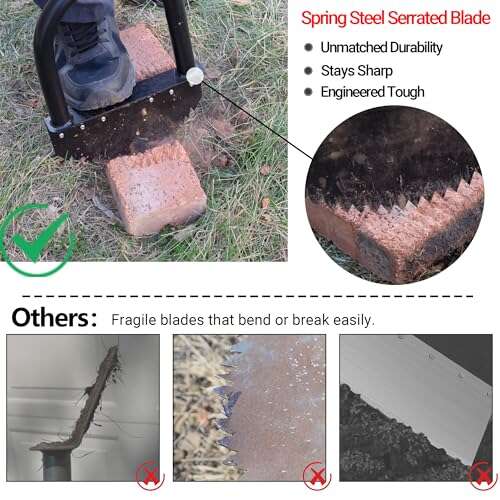
CKLT 41-Inch Spring Steel Border Edger

The CKLT 41-inch edger uses a tempered spring steel blade for firm cuts along lawn borders. Its long shaft lets me work while standing, which helps reduce the bending that often makes edging tiring. The blade shape suits flower beds, walkways, and simple lawn borders. It is a practical choice when I want a straight edge without starting a gas or electric machine.
The one-piece design also keeps the tool simple. There are fewer parts to tighten during a long edging job, and the narrow blade can follow a curved bed with steady hand pressure. Like most manual edgers, it works best when the soil has some moisture but is not muddy. A short watering session before use can make hard ground much easier to cut.
Pros:
- Strong tempered spring steel blade
- Long 41-inch reach reduces bending
- Useful for beds, paths, and lawn borders
- Simple manual design needs no fuel or battery
- One-piece build helps limit loose connections
- Good control for straight and curved lines
Cons:
- Manual work can take effort in dry clay
- Fixed length may not suit every user
- It may need cleaning after damp soil use
My Recommendation
| Best for | Why |
|---|---|
| Everyday flower beds | The sharp blade makes neat border cuts with little setup. |
| Tall or average users | The 41-inch shaft supports a more upright stance. |
| Low-maintenance yards | It needs no charging, fuel, or motor service. |
I recommend the CKLT for homeowners who want the best tool for edging garden beds in a simple, traditional format. It offers a useful mix of reach, strength, and control. Its value is strongest for routine seasonal edging and small to medium yards.
Garden Weasel Edger Chopper
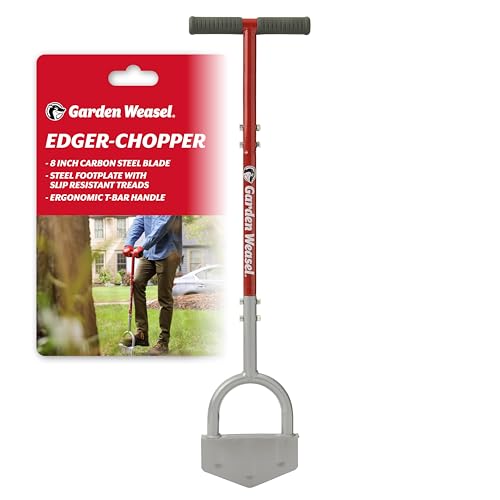
The Garden Weasel Edger Chopper is made for more than a light trim. Its chopper-style shape can help break through turf, thin roots, and loose soil along beds, patios, and sidewalks. I like this type of tool when the border has become overgrown and a simple slicing motion does not feel strong enough. It can also help define a new bed before adding mulch or plants.
This tool rewards a firm, controlled motion rather than wild swinging. I would mark the line first, then use small bites to avoid damaging nearby plants. The metal working end should stay cleaner and sharper when I brush away soil after use. Its broad purpose makes it useful for garden projects, though it may feel more active than a light-duty edging spade.
Pros:
- Chopper design handles overgrown borders
- Useful beside beds, patios, and sidewalks
- Can help cut through light roots and turf
- Manual action gives direct control
- Helpful for creating new garden outlines
- Does not require electricity or fuel
Cons:
- May require more force than a simple edger
- Less suited to users who need a very light tool
- Careful placement matters near delicate plants
My Recommendation
| Best for | Why |
|---|---|
| Overgrown beds | The chopper form helps reclaim borders that have lost their shape. |
| New landscape lines | It can cut a first outline before soil work begins. |
| Mixed hardscape areas | It works around patios, walks, and lawn edges. |
The Garden Weasel is a strong pick for anyone seeking the best tool for edging garden beds that also handles heavier cleanup. It is best for active yard work, not just a quick touch-up. Gardeners who value versatility may find its broader cutting role worth the effort.
KYEEN-TOOLS Serrated Lawn Edger
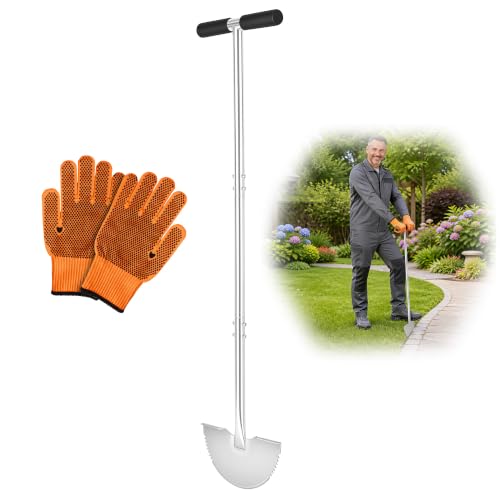
The KYEEN-TOOLS edger has a serrated blade designed to grip soil and grass as I push it into the border. That tooth pattern can be helpful when a smooth blade slides over compacted ground. Its softer T-handle gives both hands a more natural place to work. The 38-inch format also offers useful reach without feeling overly tall for many users.
The rust-proof construction is a practical feature for a tool that often meets wet soil. Still, I would not leave it outdoors after use. Serrated edges can make a clean cut, but they work best when I keep the tool level and follow a marked line. This model suits gardeners who want leverage, a comfortable grip, and a blade that can bite into firm lawn edges.
Pros:
- Serrated blade helps grip compact soil
- Softer T-handle improves hand comfort
- 38-inch length offers useful control
- Rust-proof build supports outdoor use
- Suitable for lawns, beds, and sidewalks
- Good choice for moderate edging tasks
Cons:
- Serrated teeth may leave a rough first cut
- Shorter users may still need to adjust stance
- Very hard ground may require prior watering
My Recommendation
| Best for | Why |
|---|---|
| Firm lawn edges | The teeth can hold the surface better than a smooth blade. |
| Comfort-focused gardeners | The softer T-handle makes repeated pushes easier. |
| Medium-size beds | The 38-inch length balances reach and control. |
I would choose the KYEEN-TOOLS model as the best tool for edging garden beds when grip and hand comfort matter most. It is especially useful for soil that feels firm but is not full of large roots. It offers a practical middle ground for routine home landscaping.
WORKPRO 40-Inch Saw Tooth Edger
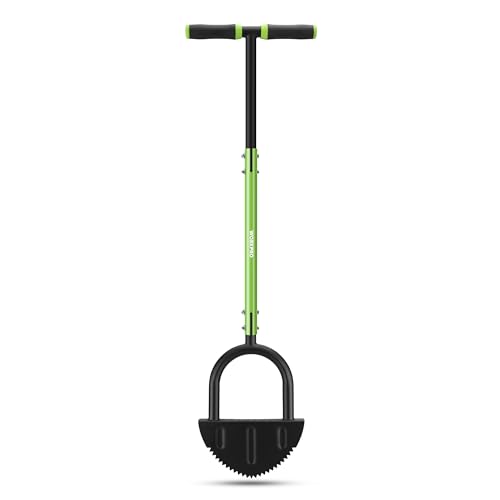
The WORKPRO 40-inch edger uses a saw-tooth blade to cut through grass mats and soil with a repeated push. Its height is long enough to reduce deep bending, yet it remains manageable around narrow beds. I see it as a solid general-purpose option for homeowners who want a manual lawn edging tool. It is simple, direct, and easy to understand.
A saw-tooth blade can help when a plain edge meets dense turf. I still recommend marking the border before cutting, especially around curved beds. The tool should enter the ground with steady pressure instead of a hard kick, which gives a cleaner line and protects the blade. With basic care, it can serve well for seasonal lawn maintenance.
Pros:
- 40-inch shaft supports upright work
- Saw teeth help cut dense grass
- Useful for routine lawn and bed borders
- Manual design keeps operating costs low
- Easy to guide along a marked line
- Good reach for medium-size users
Cons:
- May feel less precise in tight corners
- Hard clay can still slow the cut
- Users may need to sharpen or clean the blade over time
My Recommendation
| Best for | Why |
|---|---|
| Regular lawn care | The 40-inch build suits repeat border maintenance. |
| Dense grass | Saw teeth help separate turf fibers during each push. |
| First-time users | The familiar half-moon style is easy to learn. |
The WORKPRO is a good candidate for the best tool for edging garden beds if you want a balanced saw-tooth design. It has enough reach for comfort and enough bite for common grass problems. I consider it a dependable option for regular spring and fall cleanup.
Adjustable 38-42 Inch Manual Edger

This adjustable manual edger offers a 38- to 42-inch range, which makes it easier to find a comfortable working height. Its wide footplate gives my shoe more room when I need extra downward pressure. The manganese steel blade is designed for repeated contact with soil and turf. That combination makes the tool suitable for flower beds, sidewalks, and landscaping work.
Adjustability is valuable when more than one person shares the yard tools. A shorter setting can improve control in tight areas, while a longer setting can reduce bending across a long border. I would check the adjustment point before each session and keep the blade free of packed mud. The wide plate also helps spread pressure instead of concentrating it on one small spot.
Pros:
- Adjustable length fits different users
- Wide footplate improves pushing comfort
- Manganese steel blade suits regular yard work
- Useful for flower beds and sidewalks
- Supports better posture for taller gardeners
- Good choice for shared households
Cons:
- Adjustment hardware may need periodic checking
- More parts mean more maintenance than a one-piece tool
- Wide footplate can be less nimble in narrow gaps
My Recommendation
| Best for | Why |
|---|---|
| Shared households | The adjustable shaft can suit more than one user. |
| Tall gardeners | The longer setting helps reduce back strain. |
| Long straight borders | The wide plate makes repeated cuts more stable. |
This adjustable model may be the best tool for edging garden beds for families or gardeners with different heights. Its wide footplate and adjustable shaft focus on comfort during longer jobs. It delivers strong value when flexibility matters more than the lightest possible weight.
Orcela 37-Inch Half Moon Edger
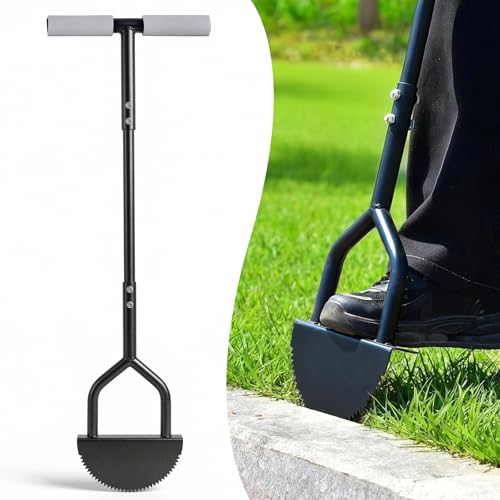
The Orcela half moon edger uses a classic shape for cutting a clear line between lawn and soil. Its 37-inch handle keeps the tool compact enough for smaller spaces and curved beds. The T-grip gives me a familiar two-hand hold when I need to press down. This design is easy to use for light and moderate edging around home gardens.
I like a shorter edger when the bed has shrubs, stones, or other obstacles close to the line. It is easier to place than a very long tool, although it may require a little more bending for tall users. For the cleanest result, I use the blade in short sections and remove the loose strip of grass afterward. That small step makes the border look finished instead of merely cut.
Pros:
- Compact 37-inch length improves maneuvering
- Classic half moon blade is easy to guide
- T-grip supports two-handed pressure
- Useful around curved beds and shrubs
- Simple design suits light yard work
- Easy to store in a small shed
Cons:
- May require more bending for tall users
- Less suited to deep roots or very hard soil
- Shorter reach can slow work on large yards
My Recommendation
| Best for | Why |
|---|---|
| Small flower beds | The shorter shaft is easy to position in tight areas. |
| Curved borders | The compact form helps follow gentle turns. |
| Small sheds | It stores more easily than extra-long tools. |
I recommend the Orcela as the best tool for edging garden beds when space and control are the main concerns. It is a friendly choice for smaller yards and occasional users. Its value comes from easy handling rather than heavy-duty cutting power.
Root Slayer Serrated Garden Edger

The Root Slayer serrated garden edger is built for borders where ordinary grass is not the only problem. Its serrated working edge can help saw through roots, stubborn turf, and packed soil. I would consider this a more aggressive tool than a basic half-moon spade. It is useful when a garden bed has been neglected or when roots make a clean cut difficult.
The red finish makes the tool easy to spot in tall grass or a crowded shed. Its pointed, toothed profile should be used with care near planted areas, since a deep cut can harm roots that I want to keep. I prefer to work slowly and check below the surface before applying force. When used with control, this edger can turn a rough border into a strong, lasting line.
Pros:
- Serrated edge helps cut roots and tough turf
- Strong choice for neglected borders
- Distinct color improves visibility
- Useful for deeper landscape work
- Provides direct control without a motor
- Can help reclaim wide grass growth
Cons:
- May be too aggressive for delicate beds
- Requires careful control near plant roots
- Can feel heavy during long edging sessions
My Recommendation
| Best for | Why |
|---|---|
| Root-filled borders | The serrated edge can work through roots and dense turf. |
| Overgrown gardens | It provides more cutting power than a light edger. |
| Major bed repairs | The strong profile suits reclaiming an unclear border. |
The Root Slayer is a strong contender for the best tool for edging garden beds when roots are the main challenge. I would not choose it for gentle weekly trimming around fragile plants. For difficult ground, however, its cutting design can save time and repeated effort.
CKLT One-Piece 41-Inch Edger

This CKLT model uses a one-piece 41-inch design and a spring steel blade. The long handle provides a comfortable reach for many users, while the fixed build keeps the tool straightforward. I like one-piece tools when I want less assembly and fewer connection points to inspect. It is suited to lawn borders, walkways, and flower beds that need a clear edge.
The spring steel blade should flex slightly under normal pressure while still returning to shape. I would use body weight instead of swinging the tool, especially in hard soil. A clean, vertical cut creates the best visual line and helps keep grass from leaning into the bed. After use, rinsing and drying the blade can help preserve its working condition.
Pros:
- One-piece design feels simple and stable
- 41-inch length reduces frequent bending
- Spring steel blade suits repeated edging
- Works along lawns, paths, and beds
- No batteries, cords, or fuel are needed
- Good option for routine maintenance
Cons:
- Fixed length offers no height adjustment
- Hard, dry soil may still need preparation
- Long handle may feel less nimble in tight corners
My Recommendation
| Best for | Why |
|---|---|
| Routine maintenance | The simple build is ready for regular edging work. |
| Users who dislike assembly | The one-piece design reduces setup. |
| Medium and large borders | The 41-inch reach supports a steady pace. |
This CKLT is a dependable choice for the best tool for edging garden beds if you prefer a sturdy, no-fuss design. It works well for homeowners who value reach and simple care. Its overall value is especially good when regular maintenance matters more than extra features.
Adjustable Heavy-Duty Half Moon Edger

This heavy-duty half moon edger offers an adjustable 38- to 49-inch handle, giving it one of the widest height ranges in this group. Its sharp saw-tooth blade can help with grass, soil, and compact border material. The wide footplate provides a stable place to apply pressure. I see it as a flexible tool for users who want both reach and strong cutting action.
The longer setting can help taller gardeners protect their backs during long runs. The shorter setting gives better control for detail work and smaller beds. Because the blade is aggressive, I recommend testing it in an out-of-the-way spot before edging near valuable plants. Regular cleaning at the end of the job will also help keep the teeth working smoothly.
Pros:
- Very broad 38- to 49-inch adjustment range
- Saw-tooth blade handles firm turf
- Wide footplate supports strong pressure
- Can suit both shorter and taller users
- Useful for long borders and large yards
- Good control when adjusted correctly
Cons:
- More adjustments mean more parts to check
- May feel large in narrow garden spaces
- Sharp teeth require care near plants and roots
My Recommendation
| Best for | Why |
|---|---|
| Tall gardeners | The 49-inch setting can reduce stooping. |
| Large yards | The reach and footplate support faster progress. |
| Mixed edging jobs | Adjustability allows both detail and broad work. |
This adjustable half moon model may be the best tool for edging garden beds for taller users and large properties. It offers strong reach without locking you into one size. I recommend it to gardeners who want power and flexibility and are willing to check the adjustment points.
No-Dig 100-Foot Landscape Edging Kit

This no-dig landscape edging kit takes a different approach from a blade edger. Instead of cutting a temporary line, it creates a physical border that can separate mulch, soil, and grass. The kit includes a long roll of edging, spikes, a hammer, and gloves. That makes it useful for larger landscaping projects where I want a lasting visual boundary.
Installation still needs planning. I would mark the path, trim the grass, and make sure the edging follows the ground before securing it with spikes. It works best in soil that allows the stakes to enter firmly. This kit is not the best tool for edging garden beds when I only need a quick cut, but it can reduce future grass spread once installed.
Pros:
- 100-foot length suits large projects
- Creates a lasting physical border
- Includes spikes, hammer, and gloves
- No digging is required for basic setup
- Helps hold mulch and soil in place
- Can reduce repeated manual trimming
Cons:
- Installation takes more planning than blade edging
- Plastic edging may not suit every landscape style
- Uneven ground can make alignment difficult
My Recommendation
| Best for | Why |
|---|---|
| Large landscape projects | The 100-foot roll covers long garden borders. |
| Mulch containment | The installed edge helps keep mulch in the bed. |
| Long-term upkeep | A physical barrier can reduce repeated grass spread. |
I recommend this kit when the best tool for edging garden beds means a lasting border, not a hand-cut line. It is a smart choice for large beds and pathways that need separation. Its value grows over time because it may reduce the need for frequent touch-up edging.
How to Choose the Best Tool for Edging Garden Beds
The best tool for edging garden beds depends on the soil, bed size, and kind of finish you want. A manual half-moon edger works well for clean cuts along grass and soil. A serrated blade is better for roots and dense turf. A no-dig border is better when you want a physical barrier that stays in place.
Blade shape
A smooth half-moon blade creates a neat slice in soft or prepared soil. A saw-tooth blade can grip and cut dense grass with less sliding. Serrated root-cutting designs suit neglected beds, but they need more care near shrubs and perennials.
Handle length
Most gardeners should look for a handle that lets them stand fairly upright. A 37- to 41-inch tool suits many average users. Adjustable models offer more flexibility for shared homes or taller gardeners. A shorter tool can be easier to control around curved beds and crowded plants.
Footplate width
A wide footplate spreads pressure across the shoe. This can make repeated cuts easier and more stable. It also helps when the soil is firm. However, a broad plate may feel awkward in very narrow borders.
Soil condition
Even the best tool for edging garden beds will struggle in bone-dry clay. Water the area lightly several hours before edging, then wait until the soil feels crumbly rather than wet. Wet mud can stick to the blade and make the line messy. In rocky soil, remove stones first to protect the blade and your feet.
Manual versus powered edging
Manual edgers are quiet, light on maintenance, and easy to store. They work well for small and medium beds. Powered edgers cover long borders faster, but they cost more and need fuel, charging, cords, or engine care. For many home gardeners, a strong manual tool offers the best balance of control and value.
How I Use a Garden Bed Edger
I start by using a hose, rope, or marking paint to plan the line. This step matters because small errors become obvious once the bed is cut. I keep the line smooth and avoid sharp corners that are hard to mow around.
Next, I place the blade at the edge of the lawn. I push down with my foot while keeping the shaft straight. I make short cuts instead of forcing one long stroke. This method gives a cleaner edge and helps me stop before reaching plant roots, irrigation lines, or cables.
After cutting, I lift away the loose strip of grass and soil. I then rake the bed and add mulch if needed. A final pass with a stiff brush or broom cleans the walkway. This simple routine makes the border look crisp, like a frame around a picture.
Safety and Care Tips
Wear sturdy shoes with closed toes when using any manual edger. Gloves help protect hands from rough handles, sharp edges, and hidden stones. I also recommend checking the area for irrigation tubes, landscape lighting wires, and shallow roots before pushing the blade deep.
Keep the blade pointed down when carrying the tool. Do not use a damaged shaft or loose handle. After each job, remove soil, dry the metal, and store the edger under cover. A light coat of suitable oil on exposed metal can help limit rust, but follow the care directions supplied with the product.
Good posture matters too. I keep my back straight and use my legs for pressure. I take short breaks during long jobs. Edging should create a clean border, not a sore back.
FAQs Of best tool for edging garden beds
What is the best tool for edging garden beds?
A sturdy half-moon edger with a sharp blade and long handle is the best general choice. Choose a serrated model for dense turf or roots. Choose landscape edging when you want a permanent barrier.
Should I edge garden beds when the soil is wet?
No. Very wet soil sticks to the blade and can create a rough line. Slightly moist soil is better because it cuts with less force while still holding its shape.
Is a serrated edger better than a smooth edger?
It depends on the job. Serrated edges work well in dense grass and firm soil. Smooth blades often create a cleaner cut in soft, prepared soil.
How deep should I edge a flower bed?
A cut of about 2 to 4 inches is common for a visible lawn border. The right depth depends on the grass, soil, and mulch. Avoid cutting deeply near shallow roots or buried irrigation lines.
Can a manual edger cut through roots?
Some serrated edgers can cut small roots and tough turf. Large roots need a pruning saw or other suitable tool. Always confirm that the root does not belong to a plant you want to keep.
Final Verdict: Which Should You Buy?
The CKLT 41-inch spring steel edger is my top pick for the best tool for edging garden beds. It offers strong reach, simple use, and good control for common home borders.
Choose a serrated model for roots or a no-dig kit for a lasting border. With the right tool and moist soil, garden edging becomes faster, cleaner, and easier to maintain.

Laura Bennett is a gardening writer at MyGardenLabs who creates beginner-friendly guides focused on solving common plant care and gardening problems.