Best Tool For Weeding Between Bricks: Top Easy Picks
For most patios, a sharp stainless-steel crack weeder with a long handle is the best choice.
You pull weeds from a flower bed, yet tiny green shoots still fill the gaps between your bricks. Rain helps their roots grip tight, while moss and dirt make each joint look older than it is. A flat screwdriver may work for one spot, but it can hurt your hand and damage mortar. I reviewed the leading manual crack weeders for patios, walkways, driveways, and pavers to find the best tool for weeding between bricks.
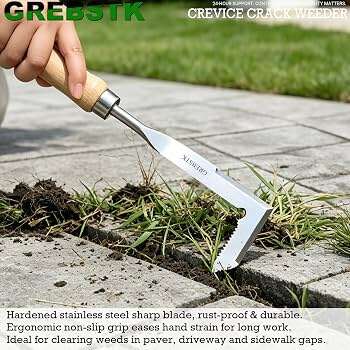
GREBSTK Crack Weeder, Short Stainless Steel

The GREBSTK short crack weeder has the simple shape I like for close work. Its narrow stainless-steel blade can slide into tight joints between bricks, pavers, and slabs. The sharp edge helps cut roots below the surface instead of only snapping off the visible leaves. Its small size also gives you good control around edging, steps, and garden borders.
This is a hand tool, so you must bend or kneel while using it. That trade-off brings better control in awkward spots and makes it easy to see what you are doing. I would use it after rain or after watering, when the soil in the joint feels softer. For small patios and spot jobs, this compact model offers the direct feel many gardeners want from the best tool for weeding between bricks.
Pros:
- Sharp, narrow tip fits small brick joints
- Stainless steel helps resist rust
- Light weight makes detail work easy
- Good control near plants and edging
- Useful for weeds, moss, and packed debris
Cons:
- Requires kneeling or bending
- Short handle offers less reach
- Large areas may take more time
GREBSTK Crack Weeder, Compact Sharp Tool

This GREBSTK model follows the classic crack-weeder design: a slim metal point, a firm grip, and a shape made for seams. It works well when weeds grow in narrow gaps where a hoe or broad trowel cannot enter. The pointed end can break through dry surface crust, while the hooked profile helps pull out stems and shallow roots. I find this type especially useful on older brick paths with uneven joints.
The tool has no motor, battery, or chemical spray to manage. That keeps maintenance simple and lets you work in areas used by children or pets without applying weed killer. Still, manual removal works best when you remove as much root as possible and sweep away loose seeds. This GREBSTK is a practical pick for buyers who want a small best tool for weeding between bricks at a modest cost.
Pros:
- Fits tight cracks with little room to spare
- Sharp point helps loosen hard surface soil
- Simple manual design needs no charging
- Easy to carry around a patio or yard
- Works for weeds and light moss buildup
Cons:
- Short reach can strain the back
- Not ideal for very wide joints
- Heavy roots may need repeated passes
BARAYSTUS 13-Inch L-Shaped Crack Weeder

The BARAYSTUS 13-inch crack weeder adds a little more reach without becoming a full-size yard tool. Its L-shaped head is made to enter a joint and pull toward you. That motion is useful for crabgrass, plantain, dandelion stems, and weeds that hold onto the sides of a paver. The stainless-steel build should also stand up well to damp soil when you clean and dry it after use.
I like this size for users who want hand-tool control but do not want to work with a tiny blade. The longer body keeps your hands slightly farther from grit and sharp brick edges. It still requires some bending, but it feels less cramped than a very short weeder. As a best tool for weeding between bricks, it suits routine patio care and small driveway repairs.
Pros:
- 13-inch length gives useful extra reach
- L-shaped head pulls weeds from the seam
- Stainless steel suits damp outdoor work
- Good balance of control and leverage
- Helpful for patios, paths, and pavers
Cons:
- Still may require bending for low joints
- Manual pulling takes time on long paths
- Very deep roots may need a second tool
BARAYSTUS Long-Handle Crack Weeder

The long-handle BARAYSTUS model targets the main problem with hand crack weeders: back strain. Its extended design lets you work from a standing position across walkways, patios, and driveway edges. The L-shaped stainless-steel head reaches down into a seam and gives you a pulling angle that feels natural. It can also help clear moss and compacted plant matter from between pavers.
Long handles do not remove every challenge. You need to keep the blade aligned with the joint, and a very tight gap may demand a slower approach. I recommend using short pulls rather than forcing the shaft sideways. For older adults or anyone with knee pain, this model may be the best tool for weeding between bricks because comfort can make regular care much more likely.
Pros:
- Allows standing work on most ground-level paths
- Reduces kneeling and repeated bending
- L-shaped blade pulls roots from cracks
- Useful on patios, walkways, and driveways
- Stainless-steel head is suited to outdoor use
Cons:
- Less precise than a short hand weeder
- Long shafts need storage space
- Hard sideways force may stress the joint or tool
Juxifyron 2-Piece Stainless Crack Weeder Set

The Juxifyron two-piece set gives you more than one way to attack a brick joint. One tool can focus on narrow cracks, while the other can help pull or loosen moss and weeds from a wider seam. This matters when a patio has mixed surfaces, since not every gap has the same width or depth. Stainless-steel heads also make the set suitable for damp soil and routine outdoor cleanup.
A two-tool set can save time because you do not need to force one blade into every kind of gap. I would use the slimmer piece for rooted weeds and the broader piece for surface debris. The set is also useful for gardeners who care for both pavers and garden edges. It is a strong choice for anyone seeking a flexible best tool for weeding between bricks rather than one single-purpose blade.
Pros:
- Two tools cover different crack sizes
- Stainless-steel construction suits outdoor use
- Useful for weeds, moss, and loose debris
- Good option for patios with mixed pavers
- Easy to share between household users
Cons:
- Small tools still require bending
- More pieces mean more storage needs
- Not as fast as a long-handle tool on large areas
WORKPRO Adjustable Crack Weeder, 27 to 54 Inches

The WORKPRO adjustable crack weeder stands out for its 27- to 54-inch handle range. You can shorten it for closer control or extend it for standing work along a walkway. That flexibility helps households with more than one user, since each person can choose a more comfortable reach. The stainless-steel crevice head is designed to enter joints and lift unwanted growth.
Adjustability is valuable, but it also makes the connection points important. I would tighten each section before use and avoid twisting the shaft against a very hard root. At its shorter setting, this tool can feel more controlled near steps and borders. At full length, it becomes a strong best tool for weeding between bricks for users who want reach without storing a very long fixed handle.
Pros:
- Adjusts from 27 to 54 inches
- Supports both close and standing work
- Fits users of different heights
- Stainless-steel head targets narrow seams
- Stores more easily than some fixed long tools
Cons:
- Adjustable joints need proper tightening
- May feel less rigid at full extension
- Costs more than a basic short weeder
Juxifyron 67-Inch Crack Weeder With Brushes

The Juxifyron 67-inch model is made for large paths, driveways, decks, and patios where kneeling is not practical. Its long handle lets you reach a joint while standing, and its two brush heads add a useful cleanup step. You can loosen growth with the weeding head, then sweep away dry moss and dirt with a brush. That two-stage approach leaves the seam cleaner than pulling weeds alone.
This tool is best for regular maintenance, not for forcing through thick roots in rock-hard soil. Long tools work well when you keep the head straight and use steady downward pressure. I would wet stubborn joints first, then return with the tool after the water has had time to soften the soil. For broad hardscape areas, this may be the best tool for weeding between bricks for comfort and speed.
Pros:
- 67-inch reach supports upright work
- Two brush heads add cleanup value
- Useful for large patios and driveways
- Helps reduce knee and back strain
- Good for weeds, moss, and surface dirt
Cons:
- Long length can reduce close control
- Needs more storage room
- May struggle with thick, woody roots
Three-Piece Stainless Crack Weeder Set

This three-piece set is aimed at gardeners who want several shapes for different jobs. The narrow teeth can help rake out loose material, while a pointed section can enter a tight brick seam. Multiple tools are useful when one crack holds soft moss and another holds a firm weed root. The compact design also makes the set easy to keep in a garden tote or shed drawer.
Small hand tools give you strong feedback through the handle, which helps you avoid scraping the brick face. I suggest using the teeth lightly at first, especially on older mortar or fragile pavers. Remove the loosened debris with a stiff broom so seeds and soil do not stay in the gap. This set is a good best tool for weeding between bricks for detail work and mixed hardscape repairs.
Pros:
- Three shapes handle varied crack conditions
- Teeth help loosen compacted debris
- Pointed tools reach narrow joints
- Compact size makes storage simple
- Useful for pavers, lawns, and garden edges
Cons:
- Requires kneeling or frequent bending
- Small tools cover less ground per pass
- Teeth may need careful use near soft mortar
WORKPRO 12.5-Inch Stainless Crack Weeder
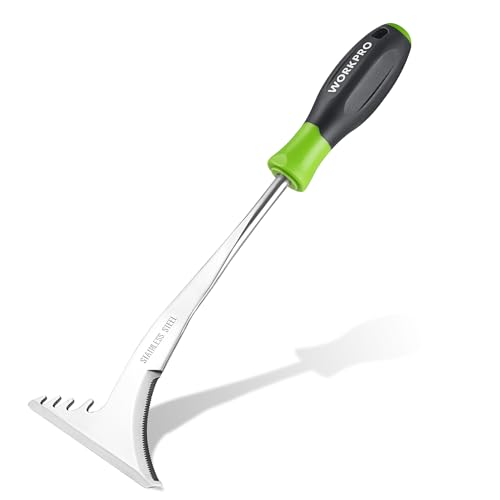
The WORKPRO 12.5-inch crack weeder offers a middle ground between a tiny hand pick and a full-length garden tool. Its stainless-steel head can reach into brick and paver joints without taking up much room in storage. The moderate length gives more leverage than a very short tool while keeping the head easy to guide. It is a sensible fit for steps, narrow paths, and small patios.
I prefer this size when I need to work around obstacles or control the direction of each pull. It is not the right answer for someone who cannot bend, but it avoids the cramped grip of a miniature weeder. Use it after light rain, pull upward rather than sideways, and clear the joint when finished. For close control and a solid build, it deserves consideration as the best tool for weeding between bricks.
Pros:
- Balanced 12.5-inch working length
- Stainless steel is suited to damp soil
- Good control around steps and borders
- More leverage than a very short tool
- Simple design is easy to clean
Cons:
- Still requires bending or kneeling
- Not designed for very large surfaces
- Deep roots may need a stronger puller
GREBSTK 36-Inch Long Crack Weeder

The GREBSTK 36-inch crack weeder gives you useful reach while staying shorter than many upright tools. That makes it easier to guide along narrow paths and around furniture, planters, and steps. The sharp stainless-steel head is intended for seams where a broad hoe cannot fit. Its length can also reduce the amount of crouching needed during a long cleanup session.
This model suits homeowners who want one tool for regular patio care but do not need a 60-inch shaft. I would use it for weeds that appear between bricks, along driveway borders, and beside retaining walls. Keep the blade pointed into the gap and avoid using it as a pry bar. Its reach, size, and simple design make it a balanced best tool for weeding between bricks for many average yards.
Pros:
- 36-inch reach reduces deep bending
- Easier to control than an extra-long shaft
- Sharp stainless head enters narrow seams
- Good fit for patios and walkway edges
- Simple length stores more easily than a 67-inch tool
Cons:
- Some users may still need to lean down
- Less reach than a full long-handle model
- Hard roots require patience and soft soil
What Makes a Good Brick Weeder?
The best tool for weeding between bricks must fit the joint, not just look strong in a product photo. A broad blade cannot enter a narrow seam. A weak point may bend when it meets a mature root. I look at the head shape, steel quality, handle comfort, reach, and the type of surface the tool can handle.
Brick and paver joints often hold a mix of soil, sand, moss, and roots. That mix changes after rain and during dry weather. A tool that works well in soft soil may need more care in a dry, compacted gap. The best choice gives you enough strength to pull growth while still allowing you to work without scraping the paver.
Short Handle or Long Handle?
A short crack weeder gives the highest level of control. You can see the blade clearly and guide it around mortar, plants, and fragile edges. Short tools also fit into a small tool box. Their main weakness is comfort, since you must kneel or bend for most of the job.
A long-handle model lets you work while standing. It is often the better option for a large patio, a long driveway, or anyone with knee and back concerns. The trade-off is less precise control. If you choose a long tool, use steady pulls and do not twist the shaft from side to side.
Adjustable tools sit between these two groups. You can shorten the shaft for close work and extend it when you need reach. Check the locking points before each use. A loose connection can make the head harder to guide and may waste effort.
How I Judge Crack Weeding Tools
I judge these tools by the job they must perform, not by the number of features on the package. First, the head should fit common brick and paver gaps. Next, the blade should hold its shape during normal pulling. A stainless-steel head is helpful because outdoor tools often meet wet soil, but every metal tool still benefits from cleaning and drying.
I also consider comfort. A tool that removes a weed well but causes hand, knee, or back pain may stay in the shed. Good design helps you keep a natural wrist angle and use your body weight in a controlled way. This matters because weed control works best as a regular task, not as a once-a-year battle.
Finally, I consider surface safety. Pavers can chip, and old mortar can crumble. I favor tools that let you pull from inside the seam instead of scraping across the top. I also recommend testing any new tool in a hidden area before working across a visible patio.
How to Weed Between Bricks Without Damage
Start by sweeping loose dirt from the surface. This lets you see the full seam and keeps grit from scratching the brick as you work. If the soil is hard, water the area lightly and wait. Damp soil often releases shallow roots with less force than dry soil.
Place the point beside the weed, not directly into the center of the stem. Push down until the head reaches below the root crown. Then pull up or toward your body in a short motion. Do not swing the tool or twist it like a pry bar. That can loosen a brick or break old joint material.
After removing the weed, sweep away roots and soil. Leaving that material in the gap gives new seeds a place to grow. For moss, use the crack tool first, then brush the surface clean. Always wear gloves and eye protection when dry debris may flick upward.
Manual removal avoids exposure to herbicides, but it does not guarantee permanent control. Wind, birds, soil movement, and nearby plants can bring new seeds. Regular sweeping and early removal usually make each session faster. If you use any weed control product, read its label and follow local rules, especially near drains, pets, and edible gardens.
Brick Weeding Mistakes to Avoid
Do not use a kitchen knife or a damaged screwdriver as a substitute. Those items can slip and cause injury. They may also bend or chip the brick edge. A purpose-built crack weeder gives you a safer grip and a better angle.
Do not pull only the top leaves. Many weeds can regrow from a small root section. Get the head under the crown when the joint allows it. If the root breaks, loosen more soil and remove the remaining piece.
Do not force a tool into a joint that has no room. Choose a narrower head or clear loose material first. For very tight cracks, patience works better than brute force. You want to remove the growth without widening the gap between bricks.
Do not store the tool dirty and wet. Rinse off soil, dry the steel, and keep the head protected. Even rust-resistant steel lasts longer with basic care. A clean blade also slides into the next joint with less drag.
Best Tool for Weeding Between Bricks by User
For a small patio with narrow cracks, I would choose a compact GREBSTK or WORKPRO hand tool. These models provide close control and make it easier to work around steps and decorative borders. They are also simple to store and quick to grab for a few weeds.
For a large walkway, I would choose the Juxifyron 67-inch model or the adjustable WORKPRO. Both reduce the need to kneel. The Juxifyron adds brush heads for cleanup, while the WORKPRO gives you more control over the working length.
For mixed jobs, the Juxifyron two-piece set or the three-piece set gives more flexibility. Multiple head shapes can help when one joint is packed with moss and another holds a deep-rooted weed. For older adults, the BARAYSTUS long-handle model may offer the best comfort at a straightforward price.
My Recommendation
My top overall pick is the WORKPRO adjustable crack weeder. Its 27- to 54-inch range gives it more flexibility than a fixed short tool, while the stainless-steel head still targets narrow joints. It is best for homeowners who want standing reach for long paths but also want a shorter setting for closer work. The BARAYSTUS long-handle model is my comfort pick, and the compact GREBSTK is my detail-work pick.
The best tool for weeding between bricks depends on your surface size, joint width, and ability to kneel. Choose a sharp short tool for control, a long tool for comfort, or a set for varied cracks. Any of these options can provide good value when you use it after light rain, pull out the roots, and keep the tool clean.
| Best for | Why |
|---|---|
| Overall flexibility | WORKPRO adjustable model changes from 27 to 54 inches. |
| Large patios and driveways | Juxifyron 67-inch model supports standing work and includes brush heads. |
| Small cracks and close control | GREBSTK short weeder fits narrow seams and is easy to guide. |
FAQs Of best tool for weeding between bricks
What is the best tool for weeding between bricks?
A stainless-steel crack weeder with a narrow, sharp head is usually the best choice. Pick a short handle for control or a long handle for standing comfort. The WORKPRO adjustable model offers a useful mix of both.
Can I use a screwdriver to remove weeds between bricks?
You can remove a few weeds with a screwdriver, but I do not recommend it. The handle may slip, and the tip may bend. A purpose-built crack weeder gives better grip, reach, and control.
Should I weed between bricks when the soil is wet?
Lightly damp soil is often easier to work than dry, hard soil. Avoid working in very wet soil because you may smear mud into the joint or loosen the paver. Wait until the surface is workable but not muddy.
Are long-handle crack weeders better for back pain?
They can reduce kneeling and deep bending. However, you still need good posture and light, controlled pulls. An adjustable tool lets you set a length that feels natural for your height.
How can I stop weeds from returning between bricks?
Remove the roots, sweep out loose soil, and keep the joints clean. Regular sweeping helps reduce the soil that seeds need. If you use a chemical product, follow its label and local safety rules.
Final Verdict: Which Should You Buy?
The WORKPRO adjustable crack weeder is my top pick. It offers useful reach, close control, and a stainless-steel head for narrow joints.
For small jobs, choose GREBSTK. For large paths, choose Juxifyron. The best tool for weeding between bricks is the one you will use often and safely.

Laura Bennett is a gardening writer at MyGardenLabs who creates beginner-friendly guides focused on solving common plant care and gardening problems.