How And When To Prune Trees And Shrubs: Easy Guide
Prune most deciduous trees and shrubs in late winter, while they are still dormant and before spring growth starts. Prune spring-flowering shrubs right after they bloom. Prune summer-flowering shrubs in late winter or early spring. Remove dead, broken, diseased, or unsafe branches at any time.
The best time also depends on the plant, your goal, and your location in the United States. A shrub grown in Maine may need a different schedule from the same shrub grown in Florida or Arizona.
Good pruning does three things:
- Keeps the plant safe and healthy
- Improves its shape and size
- Encourages the type of growth or flowers you want
Poor pruning can spread disease, cause weak growth, and leave permanent wounds. This guide explains how to prune trees and shrubs with simple, safe steps.
What Is Pruning?
Pruning is the careful removal of selected plant parts. These parts may include branches, stems, buds, suckers, or roots.
Pruning is not the same as shearing. Shearing cuts the outer layer of a plant to create a shape. Pruning removes specific branches to improve the plant’s structure, health, or function.
Common reasons to prune include:
- Removing dead or damaged wood
- Improving air movement
- Keeping branches away from buildings and wires
- Training a young tree
- Controlling shrub size
- Rejuvenating an old shrub
- Removing crossing or rubbing branches
- Improving flowers or fruit
A healthy plant does not always need pruning. Do not cut simply because a tree or shrub looks untidy. Each cut creates a wound, so every cut should have a clear purpose.
Key pruning terms
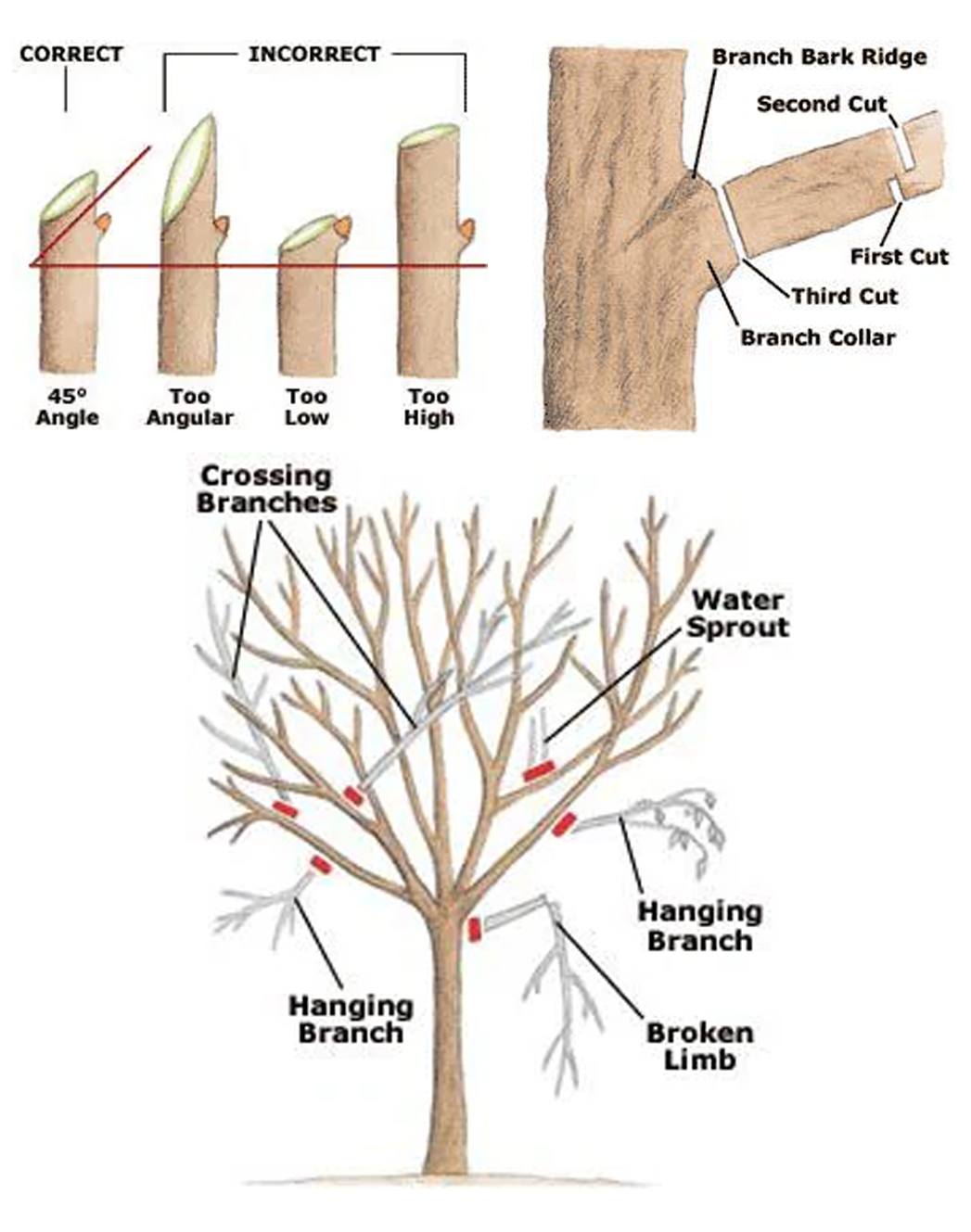
- Branch collar: The swollen area where a branch joins the trunk or a larger branch.
- Branch bark ridge: The raised line of bark along the upper branch union.
- Leader: The main upright stem of a tree.
- Sucker: A fast-growing shoot from the base or roots.
- Water sprout: A strong, upright shoot that grows from a branch or trunk.
- Heading cut: A cut made back to a bud or side branch. It often creates dense new growth.
- Thinning cut: A cut that removes a branch at its point of origin or back to a larger side branch. It keeps a more natural shape.
- Crown raising: Removing lower branches to provide clearance.
- Crown reduction: Shortening a tree’s height or spread with proper cuts to suitable side branches.
When Is the Best Time to Prune Trees and Shrubs?
The best pruning time depends on the plant and the result you want. Use the table below as a starting point, then check the care guidance for your exact species.
| Plant or goal | Usual pruning time in the U.S. | Main reason |
|---|---|---|
| Most deciduous trees | Late winter, during dormancy | Clear view of the structure and less stress from heat |
| Summer-flowering shrubs | Late winter or early spring | Flowers form on new wood |
| Spring-flowering shrubs | Soon after flowering | Flowers form on old wood |
| Dead or broken branches | Any time | Reduces risk and removes damaged tissue |
| Diseased branches | As soon as practical | Limits spread, with tool cleaning between cuts |
| Broadleaf evergreen shrubs | Late winter or after flowering | Limits stress and preserves shape |
| Conifers | Usually late winter to early spring | Corrects structure before strong growth |
| Hedges | During active growth, as needed | Maintains size and density |
| Fruit trees | Often late winter, with crop-specific exceptions | Supports light, air, and fruit production |
| Young trees | Late winter or early spring | Builds a strong permanent structure |
Prune spring-flowering shrubs after they bloom
Lilac, forsythia, weigela, and many azaleas set flower buds on older wood. If you prune them in late winter, you may remove the buds that would have opened that spring.
Prune these plants soon after flowering ends. This gives them time to grow new wood and set next year’s flower buds.
Prune summer-flowering shrubs before spring growth
Many plants that bloom in summer form flowers on new growth. Examples include butterfly bush, beautyberry, and some spirea.
Prune them in late winter or early spring before new growth begins. Avoid cutting too early in fall. New growth may appear before winter and suffer cold damage.
Prune trees during dormancy, with important exceptions
Late winter is often a useful time to prune deciduous trees. The branch structure is easy to see, and many pests and disease organisms are less active.
However, some trees may bleed sap after late-winter cuts. This can happen with maples, birches, and walnuts. The bleeding usually does not harm the tree, but you may choose a different timing if sap flow or appearance concerns you.
Trees with active disease, storm damage, or dangerous limbs need attention sooner. Safety comes before seasonal timing.
Consider your U.S. climate
The calendar changes by region:
- Northeast and Midwest: Late winter often means February through early April.
- Pacific Northwest: Mild winters may allow pruning earlier, but wet conditions can raise disease concerns.
- South and Southeast: Dormancy may be short. Prune before strong spring growth, but avoid pruning during extreme heat.
- Southwest: Heat, drought, and irrigation affect recovery. Avoid heavy pruning during severe heat or water stress.
- Mountain West: Wait until the worst winter weather has passed when cold injury is a concern.
- California: Timing varies widely by elevation, rainfall, and plant type.
Use local guidance from a state university Extension service when timing is unclear. The U.S. Department of Agriculture Plant Hardiness Zone Map can help explain winter conditions, but it does not replace species-specific advice.

What Should You Prune First?
Start with branches that may harm people, property, or the plant. Then move to structural and cosmetic cuts.
Use this order:
- Dead branches
- Broken or hanging branches
- Diseased branches
- Branches that rub or cross
- Suckers and water sprouts
- Branches that create poor structure
- Growth that blocks a needed path, window, or view
- Minor shaping cuts
This order helps you avoid removing healthy wood before dealing with urgent problems.
Remove dead, damaged, or diseased wood
Dead branches are dry, brittle, and often lack live buds. Use a light scratch on thin bark to check uncertain stems. Living tissue below the bark is usually green or moist. Do not use this test on large branches or valuable trees without care.
Cut damaged branches back to healthy wood when possible. For a branch attached to a larger limb, make the final cut just outside the branch collar. Do not cut flush against the trunk.
Diseased wood may show cankers, unusual cracks, dark areas, ooze, or dead leaves. The correct response depends on the disease. Remove clearly affected branches when recommended for that plant, and disinfect tools between cuts when disease spread is possible.
Remove rubbing and crossing branches
Branches that rub can lose bark. These wounds create entry points for pests and disease. Remove one of the branches, usually the weaker or less useful one.
Do not remove both branches by default. A single well-placed thinning cut may solve the problem while preserving the plant’s natural form.
Remove suckers and water sprouts
Suckers grow from the base or roots. Water sprouts grow straight up from older branches or trunks. They often appear after severe pruning, storm damage, or root injury.
Remove them when they weaken the form or compete with the main structure. Pulling or cutting suckers close to their origin may reduce regrowth. Repeated heavy pruning can create more water sprouts, so correct the cause when possible.
How to Prune a Tree or Shrub Step by Step
Before you cut, identify the plant and decide what you want the final shape to be. A clear goal prevents over-pruning.
1. Inspect the plant
Walk around the entire tree or shrub. Look for:
- Dead limbs
- Broken limbs
- Narrow branch angles
- Branches that cross or rub
- Growth from the base
- Branches growing toward roofs, windows, or wires
- Signs of disease or insect damage
- A weak or competing leader
For a tree, look at the trunk and main branches first. Do not begin by trimming the outer edge of the crown.
2. Choose the right tool
Use a sharp tool that matches the branch size.
- Hand pruners: Small live stems, often up to about ¾ inch, depending on the tool.
- Loppers: Larger branches that are still within the tool’s rated capacity.
- Pruning saw: Larger branches that cannot be cut safely with pruners or loppers.
- Pole pruner: High branches only when you can keep firm control from the ground.
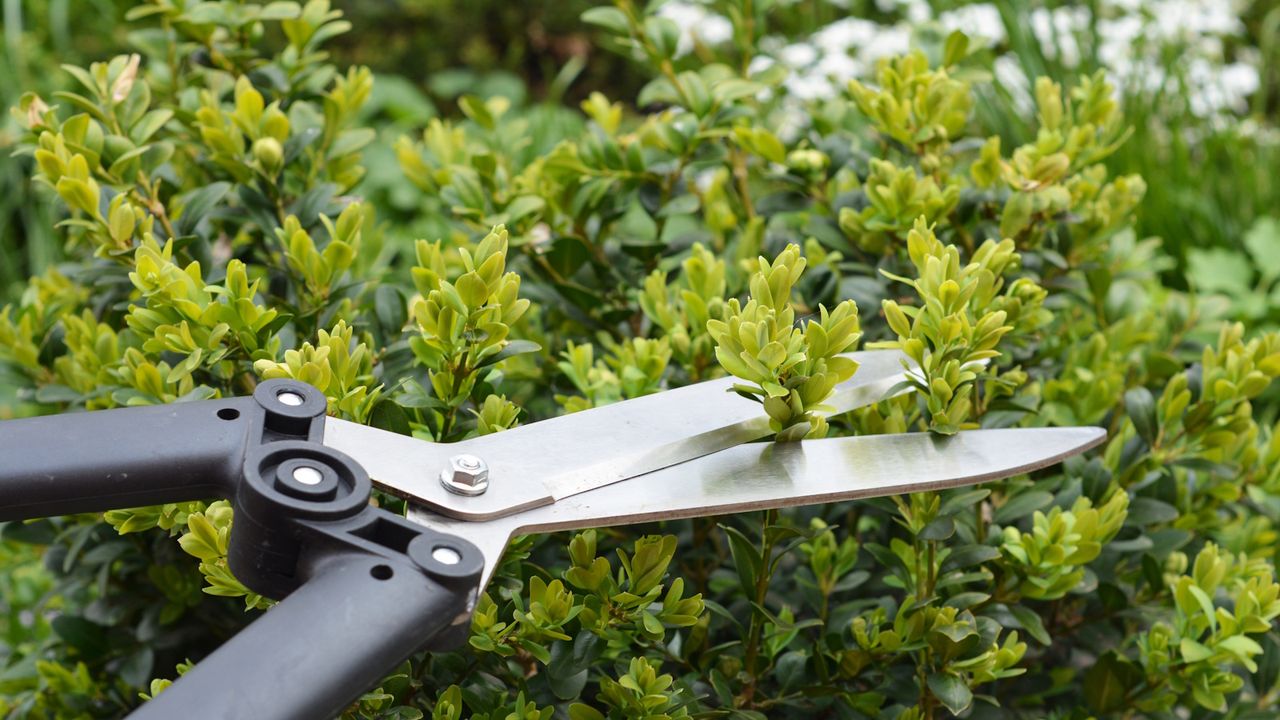
- Hedge shears: Formal hedges and some fine-leaved plants, not most natural shrubs.
Tool limits vary. Follow the manufacturer’s instructions. Never force a tool through wood that is too large.
Clean, sharp blades make cleaner cuts. Disinfect tools when moving from a diseased plant to a healthy one. A household disinfectant labeled for this use can work when applied according to its label. Keep tools dry and maintained after use.
3. Use the three-cut method for large branches
A heavy branch can tear bark as it falls. The three-cut method helps prevent that.
- Make an undercut a few inches above the branch collar.
- Make a top cut farther out on the branch to remove most of its weight.
- Make the final cut just outside the branch collar.
The first two cuts remove the branch’s weight. The final cut cleans up the stub without damaging the trunk.
Never leave a long stub. Do not cut into the trunk. The branch collar helps the tree seal the wound.
4. Make cuts in the right place
For a branch attached to a larger branch or trunk, cut just outside the branch collar. For a heading cut, cut slightly above a healthy bud or side branch.
Choose a bud that points in the direction you want new growth to take. Make the cut at a slight angle, but do not create a long sloping wound.
Avoid these cuts:
- Flush cuts into the trunk
- Long stubs
- Cuts that damage the branch collar
- Heading cuts made at random points
- Large cuts made only to reduce height
5. Step back often
After every few cuts, move away from the plant. Check its shape from several sides.
A common mistake is to keep cutting because the plant does not look finished. Stop when the structure is clear and the original problem is solved.
6. Clean up safely
Pick up cut branches and dispose of diseased material as local rules require. Do not add diseased branches to home compost unless your local guidance confirms that the process will destroy the disease.

How Much Can You Prune at One Time?
For established plants, remove only as much live growth as needed. A common conservative limit is no more than about 25% of a tree’s live crown in one year, especially for mature trees. Some plants tolerate less.
Young, vigorous shrubs may recover from more pruning than old, stressed trees. Still, a large cut can weaken any plant.
Avoid removing large limbs just to make a mature tree smaller. If a tree has outgrown its space, repeated reduction cuts may create weak shoots and large wounds. A certified arborist may recommend a better option, such as selective reduction, removal, or replacement.
The one-third rule for shrubs
When reducing a shrub, try to cut a stem back to a side branch or the base rather than leaving a stub. Remove up to about one-third of the oldest stems each year for gradual renewal.
For an overgrown, multi-stem shrub, remove the oldest stems at ground level. This can encourage younger stems from the base while preserving some flowers and cover.
Some shrubs respond well to renovation pruning. Others do not. Avoid cutting broadleaf evergreen shrubs to bare wood unless the species is known to recover from it.
Do not top trees
Tree topping cuts the main branches back to stubs. It is not a safe form of height control.
Topping can:
- Create weakly attached shoots
- Cause large wounds
- Increase decay risk
- Stress the tree
- Make the tree harder to manage later
If a tree is too large for its location, consult an ISA Certified Arborist or another properly qualified tree-care professional. The International Society of Arboriculture provides a public arborist directory in the United States.
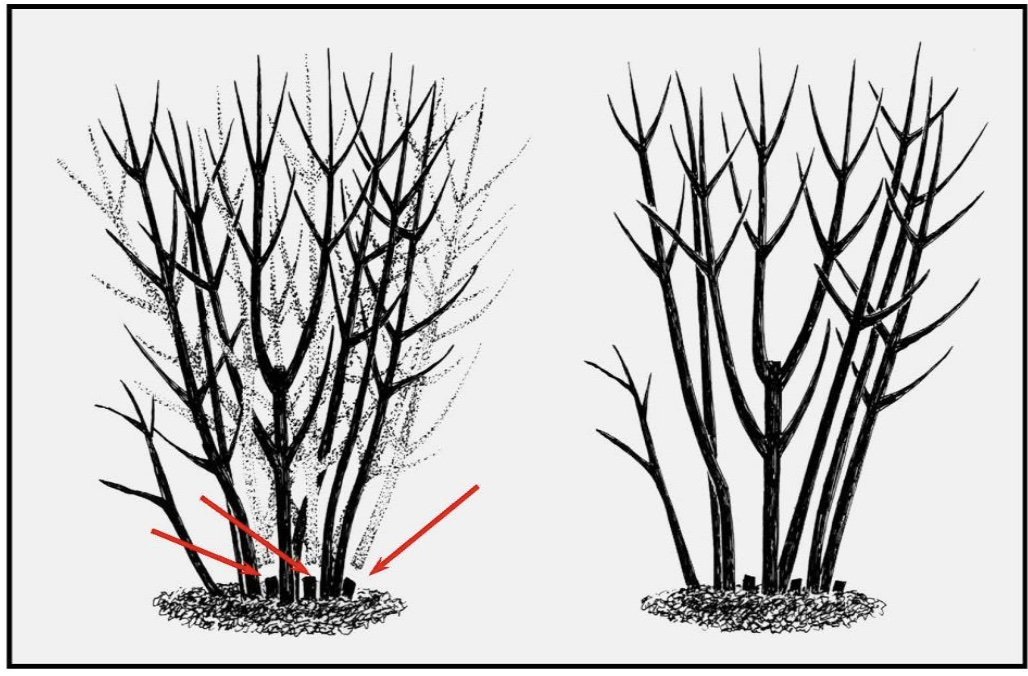
How to Prune Common Shrub Types
Different shrubs need different methods. A plant’s flower timing and growth habit matter more than a one-size-fits-all rule.
Deciduous flowering shrubs
First identify whether the shrub flowers on old wood or new wood.
- Old wood: Prune after spring flowering.
- New wood: Prune in late winter or early spring.
If you do not know the type, wait until after flowering. You may lose some flowers, but you reduce the chance of removing the next flower crop.
Broadleaf evergreen shrubs
Boxwood, holly, laurel, and similar shrubs often need light shaping rather than deep cuts.
Remove dead or crossing branches first. Thin selected stems to improve light and air. Avoid cutting far into leafless interior wood unless the plant can produce new shoots there.
Hedges
Trim a formal hedge so the base is slightly wider than the top. This lets sunlight reach the lower branches.
Do not create a top-heavy hedge with a wide upper edge. That shape often causes bare lower growth.
For a natural hedge, use hand pruning or selective thinning. Shearing may create a dense outer shell with weak, shaded growth inside.
Conifers
Many conifers do not produce new growth from old, bare wood. If you cut past the green needles, the branch may stay bare.
Prune conifers lightly. Cut back to a green side branch when possible. Remove dead or damaged limbs, but do not cut into the bare interior unless you know the species can recover.
Roses
Rose pruning varies by rose type. In general, remove dead, weak, and crossing canes first. Many modern repeat-blooming roses tolerate late-winter pruning, while once-blooming old garden roses may flower on older wood.
Local Extension guidance can help identify the rose group before you make heavy cuts.
When Should You Avoid Pruning?
Do not make major cuts when the plant is under severe stress. Wait during periods of extreme heat, drought, or freezing weather unless a safety problem requires immediate action.
Avoid pruning when:
- A storm has left branches unstable overhead
- You cannot safely reach the branch
- The tree is near power lines
- The branch is too large for your tools
- You suspect a structural defect
- The plant is newly transplanted and already stressed
- Wet conditions could make ladders or tools unsafe
Do not use tree wound paint or pruning sealers as a routine practice. Research and Extension guidance generally find that trees are better served by proper cuts and normal wound response. Some special situations may differ, so follow a specific, trusted recommendation when one applies.
Power lines require special care
Never prune branches that touch or may fall into power lines. Do not use a ladder or pole tool near electrical conductors.
Contact the utility company for branches near utility lines. For other high or hazardous work, hire a qualified tree-care professional with the right insurance and equipment.
Large trees are not a DIY job
Call a professional when a tree is large, near a home, over a road, or structurally unstable. A professional is also appropriate when you see:
- A split trunk
- Large dead limbs
- Cracks at major branch unions
- A leaning tree with lifted roots
- Cavities or extensive decay
- Hanging branches after a storm
- Branches over power lines
Ask for proof of insurance and check local licensing rules. In the United States, ISA certification is one useful credential to verify, but certification alone does not replace insurance, sound judgment, or a written scope of work.

Common Pruning Mistakes
Avoid these errors to protect the plant and reduce future work.
Cutting too much at once
Heavy pruning can trigger weak, fast growth. It can also expose bark to sun and heat. Make gradual cuts over several seasons when possible.
Making flush cuts
Flush cuts remove the branch collar. This can enlarge the wound and slow the tree’s natural defense and closure process.
Leaving stubs
Stubs often die back and decay. They can also produce weak shoots. Cut back to the branch collar or a suitable side branch.
Shaping every plant into a ball
Formal shapes may suit some hedges, but many trees and shrubs look and grow better with their natural form. Follow the plant’s structure instead of forcing it into a shape.
Pruning at the wrong time
Pruning a spring-flowering shrub in late winter may remove its flowers. Pruning a summer-flowering shrub right after bloom may remove little, but it can delay the new growth that carries next year’s flowers.
Using dull or dirty tools
Dull blades crush tissue. Dirty blades may spread plant pathogens. Sharpen and clean tools before important work.
Ignoring the reason for repeated growth
If water sprouts or suckers return every year, the plant may be reacting to stress, severe pruning, root damage, or poor growing conditions. Cutting them repeatedly without addressing the cause may not solve the problem.

A Simple Annual Pruning Plan
Use this plan as a general guide for a U.S. landscape.
Winter
- Inspect deciduous trees while leaves are absent.
- Remove dead, broken, crossing, and poorly attached branches.
- Prune many summer-flowering shrubs.
- Train young trees with small, selective cuts.
- Avoid major work during icy or unsafe conditions.
Spring
- Wait for spring-flowering shrubs to finish blooming.
- Remove storm damage.
- Watch for new suckers and water sprouts.
- Avoid heavy pruning during extreme heat or drought.
Summer
- Make light corrective cuts when needed.
- Remove water sprouts and unwanted suckers.
- Trim hedges during active growth if appropriate.
- Avoid major cuts during heat stress.
Fall
- Remove dead or hazardous branches.
- Avoid heavy pruning that may cause tender new growth before winter.
- Clean up diseased plant material.
- Mark branches that need attention during the next dormant season.
This plan is a starting point, not a substitute for identifying the plant. The correct schedule for a crabapple, hydrangea, oak, boxwood, or grapevine may differ.

Frequently Asked Questions
Can I prune a tree in summer?
Yes, light pruning and removal of dead or hazardous branches can be done in summer. Avoid heavy pruning during heat or drought stress. Some trees and shrubs also have pest or disease risks that make summer cuts less desirable.
Should I prune before or after rain?
Wait until conditions are safe and the plant is reasonably dry when disease spread is a concern. Wet branches, ladders, and tools can increase risk. Never work in storms or near wet electrical lines.
How do I know if a branch is dead?
A dead branch is often brittle, dry, and without live buds. A small scratch may reveal live tissue, but do not damage valuable bark to test large branches. When uncertain, make a small cut or ask an arborist.
Should I cut off all water sprouts?
Remove water sprouts that damage the structure or block useful growth. Do not remove every shoot from a stressed tree without finding the cause. Severe pruning can lead to even more water sprouts.
Can I prune a newly planted tree?
Make only light corrective cuts at planting or soon after. Remove broken, dead, or badly damaged branches. Delay major structural training until the tree is established unless a safety issue requires action.
What is the best tool for thick branches?
Use a pruning saw for branches too large for hand pruners or loppers. Use a tool rated for the branch size. Do not twist or force a tool, and use the three-cut method for heavy limbs.
Key Takeaways
- Prune most deciduous trees in late winter while they are dormant.
- Prune spring-flowering shrubs soon after they bloom.
- Prune summer-flowering shrubs in late winter or early spring.
- Remove dead, broken, diseased, and unsafe branches first.
- Cut just outside the branch collar.
- Use the three-cut method for large branches.
- Avoid topping trees and heavy cuts during heat or drought.
- Never prune near power lines.
- Hire a qualified professional for large, high, unstable, or hazardous trees.
Final Recommendation
Before making a cut, identify the plant, check its flowering habit, and define your goal. Start with small cuts that solve a clear problem. When a tree is large, damaged, close to a structure, or near power lines, stop and call a qualified tree-care professional.

Laura Bennett is a gardening writer at MyGardenLabs who creates beginner-friendly guides focused on solving common plant care and gardening problems.