How Long Does It Take To Prune A Tree: Time Guide
For most homeowners in the United States, pruning one small tree takes about 30 minutes to 2 hours. A medium tree often takes 2 to 4 hours, while a large or difficult tree may take 4 to 8 hours or more.
Those times include cutting, moving branches, basic cleanup, and site checks. A professional crew may finish faster because several workers can prune, lower limbs, chip branches, and clean the yard at the same time. Large trees near homes, power lines, roads, or fences can take much longer.
The exact time depends on the tree’s size, health, species, pruning goal, access, and the equipment needed.

Average Time to Prune a Tree
The tree’s height and branch size usually have the greatest effect on pruning time. A few light cuts on a young tree are very different from removing dead wood from a mature oak.
| Tree size or job type | Typical pruning time | Common situation |
|---|---|---|
| Small tree, under 15 feet | 30 minutes to 1.5 hours | Young ornamental tree or light shaping |
| Small to medium tree, 15–25 feet | 1 to 3 hours | Fruit tree, crape myrtle, or small maple |
| Medium tree, 25–40 feet | 2 to 4 hours | Routine crown cleaning or branch reduction |
| Large tree, 40–60 feet | 4 to 8 hours | Mature shade tree with several large limbs |
| Very large tree, over 60 feet | 1 day or more | Specialized crew, climbing, or lift equipment |
| Storm-damaged tree | 2 hours to several days | Broken limbs, unstable branches, or blocked access |
| Tree near power lines | Varies widely | Utility coordination and extra safety controls |
These are planning ranges, not guarantees. They assume a reasonably accessible site and ordinary pruning. A tree with dense growth, poor structure, decay, or many dead limbs may take much longer than a healthy tree of the same height.
A professional estimate may also include time for:
- Setting up cones, ropes, ladders, or a lift.
- Moving furniture, vehicles, or other obstacles.
- Lowering large limbs safely.
- Chipping branches or hauling them away.
- Raking leaves and sawdust.
- Inspecting the tree after pruning.
A simple job may involve only cutting and cleanup. A complex job is closer to a small worksite.
What Determines How Long Tree Pruning Takes?
The main factors are tree size, the amount of wood removed, access, and safety risk. The number of cuts matters, but it is not the only measure of the work.
Tree height and trunk diameter
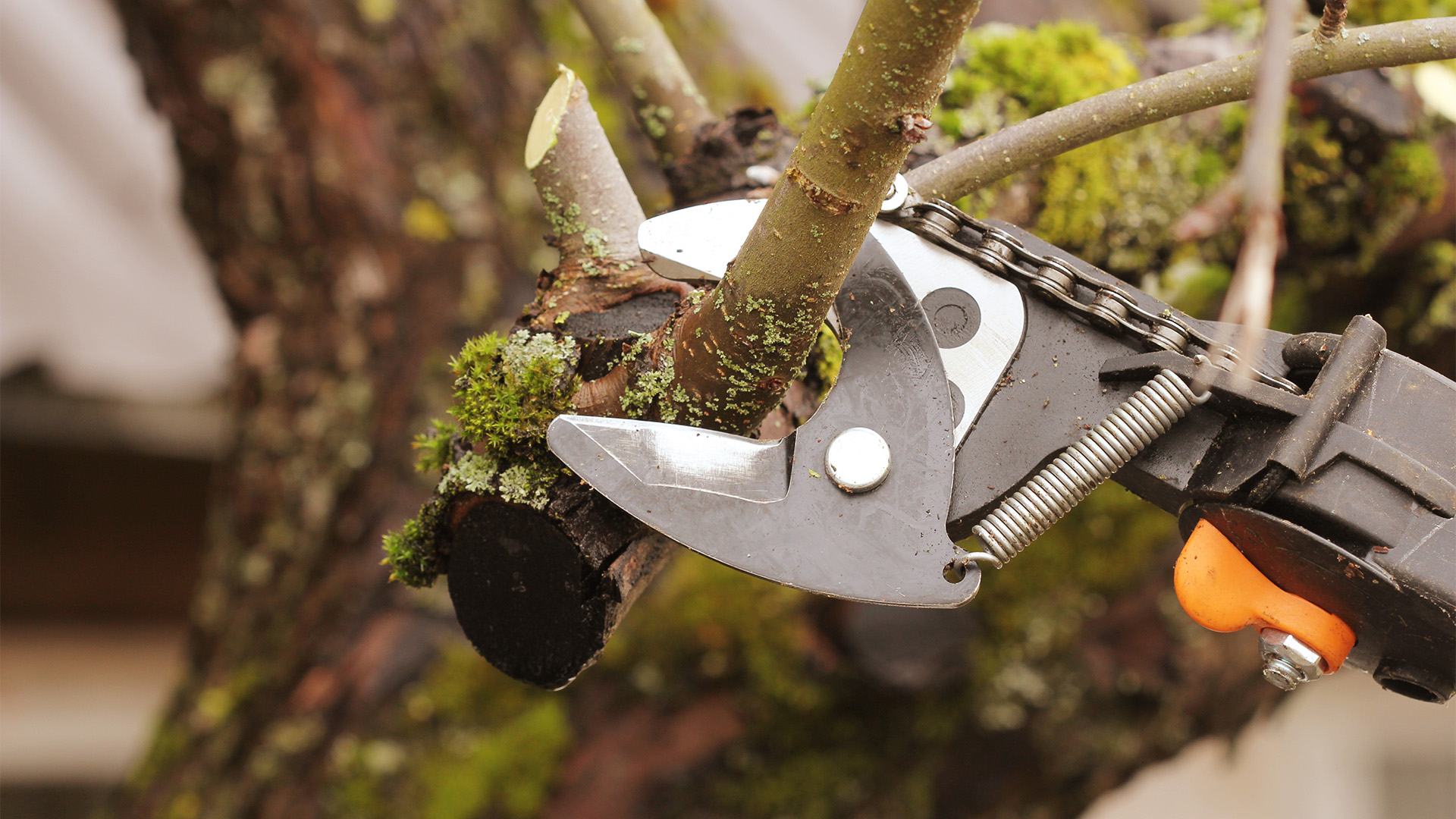
A short tree can often be pruned from the ground with hand tools or a pole pruner. A tall tree may require climbing equipment, ropes, a bucket truck, or a crane.
The trunk diameter also matters. Thick limbs take more time to cut and may need to be lowered instead of dropped. Large cuts create heavier pieces that require extra handling.
Amount of pruning needed
Light pruning is usually quick. It may involve removing:
- Dead twigs.
- Small crossing branches.
- A few water sprouts.
- Low shoots blocking a walkway.
Heavy pruning takes longer and can harm the tree if done poorly. It may involve removing large limbs, reducing branch weight, or correcting structural problems.
A good pruning plan should focus on a clear goal. Common goals include:
- Removing dead, diseased, or damaged wood.
- Improving clearance over a roof, driveway, or sidewalk.
- Reducing a safety risk.
- Improving young-tree structure.
- Removing suckers or weakly attached shoots.
- Managing fruit production on certain fruit trees.
Tree species and growth habit
Some trees have dense, fine branches. Others have fewer but much larger limbs. A dense evergreen can take longer to inspect and clean than an open-grown deciduous tree.
Species also affect the best season and cut location. For example, some trees are more likely to suffer from disease or insect problems when pruned at certain times. Local university extension guidance can help with regional timing.
Tree health and defects
A healthy tree is easier to assess. A tree with decay, cavities, cracks, included bark, or weak branch unions requires more care.
A branch union with included bark has bark pressed between two stems. This can create a weak connection. A qualified arborist may need to inspect such a tree before pruning, especially when large limbs overhang a home or play area.
Access to the work area
Limited access can add hours to a job. Examples include:
- A narrow gate.
- A fenced backyard.
- Wet or steep ground.
- A tree behind a house.
- Landscaping that cannot be driven over.
- Vehicles parked beneath the tree.
- A lack of space to drop branches.
When a crew cannot use a chipper or lift near the tree, workers may need to carry branches by hand.
Power lines and nearby structures
Trees near overhead utility lines need special care. Do not assume that a line is safe because it is insulated or appears inactive. The Occupational Safety and Health Administration warns that contact with overhead power lines can cause serious injury or death.
Only qualified professionals should work near energized lines. In some cases, the utility company must be contacted before work begins. This can change the schedule from a few hours to several days or longer.
How Long Does It Take to Prune a Tree Yourself?
A careful homeowner may prune a small tree in 30 minutes to 2 hours, not counting a long cleanup. A medium tree may take several hours and may exceed the limits of safe ground work.
Before starting, make sure you have:
- Sharp, clean hand pruners.
- Loppers for branches within their rated size.
- A pruning saw for larger limbs.
- Eye protection.
- Gloves and sturdy shoes.
- A way to keep people and pets away.
- A plan for handling the cut branches.
Use the following process for a small tree that can be pruned safely from the ground.
1. Inspect the tree and work area
Look for dead limbs, hanging branches, cracks, nests, utility lines, and obstacles below the tree. Do not begin if a branch could fall onto a person, vehicle, building, or power line.
2. Set a clear goal
Avoid cutting simply to make the tree look smaller. Choose one purpose, such as removing dead wood or clearing a walkway.
3. Remove small problem branches first
Start with dead, broken, or diseased branches. Then look for branches that rub, cross, or grow toward a target you need to keep clear.
4. Make proper cuts
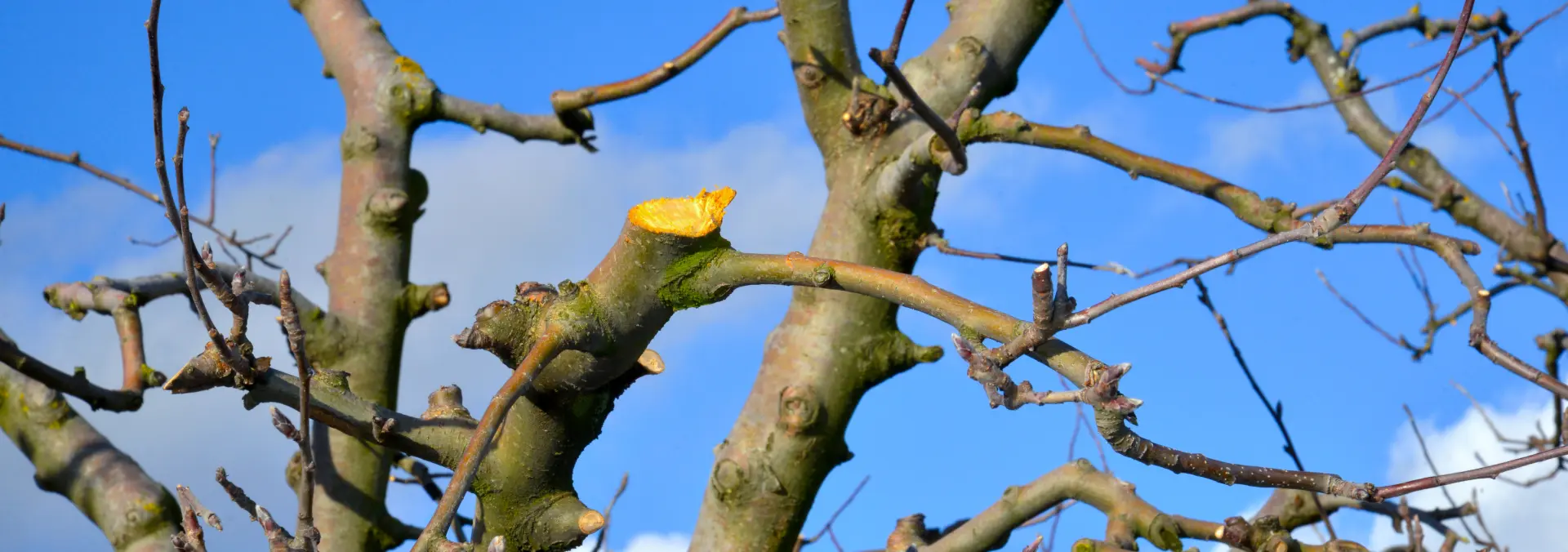
Cut just outside the branch collar. The branch collar is the slightly raised area where a branch joins the trunk or a larger limb. Do not leave a long stub, and do not cut flush against the trunk.
For a heavy limb, use the three-cut method:
- Make a small undercut several inches from the final cut.
- Make a top cut a little farther out to remove the limb’s weight.
- Make the final cut just outside the branch collar.
This method helps prevent the bark from tearing.
5. Step back and check the shape
Stop after each group of cuts. Check the tree from several angles. Removing too much at once is a common mistake because the final shape can be hard to judge from beneath the canopy.
6. Clean the area
Collect branches, inspect the ground for hazards, and keep wood piles away from structures. Do not burn cut branches unless local rules allow it and conditions are safe.
A useful rule is to stop when the work requires a chainsaw above shoulder height, a ladder near a tree, climbing, or work close to power lines. The Tree Care Industry Association and the International Society of Arboriculture both advise using trained professionals for hazardous tree work.

How Long Does Professional Tree Pruning Take?
A professional pruning visit may take one to eight hours, depending on the tree and the crew. A basic visit for one small tree may take less than an hour. A large tree may require a full day, multiple workers, or specialized equipment.
Ask the company what its quoted time includes. Some estimates cover only cutting. Others include setup, branch removal, chipping, hauling, and final cleanup.
A professional crew may divide the work into roles:
- One person assesses the tree and directs the cuts.
- One worker climbs or operates a lift.
- Another worker manages ropes and lowers limbs.
- Ground workers move branches and run the chipper.
- A final worker rakes and checks the site.
This means a crew can complete more work in the same clock time than one person working alone. More workers do not always mean a lower price, but they can reduce the time that the site remains closed or obstructed.
Before hiring, ask these questions:
- How long do you expect the job to take?
- How many workers will be on site?
- Does the price include cleanup and hauling?
- Will you use a bucket truck, climber, or crane?
- Are you insured?
- Who will perform the pruning?
- What will you do if you find decay or an unstable limb?
- Will you follow accepted pruning practices?
In the United States, an ISA Certified Arborist can help assess difficult trees. Certification does not guarantee a specific result, but it can help you find someone with verified tree-care knowledge.

Does the Season Affect Pruning Time?
The season can affect both the work time and the best pruning decision. In much of the United States, dormant-season pruning is easier because deciduous trees have fewer leaves. However, the best timing depends on the tree species, local climate, disease risks, and reason for pruning.
Winter pruning may offer better visibility, but cold weather, ice, snow, or frozen ground can slow setup and cleanup. Summer pruning can take longer when thick foliage hides branch defects or makes access harder.
Avoid pruning during extreme weather. Wet, icy, or windy conditions increase the risk of falling limbs and slippery work areas.
Season also matters for disease spread. For example, some oak species and regions have specific concerns about pruning during periods when oak wilt can spread. The U.S. Department of Agriculture and state extension offices provide regional information for tree diseases and pests.
If the tree needs immediate hazard reduction, safety takes priority over the ideal season. A dangerous broken limb should not be left in place simply because the calendar is not ideal.
How Long Does It Take to Prune a Tree After a Storm?
Storm cleanup can take two hours to several days, depending on the damage. A single broken branch may be removed in an hour. A split trunk, uprooted tree, or tree resting on a roof needs a specialized response.
Do not approach a storm-damaged tree if:
- It is touching or near power lines.
- The trunk is split.
- Large limbs are hanging overhead.
- The tree is leaning toward a building.
- The root plate has lifted from the ground.
- A branch is under tension.
- The tree blocks a road or public path.
Bent or partially broken limbs can store energy. When cut, they may move suddenly. This is one reason storm work can take much longer than normal pruning.
Call 911 for an immediate public danger, such as a downed power line or blocked roadway. For a private tree, contact the utility company when lines are involved, then use a qualified tree-care professional.
Common Mistakes That Make Pruning Take Longer
Poor planning can turn a short job into a longer and less safe one. The most common mistakes include:
Starting without a pruning goal
Cutting random branches creates repeated stops and second guesses. Decide what must be removed before making the first cut.
Using the wrong tool
A dull saw creates rough cuts and slows the work. A tool that is too small may force you to cut from an unsafe angle. Use tools designed for the branch size.
Removing too much
Large cuts take time to make and may create long-term tree problems. The American National Standards Institute’s tree-care standards and extension guidance generally support conservative pruning rather than aggressive topping.
Dropping limbs without a plan
A falling branch can damage roofs, fences, irrigation systems, and plants. It can also bounce or roll after landing. Use controlled lowering when a limb could strike something valuable.
Working from a ladder
A ladder can shift when a branch moves. Do not use a ladder for chainsaw work or near unstable branches. Professional climbers use specialized training and equipment.
Ignoring cleanup
Branch disposal often takes as long as the cutting. Before starting, decide whether you will cut the branches into firewood, use a yard-waste service, or hire a crew to chip and haul them.
When Should You Hire a Professional?
Hire a qualified tree professional when the tree is tall, unstable, near a structure, or close to utility lines. Professional help is also the safer choice when you cannot reach the work from the ground.
You should strongly consider professional service for:
- Trees taller than you can safely manage from the ground.
- Branches larger than your tools can handle.
- Trees near homes, garages, roads, or fences.
- Storm-damaged or leaning trees.
- Trees with cavities, cracks, or significant decay.
- Trees near overhead utility lines.
- Work that requires climbing or a chainsaw above shoulder height.
- Large branch removal or crown reduction.
A professional cannot remove every risk, but proper planning, equipment, and training can reduce the chance of injury or property damage.
Get more than one written estimate for a large job. Compare the scope of work rather than choosing only by the shortest time or lowest price. A quote should explain which branches will be removed, how debris will be handled, and whether cleanup is included.
How to Estimate Your Own Tree-Pruning Time
You can make a rough estimate by separating the job into four parts:
Total time = inspection and setup + cutting + branch handling + cleanup
For example, this hypothetical estimate may look like:
- Inspection and setup: 20 minutes.
- Cutting a few small branches: 40 minutes.
- Moving branches: 30 minutes.
- Cleanup: 30 minutes.
Estimated total: 2 hours.
This method works better than estimating from tree height alone. If the tree is near a fence, has dense branches, or requires careful lowering, increase the branch-handling time.
For a professional job, also add time for travel, equipment setup, worker coordination, and disposal. Ask whether those items are included in the estimate.
Frequently Asked Questions
Can a tree be pruned in one hour?
Yes. A small, healthy tree with a few minor branches may take less than an hour. A large or complex tree will usually take much longer.
How long does it take to prune a 20-foot tree?
A 20-foot tree often takes one to three hours for routine pruning. Dense growth, poor access, heavy limbs, or storm damage can extend the job.
How long does it take to prune a large oak tree?
A large oak may take four to eight hours or more. The time depends on height, limb weight, decay, access, equipment, and how much cleanup is required.
Is pruning the same as trimming?
People often use the terms in the same way. In practice, pruning usually means selectively removing branches for tree health, structure, safety, or clearance. Trimming can refer to shaping or reducing growth, especially on hedges and ornamental plants.
How often should a tree be pruned?
There is no single schedule for every tree. Young trees may need structural pruning every few years. Mature trees may need occasional pruning for dead wood, clearance, or safety. Pruning more often does not always improve a tree.
Should I prune a tree myself?
You may handle light pruning on a small tree if you can work safely from the ground. Do not climb, use a chainsaw overhead, or work near power lines without proper training and equipment.
Key Takeaways
- A small tree usually takes 30 minutes to 2 hours to prune.
- A medium tree often takes 2 to 4 hours.
- A large or complex tree may take 4 to 8 hours or more.
- Cleanup, access, storm damage, and power lines can add substantial time.
- Prune from the ground only when the work is clearly safe.
- Use a qualified professional for tall trees, large limbs, unstable trees, and utility-line hazards.
Conclusion
For a typical U.S. homeowner, plan on about one to three hours for a small or medium tree and a full workday for a large tree. The safest estimate comes from the tree’s size, the number and weight of branches, the work area, and the cleanup plan.
Before you begin, inspect the tree and identify the job’s limits. If the work involves climbing, heavy limbs, a chainsaw above shoulder height, storm damage, or power lines, stop and contact a qualified tree-care professional.
Sources and Further Reading
- International Society of Arboriculture
- Tree Care Industry Association
- OSHA: Tree Trimming and Removal
- USDA Forest Service
- ANSI A300 Tree Care Standards information

Laura Bennett is a gardening writer at MyGardenLabs who creates beginner-friendly guides focused on solving common plant care and gardening problems.