Best Tool For Getting Weeds Out Of Cracks: Top Picks
The best tool for getting weeds out of cracks is a sturdy stainless steel crack weeder with a sharp, angled hook.
Every spring, tiny weeds push through driveway joints, patio pavers, and sidewalk cracks. Pulling them by hand often leaves the root behind, while a wide garden hoe cannot reach the narrow gap. I tested the features that matter most, including blade shape, handle length, grip comfort, rust resistance, and control. This guide compares the best crack weeders for small touch-ups, large patios, deep roots, moss, and long-term yard care.
BARAYSTUS Long-Handle Crack Weeder

The BARAYSTUS Crack Weeder uses a stainless steel, L-shaped head to reach narrow gaps with good control. Its long handle lets me work while standing, which helps reduce bending during a long cleanup job. The hooked edge can slide below shallow roots and lift weeds from concrete, pavers, patios, and lawn borders. This design is simple, but that is also its strength.
I like this tool for routine weed removal because it does not depend on spray or fuel. A firm push into the crack loosens the plant, and a pull usually brings out the stem and root. Stainless steel also handles damp soil better than plain carbon steel, though I still recommend rinsing and drying the head after use. For many homes, this is the best tool for getting weeds out of cracks when a long handle and direct control matter most.
Pros:
- Long handle helps limit back strain
- Angled head reaches narrow pavement gaps
- Stainless steel resists common garden rust
- Works without herbicide or fuel
- Useful on patios, sidewalks, and driveways
- Simple design is easy to clean
Cons:
- May need extra force for thick woody weeds
- Long handles can feel less precise in tiny gaps
- Storage space is greater than with a hand tool
My Recommendation
I recommend this BARAYSTUS model for homeowners who want a standing crack weeder for regular maintenance. It suits people with large paved areas, mild back pain, or many joints to clear. The L-shaped head gives it a useful balance of reach and leverage. If you want the best tool for getting weeds out of cracks without using chemicals, this model is a practical first choice and is commonly easy to find online.
BARAYSTUS 13-Inch Crack Weeder

This 13-inch BARAYSTUS crack weeder is made for closer work than a full-size standing tool. The compact shaft gives me more control when I need to target one weed at a time. Its stainless steel L-shaped head can scrape along a paver edge and hook beneath small roots. It also fits well in a shed, drawer, or small garden tote.
The shorter length is helpful around steps, raised beds, and crowded patio furniture. I can angle the head with care and avoid disturbing nearby plants or loose joint sand. However, the tradeoff is clear: I must bend or kneel more often than with a long-handle model. This is the best tool for getting weeds out of cracks for users who value precision and easy storage over standing comfort.
Pros:
- Compact size offers accurate weed control
- Good for narrow cracks and small repairs
- Stainless steel head is easy to rinse
- Fits in small storage areas
- Light enough for quick spot treatments
- Useful near flowers and other plants
Cons:
- Requires more bending than a long-handle tool
- Not ideal for clearing a very large driveway
- Short reach may not suit tall users
My Recommendation
I would choose this 13-inch weeder for small patios, porch steps, garden walls, and careful detail work. It is especially useful for renters or homeowners with limited storage. The shorter shaft lets me feel the blade enter the joint, which improves control around fragile pavers. For small jobs, this may be the best tool for getting weeds out of cracks because it is quick, direct, and easy to keep nearby.
SDFGSD Long-Handle Crack Weeder

The SDFGSD Crack Weeder focuses on reach and leverage. Its long handle allows me to stand over a sidewalk or driveway crack and pull weeds without constant kneeling. The L-shaped manual head is designed to enter tight spaces where a regular rake cannot work. It is a useful choice for old weeds that have formed a firm hold in joint sand or soil.
I find long-handled crack weeders most useful after light rain, when the ground is softer. The blade can then slide under roots with less strain. On dry concrete edges, I may need to loosen the area with several short scrapes instead of one hard pull. This is the best tool for getting weeds out of cracks when reach and leverage are more important than ultra-fine control.
Pros:
- Standing height reduces repeated kneeling
- Long shaft gives useful pulling leverage
- Angled head fits pavement joints
- Works well on sidewalks and driveway edges
- Manual action gives precise root contact
- No batteries, cords, or fuel are needed
Cons:
- May feel bulky in tight garden spaces
- Requires safe footing during strong pulls
- Very hard, woody roots may need another tool
My Recommendation
This model suits homeowners with long paths, wide driveways, and repeated seasonal weed growth. I would also consider it for users who dislike bending but still want a manual tool. Use short, controlled movements instead of twisting the shaft. For a large paved area, this is a strong candidate for the best tool for getting weeds out of cracks, especially when used after rain.
Garden Guru Patio Crack Weeder

The Garden Guru Patio Crack Weeder stands out for its ergonomic handle and compact working head. The stainless steel construction gives it a solid feel without making the tool overly complex. Its shape is suited to patio joints, driveway seams, and sidewalk edges. I like that the handle encourages a firm grip when the weed resists the first pull.
A comfortable grip matters more than many buyers expect. When the handle slips, I lose power and may scrape the surface beside the crack. This model helps make repeated spot work feel more controlled, though users must still keep their wrist straight and avoid sudden jerks. For anyone seeking the best tool for getting weeds out of cracks during short, frequent cleanups, this is a well-balanced option.
Pros:
- Ergonomic handle supports a secure grip
- Stainless steel construction resists moisture
- Compact head offers good control
- Well suited to patio and sidewalk joints
- Easy to carry between small work areas
- Simple manual design needs little care
Cons:
- Shorter reach can require bending
- May take more time on a large driveway
- Small head is less suited to heavy brush
My Recommendation
I recommend the Garden Guru to buyers who care about grip comfort and precise hand work. It is a good fit for patios, front walks, and small areas where weeds appear in scattered cracks. The rust-resistant steel and focused head make routine care easy. If comfort in the hand matters most, this may be the best tool for getting weeds out of cracks in a compact, user-friendly format.
BARAYSTUS 61-Inch 2-in-1 Weeder

The BARAYSTUS 61-inch tool combines a crack weeder with a weed rake. That two-in-one design can save time when a job includes both narrow joints and loose surface weeds. The detachable head also makes storage and transport easier than with some fixed long tools. Its tall handle lets me clear many spots while standing upright.
This tool makes the most sense for a yard that needs more than crack cleaning. I can use the narrow section for paver gaps, then switch to the rake function to gather weeds or surface debris. A combination tool cannot replace every specialized garden tool, but it can reduce clutter in a small shed. It may be the best tool for getting weeds out of cracks for people who want one tool for several light-duty tasks.
Pros:
- Combines crack weeding and light raking
- 61-inch reach helps reduce back strain
- Detachable head supports easier storage
- Useful across lawns, yards, and walkways
- Reduces the need to carry two tools
- Good for routine seasonal cleanup
Cons:
- Multi-use design may feel less specialized
- More parts require occasional tightening
- Not a replacement for a heavy garden rake
My Recommendation
I would pick this model for homeowners who want one long tool for several light yard tasks. It works best when weeds are small to medium and the surrounding surface is fairly open. Check the connections before each use so the detachable head stays firm. For buyers who value versatility, this is a smart best tool for getting weeds out of cracks and cleaning nearby lawn areas.
PIMEKOY Three-Head Crack Weeder Set

The PIMEKOY set includes three different weed-remover heads for pavers and other narrow spaces. Multiple head shapes can help when one joint holds soft moss and another holds a deep taproot. I like this approach because no single blade shape works perfectly in every crack. The set gives the user more ways to scrape, hook, and lift unwanted growth.
A multi-head set can be useful for people who maintain mixed surfaces. One head may work well along a smooth paver, while another may reach a rough stone edge. The extra parts also require careful storage so they do not disappear in the shed. For flexible surface care, this can be the best tool for getting weeds out of cracks because it adapts to different weed and joint shapes.
Pros:
- Three head styles support varied tasks
- Useful for pavers, patios, and stone paths
- Offers more control than one fixed blade
- Good choice for mixed crack sizes
- Manual operation avoids chemical residue
- Can handle moss and small weeds
Cons:
- Extra heads need organized storage
- Changing heads takes more time
- Users must learn which head suits each job
My Recommendation
I recommend the PIMEKOY set for gardeners who work on several types of paving. It is especially helpful when weeds, moss, and loose debris appear in different joints. Buyers who want the simplest possible tool may prefer a fixed head, but the added choice is valuable for detailed work. This is a strong best tool for getting weeds out of cracks when flexibility is the main goal.
Heavy-Duty 58-Inch Carbon Steel Weeder

This heavy-duty crack weeder uses a carbon steel blade and a 58-inch handle. Carbon steel can offer strong resistance to bending when the tool meets compact soil or stubborn roots. The long shaft helps me work across decks, patios, garden beds, and sidewalk joints without staying on my knees. It is built for users who expect to apply more force.
Carbon steel needs more care than stainless steel. I would wipe the blade dry after use and apply a light protective coat if it will sit in storage for a long time. In return, the firm blade can feel more capable in hard ground. For difficult weeds and deep cracks, this may be the best tool for getting weeds out of cracks, provided the user accepts the extra care.
Pros:
- Strong carbon steel blade supports hard pulls
- 58-inch handle reduces repeated bending
- Useful for deep or compacted joints
- Works around patios, decks, and beds
- Long reach covers more ground quickly
- Good fit for demanding manual jobs
Cons:
- Carbon steel needs drying and rust care
- May feel heavy for light spot work
- Strong pulls can disturb loose paver sand
My Recommendation
I would choose this model for mature weeds, hard soil, and users who want a firm working edge. It is less convenient for a tiny patio touch-up, but it makes sense for a large property with neglected cracks. Work slowly near loose pavers to avoid removing joint material. If strength ranks above low maintenance, this is a reliable best tool for getting weeds out of cracks.
Soil Grove 3-in-1 Crack Weeder
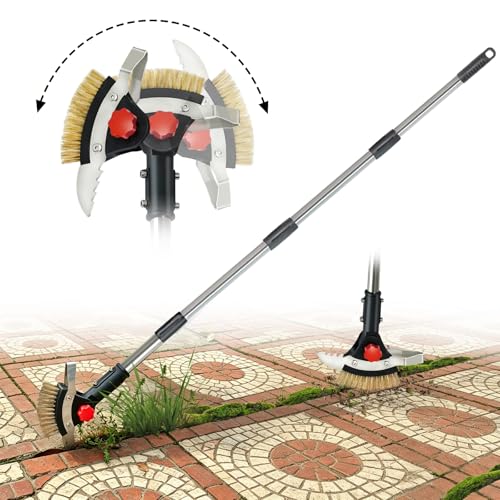
The Soil Grove 3-in-1 tool pairs a crack weeder with a scraper and weed brush. That combination is helpful when a joint contains more than a rooted plant. I can scrape packed soil, pull the weed, and brush away loose fragments without changing to a separate tool. Its long handle also makes cleanup easier on paths and patio edges.
This style works best as a maintenance tool rather than a root-busting bar. The scraper can open a clogged joint, while the brush helps remove small moss or dirt left on the surface. I would still use a stronger hook for very thick roots. For routine cleaning, this is the best tool for getting weeds out of cracks when a clean, three-step process matters.
Pros:
- Combines a scraper, weeder, and brush
- Long handle supports upright work
- Useful for dirt, moss, and small weeds
- Reduces the need for extra hand tools
- Good for regular patio maintenance
- Helps leave joints cleaner after pulling
Cons:
- May be less forceful than a heavy hook
- Three functions can add some bulk
- Brushes may wear with rough concrete use
My Recommendation
I recommend Soil Grove for people who want to clean and weed cracks in one pass. It is a good match for patios, walkways, and areas with light moss or soil buildup. Use the scraper gently on sealed surfaces and brush away debris before rinsing. For neat, repeated care, it is a practical best tool for getting weeds out of cracks.
Juxifyron 67-Inch Crack Weeder

The Juxifyron Crack Weeder offers a 67-inch reach and two brush heads. That extra length can help tall users work with a more natural posture across long driveways and walkways. The tool is designed for both weeds and moss, so it fits jobs where surface growth spreads beyond one narrow plant. The brush heads add a cleanup step after the root has been removed.
Long reach is useful, but it can reduce fine control if the tool is held at a steep angle. I recommend using gentle strokes first and keeping both feet steady. The two brush heads can help sweep residue from pavers, though a brush is not a substitute for a sharp blade on a deep taproot. This may be the best tool for getting weeds out of cracks for tall users and large paved spaces.
Pros:
- 67-inch reach suits many tall users
- Helps reduce bending across large areas
- Two brush heads support moss cleanup
- Useful on driveways, paths, and patios
- Handles weeds and surface debris
- Good for broad seasonal maintenance
Cons:
- Extra length may reduce precision
- Brush action may not remove deep roots
- Requires more storage room
My Recommendation
I would select Juxifyron for tall gardeners or anyone facing a wide walkway with moss and scattered weeds. Its reach helps make a long job less tiring, while the brush heads make the finished surface look cleaner. Use a slow pull near loose pavers and check the tool after wet work. For long paths, it can be the best tool for getting weeds out of cracks with less bending.
How to Choose the Best Crack Weeder
The right tool depends on the crack, not just the product label. A narrow joint with soft soil needs a precise hook. A deep driveway seam may need a long handle and a firm blade. Before buying, I look at reach, head shape, steel type, grip, storage, and the size of the area.
Stainless steel is a strong choice for low-maintenance use. It usually handles water and soil well, but no metal is completely immune to neglect. Carbon steel can provide excellent strength, yet it needs more drying and rust prevention. If you garden often, a small amount of care can keep either type working for many seasons.
Handle Length
A short handle gives better control. It works well near steps, flower beds, and fragile pavers. A long handle reduces bending and makes large areas easier. Tall users may prefer a 58-, 61-, or 67-inch design, while shorter users may feel more comfortable with a compact model.
Head Shape
An L-shaped hook can enter a narrow joint and pull against the root. A scraper can remove packed dirt and old moss. A brush can sweep loose debris after the weed is gone. For mixed jobs, a set or three-in-one tool may save time.
Manual Versus Chemical Control
Manual removal gives direct control and leaves no herbicide on the surface. It also lets me target one weed without spraying nearby plants. Chemical products can have a role in some yard plans, but users must read the label and follow local rules. Children, pets, drains, and water sources also deserve careful consideration.
How I Use a Crack Weeder
I start by clearing loose leaves and dirt from the joint. Then I place the hook beside the plant, not directly on its stem. I push down, angle the tool toward the root, and pull with a slow motion. If the soil is hard, I work in short strokes instead of forcing the handle.
After removal, I brush away loose material and check whether the root came out. A broken stem often grows back quickly. For stubborn weeds, damp soil can help, but I avoid working on slippery surfaces. I finish by rinsing the head, drying it, and storing it where the blade will not cause an injury.
Best for Table
| Best for | Why |
|---|---|
| Large driveways and long paths | Long handles reduce bending and cover more ground. |
| Small cracks and detailed work | Short tools provide better control near pavers and plants. |
| Mixed weeds, moss, and debris | Multi-head and 3-in-1 designs handle more than one task. |
FAQs Of best tool for getting weeds out of cracks
What is the best tool for getting weeds out of cracks?
A stainless steel crack weeder with an angled hook is the best general choice. It can reach narrow joints and pull weeds without chemicals. Choose a long handle if you want to work while standing.
Should I remove weeds from cracks when the soil is wet?
Lightly damp soil is often easier to work than dry, hard soil. Avoid using the tool when the surface is muddy or slippery. Good footing helps prevent slips and protects nearby pavers.
Can a crack weeder remove the whole root?
It can remove many shallow and medium roots when you place the hook below the plant. Deep taproots may break or require repeated work. Pull slowly and inspect the joint after removal.
Is stainless steel better than carbon steel?
Stainless steel usually needs less rust care and suits damp garden work. Carbon steel can feel very strong, but it needs to be dried and protected after use. Both can work well when matched to the job.
How can I stop weeds from returning in pavement cracks?
Remove the full root, sweep out loose soil, and keep the joint clean. Repairing damaged joint material can also reduce the space where seeds settle. Regular checks in spring and summer work better than waiting for large growth.
Final Verdict: Which Should You Buy?
The BARAYSTUS Long-Handle Crack Weeder is my top pick for the best tool for getting weeds out of cracks. It offers useful reach, a focused L-shaped head, and simple stainless steel care.
Choose a short tool for precision, a heavy model for hard roots, or a multi-use design for moss and debris. A good manual crack weeder keeps patios, sidewalks, and driveways neat with less strain.

Laura Bennett is a gardening writer at MyGardenLabs who creates beginner-friendly guides focused on solving common plant care and gardening problems.