Best Tool For Planting Tulip Bulbs: Top Garden Picks
The best tool for planting tulip bulbs is a sturdy bulb planter with depth marks and an easy soil-release design.
Planting tulips sounds simple until hard soil, sore knees, and uneven holes turn a bright fall task into a chore. I have found that the right bulb planter acts like a small cookie cutter for the ground. It makes neat holes, helps set each bulb at a steady depth, and saves time when you plant dozens at once. The tools below cover hand planters, long-handle models, and a drill-powered auger, so you can match the best tool for planting tulip bulbs to your soil, garden size, and comfort needs.
FLORA GUARD Bulb Planter

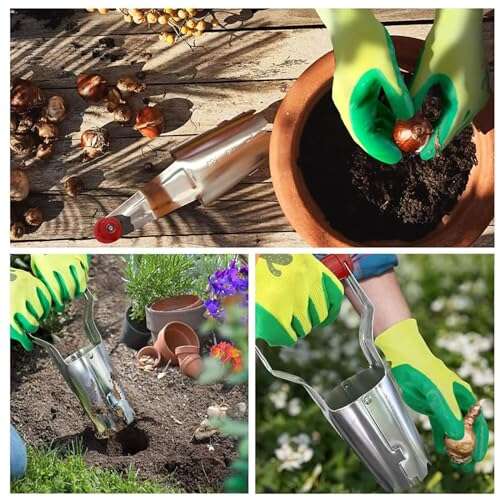
The FLORA GUARD Bulb Planter is a simple hand tool for gardeners who want clean holes without guessing the depth. Its depth markers make it easier to plant tulips at a more even level across a bed. The compact shape also works well around existing plants, borders, and small raised beds.
I like this style for small to medium planting jobs because it gives direct control over each hole. You press the cutter into prepared soil, lift out a plug, place the bulb, and return the soil. It is not a replacement for a long-handle tool when bending is difficult, but it remains a practical choice for careful, close planting.
Pros:
- Depth markers support more even tulip planting
- Compact design fits narrow beds and containers
- Easy to guide around roots and established plants
- Useful for tulips, crocuses, daffodils, and small bulbs
- Simple hand operation needs no batteries or drill
- Good choice for gardeners who want direct control
Cons:
- Requires kneeling or bending during use
- Hand pressure may be limited in dry, hard soil
- Best suited to smaller planting areas
Colwelt Long Handle Bulb Planter

The Colwelt Long Handle Bulb Planter is built for gardeners who do not want to work on their knees. Its upright design lets you position the cutter, press down, and remove a soil plug while standing. That can make a major difference during a large fall planting session.
This type of tool is especially useful in open beds and lawns where you need many holes in a straight or spaced pattern. The long shaft adds reach, while the sod-plugging design helps make a defined opening. I would still loosen very dry soil first, since no manual planter can replace good soil preparation.
Pros:
- Lets many users plant while standing
- Reduces repeated bending and kneeling
- Well suited to rows and larger beds
- Useful for bulbs and small plugs
- Helps create a consistent hole shape
- Good fit for gardeners with limited mobility
Cons:
- Needs more storage space than a hand planter
- Can be harder to control in very tight beds
- May need extra pressure in compact clay soil
XVBITOR Bend-Free Bulb Transplanter

The XVBITOR Bulb Planter focuses on a bend-free planting position. For gardeners with stiff backs, sore knees, or limited range of motion, that design can turn an unpleasant task into a manageable one. The tool is made to help open a hole for bulbs without requiring the low crouch used with many small planters.
I see this as a useful middle ground between a small hand tool and a heavy garden auger. It should work best in soil that has already been cultivated or watered. The main advantage is comfort, especially when you want to plant tulips in groups rather than one or two at a time.
Pros:
- Supports a more upright planting posture
- Reduces strain from repeated bending
- Practical for tulips and other seasonal bulbs
- Useful for gardeners with back or knee concerns
- Faster than digging each hole with a small trowel
- Works well in prepared garden soil
Cons:
- Hard ground can still require extra effort
- Long tools may feel awkward in crowded borders
- May not suit very large commercial-style planting jobs
BARAYSTUS Long Handle Bulb Planter

The BARAYSTUS Long Handle Bulb Planter adds several features that matter during repeated digging. Its serrated base is designed to help cut into soil, while the double pedal gives your foot a wider place to apply pressure. A soft T grip also makes it easier to guide the tool and keep your hands in a natural position.
This is the kind of planter I would consider for a gardener who plants a full bed each autumn. The foot pedal can help transfer body weight into the soil, which is often easier than pushing with your arms alone. It still works best when the soil has some moisture, but the design offers more leverage than a small hand planter.
Pros:
- Serrated base can help enter firm garden soil
- Double pedal gives better foot support
- Long handle allows upright use
- Soft T grip improves handling comfort
- Useful for repeated planting across larger beds
- Suitable for tulips, daffodils, and similar bulbs
Cons:
- Heavier and larger than a basic hand tool
- May be more tool than needed for a few bulbs
- Very rocky soil can reduce cutting speed
Jardineer Long Handle Bulb Planter
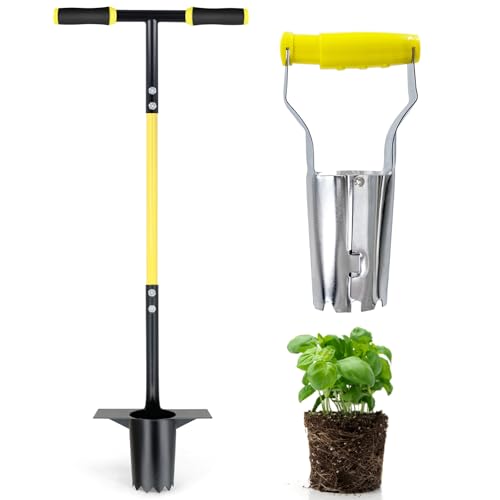
The Jardineer Bulb Planter is designed for standing work and includes a serrated base for opening soil. Its automatic soil-release feature is the detail that sets it apart from many basic planters. After making the hole, the tool can help release the soil plug instead of forcing you to clear it by hand each time.
That feature can save small amounts of time that add up over a whole flower bed. I would use it for tulips, daffodils, lilies, and other bulbs that need repeated holes at a similar depth. The long handle also makes it a kinder choice for anyone who finds kneeling difficult.
Pros:
- Automatic soil release can speed up repeated planting
- Long handle reduces bending and kneeling
- Serrated base helps start holes in prepared soil
- Useful for several types of garden bulbs
- Good choice for medium-size planting areas
- Simple manual design does not need power
Cons:
- Soil can stick in wet or heavy clay conditions
- Less precise in very crowded planting borders
- Requires cleaning after use to limit soil buildup
Haliaeetus Bulb Planter With Depth Mark

The Haliaeetus Bulb Planter uses a six-inch depth mark to help guide planting. That is useful because tulips often perform best when planted several inches deep, with the exact depth adjusted for bulb size, soil, and local climate. A visible mark gives you a quick reference instead of relying on memory or a ruler.
This tool suits gardeners who care about even bloom height and tidy spacing. I find depth marks especially helpful when planting many tulips of the same type, since a consistent starting point can create a more uniform display. As with any narrow planter, prepare the soil first if it is packed or full of stones.
Pros:
- Six-inch mark supports repeatable planting depth
- Useful for creating a more even tulip display
- Simple design is easy for new gardeners to learn
- Good for flower beds, borders, and raised beds
- Works without electricity or batteries
- Helpful for planting bulbs at a steady depth
Cons:
- Depth marks do not remove the need to assess soil
- Hard clay may require pre-loosening
- Hand operation can become tiring over many holes
Edward Tools Bend-Free Bulb Planter

The Edward Tools Bulb Planter is made for gardeners who want bend-free planting and a depth marker in one compact tool. Its design can help you make a hole while standing, then place the bulb without dropping to the ground. The depth guide also supports more consistent planting for tulips, daffodils, and dahlias.
I would place this model on the shortlist for small yards and seasonal gardeners. It offers comfort without the bulk of a large sod plugger, and its straightforward design is easy to understand. For best results, use it after rain or after watering the bed, but avoid working soil when it is sticky and wet.
Pros:
- Bend-free design helps protect the back and knees
- Depth marker supports consistent bulb placement
- Compact enough for home garden storage
- Useful for multiple bulb varieties
- Easy option for first-time bulb planters
- Good balance between comfort and control
Cons:
- May struggle in dry, compacted ground
- Not the fastest option for very large beds
- Less useful where rocks block the cutting end
Garden Auger Drill Bit for Planting

The Garden Auger Drill Bit takes a different approach from manual bulb planters. It connects to a compatible drill and uses rotation to make planting holes, which can greatly reduce hand effort during a large job. The listed size is designed for bulbs and bedding plants, making it a useful option for gardeners who already own a suitable drill.
This is likely the fastest choice for open soil when you need many holes in a short time. I recommend a slow, controlled speed rather than forcing the auger into the ground. Watch for stones, roots, and underground cables, and remember that a power tool needs more care than a simple hand planter.
Pros:
- Can make many holes quickly in prepared soil
- Reduces repeated pushing and lifting by hand
- Useful for large tulip beds and mass displays
- Fits gardeners who already own a compatible drill
- Helpful for bedding plants as well as bulbs
- Can save time during peak planting season
Cons:
- Requires a compatible drill and charged battery or power
- Rocks and roots can stop or deflect the auger
- Requires more safety awareness than a hand tool
- May disturb more soil than a narrow manual planter
Eadwiella Bulb Planter With Depth Markers

The Eadwiella Bulb Planter combines depth markers with an automatic soil-release transplanter design. This gives you two useful functions: a guide for hole depth and a quicker way to clear the soil plug. Those details matter when you want tulips to sit at a similar level without stopping to measure every opening.
I see this as a versatile choice for flower beds where neat work matters. It can help reduce the small delays that make bulb planting feel slow, especially when you plant in groups. Keep the cutter clean after use, and use a hand fork first if the soil is packed tightly.
Pros:
- Depth markers support even planting
- Automatic soil release can improve workflow
- Useful for tulips and other seasonal bulbs
- Helps create tidy, repeatable holes
- Good option for home flower beds
- Does not need a drill or electrical power
Cons:
- Wet soil may affect automatic release
- Hard ground still needs preparation
- May take practice to keep hole spacing uniform
Gardening Planting Tool Set With Depth Marking

This gardening planting tool set is aimed at people who want more than one step covered. The set is designed for digging holes, filling pits, moving plants, and using depth marks for more even planting. That makes it useful when tulip planting is only one part of your seasonal garden work.
A set can also reduce the need to switch between unrelated tools. I would choose it for a new gardener, a container gardener, or anyone building a basic bulb kit from scratch. It may not offer the speed of a drill auger or the back relief of a long-handle planter, but it provides broad everyday usefulness.
Pros:
- Supports digging, filling, and plant moving tasks
- Depth marking helps guide bulb placement
- Useful for tulips, daffodils, and dahlias
- Good starter option for new gardeners
- Helpful for containers and small beds
- Offers more than one garden function
Cons:
- A multi-tool set may lack a long handle
- May require more bending than upright planters
- Not the fastest choice for hundreds of bulbs
My Recommendation
The best tool for planting tulip bulbs depends on how many bulbs you plant and how your body handles garden work. For a small bed, the FLORA GUARD, Haliaeetus, or Eadwiella offers useful depth guidance and close control. For comfort, the Edward Tools, XVBITOR, Colwelt, BARAYSTUS, and Jardineer models let you work more upright. For speed across a large prepared bed, the Garden Auger Drill Bit is the strongest option if you already own a compatible drill.
When I compare these products, I look beyond the word “heavy duty.” Soil type, planting depth, body comfort, hole spacing, and cleanup all affect the real result. A sharp cutter may work well in loose loam but slow down in dry clay. A long handle may protect your back but feel awkward beside established perennials. Choose the tool that matches the work you will truly do, not only the feature list.
Tulip bulbs usually need well-drained soil and a planting depth based on bulb size and local growing advice. Many gardeners use a depth of about two to three times the bulb’s height, but local climate and the bulb package instructions should guide the final choice. The pointed end should face up, and the soil should settle firmly without being packed like concrete. These basic steps matter as much as the planter.
Best For Comparison
| Best for | Why |
|---|---|
| Small beds and close planting | Hand planters offer precise control and easy spacing around other plants. |
| Back-friendly planting | Long-handle models reduce kneeling and repeated bending during fall work. |
| Large planting jobs | A drill auger can open many holes quickly in loose, prepared soil. |
How to Choose the Best Tool for Planting Tulip Bulbs
Start with the size of your planting area. If you plan ten or twenty tulips in a border, a hand planter may be all you need. If you plan a full front lawn bed or several hundred bulbs, a long-handle model or auger can save hours. The best tool for planting tulip bulbs should make the job easier without creating a new problem.
Next, check your soil. Loose garden soil is friendly to almost every planter. Clay, dry soil, gravel, and dense turf need more care. Water the bed lightly a day before planting if the ground is dry, but do not dig when soil turns sticky. A hand fork or garden spade can break the surface before you use a bulb planter.
Depth marks are worth having when you want an even show of flowers. Tulips planted at different depths may emerge at different times, and shallow bulbs can face more temperature change or animal disturbance. A mark does not replace good judgment, yet it gives your eye a steady target. That small guide can make the planting pattern look more professional.
Comfort also matters. Repeated kneeling can be hard on your knees, and repeated bending can tire your lower back. Long handles and foot pedals shift more of the work into your legs and body weight. If mobility is a concern, the best tool for planting tulip bulbs is often the one that lets you keep a stable standing posture.
How I Evaluated These Tulip Bulb Planters
I focused on practical garden use rather than attractive claims alone. A good planter should make a clean hole, give reasonable depth control, and remove soil without constant fuss. It should also match the gardener’s body, soil, and planting scale.
I also considered the limits of each design. No bulb planter works equally well in rock, roots, wet clay, and dry turf. Manual tools offer quiet control, while augers offer speed with extra safety needs. That balance helps create a more honest buying guide for 2026.
Amazon availability and product details can change, so check the current listing before ordering. Pay attention to size, handle length, compatible drill requirements, and customer feedback about your type of soil. A product can be excellent for one garden and a poor fit for another.
Tips for Planting Tulip Bulbs With Less Work
Plant tulips in fall after the soil cools but before it freezes. The exact window depends on your USDA hardiness zone and local weather. Choose a sunny spot with good drainage, since standing water can cause bulbs to rot. If the bed drains poorly, improve the soil or use a raised bed before planting.
Mark your spacing before you start. You can use a measuring stick, string, or a simple visual pattern. For a natural look, plant in small groups instead of making every bulb form a perfect grid. For a formal bed, consistent spacing and depth create a clean spring display.
Place each bulb with its pointed tip facing up and its flatter root plate facing down. Do not force a bulb into a hole that is too small. After placement, return the soil and press it gently so there are no large air pockets. Water once if the soil is dry, then let natural fall moisture do much of the work.
Protect new plantings from squirrels and other pests when needed. A layer of wire mesh or a suitable garden cover can help in areas with heavy digging activity. Avoid thick, wet mulch directly against the bulbs. Good drainage, sound bulbs, and the right depth give tulips the strong start they need.
FAQs Of best tool for planting tulip bulbs
What is the best tool for planting tulip bulbs by hand?
A hand bulb planter with depth markers is a strong choice for small beds and containers. It offers control and helps you make holes at a more even depth. The FLORA GUARD, Haliaeetus, and Eadwiella models fit this type of work.
Are long-handle bulb planters better for bad knees?
They can be. A long handle lets you plant while standing and reduces repeated kneeling. A foot pedal may also help you use body weight instead of arm strength.
Can I use a drill auger for tulip bulbs?
Yes, if the auger fits your drill and the soil is suitable. Use a slow speed, wear eye protection, and check for rocks, roots, and hidden lines. A drill auger works best in loose, prepared soil.
How deep should tulip bulbs be planted?
Many gardeners plant tulips about two to three times as deep as the bulb is tall. Follow the bulb label and local extension advice, since soil and climate can change the ideal depth.
Should I water tulip bulbs after planting?
Water after planting if the soil is dry. This helps settle the soil around the bulb. Do not keep the bed soggy, because excess water can lead to bulb rot.
Final Verdict: Which Should You Buy?
For most home gardeners, the Eadwiella or Haliaeetus is the best tool for planting tulip bulbs because depth marks support even results. Choose Edward Tools or a long-handle model if bending is hard. Pick the Garden Auger for large beds and faster work.
The right tulip bulb planter saves time, protects your body, and helps create a bright spring display. Match the tool to your soil, space, and comfort needs before ordering.

Laura Bennett is a gardening writer at MyGardenLabs who creates beginner-friendly guides focused on solving common plant care and gardening problems.