What Is The Best Shovel To Remove Grass: Easy Guide
Introduction
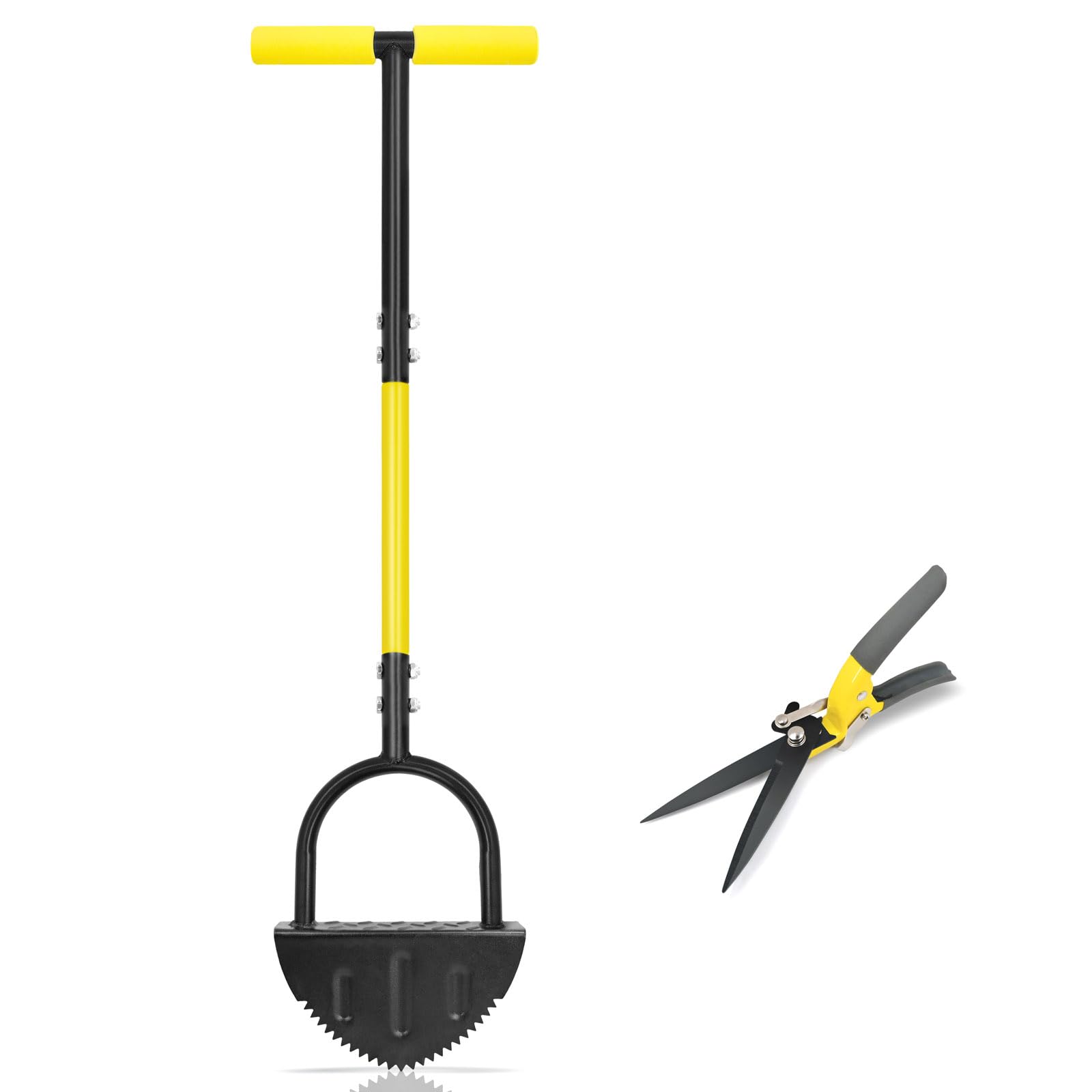
For most homeowners in the United States, the best shovel for removing grass is a sharp, long-handled square-point garden spade. Its flat blade cuts clean lines under turf and helps lift small sections of sod without wasting much soil.
Choose a manual sod cutter for a large lawn project. Use a round-point shovel when the soil is hard, rocky, or full of roots. The right tool depends on the lawn size, soil, grass type, and whether you want to save the sod.

Quick Answer
A long-handled square-point spade with a strong steel blade is the best all-purpose shovel for removing grass by hand.
Look for:
- A sharp, straight blade
- A long handle
- A comfortable grip
- A strong steel socket
- A blade about 8 to 12 inches wide
- A step or footrest on top of the blade
- A blade length of about 10 to 12 inches
For a large area, a sod cutter is better than any shovel. It removes grass faster and makes a more even cut. You can rent one from many home improvement stores and equipment rental shops in the United States.
Why a Square-Point Spade Works Best
A square-point spade has a flat cutting edge. This shape lets you make straight cuts through turf. It also helps you lift a slab of grass with less soil attached.
A round shovel is made to dig and move loose soil. Its curved blade can cut grass, but it tends to make uneven cuts. It is still useful when the ground is packed, rocky, or filled with deep roots.
A garden spade also gives you better control than a wide transfer shovel. A transfer shovel is useful for moving loose mulch or soil. It is not the best tool for cutting intact turf.
The best blade shape
Choose a square or slightly squared blade for:
- Removing lawn for a garden bed
- Cutting small strips of sod
- Making clean borders
- Taking out grass around paths
- Working in tight spaces
Choose a round-point blade for:
- Hard clay
- Rocky ground
- Soil with thick roots
- Breaking through compacted ground
- Digging below the root zone
The blade should be sharp. A dull blade makes you use more force. It may also slip, bend, or damage the grass layer you want to keep.
The best handle length
A long handle is usually the best choice for grass removal. It lets you use your legs and body weight instead of bending over each cut.
A short handle may help in raised beds or tight spots. However, it gives you less leverage and can place more strain on your back.
For most adults, a long-handled shovel with a shaft near chest height is a practical starting point. The correct length should let you work with a mostly upright posture.
The best blade material
A steel blade is the safest choice for cutting turf. Tempered steel can resist bending better than thin stamped metal.
Stainless steel may resist rust, but the handle joint and blade shape still matter. A stainless blade is not automatically stronger.
Avoid very light plastic blades for cutting established grass. They may work for loose soil, mulch, or snow, but they are not designed for roots and compact soil.

Best Tool by Grass-Removal Job
The “best shovel” changes with the job. Use this table to match the tool to the area and soil.
| Job | Best tool | Why it works |
|---|---|---|
| Small patch under 50 square feet | Square-point garden spade | Gives good control and clean cuts |
| Narrow edge or border | Border spade | Fits tight spaces |
| Hard or rocky soil | Round-point digging shovel | Breaks and penetrates rough ground better |
| Large lawn area | Manual or powered sod cutter | Removes long, even strips |
| Saving healthy sod | Sod cutter or sharp spade | Makes shallow, controlled cuts |
| Removing invasive grass roots | Spade plus garden fork | Helps loosen and collect roots |
| Very wet soil | Sharp spade used with care | Cuts better than a dull blade, but avoids excess soil damage |
| Very dry clay | Watering, then a digging shovel | Softens the soil before cutting |
A square spade is the best general answer. It is not the best answer for every lawn.
How to Remove Grass With a Shovel
Use this method for a small or medium patch. For a large lawn, renting a sod cutter may save time and effort.
What you need
Gather:
- A sharp square-point spade
- A garden fork
- Work gloves
- Safety glasses
- Sturdy shoes or boots
- A garden hose or measuring tape
- A wheelbarrow or tarp
- A rake
- A file or shovel sharpener, if the blade is dull
Check the work area before you dig. Call 811 in the United States before digging if your project may reach buried utility lines. The exact process can vary by state, so follow the instructions for your location.
Step 1: Mark the area
Mark the edge with string, spray paint, or a garden hose. Straight lines make the work easier.
Avoid cutting more area than you need. Removing a small strip at a time gives you better control and reduces waste.
Step 2: Mow the grass short
Mow the lawn before you dig, if possible. Short grass is easier to handle and shows the soil line more clearly.
Do not mow if the ground is unsafe to walk on or the site contains hidden objects. Pick up stones, toys, and other debris first.
Step 3: Choose the right soil moisture
The soil should be moist but not muddy. Very dry soil is hard to cut. Very wet soil sticks to the blade and forms heavy clumps.
If the ground is dry, water it lightly one day before removal. Do not flood it. Mud can damage soil structure and make lifting much harder.
Step 4: Cut the outline
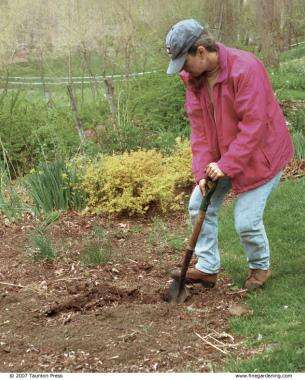
Place the spade straight down along the marked edge. Press the blade into the soil with your foot.
Cut to a depth of about 1 to 2 inches for shallow turf. Some grass has deeper roots or runners. In that case, you may need a deeper cut to remove the crown and connected roots.
Make short, overlapping cuts. This creates a clean outline without forcing the shovel sideways.
Step 5: Cut the sod into strips
Divide the area into strips about 12 inches wide. Short strips are easier to lift than large sheets.
Slide the spade under one end of a strip. Keep the blade as flat as you can. The goal is to separate the grass layer from the soil below it.
Step 6: Roll or lift the sod
If you plan to reuse the grass, roll each strip with the grass side facing inward. Keep the rolls damp and use them soon.
If you do not need the sod, place it on a tarp or in a wheelbarrow. Do not assume grass clippings or large sod chunks belong in a regular compost pile. Thick pieces may regrow if they are not fully broken down.
Step 7: Remove leftover roots
Use a garden fork to loosen roots left in the soil. Pick out runners and crowns by hand.
This step matters with spreading grasses such as bermudagrass and some types of zoysia. Small root or runner pieces may survive and grow again.
Step 8: Level the soil
Rake the exposed soil. Remove large roots and stones. Fill low spots with suitable soil and check the grade before planting.
The surface should be firm but not packed hard. A smooth, level bed makes later planting much easier.

How to Choose the Best Shovel
A good grass-removal shovel should cut, pry, and lift without bending. Use these features as a buying checklist.
1. A sharp cutting edge
The edge should be sharp enough to enter the turf with steady foot pressure. It does not need to be razor sharp.
A file can restore a dull edge. Follow the shovel maker’s care instructions. Wear eye protection when sharpening metal.
2. A strong blade-to-handle connection
The socket is the part that connects the blade to the handle. A loose or weak socket can fail when you pry.
Look for a solid connection with no visible cracks, large gaps, or movement. Avoid using a shovel as a lever if the manufacturer does not support that use.
3. A comfortable handle
A D-grip can give you control during short digging tasks. A straight long handle gives more reach and leverage.
The best handle is the one that lets you keep your wrists fairly straight and your back in a comfortable position.
4. A useful blade width
A wider blade removes more grass per cut. It also needs more force.
A blade around 8 to 10 inches wide is a practical choice for many home projects. A narrow blade may work better in dense soil or tight spaces.
5. A foot step
A foot step gives your boot a stable place to press. It can make repeated cuts easier and reduce slipping.
Do not place your foot on a sharp or damaged blade edge. Replace a shovel that is bent, cracked, or loose.
Shovel Versus Sod Cutter
A shovel is best for small areas. A sod cutter is best for large areas or projects that need an even depth.
A manual sod cutter has a blade that slides under the turf. Some models have a handle that lets you push the blade forward. Powered models use an engine to cut long strips with less hand effort.
The main trade-off is cost and setup. A shovel is simple and useful for many other garden jobs. A sod cutter may save hours on a large lawn, but rental cost, transport, and safe operation matter.
As a rough planning example, a 10-by-10-foot patch is 100 square feet. A shovel can handle that area, but the time will vary with soil, roots, fitness, and turf thickness. For several hundred square feet, compare the work and rental cost before starting.
A sod cutter also does not solve every problem. It may leave roots behind, struggle in rocky soil, or fail to work well on steep or uneven ground. Read the rental instructions and use the machine only under safe conditions.

Which Shovel Is Best for Different Grass Types?
Grass type changes the difficulty of removal. The surface may look similar, but roots and runners can behave very differently.
Cool-season lawn grass
Kentucky bluegrass, tall fescue, fine fescue, and perennial ryegrass often form a dense turf mat. A sharp spade can remove these grasses in manageable sections.
Remove the crown and the main root layer if you want to stop regrowth. A shallow scrape may leave live roots behind.
Bermudagrass
Bermudagrass can spread through stolons and rhizomes. Stolons are above-ground runners. Rhizomes are underground stems.
A square spade can remove the top layer, but small pieces may remain. Use a garden fork to search for runners. Watch the area for regrowth after removal.
Zoysia grass
Zoysia forms a dense mat and may take more force to cut. A sharp spade or sod cutter works better than a dull shovel.
Work in smaller strips. This reduces the force needed to lift the turf.
St. Augustine grass
St. Augustine often forms thick above-ground runners. A sharp spade can cut the mat, but runners may remain along the edge.
Inspect the soil and nearby lawn after removal. Pull out visible runners before preparing the new bed.
Buffalo grass and other prairie grasses
These grasses may have strong crowns and deep roots. A spade can work for small patches, but a garden fork may help loosen the root zone.
If the area is large, compare a sod cutter with a rototiller. Tilling can spread roots and create more cleanup if the grass spreads by runners.
Common Mistakes When Removing Grass
The most common mistake is choosing a shovel that is too dull, too short, or too light for the soil.
Avoid these errors:
- Cutting when the soil is mud: Mud sticks to the blade and can damage soil structure.
- Prying with a damaged shovel: A bent blade or loose socket may break.
- Removing only the leaves: Grass can regrow from crowns, roots, or runners.
- Making very large sections: Large sod pieces are heavy and hard to control.
- Ignoring buried utilities: Always use the proper utility-locating service before digging.
- Working without proper shoes: Sandals do not protect your feet from a slipping blade.
- Using a shovel for a huge lawn: A sod cutter may be safer and more efficient.
- Leaving invasive runners behind: Spreading grass may return from small pieces.
- Overwatering hard soil: Excess water makes the ground heavy and slippery.
- Tilling without a plan: Tilling can spread some types of grass rather than remove them.
Stop work if you find buried cable, pipe, chemical containers, glass, or other hazardous material. Contact the proper utility or local service before continuing.

Best Shovel for Removing Grass: Buying Guide
If you want one tool for normal home use, choose a long-handled square-point spade with a steel blade and foot step.
Use this checklist:
- Choose the blade shape: Square for clean turf cuts; round for hard and rocky soil.
- Check the edge: It should be straight, sturdy, and easy to sharpen.
- Inspect the socket: It should not wobble or show cracks.
- Match the handle to your height: You should not need to bend deeply for each cut.
- Check the grip: It should feel secure with gloves.
- Consider weight: A heavier shovel may be strong, but it can cause fatigue.
- Look at replacement parts: A replaceable handle can extend the tool’s life.
- Skip novelty features: A basic, strong design is often more useful than extra attachments.
The best shovel is not always the most expensive one. A sharp blade, sound connection, and comfortable handle matter more than a long list of features.
How to Care for a Grass-Removal Shovel
Clean the blade after each use. Soil left on steel can hold moisture and encourage rust.
Dry the shovel before storing it. If the blade is steel, a light coat of tool oil can help protect it during long storage. Keep the tool in a dry place and hang it when possible.
Check the handle and socket before each project. Tighten hardware when the design allows it. Replace a cracked handle rather than trying to hide the damage with tape.
Sharpen the edge when the shovel begins to bounce off the soil. A maintained blade cuts with less force and gives you better control.

Key Takeaways
- The best all-purpose shovel for removing grass is a sharp, long-handled square-point spade.
- Use a round-point shovel for hard, rocky, or root-filled soil.
- Use a sod cutter for a large lawn area.
- Cut turf into small strips that you can lift safely.
- Remove crowns, roots, and runners if you want to prevent regrowth.
- Call 811 before digging where buried utilities may be present.
- Stop and reassess if the soil is muddy, the shovel is damaged, or the area contains hazards.
FAQs
Can I use a regular garden shovel to remove grass?
Yes. A regular garden shovel can remove grass from a small patch. A square-point spade usually works better because its straight edge cuts cleaner lines.
Should I use a spade or a shovel to remove sod?
Use a spade when you need clean, shallow cuts. Use a round-point shovel when the soil is hard or full of roots. For a large area, use a sod cutter.
How deep should I dig to remove grass?
Start at about 1 to 2 inches for shallow turf. Go deeper if the grass has thick roots, runners, or a raised crown. The goal is to remove the living root and crown layer, not a large amount of soil.
Can I reuse the grass I remove?
Healthy sod can be reused if you keep it moist and reinstall it soon. Roll it with the grass side inward. Do not leave it rolled up for long periods because the center can heat up and die.
What is the easiest way to remove grass without a shovel?
For a large area, rent a sod cutter. For a small area, sheet mulching or solarization may work, but these methods take more time and may not suit every grass type or planting schedule.
Will grass grow back after I remove the sod?
It can. Grass may return from roots, crowns, stolons, rhizomes, or pieces left near the edge. Inspect the soil and monitor the area after removal.
Conclusion
For most U.S. home projects, choose a sharp, long-handled square-point garden spade. It gives you the best balance of control, strength, and clean cuts.
Choose a round-point shovel for tough soil, and rent a sod cutter when the lawn area is large. Before you begin, mark the work area, check for buried utilities, set the soil moisture, and remove the full root layer.

Laura Bennett is a gardening writer at MyGardenLabs who creates beginner-friendly guides focused on solving common plant care and gardening problems.