
What Type Of Bonsai Do I Have: Identify Your Tree
Your bonsai type is identified by its leaves, bark, trunk, growth habit, and care needs.
If you are asking, “what type of bonsai do I have,” you are not alone. Many bonsai trees look alike at first glance, especially when they are young or sold without a plant label. After years of examining bonsai traits, I have found that careful observation is more reliable than guessing from the tree’s shape alone. This guide will help you identify your bonsai and choose the right care routine.
First, understand what a bonsai is
Bonsai is not one tree species. It is the art of growing and training a woody plant in a small container. Almost any tree or shrub with a strong trunk, small leaves, and flexible growth can become bonsai.
This means the question “what type of bonsai do I have” really has two parts:
- What species or plant is it?
- What bonsai style has been used to train it?
A tree can be a juniper bonsai in an informal upright style. It can also be a ficus bonsai in a root-over-rock style. The species tells you how to care for the plant, while the style describes its shape.
A common mistake is to identify a bonsai by its pot or twisted trunk. Those features show training, not plant identity. Leaves, needles, flowers, fruit, bark, and growth habits give much better clues.

Look at the leaves or needles first
Leaves are often the fastest way to narrow down your bonsai type. Study their size, color, texture, shape, and arrangement on the branches.
Use a bright light and inspect both old and new growth. New leaves can look different from mature leaves, so avoid making a final guess from one small shoot.
Broad, glossy leaves
A bonsai with thick, shiny leaves may be a ficus, jade, or dwarf umbrella tree.
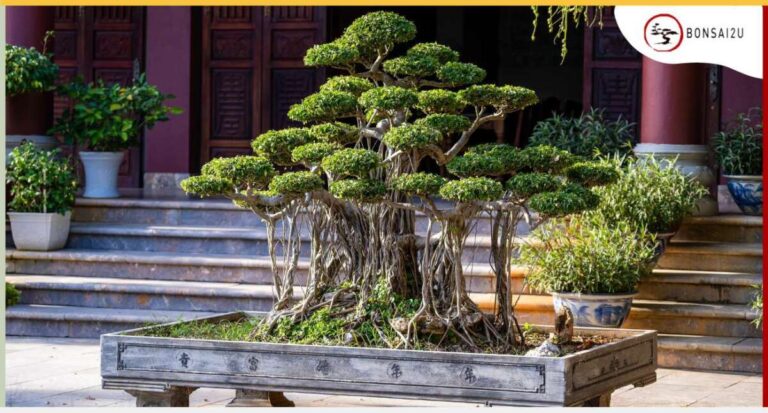
Ficus bonsai often have:
• Smooth, oval leaves
• A glossy green surface
• Pale gray bark
• Strong, spreading roots
• Milky sap when a branch is cut
Jade bonsai have thicker leaves that hold water. Their leaves may feel slightly rubbery or fleshy. The trunk often becomes tan and rough with age.
Dwarf umbrella trees have leaflets arranged like spokes around a central stem. This pattern looks like a small green umbrella, which explains the common name.
Small, soft leaves
Small oval leaves may point to Chinese elm, serissa, boxwood, or olive.
Chinese elm bonsai usually have:
• Small, toothed leaves
• Fine twigs
• Gray or mottled bark
• A dense branching pattern
Serissa, often called snow rose, has tiny leaves and may produce small white flowers. It is attractive but can drop leaves when moved, overwatered, or exposed to sudden temperature changes.
Boxwood has small, firm leaves and dense growth. Its leaves often grow in opposite pairs along the twig.
Needle-like foliage
Needles usually suggest a conifer. Juniper and pine are two of the most common bonsai trees with needle-like foliage.
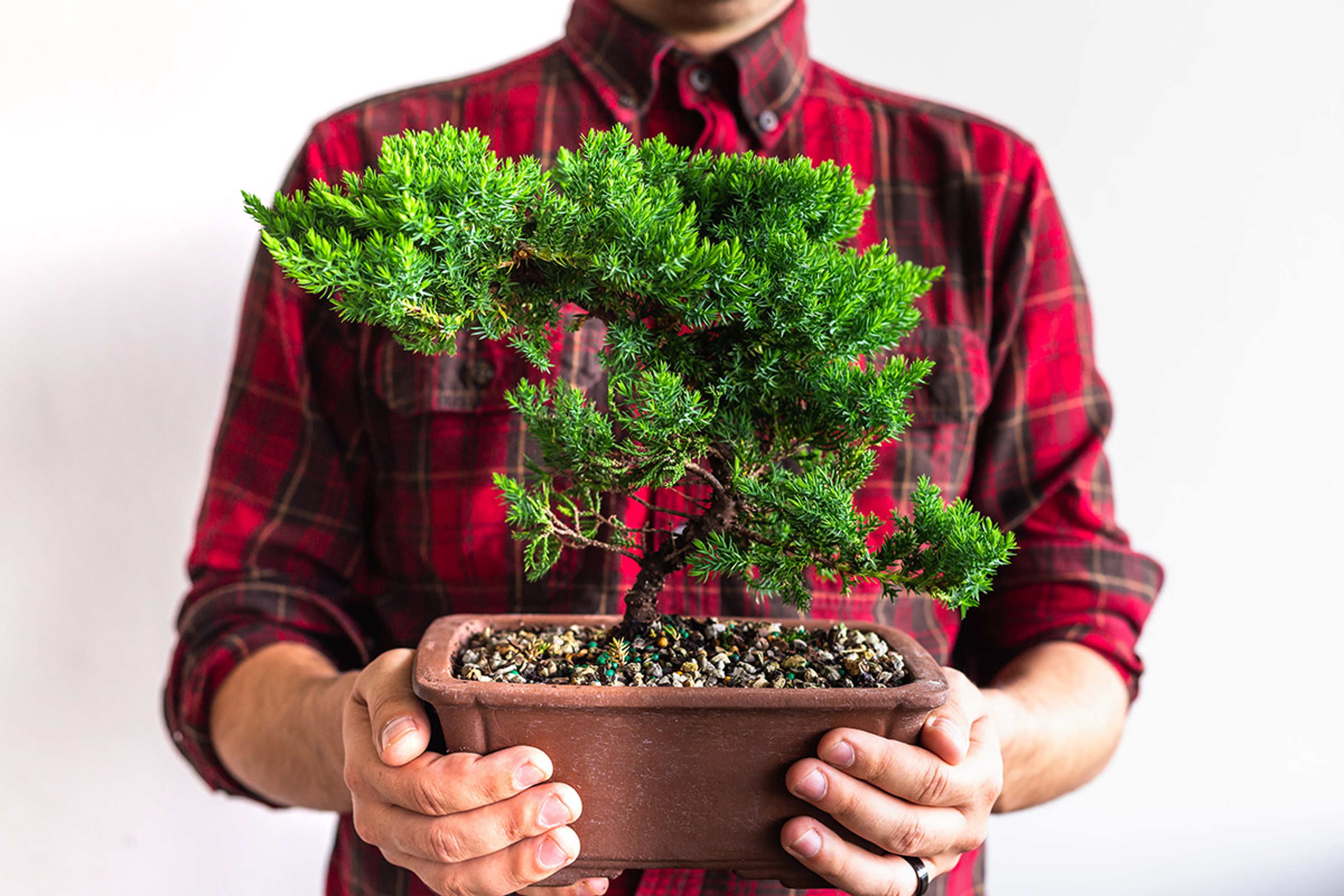
Juniper bonsai may have scale-like foliage or sharp juvenile needles. The foliage is often blue-green, dark green, or silver-green. Junipers also produce small berry-like cones.
Pines have longer needles that grow in bundles. Count the needles in each bundle if possible. Two, three, or five needles per bundle can help identify the pine group, although exact species identification may require more evidence.
Maple-shaped leaves
A bonsai with delicate, hand-shaped leaves is often a Japanese maple. These leaves may turn red, orange, or yellow in fall, depending on the cultivar and growing conditions.
Japanese maple bonsai usually have:
• Palmate leaves with several pointed lobes
• Fine twigs
• Smooth bark when young
• Strong color in spring or fall
Leaf color alone is not enough. Light, temperature, nutrition, and cultivar all affect the color of maple leaves.
:max_bytes(150000):strip_icc()/GettyImages-1217006787-7822e0483e314f45a5900054a40920d4.jpg)
Check the bark, trunk, and roots
The trunk can provide important clues, but it should support your identification rather than decide it alone. Bonsai growers often wire, prune, bend, and carve trunks, so the trunk may not show the plant’s natural form.
Look for these features:
• Smooth or rough bark
• Gray, brown, red, or pale color
• Peeling bark
• Swollen roots
• A single trunk or several trunks
• Sharp thorns or small spines
• Milky sap from a fresh cut
Ficus bonsai often develop thick surface roots and pale bark. Older junipers may have flaky bark and deadwood areas. Pine bark can become deeply plated with age.
Never cut a branch just to test for sap unless pruning is already needed. If you do make a proper pruning cut, use clean tools and observe the sap carefully. Milky sap is common in ficus and some other plants, but it is not a complete identification test.
Roots can also help. A ficus may develop dramatic aerial roots in warm, humid conditions. A jade may have a thick, woody base but a smaller root system. A recently repotted tree may not show its natural roots at all.

Match the bonsai to its growing conditions
Your bonsai’s location can reveal its likely type. Ask where the tree was sold and where it grows best.
Some bonsai are mainly indoor trees in the United States. Others need outdoor seasons and may decline indoors.
Bonsai that often grow indoors
These species usually tolerate a warm home if they receive strong light:
• Ficus
• Jade
• Dwarf umbrella tree
• Fukien tea
• Serissa
• Carmona species
Even these trees need more light than a dim room provides. A sunny window or quality grow light is often needed.
Bonsai that usually belong outdoors
These trees need natural seasonal changes:
• Juniper
• Japanese maple
• Pine
• Spruce
• Larch
• Many flowering and fruiting trees
A juniper may survive indoors for several weeks, but it usually needs outdoor light, air movement, and seasonal dormancy for long-term health. This is one of the most important clues when determining what type of bonsai do i have.
Do not move an outdoor bonsai directly from shade into strong afternoon sun. Increase light over several days to reduce leaf or needle damage.

Use flowers, fruit, and cones as clues
Flowers and fruit can make identification much easier. If your bonsai is blooming, take clear photos before the flowers fade.
Common clues include:
• Small white flowers and tiny leaves, which may suggest serissa
• Pink, white, or red flowers with oval leaves, which may suggest azalea
• Small orange or red fruit, which may suggest a pomegranate or crabapple
• Blue or red berry-like cones, which may suggest juniper
• Pine cones with needle bundles, which point toward pine
Flowering bonsai often need more light to bloom well. They may also require different pruning times. For example, cutting a flowering tree at the wrong time can remove next season’s buds.
Do not eat fruit from an unidentified bonsai. Some ornamental plants may have toxic parts, and bonsai trees can be treated with pesticides or systemic products.

Compare the most common bonsai types
The table below can help you make a first identification. Treat it as a guide, not a final diagnosis.
| Bonsai type | Main identifying features | Usual growing habit |
|---|---|---|
| Ficus | Glossy oval leaves, pale bark, strong roots, milky sap | Warm indoor or tropical conditions |
| Chinese elm | Small toothed leaves, fine twigs, mottled bark | Often outdoors, with protection in cold areas |
| Juniper | Scale-like or needle-like foliage, flaky bark, berry-like cones | Outdoor, with strong light |
| Jade | Thick fleshy leaves, woody trunk, water-storing tissues | Bright indoor or warm outdoor conditions |
| Japanese maple | Lobed leaves, fine branches, seasonal color | Outdoor with winter dormancy |
| Pine | Needles in bundles, resinous bark, cones | Outdoor with strong light |
| Serissa | Tiny leaves, small white flowers, fine branches | Bright, stable conditions |
| Azalea | Small leaves, colorful flowers, dense branches | Outdoor or cool bright conditions |
| Fukien tea | Small rough leaves, white flowers, red berries | Warm, bright conditions |
| Dwarf umbrella tree | Leaflets arranged around a central stem | Warm indoor conditions |
When asking what type of bonsai do i have, begin with the closest match in this table. Then confirm the details with a plant reference guide, local bonsai club, nursery expert, or clear photographs.
:max_bytes(150000):strip_icc()/Bonsai-Juniper-Tree_GettyImages-1191078639-c86fffdd513648b6b2ee0d658710bc7d.jpg)
Identify your bonsai with a simple process
You can often narrow down the species in ten minutes. Work through the tree from the leaves to the roots.
- Take several clear photos in natural light.
- Photograph the whole tree from the front and side.
- Take a close photo of the leaves or needles.
- Photograph the bark, trunk, flowers, fruit, or cones.
- Note whether the plant is indoors or outdoors.
- Check if the leaves grow in pairs, clusters, rosettes, or alternating rows.
- Look for thorns, sap, aerial roots, or unusual bark.
- Compare the traits with a trusted bonsai guide.
- Ask a bonsai club or nursery for a second opinion.
- Avoid changing the care routine until you have a reasonable identification.
A photo identification app can help, but it may confuse similar species. For example, it may identify a Chinese elm as another elm or mistake a juniper for a different conifer. Use technology as a starting point, not as the final authority.
In my experience helping new growers, the best results come from combining three clues: leaf form, outdoor or indoor behavior, and bark texture. One clue can mislead you. Three matching clues usually give a much stronger answer.

Common mistakes when identifying bonsai
Many identification errors come from focusing on appearance rather than biology. A bonsai can be shaped to look like a miniature ancient tree, but its care needs remain linked to its species.
Avoid these mistakes:
• Assuming every bonsai with needles is a juniper
• Calling any small tree a Japanese maple
• Using the pot color as an identification clue
• Confusing leaf drop with a deciduous species
• Keeping an outdoor tree indoors because it looks small
• Watering on a fixed schedule before identifying the plant
• Repotting immediately after bringing the tree home
• Cutting branches to test for sap or growth patterns
Stress can change a tree’s appearance. A ficus may drop leaves after a move. A maple may lose leaves in winter. A juniper may look dull when it lacks light, but that does not mean it is dead.
I once saw a new grower label a stressed ficus as a dying tropical shrub because it lost leaves after being moved indoors. The real issue was low light and irregular watering. After the location improved, new growth appeared. The lesson is simple: identify the plant, then assess its health.
:max_bytes(150000):strip_icc()/bonsai-tree-getty-0723-c656729073b04f46bd45a9bbee0d7f78.jpg)
What to do if you still cannot identify it
Sometimes the available clues are not enough. Nursery labels may be wrong, and many bonsai are sold under broad names such as “indoor bonsai” or “green bonsai.”
If you are still unsure, collect the following information:
• Your location and climate
• Where the bonsai was purchased
• How long you have owned it
• Whether it loses leaves in winter
• How often it flowers or produces cones
• The leaf length and width
• The tree’s current light level
• Any care label or tag from the seller
Then share clear photographs with a local bonsai society, extension office, botanical garden, or experienced nursery. A specialist may identify the tree from small details that are easy to miss.
There are limits to visual identification. Cultivars, hybrids, grafted trees, and poor photos can make an exact answer impossible. In those cases, identifying the plant group is still useful because it helps you choose safer light, water, pruning, and winter care.
Give your bonsai safe care while you identify it
Until you know the species, use a cautious care plan. Bonsai need frequent observation because a small pot holds little water and has limited root space.
Follow these basic steps:
• Place the tree in bright light suited to its likely group.
• Check the soil with your finger before watering.
• Water deeply when the soil begins to dry, then let excess water drain.
• Never leave the pot sitting in a tray of standing water.
• Avoid heavy fertilizer while the tree is stressed.
• Do not prune roots or repot until the species and best season are clearer.
• Protect the tree from sudden heat, frost, and strong wind.
• Watch new growth for signs of recovery.
Watering by calendar is risky. A tree may need water daily during hot weather and much less during cool, cloudy periods. The soil, pot size, tree species, and local climate all affect the schedule.
If the leaves are yellow, inspect the roots, soil, light, and watering pattern before adding fertilizer. Yellow leaves can result from excess water, poor drainage, low light, nutrient shortages, or natural aging.
Why correct identification matters
Knowing what type of bonsai do i have can prevent serious care mistakes. A tropical ficus and an outdoor juniper may both be sold in small ceramic pots, but they need very different conditions.
Correct identification helps you decide:
• Whether the tree belongs indoors or outdoors
• How much light it needs
• Whether it requires winter dormancy
• When to prune and repot
• How often to fertilize
• How much cold it can tolerate
• Whether leaf drop is normal
• Which pests and diseases to watch for
It also helps you set realistic expectations. A young bonsai will not look like a centuries-old specimen overnight. Bonsai is a slow craft. The tree grows in seasons, and good care is measured in years rather than days.
Frequently Asked Questions About What Type of Bonsai Do I Have
How can I tell if my bonsai is a ficus?
Look for glossy oval leaves, pale smooth bark, strong surface roots, and white or milky sap from a proper pruning cut. Ficus bonsai also prefer warm conditions and bright light, making them common indoor bonsai trees.
Is my bonsai a juniper if it has needle-like leaves?
It may be, but needle-like foliage can also belong to pine, spruce, cedar, or other conifers. Junipers often have scale-like foliage, sharp juvenile needles, flaky bark, and small berry-like cones.
Can I identify a bonsai from a photo?
A clear photo can provide useful clues, especially when it shows the leaves, bark, trunk, and whole tree. However, exact identification may not be possible from one image because cultivars and hybrids can look very similar.
Why is my bonsai losing leaves?
Leaf loss can result from moving stress, low light, overwatering, underwatering, pests, temperature changes, or normal seasonal dormancy. Identify the species first, then compare the symptoms with its natural growth cycle.
Does every bonsai need to live outdoors?
No. Tropical species such as ficus and jade can often grow indoors with strong light and stable warmth. Juniper, pine, maple, spruce, and many other temperate bonsai generally need to live outdoors and experience seasonal change.
What is the easiest bonsai for beginners?
Ficus is often a forgiving choice for beginners in warm indoor settings. Chinese elm can also be a good option when grown in suitable outdoor conditions, but the best choice depends on your climate, light, and available space.
Conclusion
To answer “what type of bonsai do i have,” study the leaves, needles, bark, roots, flowers, and growing conditions together. Remember that bonsai is a training method, not a single species, so the tree’s biology matters more than its miniature shape.
Start with clear photos and a written list of traits. Compare them with a reliable plant guide, and ask a bonsai club or specialist when the clues are unclear. Once you identify the tree, adjust its light, water, pruning, and seasonal care with confidence.
Your bonsai does not need perfect care on the first day. It needs careful observation and steady improvement. Explore more bonsai guides, learn from local growers, and share your tree’s features or photos in the comments.

Laura Bennett is a gardening writer at MyGardenLabs who creates beginner-friendly guides focused on solving common plant care and gardening problems.