Why Is My Bonsai Tree Turning Yellow: Causes And Fixes
Bonsai leaves turn yellow most often because of watering stress, poor light, seasonal change, pests, or natural leaf aging.
If you are asking, “why is my bonsai tree turning yellow,” the answer depends on the tree species, leaf pattern, soil, roots, and care routine. A few yellow leaves may be normal, but sudden yellowing can signal a problem that needs quick action. This guide will help you find the cause, correct it safely, and prevent the issue from returning.
Why Is My Bonsai Tree Turning Yellow?
Yellow bonsai leaves are a sign that the plant is under stress. The leaves may turn pale yellow, bright yellow, or yellow with brown edges. Each pattern gives useful clues.
The most common causes include:
• Overwatering and poor drainage
• Underwatering and dry roots
• Too little or too much sunlight
• Normal seasonal leaf drop
• Nutrient shortages
• Root damage
• Insect pests or disease
• Sudden changes in temperature or location
A bonsai tree grows in a small pot. This gives you more control, but it also leaves less room for mistakes. The roots can dry out fast, yet they can also sit in wet soil for too long. Think of the root system as the tree’s kitchen. If the roots cannot absorb air, water, or nutrients, the leaves are often the first part to show trouble.
Overwatering Is a Common Cause of Yellow Bonsai Leaves
Overwatering is one of the leading answers to “why is my bonsai tree turning yellow.” Many growers water on a fixed schedule, such as every day or every Sunday. Bonsai trees do not follow calendars. Their water needs change with the season, pot size, soil mix, weather, and tree species.
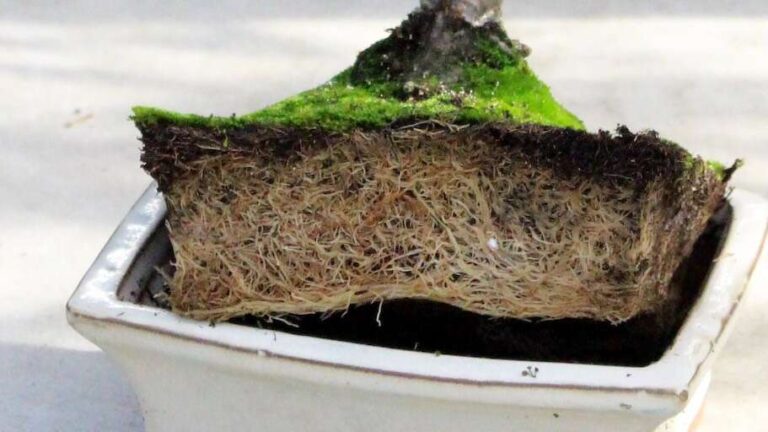
When soil stays wet for too long, air pockets disappear. Roots need oxygen as well as water. Without enough oxygen, fine roots may weaken or rot. The tree then struggles to move water and nutrients to its leaves, even though the pot looks wet.
Look for these signs of overwatering:
• Several leaves turn yellow at once
• Leaves feel soft or drop easily
• The soil stays wet for days
• The trunk or roots smell sour
• Black or mushy roots appear
• Fungus or green algae grows on the soil surface
To fix overwatering, check the soil before you water again. Push a wooden chopstick or your finger about one inch into the soil. If it feels damp, wait. If the soil is extremely wet and the tree is declining, inspect the drainage holes and consider a root check.
Never place a bonsai in a decorative pot that holds water. Empty the saucer after watering. A healthy bonsai soil mix should drain freely while still holding a small amount of moisture.

Underwatering Can Also Turn Bonsai Leaves Yellow
Although overwatering is common, underwatering can also explain why is my bonsai tree turning yellow. A tree that lacks water cannot maintain normal leaf function. Older leaves may turn yellow first, then become dry, brown, and crisp.
Underwatered bonsai trees often show:
• Dry, hard soil that pulls away from the pot
• Drooping leaves or small branches
• Brittle leaf edges
• A very light pot
• Leaves that fall after becoming yellow
• Soil that repels water instead of absorbing it
A dry bonsai may need more than a quick splash. Water slowly over the soil until water flows from the drainage holes. Wait a minute, then water again. This helps rehydrate dry soil more evenly.
Do not leave a badly dried tree sitting in a deep bowl of water for hours unless a trained professional recommends it. Soaking can create a sudden change in moisture and may worsen root problems. After rehydrating the tree, place it in bright, gentle light and monitor the soil each day.
The best watering rule is simple: water when the soil begins to dry, not when it is completely dry and not while it is still soaked.

Light Problems and Yellow Bonsai Leaves
Light has a major effect on leaf color. Most bonsai trees need strong light, but their exact needs depend on the species. A ficus bonsai usually enjoys bright indoor light. Juniper, pine, and maple bonsai generally need outdoor conditions and direct sun.
Too little light can cause pale, weak growth. The tree may produce larger leaves, long spaces between leaves, and slow new growth. If the plant is kept indoors far from a window, yellow leaves may develop over time.
Too much sudden sunlight can also cause stress. A bonsai moved from a dim room to hot afternoon sun may develop yellow or scorched leaves. The change is more harmful than the light itself.
Improve lighting by following these steps:
- Identify the tree species.
- Match its light needs to its natural habitat.
- Move the tree gradually if the light level is changing.
- Rotate indoor bonsai plants every few days for even growth.
- Keep the leaves away from hot glass during extreme heat.
A south or east-facing window may suit many indoor bonsai trees. Outdoor species should usually live outside year-round, with protection from severe weather when needed. A grow light can help indoors, but it should sit at the correct distance and run on a consistent schedule.
Natural Leaf Aging and Seasonal Changes
Sometimes the answer to why is my bonsai tree turning yellow is simply that old leaves are reaching the end of their life. Trees naturally remove older leaves to redirect energy toward new growth. This is common when only a few lower or inner leaves turn yellow.
Seasonal leaf drop is normal for deciduous bonsai such as:
• Japanese maple
• Chinese elm
• Trident maple
• Pomegranate
• Crabapple
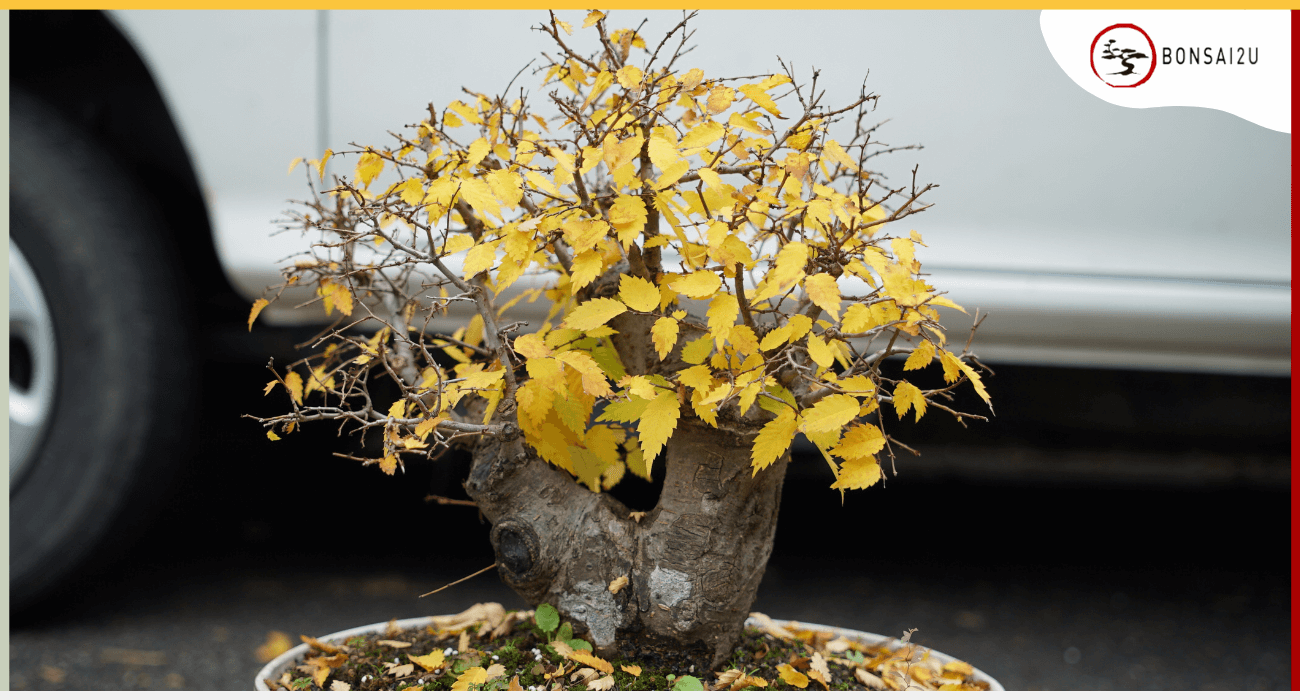
Deciduous trees may lose many leaves in fall or after a natural winter rest. This does not always mean the tree is sick. If the branches remain flexible, buds look healthy, and new growth appears at the right time, the color change may be part of the tree’s normal cycle.
Evergreen bonsai can also lose older needles or leaves, but widespread yellowing is more concerning. A juniper, pine, or spruce should not be treated like a tropical ficus. Learn the natural growth cycle of your species before changing its care routine.

Nutrient Deficiencies That Cause Yellow Leaves
A bonsai tree in a small pot has limited access to nutrients. Watering slowly washes nutrients from the soil, and roots cannot explore a large area as they would in the ground. Without regular feeding during active growth, leaves may become pale.
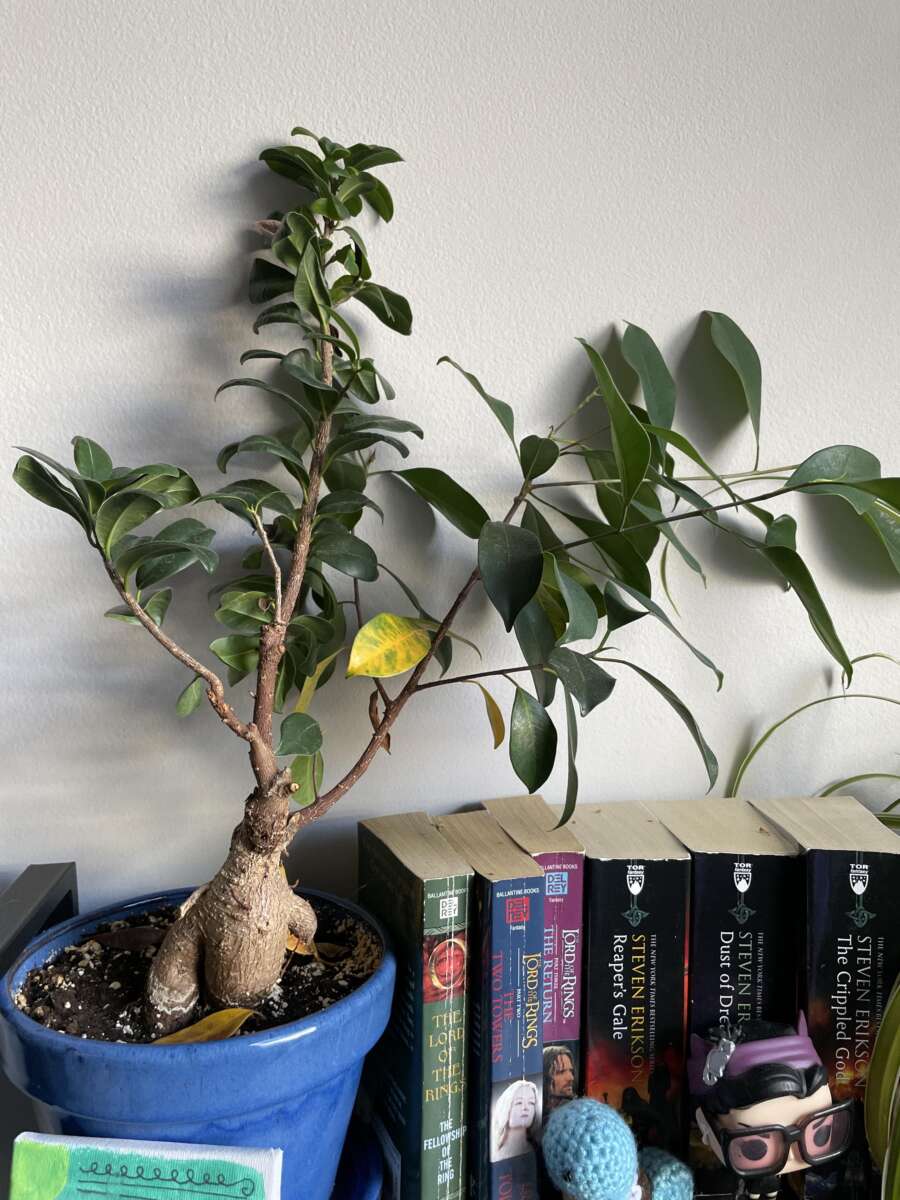
Nitrogen deficiency often causes older leaves to turn evenly yellow. Iron deficiency may cause newer leaves to turn yellow while the veins stay green. These symptoms can look similar to root damage, so do not add fertilizer without checking the soil and roots first.
Use a balanced bonsai fertilizer during the tree’s active growing season. Follow the product label and avoid feeding a tree that is severely dry, sick, or freshly repotted. Fertilizer does not repair rotten roots or replace good light.
Helpful nutrient practices include:
• Feed healthy trees during active growth.
• Use a fertilizer made for container plants or bonsai.
• Apply a weaker dose if the label allows it.
• Do not fertilize dry soil.
• Reduce or stop feeding during dormancy.
• Flush the soil from time to time if salt buildup appears.
White crust on the soil or pot rim can indicate fertilizer salts. These salts may damage roots and contribute to yellow leaves. Gentle flushing with clean water can help, but severe buildup may require repotting.

Root Damage and Poor Bonsai Soil
The roots are often the hidden reason why is my bonsai tree turning yellow. A bonsai cannot thrive in compact soil that stays muddy or blocks air. Old garden soil may work outdoors, but it often performs poorly in a shallow bonsai pot.
Healthy roots are usually firm and light colored, depending on the species. Damaged roots may be dark, soft, hollow, or foul smelling. Root problems can result from overwatering, poor soil, a blocked drainage hole, root pests, or rough handling during repotting.
Consider the root system when:
• Yellowing continues despite better watering
• The soil never dries at a reasonable rate
• Water runs around the edge instead of through the soil
• The tree wobbles in the pot
• New growth is weak or stops
• The pot has a strong rotten smell
Repotting can help, but timing matters. Most trees should be repotted near the start of active growth, based on species and climate. Avoid heavy root pruning when the tree is already weak. Remove only clearly dead or rotten roots, use fresh bonsai soil, and secure the tree so new roots are not disturbed.
One common mistake is repotting too quickly. A yellow leaf does not always mean the tree needs new soil. First inspect light, moisture, drainage, and pests. Repot only when the evidence points to a root or soil problem.

Pests and Diseases That Cause Yellowing
Insects can damage leaves by sucking plant sap. Common bonsai pests include spider mites, aphids, scale, mealybugs, and fungus gnats. Their feeding can cause yellow spots, curling, sticky leaves, or early leaf drop.
Inspect both sides of the leaves and the small spaces where branches meet the trunk. Use a magnifying glass if needed. Fine webbing may suggest spider mites. Cotton-like clusters may indicate mealybugs. Brown bumps that do not move may be scale.
Disease is more likely when yellowing appears with dark spots, mold, soft tissue, or rapid dieback. Wet leaves, poor air movement, and crowded plants can increase disease risk.
Start with gentle control:
• Isolate the affected bonsai from other plants.
• Remove badly damaged leaves.
• Wash pests away with a gentle stream of water.
• Improve air movement around the tree.
• Use insecticidal soap or horticultural oil as directed.
• Test any treatment on a small area first.
Never spray horticultural oil during extreme heat or on a dehydrated tree. Follow the label carefully. If the trunk is rotting or branches are dying fast, contact a local extension office, nursery professional, or plant health specialist.

Temperature, Location, and Repotting Stress
A sudden change in location can answer why is my bonsai tree turning yellow. Bonsai trees respond to shifts in temperature, humidity, light, wind, and watering. Moving an outdoor tree into a dry, heated room can cause stress even if you maintain the same watering routine.
Cold drafts, heat vents, air conditioners, and hot windows may all affect leaf health. Tropical bonsai trees are especially sensitive to cold. Temperate trees, however, may need a cool dormant period and should not stay in a warm room all winter.
Yellowing may also follow:
• Recent repotting
• Heavy pruning
• Wiring injury
• Transport from a nursery
• A sudden change in sunlight
• Exposure to frost or hot wind
After a stressful change, give the tree stable conditions. Keep watering consistent, avoid extra pruning, and do not fertilize until you see healthy recovery. A stressed bonsai needs time, much like a person recovering from a long trip.
How to Diagnose Yellow Leaves Step by Step
If you are still wondering why is my bonsai tree turning yellow, avoid guessing. A short inspection can narrow the cause.
- Identify the species. A ficus, juniper, and maple do not share the same care needs.
- Check the soil. Note whether it is dry, damp, compact, or sour smelling.
- Inspect drainage. Make sure each drainage hole is open.
- Study the leaf pattern. Look for even yellowing, spots, brown edges, or green veins.
- Examine the undersides of leaves. Search for insects, eggs, webbing, or sticky residue.
- Check the roots if the soil remains wet or the tree declines quickly.
- Review recent changes. Think about moves, repotting, weather, pruning, and fertilizer.
- Correct one major problem at a time. This helps you learn what worked.
Do not remove every yellow leaf at once. Gently remove leaves that are fully dead, but leave partly green leaves if they are still helping the tree produce energy. Also avoid adding several products at the same time. Too many treatments can make the real problem harder to identify.
How to Prevent Yellow Leaves on a Bonsai Tree
Good bonsai care is mostly about consistency. You do not need a complicated routine, but you do need to observe the tree often.
Use these habits:
• Check soil moisture before every watering.
• Water deeply until excess flows from the drainage holes.
• Use a fast-draining bonsai soil mix.
• Match light and temperature to the species.
• Feed only during healthy, active growth.
• Inspect leaves and roots for pests.
• Keep tools clean when pruning.
• Repot when the soil breaks down or roots fill the pot.
• Protect tropical species from cold.
• Keep a simple care log.
A care log is especially useful. Write down the date, watering, fertilizer, location, and changes in leaf color. Over time, patterns become clear. You may learn that yellow leaves appear after cloudy weeks, missed watering, or a certain fertilizer dose.
In my experience, the most useful lesson is to observe before acting. Many bonsai problems become worse when a grower responds to yellow leaves with more water, more fertilizer, and more pruning all at once. Slow, careful changes usually give the tree a better chance to recover.
When Yellow Bonsai Leaves Need Urgent Help
A few yellow leaves are rarely an emergency. However, fast or widespread decline deserves prompt attention. Act quickly if the tree has yellow leaves along with soft roots, a rotting trunk, severe wilting, or rapidly dying branches.
Seek expert help when:
• More than half the foliage changes color in a short time
• The trunk becomes soft or dark
• Roots are black and mushy
• Pests spread to nearby plants
• The tree does not improve after several weeks of proper care
• You cannot identify the species or disease
Take clear photos of the whole tree, leaves, soil, trunk, and roots. Record your watering and light conditions. This information helps a nursery professional or extension specialist give a more accurate answer.
Remember that yellow leaves cannot always turn green again. Once a leaf has lost much of its chlorophyll, it may fall. The goal is not to restore every damaged leaf. The goal is to protect the roots and encourage strong new growth.
Frequently Asked Questions
Can yellow bonsai leaves turn green again?
Usually, a fully yellow leaf will not return to its former green color. Correcting the cause can protect healthy leaves and support new green growth.
Should I cut off yellow leaves from my bonsai tree?
Remove leaves that are fully dead, badly damaged, or covered with disease. If a leaf is partly green, leave it in place unless it attracts pests or blocks healthy growth.
How often should I water a bonsai tree with yellow leaves?
Water when the top layer of soil begins to dry, not according to a fixed schedule. The exact timing depends on the tree species, pot size, soil, temperature, wind, and sunlight.
Why is my indoor bonsai tree turning yellow?
Indoor bonsai trees often turn yellow because of weak light, excess water, dry indoor air, poor drainage, or cold drafts. Check the species first, since many bonsai trees need to live outdoors.
Can too much fertilizer cause yellow bonsai leaves?
Yes. Excess fertilizer can damage roots and create salt buildup in the soil. Stop feeding a stressed tree, flush the soil carefully if salts are present, and resume with a weaker dose only after healthy growth returns.
Why are only the lower leaves on my bonsai turning yellow?
Lower leaves may yellow from normal aging, low light, poor air movement, or a mild nutrient shortage. If the yellowing spreads upward or affects new leaves, inspect watering, roots, and pests more closely.
Should I repot a bonsai with yellow leaves?
Repot only when there is evidence of compacted soil, blocked drainage, or damaged roots. Repotting a weak tree at the wrong time can add more stress, so correct simple care problems first.
Conclusion
The answer to why is my bonsai tree turning yellow usually lies in its roots, water, light, season, or recent care changes. Check the soil before watering, confirm the tree’s light needs, inspect for pests, and look for signs of root damage. A calm diagnosis is safer than a sudden rush to prune, fertilize, or repot.
Your bonsai can often recover when you correct the cause and give it stable care. Observe the tree closely, make one change at a time, and track its response. If this guide helped, share your bonsai species and symptoms in the comments or explore more care resources for your specific tree.

Laura Bennett is a gardening writer at MyGardenLabs who creates beginner-friendly guides focused on solving common plant care and gardening problems.