Can I Trim A Tree In The Fall: Best Pruning Tips
Yes, you can trim a tree in the fall, but timing, tree type, and pruning goals all matter.
The question “can I trim a tree in the fall” has a careful answer because autumn pruning can help in some cases and harm a tree in others. After years of reviewing pruning practices and seasonal tree care, I’ve found that the safest choice depends on the tree’s health, local climate, species, and the size of the branches you want to remove.
Can I Trim a Tree in the Fall?
Yes, you can trim a tree in the fall when you remove dead, broken, diseased, or dangerous branches. Light pruning is often safe after leaves drop, especially when the tree is entering dormancy.
However, fall is not always the best season for major pruning. Large cuts may heal slowly as growth stops. Fresh wounds can also face cold weather, moisture, insects, and disease before the tree can seal them.
When deciding, ask three simple questions:
• Is the branch dead, broken, or unsafe?
• What type of tree is it?
• What is the weather like in your area?
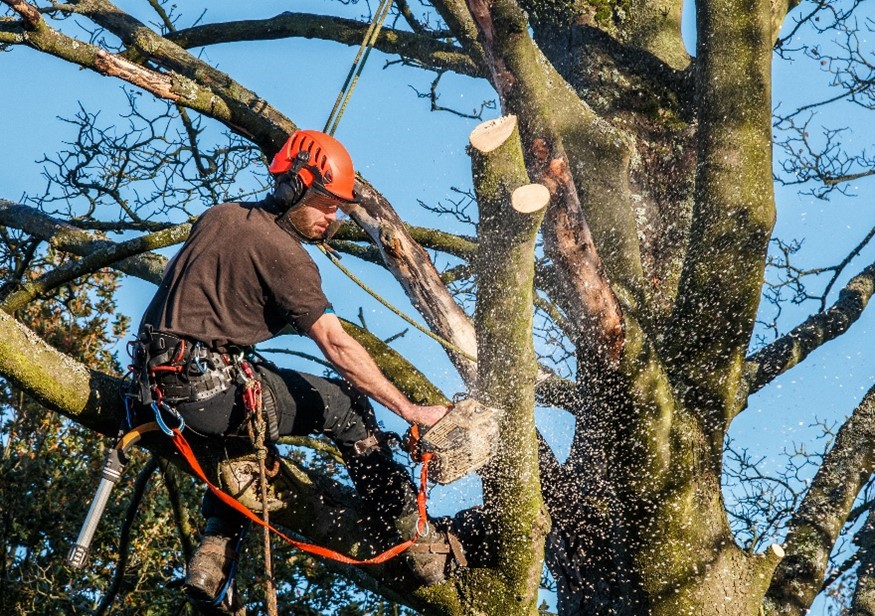
If a branch threatens your home, car, power line, or people, safety comes first. Do not wait for the perfect season. Call a qualified tree professional for large or risky work.
When Fall Tree Trimming Is Safe
Fall tree trimming is usually safest when the tree is dormant or nearly dormant. This often means most leaves have fallen, but the exact timing varies by region.
Light pruning can improve safety and tree structure. It may also reduce the chance of a weak branch breaking during winter storms.
You can usually trim these branches in the fall:
• Dead branches with no living buds
• Broken branches after wind or storms
• Diseased limbs that need prompt removal
• Branches rubbing against each other
• Branches touching a roof, fence, or driveway
• Water sprouts and small unwanted shoots
• Small limbs blocking a walkway or window
Make clean cuts just outside the branch collar. The branch collar is the slightly swollen area where a branch joins the trunk or a larger limb. Cutting into it can create a larger wound and slow recovery.
Do not leave a long stub. Stubs often die back and can invite decay. At the same time, do not cut flush against the trunk.

When You Should Not Trim a Tree in the Fall
Fall is not ideal for every type of pruning. Avoid heavy trimming when the work would remove many live branches or change the tree’s shape.
Large pruning cuts can stress a tree before winter. A tree needs healthy leaves to make and store energy. Removing too much live growth can reduce its food supply.
Avoid major fall pruning when:
• The tree is weak, newly planted, or recovering from drought
• You plan to remove more than about 15 to 20 percent of live branches
• The tree has large limbs that need climbing or rigging
• The forecast shows freezing rain, snow, or extreme cold
• The tree is an oak in an area affected by oak wilt
• The branches are near utility lines
• You are unsure which limbs are alive
The 15 to 20 percent guideline is not a universal rule for every tree. Young trees, mature trees, fruit trees, and stressed trees may need different limits. A certified arborist can assess the structure before you make large cuts.
The Best Time to Prune Different Trees
The best pruning season depends on the species. Tree trimming is not a one-season task.
Deciduous shade trees
Many deciduous trees, such as maple, elm, birch, and oak, are best pruned during late winter while they are dormant. Late winter usually offers a short period before spring growth begins.
Some light fall pruning is still acceptable. Remove dead or damaged branches, but save major structural work for late winter unless a safety concern requires immediate action.
Oak trees
Use extra care with oaks. In some regions, oak wilt spreads through fresh pruning wounds during the warmer months. Local rules and disease risk vary.
Many tree health experts recommend pruning oaks during the dormant season in areas where oak wilt is a concern. Your local extension office or arborist can identify the safer pruning window for your county.
Fruit trees
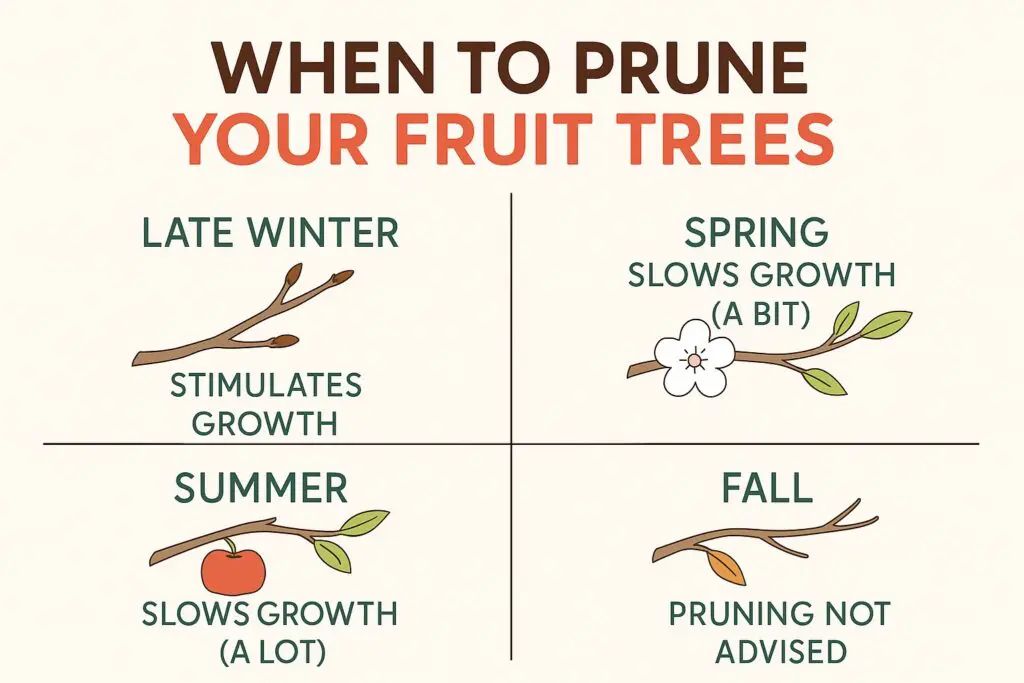
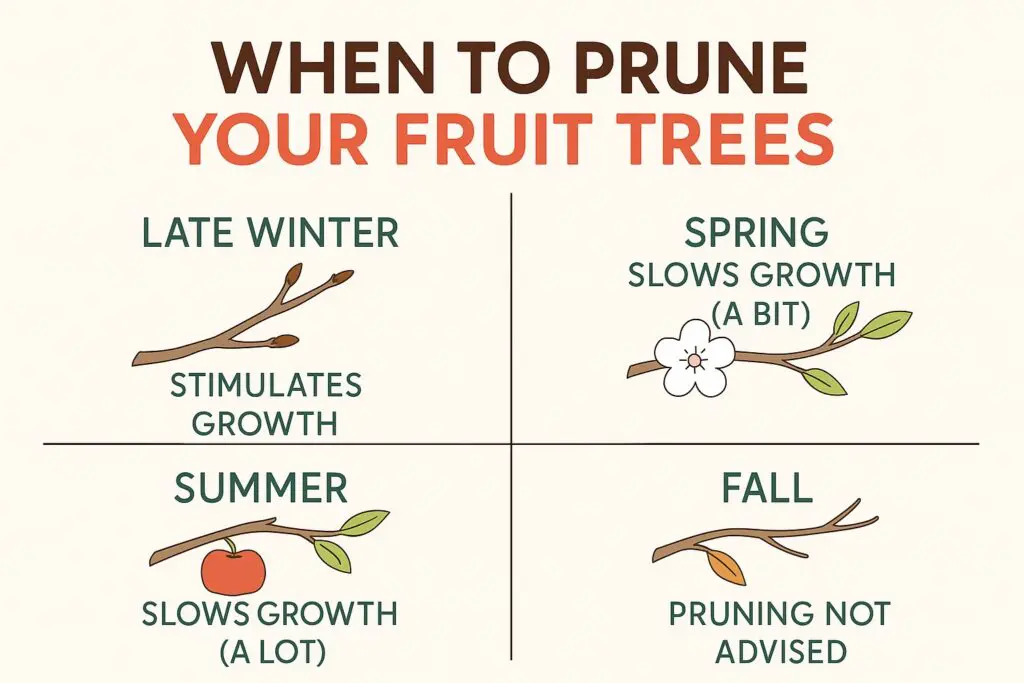
Fruit trees often benefit from late winter pruning. This timing makes the branch structure easier to see and supports better fruit production.
Fall trimming may remove dead wood, but avoid heavy shaping unless you understand the needs of the specific fruit tree. Peach, apple, cherry, and pear trees do not all respond in the same way.
Evergreen trees
Most evergreen trees need little pruning. Remove dead, broken, or diseased branches in the fall, but avoid cutting deep into old wood.
Many evergreens do not produce new growth from bare inner branches. A deep cut can leave a permanent hole that never fills in.
Conifers
Pine, spruce, fir, and other conifers often need only light maintenance. Avoid removing the central leader, which is the main upward stem, unless a trained professional has a clear reason.
Flowering trees
The pruning time for flowering trees depends on when they bloom. Trees that bloom in spring often set flower buds on older wood. Heavy fall pruning may remove next year’s flowers.
Trees that bloom in summer often produce flowers on new growth. They may handle dormant-season pruning better, but species-specific advice still matters.

Benefits of Trimming a Tree in the Fall
There are good reasons to trim a tree in the fall. Cooler weather can make outdoor work more comfortable, and fallen leaves reveal the branch structure.
Fall pruning may offer these benefits:
• Better visibility of dead and crossing branches
• Less sap flow from many deciduous trees
• Fewer leaves to clean up during the work
• Improved clearance from buildings and walkways
• Reduced risk from weak limbs before winter storms
• Easier access for trained tree crews
Dormant trees also have less active growth. This can make it easier to inspect the crown and identify structural problems.
Still, fall trimming is not a cure for every tree problem. Pruning cannot repair severe trunk decay, root damage, or unstable soil. It can also make some problems worse when cuts are too large or poorly placed.

Risks of Fall Tree Trimming
The main risk is making a large wound just before winter. A tree does not heal like human skin. It grows new wood around the wound over time and uses natural chemical barriers to slow decay.