How To Trim Ficus Bonsai: Easy Step By Step Guide
Trim ficus bonsai by pruning new shoots, thinning the canopy, and making clean, angled cuts.
I have spent over eight years caring for ficus bonsai and teaching others how to trim ficus bonsai safely and effectively. This guide gives clear steps, practical tips, and real mistakes I’ve made so you can prune with confidence. Read on for step-by-step instructions, tools, timing guidance, pruning techniques, and aftercare so your ficus bonsai stays healthy and beautiful.

Why trim your ficus bonsai
Trimming keeps a ficus bonsai healthy, balanced, and in scale with its pot. Regular pruning controls size, encourages ramification, and opens the canopy to light and air. You will also remove dead, crossing, or weak branches that sap the tree’s energy. Knowing why to prune makes it easier to decide what to cut and when to cut it.

Tools and supplies for how to trim ficus bonsai
Good tools make clean cuts and reduce stress for your ficus bonsai. Use sharp instruments and keep them clean to prevent infection.
- Pruning shears. For small to medium branches. Choose a bypass type for smooth cuts.
- Concave cutters. For removing larger branches and promoting good healing.
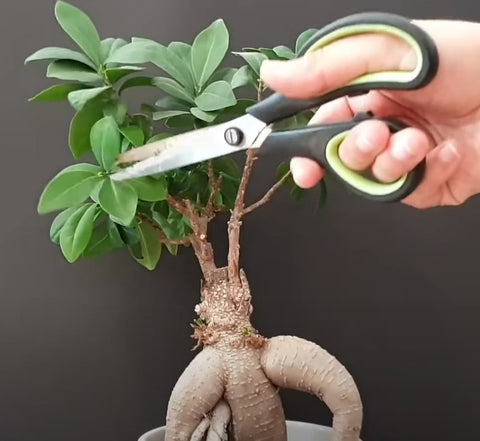
- Tweezers and scissors. For delicate leaf pruning and thinning new shoots.
- Rubbing alcohol or disinfectant. To sterilize tools before and after use.
- Sealant or wound paste (optional). For very large cuts on older wood.
- Gloves. To protect hands from sap and insects.
I always keep a small tool kit near my bonsai area. Clean tools between cuts. That simple habit prevented several infections I saw early in my learning.
When to trim your ficus bonsai
Timing matters for how to trim ficus bonsai. Ficus species are forgiving. They respond well to pruning during the growing season.
- Best time. Late spring to early summer when active growth occurs.
- Light trimming. Can be done year-round indoors when the tree is actively growing.
- Heavy pruning. Avoid in late fall or winter when growth slows.
If your ficus bonsai is indoors under steady heat and light, you can trim more often. Watch for new growth bursts; those are the best moments to refine shape.

Step-by-step: how to trim ficus bonsai
Follow these clear steps to trim safely and shape your tree.
- Assess the tree.
- Look at the trunk, primary branches, and canopy.
- Decide on a style and a focal point.
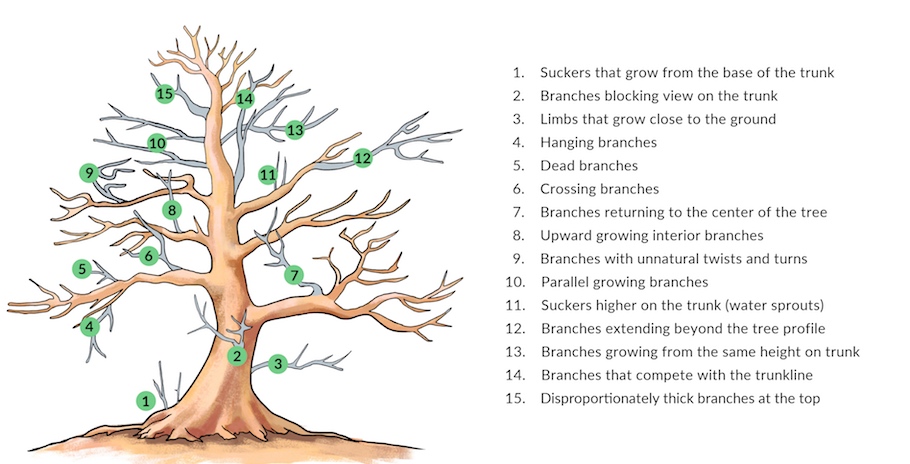
- Remove dead, diseased, or crossing branches.
- Cut back to healthy wood or the trunk junction.
- Make decisive cuts; don’t leave stubs.
- Thin the canopy.
- Remove interior shoots that block light.
- Keep a balanced silhouette for light and airflow.
- Trim back long shoots.
- Cut shoots to a leaf pair or node to encourage branching.
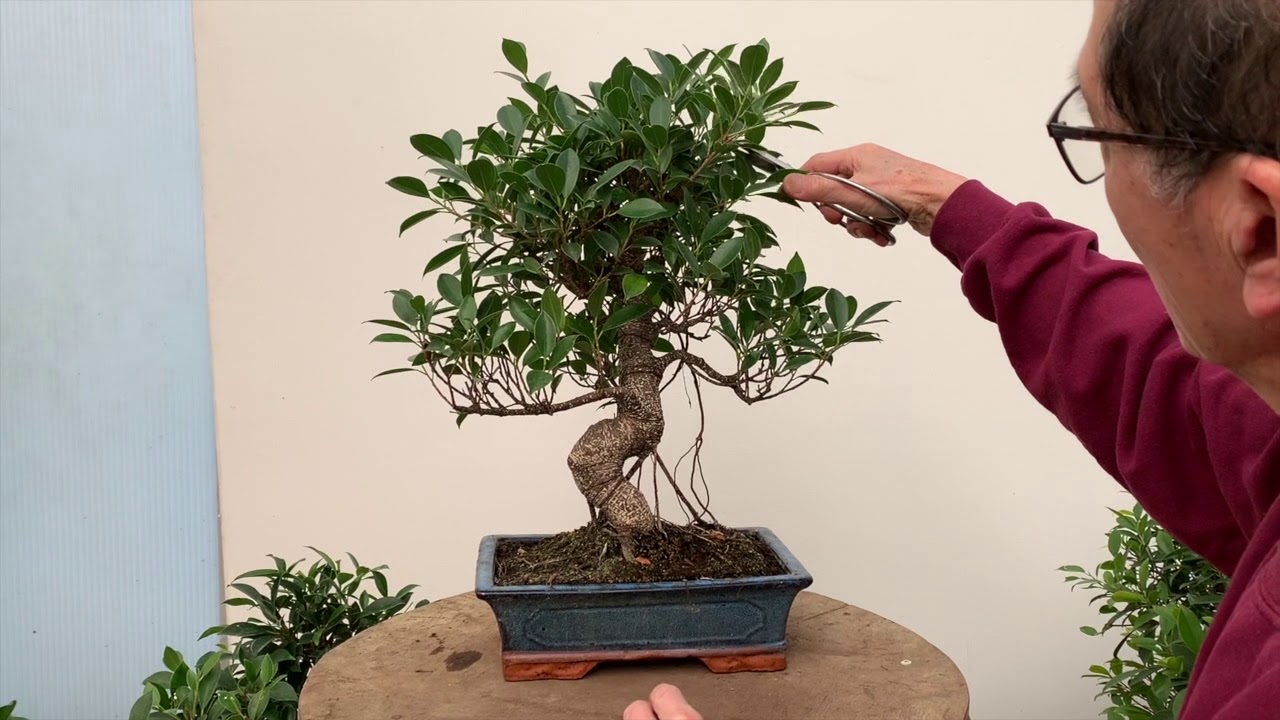
- Use scissors for green growth and concave cutters for woody branches.
- Refine taper and ramification.
- Shorten back new growth to develop a fine branch network.
- Repeat over seasons to build structure.
I remember once over-pruning a ficus in one go. It shocked into heavy sprouting that looked messy for weeks. Now I prune gradually. That keeps growth even and controlled.

Pruning techniques and styles for ficus bonsai
Different cuts and styles shape your tree in unique ways. Learn the basics and match technique to your design goal.
- Maintenance pruning. Removes new shoots to keep size and shape.
- Structural pruning. Removes whole branches to define the trunk and silhouette.
- Leaf pruning. Removes selected leaves to reduce size and increase light penetration.
- Pinching. Use fingers to remove soft tips and encourage back-budding.
- Wiring (complementary). Shape branches after pruning, but don’t wire stressed branches.
Ficus respond well to leaf pruning. I often strip some leaves in summer to reveal inner structure. This helps light reach lower branches and thickens the trunk over years.
Aftercare and recovery after trimming your ficus bonsai
Aftercare helps your ficus bonsai heal fast and stay healthy.
- Watering. Keep soil slightly moist. Don’t overwater right after heavy pruning.
- Light. Provide bright indirect light to encourage new growth.
- Humidity. Raise humidity with a tray or misting if indoor air is dry.
- Feeding. Wait two weeks after major pruning, then resume a balanced fertilizer.
- Monitor for pests. Pruning can stress the tree and attract pests; inspect weekly.
I once fed a pruned ficus too soon and it burned new foliage. Now I wait and observe. Recovery is steady if you do small, consistent maintenance.

Common mistakes when trimming ficus bonsai and how to avoid them
Avoid these pitfalls when you learn how to trim ficus bonsai.
- Cutting too much at once. It weakens the tree and causes shock. Prune in stages.
- Using dull or dirty tools. They cause ragged wounds and disease. Sterilize and sharpen tools.
- Ignoring inner growth. Crowded interiors create rot. Thin regularly.
- Wiring stressed branches. Wait until the branch recovers from pruning before wiring.
- Pruning in dormancy for an indoor ficus. Trim when growth is active.
I learned the hard way that small, frequent pruning beats marathon sessions. Patience is the bonsai maker’s quiet skill.

Additional tips and seasonal care for how to trim ficus bonsai
Small habits keep your tree thriving and reduce heavy pruning needs.
- Train yearly. Light shaping each season prevents sudden major cuts.
- Observe growth patterns. Cut back where growth is strongest to rebalance the tree.
- Use selective defoliation. For trunk development, remove some leaves in mid-summer.
- Repot thoughtfully. Prune roots during repotting to keep root-to-canopy balance.
- Keep notes. Track pruning dates, results, and mistakes to repeat success.
When I started, I kept no records. After a season of mixed results, I began noting dates and methods. That simple log improved my outcomes a lot.
Frequently Asked Questions of how to trim ficus bonsai
How often should I trim my ficus bonsai?
Trim lightly every few weeks during the growing season to maintain shape. Do heavier structural pruning once a year or every other year as needed.
Will pruning my ficus bonsai make it grow faster?
Pruning redirects energy to remaining shoots and can stimulate back-budding, which increases branching over time. It does not make the tree grow taller faster.
Can I prune ficus bonsai in winter?
Avoid heavy pruning in winter when growth slows. Light maintenance cuts can be done if the indoor environment keeps the tree actively growing.
What is the best tool to prune thick ficus branches?
Use concave cutters for heavier branches and sharp bypass shears for green shoots. Make clean cuts to promote proper healing.
Should I seal large cuts on ficus bonsai?
Small to moderate wounds heal well without sealant. For very large cuts on old wood, a wound paste can help prevent pests and rot.
PAA-style questions
Q: When does a ficus bonsai recover from heavy pruning?
A: Recovery varies by tree and conditions but often shows new shoots within 2–6 weeks in warm, bright conditions.
Q: How do I encourage back-budding on a ficus bonsai?
A: Thin the canopy and cut back to nodes or leaf pairs; provide good light and steady feeding to encourage buds.
Conclusion
Trimming your ficus bonsai is a skill you build with knowledge, tools, and careful practice. Keep cuts clean, prune in stages, and watch how your tree responds. Try a small pruning session this week, record what you did, and adjust next time based on results. Share your progress or questions below to learn together and grow better bonsai.

Laura Bennett is a gardening writer at MyGardenLabs who creates beginner-friendly guides focused on solving common plant care and gardening problems.