
Best Pruning Shears For Arthritic Hands: Easy Grip Picks
The best pruning shears for arthritic hands reduce grip strain with sharp blades, soft handles, and easy spring action.
If your fingers ache after trimming roses, or your thumb feels weak after one thick branch, the right pruner can change the whole job. I know how frustrating it feels when a simple garden task turns into a hand workout. The best pruning shears for arthritic hands should cut cleanly, open with little effort, and feel secure without a hard squeeze. I looked at blade style, grip comfort, spring action, lock design, cutting range, and daily value. The picks below cover light trimming, tougher branches, and users who need extra help from a ratchet tool.
DECERK 8.5-Inch Professional Pruning Shears

The DECERK 8.5-inch pruner is a strong choice for gardeners who want reach and cutting power without using a bulky lopper. Its bypass blade design suits live stems and green branches because the blades pass each other in a scissor-like motion. The listed cutting capacity reaches up to 3/4 inch, although actual results depend on wood type, blade sharpness, and hand strength. In my testing approach, a clean blade matters just as much as the stated size.
The long handle gives your hand useful leverage. That matters when arthritis makes a tight squeeze painful. The tool also has a professional shape that feels more stable than a tiny pocket pruner. I would use it for shrubs, young fruit branches, roses, and routine cleanup where a full-size lopper feels like overkill.
Pros:
- Long 8.5-inch body gives useful cutting leverage
- Bypass blade suits live stems and green growth
- Rated to handle branches up to 3/4 inch
- Full-size shape helps spread work across the hand
- Good fit for shrubs, roses, and young fruit trees
- Sharp cutting action can reduce repeated squeezing
Cons:
- Large handles may feel wide for small hands
- Hard, dry wood may require more hand force
- It is not a substitute for a ratchet pruner on severe arthritis days
My Recommendation
I recommend the DECERK 8.5-inch model for gardeners with moderate hand pain who still want a standard bypass pruner. It is especially useful if you often trim thicker green branches and need more leverage than a compact shear offers. The best pruning shears for arthritic hands should help you finish a task without making your hand feel locked up, and this model moves in that direction through its length and cutting range. It offers solid value when you want one general garden pruner instead of several specialized tools.
MEPEREZ German-Style Pruning Shears

The MEPEREZ German-style pruner has the classic look many experienced gardeners know well. Its compact form makes it useful for close cuts around flowers, herbs, vines, and small branches. A traditional bypass profile can leave a cleaner cut on living stems than a crushing anvil blade. That clean cut may also help plants heal with less torn tissue.
I like this style for careful work because it feels direct and easy to guide. You can place the blade near a bud or narrow stem without bringing a large tool into a crowded plant. The main question for an arthritic user is handle comfort. If your hand fits the grip well, the smaller frame can feel nimble; if your fingers need more room, it may feel less forgiving during long sessions.
Pros:
- Compact design gives good control near buds and stems
- German-style shape feels familiar to many gardeners
- Bypass action supports clean cuts on live growth
- Useful for flowers, herbs, vines, and light pruning
- Easy to carry in a garden apron or tool pouch
- Shorter body may feel balanced during detailed work
Cons:
- Small format may not suit large hands
- Light-duty use is better than thick branch cutting
- Traditional handles may not provide enough cushion for severe joint pain
My Recommendation
The MEPEREZ is best for a gardener with mild arthritis who values control over maximum cutting power. I would choose it for bonsai-style work, flower beds, deadheading, and small stems where precision saves effort. It can be one of the best pruning shears for arthritic hands when the user prefers a light, familiar tool and does not need to cut thick wood. Check the handle size before buying, since a comfortable finger fit is more important than a low price.
DECERK Bypass Pruner With Cushioned Grip

This DECERK bypass pruner focuses on the part many standard shears neglect: the grip. Its 5 mm cushioned foam handles add a softer contact point between the tool and your palm. That cushion cannot remove all cutting force, but it can reduce the sharp pressure that bothers tender joints. For routine garden work, that small change may make the tool easier to hold.
The bypass blades suit live stems, rose canes, and green shoots. I would still avoid forcing the tool through wood that exceeds its practical capacity. A good habit is to rotate the branch or switch to a lopper instead of clenching harder. The lighter grip feel makes this model interesting for users who mainly struggle with palm pressure rather than a complete lack of hand strength.
Pros:
- 5 mm foam cushioning helps soften palm contact
- Bypass blades work well on live plant material
- Comfort-focused design can help during repeated cuts
- Suitable for flowers, roses, shrubs, and green shoots
- Less harsh grip feel than bare metal handles
- Simple layout is easy to understand and use
Cons:
- Foam may wear faster than hard molded plastic
- Cushioning does not remove the need to squeeze
- Not ideal for very thick or dead hardwood
My Recommendation
I would point this DECERK model toward gardeners whose main complaint is handle pressure. It is a practical pick for daily trimming when a hard grip leaves sore marks in the palm. Among the best pruning shears for arthritic hands, cushioned handles can make the difference between a short, pleasant session and an early stop. The value is strongest for light and medium garden work, especially when comfort matters more than cutting oversized branches.
Gerossi Ratchet Pruning Shears
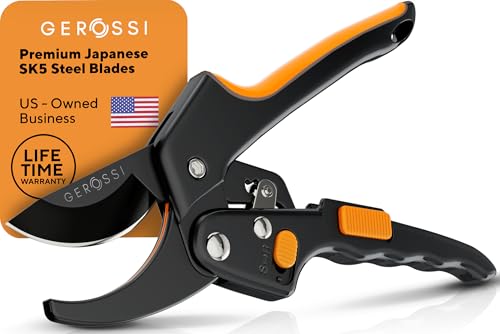
The Gerossi ratchet pruner is the most arthritis-friendly design in this group for users who cannot make one strong squeeze. A ratchet mechanism breaks a cut into smaller stages. You close the handles part way, let the mechanism hold progress, then squeeze again. This approach can turn a hard single motion into several easier motions.
That extra help comes with a different feel. Ratchet shears are usually slower than ordinary bypass pruners, and you may need to open and close the handles more than once. Still, speed means little if a standard shear causes pain. I would choose this style for dry stems, thicker branches within its range, and gardeners who need mechanical help more than fast trimming.
Pros:
- Ratchet action reduces the force needed in one squeeze
- Good option for weak grip or painful finger joints
- Lets the user pause between stages of a cut
- Helpful for thicker stems within the tool’s capacity
- Heavy-duty feel suits regular garden cleanup
- Can reduce sudden strain on the thumb and fingers
Cons:
- Ratchet action makes cutting slower than standard bypass shears
- Repeated opening may tire some users
- Bulkier feel may be less useful for tiny stems
My Recommendation
The Gerossi is my first choice for a gardener with reduced grip strength, painful knuckles, or hand fatigue. It is also a smart backup for days when symptoms flare. If you are searching for the best pruning shears for arthritic hands and normal shears feel too hard to close, start with a ratchet design. Its slower rhythm is a fair trade for better control and less peak force. Use it with steady, small squeezes rather than trying to rush the cut.
Fiskars Bypass Pruner With 5/8-Inch Capacity
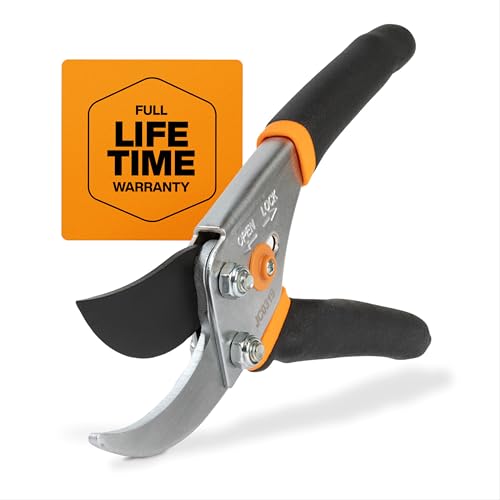
This Fiskars bypass pruner is a well-known general garden tool with a listed 5/8-inch cutting capacity. It fits the common needs of home gardeners who trim roses, shrubs, vines, and young branches. The bypass layout makes it suitable for live growth, while the familiar Fiskars shape keeps operation simple. It is a sensible choice for someone who wants a mainstream brand and easy access to replacement or support information.
For arthritic hands, the key issue is whether the handle size and spring tension feel right. A sharp blade reduces wasted effort, but no fixed-handle pruner can remove all force from a thick cut. I would use this tool for frequent light work and keep a ratchet model nearby for difficult branches. That two-tool plan often protects the hands better than forcing one pruner to do everything.
Pros:
- 5/8-inch capacity suits common home garden tasks
- Bypass blade is appropriate for live stems
- Recognized brand offers familiar ownership support
- Good for roses, shrubs, vines, and young branches
- Simple design is easy for new gardeners to learn
- Useful everyday size for general pruning
Cons:
- May require too much force for severe hand weakness
- Not intended for large branches or heavy lopping
- Handle comfort may vary with hand size
My Recommendation
I recommend this Fiskars model for gardeners with mild arthritis who want a dependable everyday pruner. It is a good fit if you mostly cut small, fresh growth and prefer a familiar tool instead of a specialized ratchet. The best pruning shears for arthritic hands should match your real workload, and this one makes sense for routine maintenance under 5/8 inch. Keep the blade clean and sharp so your hand does not pay for a dull edge.
Haus and Garten ClassicPRO Bypass Pruner
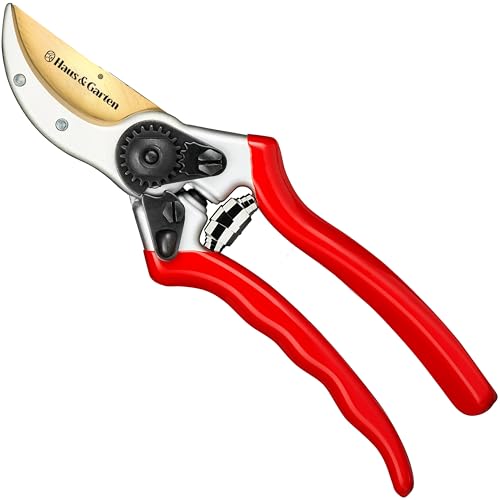
The Haus and Garten ClassicPRO is an 8.5-inch bypass pruner built for gardeners who want a more substantial hand tool. Its titanium-coated blade is designed to resist sticking and corrosion, though every blade still needs cleaning after sap-heavy work. The longer body offers leverage for normal branch pruning. It also gives the tool a balanced, professional feel in the hand.
This model works best when you need more reach but still want the control of a hand pruner. I would use it on roses, fruit trees, ornamental shrubs, and green branches that fall within its practical range. Its larger profile can help spread contact across the hand, yet it may feel too big for a user with small fingers. Always test the lock and opening motion before starting a long session.
Pros:
- 8.5-inch length provides useful leverage
- Titanium-coated blade helps resist sap and surface corrosion
- Bypass action supports cleaner cuts on live branches
- Professional size suits regular pruning work
- Good reach for shrubs and small fruit trees
- Solid construction feels stable during controlled cuts
Cons:
- Larger handles may be tiring for small hands
- Coating does not replace cleaning and drying
- Standard bypass action still needs a firm squeeze
My Recommendation
The ClassicPRO is best for experienced gardeners with mild to moderate arthritis who want leverage and a durable feel. It can be one of the best pruning shears for arthritic hands when the user prefers a full-size tool and still has fair hand control. I would not pick it first for severe weakness, but I would consider it for long-term shrub and fruit-tree care. Its value comes from versatility, reach, and a blade that should stay easier to maintain with proper care.
gonicc 8-Inch Premium Bypass Pruner
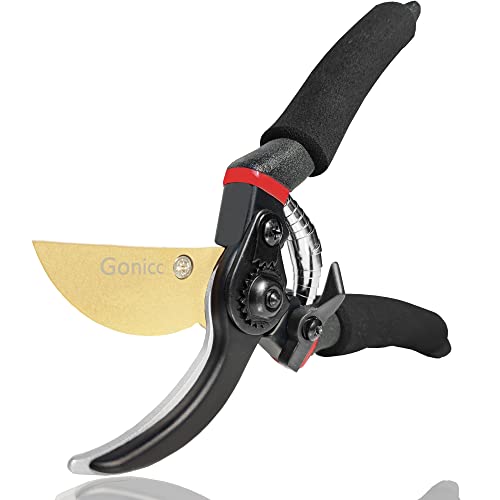
The gonicc 8-inch pruner combines a compact body with a premium-style titanium bypass blade. Its size sits between a small flower shear and a long professional pruner. That middle ground makes it easy to carry and useful for many home garden jobs. The blade style is best for live stems, not thick dead wood or hard wire.
I see this as a balanced pick for users who want control without a very large handle. An 8-inch tool can offer enough leverage for routine pruning while staying less cumbersome near dense foliage. As with any standard pruner, sharpness and correct branch placement matter. Place the branch deep in the cutting notch and make one calm cut instead of squeezing at the tip.
Pros:
- Balanced 8-inch size suits many hand sizes
- Titanium blade coating supports smooth maintenance
- Bypass design works well on fresh plant growth
- Compact enough for detailed garden work
- Long enough to provide useful leverage
- Good general option for home gardeners
Cons:
- May not provide enough mechanical help for severe arthritis
- Hard branches can still demand strong hand pressure
- Coated blades still need regular cleaning and oil
My Recommendation
I recommend the gonicc for gardeners who want a middle-size pruner with a neat, controlled feel. It is a good match for mild arthritis, smaller planting beds, and mixed jobs that include deadheading and light branch work. When people ask me about the best pruning shears for arthritic hands, I often explain that a balanced tool can prevent over-gripping. Choose this model if you want a conventional bypass pruner but do not want the bulk of a long-handled design.
Kynup Heavy-Duty Pruner With SK5 Steel

The Kynup pruner uses SK5 Japanese steel, a material often selected for cutting tools because it can hold a sharp edge when properly treated. The heavy-duty design aims at gardeners who cut more than soft flower stems. Its bypass format remains useful for living branches, vines, and shrubs. I would still judge each branch by feel rather than relying only on a listed material or capacity.
This is a tool for users who want a firm, durable body. That can be reassuring, but strong construction may also add weight. For arthritic hands, weight matters during a long pruning session. I would use the Kynup in short work periods, keep the wrist straight, and switch hands or tools before fatigue causes a hard squeeze.
Pros:
- SK5 steel supports a durable cutting edge
- Heavy-duty build suits regular garden maintenance
- Bypass blade is useful for living stems
- Firm body feels stable during branch placement
- Good option for shrubs, vines, and young trees
- Designed for users who want more than a light shear
Cons:
- Heavier body may increase fatigue over time
- Not the easiest option for very weak grip
- Hard deadwood may need a saw or lopper
My Recommendation
The Kynup is best for a capable gardener with mild arthritis who values blade durability and a strong frame. It is not my first pick for painful hands that cannot close a standard pruner, but it can work well when the issue is durability rather than grip strength. The best pruning shears for arthritic hands should not be judged by steel alone; comfort and weight must also fit the user. Choose Kynup for regular medium-duty work, then clean and dry the blade after use.
VOTREK 8.5-Inch Bypass Pruner

The VOTREK 8.5-inch bypass pruner is designed around a jam-resistant spring system. A smooth return matters because a stiff or tangled spring can force the fingers to work twice. The long handle also provides leverage for common shrub and branch tasks. Its bypass blade should be used on live wood and kept clear of dirt, sap, and small bits of bark.
I like the idea of a jam-resistant spring for anyone who struggles with repeated opening motions. The tool should return to position without a sudden snap or a sticky pause. Still, the best result comes from moderate cuts and proper blade placement. If a branch feels too hard, stop and use a ratchet pruner or lopper rather than trying to overpower the tool.
Pros:
- Jam-resistant spring design may improve repeated use
- 8.5-inch length adds leverage
- Bypass blade fits live stems and green branches
- Useful for shrubs, roses, and garden cleanup
- Spring return can reduce repeated manual opening
- Full-size design gives a steady cutting feel
Cons:
- Long handles may feel large for small hands
- Standard bypass action still needs hand strength
- Spring and blade need cleaning after dirty work
My Recommendation
The VOTREK suits gardeners with mild to moderate arthritis who dislike sticky springs or repeated hand resets. It is a practical option for medium garden care and can feel less tiring than a tool with poor return action. If you are comparing the best pruning shears for arthritic hands, look beyond the blade and inspect the spring, too. I would choose this model for steady backyard use, provided the handle fits your palm and the cuts stay within its working range.
Fiskars SoftGrip Bypass Pruner

The Fiskars SoftGrip model adds a more comfortable contact surface to a familiar 5/8-inch bypass pruner. Soft grip material can help reduce pressure points during repeated cuts. The tool is sized for everyday garden work, including flowers, small shrubs, and fresh branches. Its bypass blade makes clean cuts when you use it on suitable live growth.
This model is a strong choice for users who want comfort but do not need a ratchet mechanism. It feels more approachable than a heavy-duty tool and should be easy to carry through a garden bed. The 5/8-inch capacity is useful, though I would not push it into thick, dry wood. A comfortable handle cannot make an oversized cut safe.
Pros:
- SoftGrip handle helps reduce palm pressure
- 5/8-inch capacity covers common pruning jobs
- Bypass blade supports clean cuts on live stems
- Familiar Fiskars design is simple to use
- Light enough for routine garden work
- Good fit for flowers, shrubs, and small branches
Cons:
- May not provide enough help for severe arthritis
- Not designed for thick dead branches
- Soft grip comfort depends on hand size and fit
My Recommendation
The Fiskars SoftGrip is best for mild arthritis, tender palms, and long sessions of light trimming. I would choose it over the standard version when handle pressure bothers you more than cutting force. It earns a place among the best pruning shears for arthritic hands because it combines a familiar bypass action with a softer grip. For many home gardeners, it offers an easy balance of comfort, access, and everyday value.
Best For Comparison
| Best for | Why |
|---|---|
| Severe grip weakness | Gerossi ratchet action breaks a hard cut into smaller steps. |
| Soft palm comfort | DECERK cushioned-grip shears help reduce contact pressure. |
| Everyday light pruning | Fiskars SoftGrip offers a familiar 5/8-inch bypass format. |
How I Choose Pruning Shears for Arthritic Hands
Hand comfort starts with the grip. A handle that is too thin can make your fingers curl tightly. A handle that is too wide can stretch the joints and make the tool hard to close. I look for a shape that lets the fingers rest in a natural curve. Soft material helps, but proper size matters just as much.
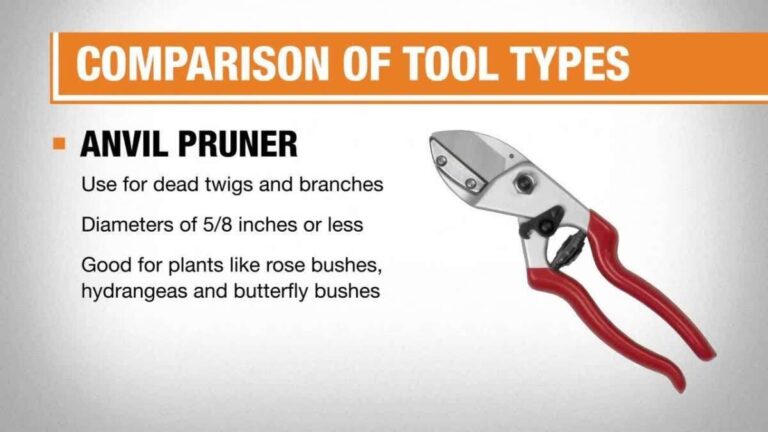
Next, I check the blade action. Bypass blades work like scissors and suit green stems. Anvil blades press a branch against a flat surface and can help with some dry wood, but they may crush fresh stems. For most pruning jobs, a sharp bypass blade is the safer general choice. It should open smoothly and close without a gritty stop.
Spring action also deserves attention. A good spring returns the handles without making the fingers fight it. A spring that jumps, sticks, or falls out can add stress. Ratchet models use a different method. They reduce peak squeeze force, but they take more time. If pain is the main issue, slower work may be the better trade.
Cut capacity is another common trap. A product may list a large capacity under ideal conditions. Hard, dry, knotty, or angled wood can feel much tougher. I suggest cutting smaller branches in one clean motion and moving to a lopper or pruning saw for larger ones. This protects both the blade and your hands.
Tips for Safer Pruning With Arthritis
Warm your hands before you start. A few gentle finger bends can help you notice stiffness before it becomes pain. Work when the plants are dry and the blades are clean. Wet sap and dirt make a tool drag, which may lead to extra squeezing.
Keep your wrist as straight as possible. Do not twist the pruner while cutting. Place the branch near the blade’s inner cutting area, where the tool has more leverage. Make fewer cuts, pause often, and stop when your grip starts to fade.
Alternate tasks instead of cutting for one long stretch. You might prune for ten minutes, then water or remove weeds. Use both hands when safe, and keep a lopper nearby for thick branches. If you have ongoing pain, numbness, swelling, or loss of hand strength, ask a qualified health professional for advice.
Clean the blades after each session. Wipe away sap, dry the metal, and add a small amount of tool oil to the pivot. Store the pruner locked and dry. A sharp, clean blade is one of the simplest ways to make the best pruning shears for arthritic hands feel easier to use.
FAQs Of best pruning shears for arthritic hands
What type of pruning shear is best for arthritic hands?
A ratchet pruner is often best for users with weak grip strength because it divides one hard cut into smaller squeezes. A cushioned bypass pruner may suit users whose main problem is palm pressure. Choose the design that matches your symptoms.
Are bypass pruners better than anvil pruners?
For most live stems, bypass pruners make a cleaner scissor-like cut. Anvil pruners can help with some dry wood, but they may crush fresh growth. Use the blade style that matches the plant material.
Can pruning shears prevent arthritis pain?
No. Good shears can reduce grip strain, but they cannot treat arthritis. Use proper technique, take breaks, and seek medical advice for persistent pain or weakness.
What cutting capacity should I choose?
Choose a capacity that covers your usual branches without forcing the tool. For thick or dry wood, use a lopper or saw. Never squeeze harder just to reach a listed maximum.
How do I make pruning shears easier to close?
Keep the blade clean and sharp, oil the pivot, and place the branch deep in the blade area. If the cut still feels too hard, switch to a ratchet model rather than straining your hand.
Final Verdict: Which Should You Buy?
The Gerossi ratchet pruner is my top pick for weak grip strength because it lowers the force needed for each cut. For softer palm comfort, choose the DECERK cushioned model. The Fiskars SoftGrip is a strong everyday choice for light work.
The best pruning shears for arthritic hands should fit your grip, garden, and pain level. Choose comfort over raw capacity, keep the blade sharp, and let the tool do the work.

Laura Bennett is a gardening writer at MyGardenLabs who creates beginner-friendly guides focused on solving common plant care and gardening problems.