Best Pruning Shears For Weak Hands: Top Easy-Cut Picks
The best pruning shears for weak hands combine sharp blades, easy handles, low force, and smooth ratchet or spring action.
A sore thumb, stiff fingers, or low grip strength can turn a simple garden task into a tiring chore. I know the feeling: one cut feels fine, but ten cuts make your hand ache. The right pruner acts like a small lever. It lets the tool do more of the work while your hand guides the cut. In this guide, I review popular options for light garden work, roses, herbs, shrubs, and small branches. I focus on grip comfort, cutting effort, blade style, control, and value. I also explain which tool may fit arthritis, weak wrists, small hands, or long pruning sessions best.
Gerossi Ratchet Pruning Shears
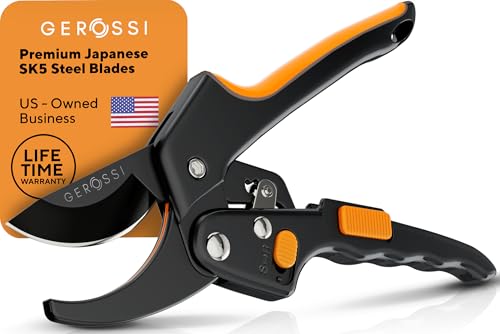
The Gerossi ratchet pruning shears stand out when hand strength is the main concern. A ratchet tool breaks one hard cut into smaller steps. Instead of forcing the handles shut in one strong squeeze, you squeeze, release, and squeeze again. That design can make thick stems feel less demanding.
The tool suits gardeners who want extra cutting help without moving to a bulky lopper. The handle shape may also feel more secure when fingers lack power. I would use it for woody stems, rose canes, vines, and small branches within its rated range. As with any pruner, a clean blade and a steady grip matter more than speed.
Pros:
- Ratchet action can reduce peak hand force
- Helpful for weak grip or stiff finger joints
- Good choice for tougher stems than basic snips
- Allows short pauses between cutting steps
- Handheld size remains easy to carry in a garden
- May reduce wrist strain during repeated cuts
Cons:
- Ratchet steps can feel slower than a standard bypass pruner
- Some users may dislike repeated handle movement
- Requires correct blade placement for a clean cut
My Recommendation
I recommend the Gerossi ratchet model for gardeners who need the most help with cutting force. It is especially useful for arthritis, weak hands, or a sore wrist that struggles with one hard squeeze. The ratchet does not remove all effort, but it spreads that effort over several small motions. That makes it a strong candidate for the best pruning shears for weak hands when branch resistance is your main problem.
| Best for | Why |
|---|---|
| Weak grip | Ratchet action divides a hard cut into smaller steps. |
| Woody stems | Its design gives more mechanical help than light snips. |
| Occasional heavy pruning | It adds cutting power without requiring a full-size lopper. |
VOTREK 8.5-Inch Bypass Pruning Shears

The VOTREK 8.5-inch bypass shears use a classic cutting pattern. One blade passes by a thicker support blade, much like scissors. This style works well on live green stems because it makes a neat cut instead of crushing the stem. The listed jam-proof spring feature may also help the handles open smoothly after each cut.
The longer body can give you useful leverage, which matters when your hands tire fast. I would consider this model for roses, shrubs, house plants, and routine garden cleanup. It may suit a user who wants a normal bypass feel but needs a little more reach and leverage. Keep the blade clean, and do not twist the tool through a branch.
Pros:
- Bypass blade style suits live stems and green growth
- Longer 8.5-inch body may improve leverage
- Spring return can reduce repeated opening work
- Jam-resistant design may keep cuts moving smoothly
- Useful for common rose and shrub maintenance
- Familiar scissor-like action feels easy to learn
Cons:
- Still needs a firm squeeze for hard, dry wood
- Long handles may feel large for very small hands
- Bypass blades need care to stay aligned
My Recommendation
The VOTREK is a good fit if your hands are tired or mildly weak, but you still prefer a regular bypass pruner. Its length can help you gain leverage without using a large tool. I would choose it for frequent trimming of fresh stems rather than very thick dead branches. For many home gardeners, it offers a balanced path toward the best pruning shears for weak hands without the slower feel of a ratchet.
| Best for | Why |
|---|---|
| Live green stems | The bypass action is made for clean cuts on flexible growth. |
| Medium hand weakness | Long handles may provide useful leverage. |
| Routine shrub care | The spring and bypass layout support repeated cuts. |
Fiskars 5/8-Inch Bypass Pruning Shears
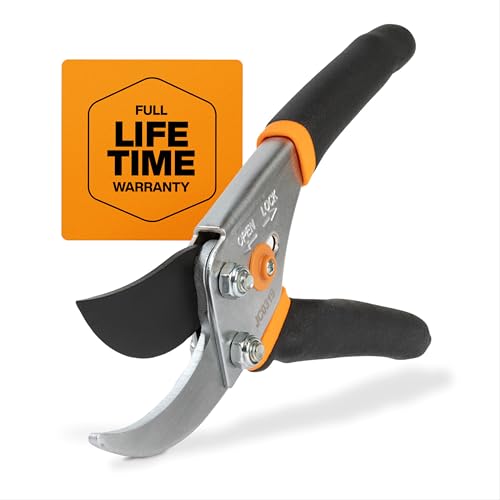
Fiskars is a familiar name in garden tools, and this bypass pruner offers a simple design with a stated 5/8-inch cut capacity. Its size fits many everyday garden jobs. The bypass blade is well suited to stems that are still alive and moist. That makes it a practical choice for flowers, herbs, young shoots, and small branches.
I like this kind of pruner for users who value a light, straightforward tool. It does not rely on a complex cutting system. Instead, sharp blades and a familiar handle action do the work. If your hand strength is limited, cut near the blade pivot, keep the branch within the rated size, and avoid forcing the tool past its capacity.
Pros:
- Simple bypass design is easy to use
- Stated 5/8-inch capacity covers many home garden tasks
- Good match for green stems and soft woody growth
- Known brand with broad garden tool experience
- Compact size can feel less tiring than large shears
- Easy choice for routine trimming and deadheading
Cons:
- May require more hand force than a ratchet model
- Not the first choice for thick dry branches
- Small handles may not suit every hand size
My Recommendation
I suggest the Fiskars bypass shears for gardeners with mild hand weakness who want a dependable, simple tool. It is a sensible option for roses, herbs, flowers, and thin shrub stems. The 5/8-inch rating gives a clear limit, which helps prevent misuse. Among the best pruning shears for weak hands, this is a practical everyday pick when you want low fuss and a familiar cut.
| Best for | Why |
|---|---|
| Everyday garden care | The simple design handles common trimming jobs. |
| Green stems | Bypass blades help make clean cuts on live growth. |
| New gardeners | The action is familiar and easy to control. |
Japanese Steel Arthritis Pruning Shears

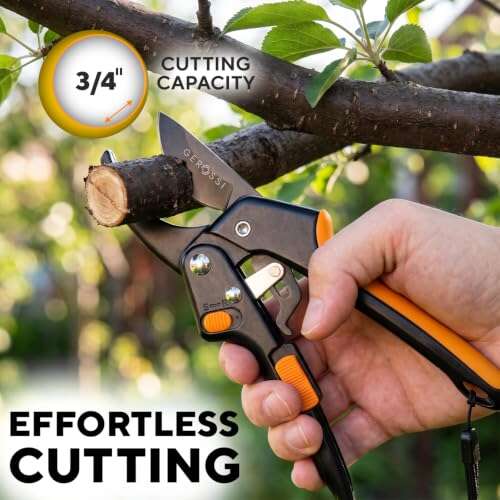
This Japanese steel pruning shear targets users who want a very sharp cutting edge and less effort. The listing describes a titanium-coated, rust-resistant blade and a cutting capacity of up to three-fourths of an inch. A sharp edge can make a major difference for weak hands. It lets the blade enter the stem instead of making your fingers fight a dull surface.
The arthritis-focused design also makes this model worth a close look for users with stiff joints. I would still treat the advertised capacity as a limit, not a challenge. Use it on suitable stems, keep your wrist straight, and stop if the handle begins to pinch your fingers. A sharp pruner can feel like a small knife through butter, but only when the branch and tool match.
Pros:
- Sharp Japanese steel may reduce cutting effort
- Titanium coating is designed to resist rust and residue
- Advertised capacity reaches about 3/4 inch
- Designed with arthritis and weak hands in mind
- Useful for flowers, shrubs, and small branches
- Sharp blades can make cleaner cuts with less squeezing
Cons:
- Sharp tools still need careful finger placement
- Advertised capacity may vary with wood type and freshness
- Users with very small hands should check handle fit
My Recommendation
This model deserves attention from gardeners with arthritis or low hand strength who place blade sharpness first. It may be the best pruning shears for weak hands if you want a high-cutting blade without a ratchet mechanism. I would use it for clean, controlled cuts on branches within its stated range. It offers strong value when comfort comes from reducing resistance rather than adding more moving parts.
| Best for | Why |
|---|---|
| Arthritis concerns | The design focuses on easier cutting and comfortable use. |
| Sharp-cut fans | Japanese steel aims to reduce drag through the stem. |
| Rust-prone gardens | The coating may help protect the blade from moisture. |
MEPEREZ German-Style Pruning Shears

The MEPEREZ German-style pruning shears take a traditional approach. German-style hand pruners often focus on solid construction, a controlled grip, and a strong bypass cut. This type of tool can feel reassuring when you want a firm, stable hold. It is suited to gardeners who prefer classic hand tools over highly specialized mechanisms.
For weak hands, balance matters as much as sharpness. A tool that sits well in the palm can help prevent wasted motion. I would use this pruner for regular plant care, flower stems, and moderate shrub work. Before a long session, test the handle opening and closing motion; a comfortable fit should let your fingers move without being stretched.
Pros:
- Traditional design feels stable and controlled
- Good option for users who prefer classic pruners
- Bypass-style cutting suits many live stems
- Solid feel may improve confidence during cuts
- Useful for flowers, herbs, and light shrub work
- Simple construction is easy to clean and inspect
Cons:
- May not reduce force as much as a ratchet pruner
- Handle fit may vary for small or large hands
- Not intended to replace loppers for large branches
My Recommendation
I recommend the MEPEREZ for users who want a classic pruner with a steady feel. It fits gardeners with mild to moderate hand weakness who can still make a normal squeeze. It is not my first pick for severe arthritis, but it can serve well as an everyday cutter. If comfort means control and balance to you, this may be among the best pruning shears for weak hands in a traditional design.
| Best for | Why |
|---|---|
| Classic tool users | The familiar format feels simple and steady. |
| Light pruning | It suits flowers, herbs, and small live stems. |
| Controlled cuts | A balanced hand tool can help guide each cut. |
DECERK 8.5-Inch Professional Pruning Shears

The DECERK 8.5-inch professional pruner is built around reach and leverage. Its listing states that it can prune branches up to three-fourths of an inch. That size rating places it in the useful middle ground between small flower snips and larger branch tools. The longer body may help reduce the squeeze needed for suitable cuts.
This design can work well for shrubs, fruit plants, roses, and general yard care. I would not push it through dead wood that feels too hard. Weak hands benefit from a smooth cut, not from forcing a tool beyond its safe range. Make a fresh cut with the blade near the pivot, then wipe away sap before storing the shears.
Pros:
- 8.5-inch length may improve hand leverage
- Advertised capacity reaches about 3/4 inch
- Useful middle size for home garden pruning
- Suitable for shrubs, roses, and fruit plants
- Long handles may reduce wrist bending
- Professional-style format supports repeated garden work
Cons:
- Long handles may feel bulky in small hands
- Hard dry branches can still require high force
- Users should avoid twisting during a cut
My Recommendation
The DECERK is best for gardeners who want more leverage but do not need a ratchet system. It may help if your hands tire during medium pruning jobs. I like its stated three-fourths-inch range for normal home use, though branch hardness always changes the effort needed. It is a strong candidate for the best pruning shears for weak hands when reach, leverage, and a professional feel matter.
| Best for | Why |
|---|---|
| Medium branches | The longer body may offer more leverage. |
| Yard cleanup | Its size suits shrubs, roses, and fruit plants. |
| Tired wrists | Extra length may reduce awkward wrist angles. |
Haus & Garten ClassicPRO Bypass Shears
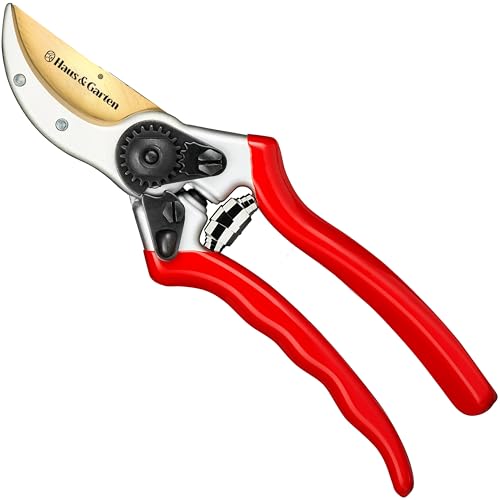
The Haus & Garten ClassicPRO is a premium-style bypass pruner made for broad garden use. Its 8.5-inch format gives it a useful reach, while the titanium blade coating is designed to resist wear and residue. The bypass layout works best when the blade stays sharp and aligned. That combination can produce a clean cut with less crushing.
I would choose this model for a gardener who wants one strong tool for regular maintenance. The longer handle may provide leverage, but comfort depends on your hand size and the handle shape. It can work for roses, shrubs, fruit trees, and ornamental plants within its capacity. As with all bypass shears, avoid dry, oversized wood that can damage the cutting edge.
Pros:
- 8.5-inch body offers useful reach and leverage
- Bypass blade supports clean cuts on live growth
- Titanium coating is designed to resist corrosion and sap
- Premium-style build suits frequent garden use
- Good all-purpose format for shrubs and roses
- Longer handles may ease some cutting pressure
Cons:
- May feel large for users with small hands
- Premium construction can mean a higher price
- Needs cleaning after sap-heavy pruning jobs
My Recommendation
The ClassicPRO is a good choice for serious home gardeners who want a durable, full-size bypass pruner. It may be the best pruning shears for weak hands if your main need is leverage during repeated garden work. I would not rank it above a ratchet for severe hand weakness, but it should suit users who can manage a normal squeeze. Its broad use range gives it strong overall value when the fit feels right.
| Best for | Why |
|---|---|
| Frequent pruning | The professional-style build suits regular use. |
| Roses and shrubs | Bypass blades make clean cuts on live stems. |
| Long reach | The 8.5-inch body may help with leverage and access. |
gonicc 8-Inch Titanium Bypass Pruners
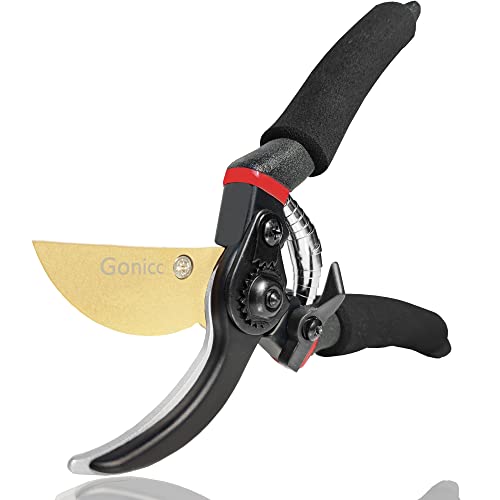
The gonicc GPPS-1003 uses an 8-inch bypass format with a titanium-coated blade. This size offers a nice balance between reach and control. It is not as compact as a flower snip, yet it remains easy to carry around a garden bed. The bypass action makes it suitable for fresh stems and common trimming tasks.
For users with weak hands, a balanced tool can help reduce wasted movement. I would use this pruner near the blade pivot and keep each cut smooth. The titanium coating may help with sap and moisture, but it does not replace cleaning. Wipe the blades after use, dry the tool, and add a small amount of tool oil when needed.
Pros:
- Balanced 8-inch size suits many garden jobs
- Titanium coating may help resist rust and sticky sap
- Bypass design works well on living stems
- Good mix of reach and hand control
- Useful for flowers, shrubs, and small branches
- Compact enough for a belt pouch or garden tote
Cons:
- Standard bypass action still needs hand strength
- May struggle with thick, dry, or hard wood
- Handle comfort can vary by hand size
My Recommendation
I recommend the gonicc for users who want a middle-size bypass pruner with a coated blade. It is a solid everyday choice for mild hand weakness and normal plant care. It will not provide the force reduction of a ratchet, but its balance may make repeated cuts feel less tiring. For shoppers seeking the best pruning shears for weak hands at a practical size, this model deserves consideration.
| Best for | Why |
|---|---|
| Balanced handling | The 8-inch size offers reach without excessive bulk. |
| Live plant growth | Bypass blades support neat cuts on green stems. |
| Small gardens | It is easy to carry and control in tight spaces. |
Gerossi Heavy-Duty Ratchet Pruning Shears

This second Gerossi ratchet option follows the same helpful idea: divide a hard cut into several easier steps. That can be a major advantage when your fingers cannot close a standard pruner with much force. The heavy-duty format suggests a focus on tougher garden work. Still, the exact branch limit should guide how you use it.
I see this type of tool as a useful bridge between hand pruners and long-handled loppers. It can fit in a garden bag while giving extra mechanical help. Ratchet tools work best when you let the mechanism advance instead of squeezing wildly. If your hand pain increases, stop and switch to a larger tool or ask for help with heavy branches.
Pros:
- Ratchet system can lower the force needed per squeeze
- Useful for weak hands and low grip strength
- Heavy-duty style suits tougher pruning jobs
- Portable alternative to a full-size lopper
- Step-by-step cutting gives better control
- May reduce sudden strain on fingers and wrists
Cons:
- Several squeezes take longer than one standard cut
- Ratchet action may feel unfamiliar at first
- Very large branches still need a lopper or saw
My Recommendation
I would choose this Gerossi ratchet pruner for users who have real trouble closing ordinary shears. It is especially suitable for arthritis, weak wrists, and gardeners who need extra mechanical help. The ratchet cannot replace safe technique, but it can make each step feel more manageable. If hand force is your top concern, this is one of the strongest choices for the best pruning shears for weak hands.
| Best for | Why |
|---|---|
| Very weak grip | Its ratchet action spreads one cut over several squeezes. |
| Tougher stems | The heavy-duty format aims at more demanding pruning. |
| Portable cutting power | It adds help without the size of a long-handled lopper. |
How to Choose the Best Pruning Shears for Weak Hands
Start with the cutting system. A ratchet pruner usually needs less force per squeeze, so it can help users with arthritis or poor grip. A bypass pruner often makes a faster, cleaner cut on green wood, but it may demand more hand power. Anvil pruners can help on dry wood, yet they may crush live stems if you use them on fresh growth.
Next, check the handle fit. Your fingers should wrap around the handles without stretching. A grip that is too wide can tire the hand quickly. A grip that is too thin may force your fingers to curl too tightly. Look for soft, non-slip surfaces and a shape that keeps your wrist close to neutral.
Blade sharpness also matters. A dull blade makes you push harder and can leave a ragged wound on the plant. Sharp blades enter the stem with less drag. Clean cuts help plants heal, though the exact recovery time depends on the plant, the season, and the size of the cut.
Pay attention to the opening spring. A strong spring may open the handles well, but it can also make the first squeeze harder. A smooth spring that does not snap or bind is better for tired hands. If a pruner has a safety lock, make sure you can open and close it without pain.
Ratchet vs. Bypass Pruning Shears
Ratchet shears suit users who need low peak force. The mechanism holds progress after each squeeze. This lets you pause without losing the cut. The trade-off is speed. A ratchet may take two or more handle cycles where a standard bypass pruner takes one.
Bypass shears suit users who want quick, clean cuts on live stems. They are often lighter and simpler. They can also feel smoother when the blade is sharp and the branch is within the tool’s range. However, a bypass pruner may not be comfortable for someone with severe hand weakness.
I would choose a ratchet for thick stems and limited grip strength. I would choose bypass shears for green growth, fast deadheading, and users with mild weakness. Some gardeners keep both. That is often the best plan because one tool cannot handle every plant and every hand condition.
Safe Pruning Tips for Weak Hands
Cut close to the plant, but do not crowd the main stem. Place the branch deep in the blade area near the pivot. This gives you more leverage than cutting at the blade tip. Keep the wrist straight and use your whole hand rather than pinching with only your thumb and index finger.
Do not twist the pruner. Twisting can jam the blade and strain the wrist. If the tool will not cut, the branch may be too hard or too large. Use loppers, a pruning saw, or help from another person instead.
Work in short sessions. Five minutes of pruning followed by a short rest may be better than one long session. Switch hands only if you can control the tool safely. Stop if you feel sharp pain, numbness, swelling, or a loss of grip.
Clean the blades after each use. Sap and dirt can make a tool sticky. Wipe the blade with a clean cloth, dry it, and use suitable tool oil on the pivot. Store the pruner closed and locked. A clean, sharp tool is safer and usually needs less force.
Which Pruner Is Best for Arthritis?
People with arthritis often benefit from a ratchet mechanism, a soft grip, and a smooth spring. The Gerossi ratchet models are the clearest choices in this review because they divide the cut into smaller steps. The Japanese steel arthritis model is another good option when sharpness and low blade drag matter more than a ratchet.
Hand size still matters. Even the best pruning shears for weak hands can hurt if the handles are too wide. Check the product photos and measurements before ordering. If possible, test the handle motion with an open hand and avoid tools that force your fingers into a tight curl.
How I Judge Pruning Shears for Weak Hands
I look at the parts that change real hand effort. These include the blade type, leverage, spring action, grip shape, tool weight, and cutting range. I also consider how easy the pruner is to clean and how much control it offers near a plant stem.
I do not treat a large capacity claim as proof that a tool feels easy. A thick dry branch can be far harder than a green branch of the same size. I also do not assume that a premium price guarantees comfort. The best tool is the one that matches your hand, your plants, and your daily task.
For 2026 garden shopping, the same core rules still apply: choose a sharp blade, use the correct cutting style, protect the pivot from grit, and respect the rated capacity. Product designs may change, but safe pruning technique remains the key to comfort and clean plant cuts.
FAQs Of best pruning shears for weak hands
What are the best pruning shears for weak hands?
Ratchet pruners are often the best choice because they divide a hard cut into smaller steps. The Gerossi ratchet models are strong options for low grip strength. A sharp bypass model may suit mild weakness and green stems.
Are ratchet pruning shears easier for arthritis?
They can be easier because each squeeze needs less peak force. You still need to use the correct branch size and keep the blades clean. Stop if the motion causes pain.
Are bypass shears good for weak hands?
Yes, if the blades are sharp and the stems are within the rated range. Bypass shears are especially good for live green growth. They may not suit users who cannot close a normal handle.
What size branch can weak-hand pruners cut?
Use the stated product capacity as a guide, not a guarantee. Fresh green wood is usually easier than dry wood. Never force the tool through a branch that makes the handles bend or jam.
How can I make pruning easier on my hands?
Keep the blade sharp, cut near the pivot, and keep your wrist straight. Work in short sessions and use loppers for larger branches. Clean and oil the tool so the spring and pivot move freely.
Final Verdict: Which Should You Buy?
The Gerossi ratchet models are my top picks for the best pruning shears for weak hands. They spread hard cuts over several squeezes. For mild weakness, choose a sharp bypass model such as the Fiskars or Japanese steel pruner.
Match the tool to your hand size and branch type. A clean, sharp pruner can make garden work feel light, safe, and far less tiring.

Laura Bennett is a gardening writer at MyGardenLabs who creates beginner-friendly guides focused on solving common plant care and gardening problems.