Best Soil For Bonsai Trees: Ultimate Mix And Tips
Best soil for bonsai trees: a fast-draining mix of pumice, lava rock, and bark.
You’ve spent hours wiring branches, trimming foliage, and styling trunks—only to watch your bonsai struggle in the wrong soil. I’ve seen root rot, compacted pots, and stunted growth fixed by swapping to the right mix. In short, the best soil for bonsai trees gives water fast drainage, steady aeration, and enough moisture retention to keep roots happy without drowning them.
Perfect Plants Bonsai Soil – 2qt

I like Perfect Plants’ 2qt mix for quick repots and small trees. It drains fast and keeps roots aerated. The particle size is consistent and the bag is ready to use. I used it on a starter Juniper and saw better root growth within a month.
The mix blends pumice, lava, and pine bark. It helps avoid overwatering and reduces compaction. It smells neutral and works well in shallow bonsai pots. For beginners, this bag is handy for small projects and seasonal refreshes.
Pros:
- Fast-draining blend that prevents root rot
- Good particle size for shallow pots and small roots
- Ready to use straight from the bag
- Lightweight—easier to handle and repot
- Consistent quality in each bag
Cons:
- Small 2qt size—runs out quickly for multiple trees
- May dry slightly faster in hot indoor spots
- Not ideal for very water-loving species without amendments
My Recommendation
I recommend this 2qt Perfect Plants mix for hobbyists with a small collection and for anyone new to bonsai soil mixes. It gives the key benefits I expect from the best soil for bonsai trees: drainage, aeration, and consistent texture. If you repot a few trees each season, this bag will speed the job.
| Best for | Why |
|---|---|
| Small bonsai collections | 2qt bag is perfect for a few pots without storage hassle |
| Beginners | Pre-mixed and ready to use, no measuring required |
| Fast repots | Good drainage speeds recovery after root work |
Professional Bonsai Soil Mix – 2.2qt

This Professional Bonsai Soil Mix is a fast-draining blend made in the USA. It uses lava rock, calcined clay, and pine bark for stable structure. The mix stays open in the pot and prevents the soggy bottoms that kill many trees. I used it on older maples and it cut wet-time in half.
The formula aims at both indoor and outdoor bonsai. Particle sizes suit medium-sized roots and it holds nutrients while letting excess water escape. It’s a solid all-rounder and a good foundation for the best soil for bonsai trees in varied climates.
Pros:
- Made with lava and calcined clay for long-term structure
- Good for indoor and outdoor bonsai varieties
- Helps prevent compaction in shallow pots
- Reliable mix for intermediate growers
- Large particles keep air pockets around roots
Cons:
- 2.2qt size might be small for larger collections
- Not fertilized—requires feeding schedule
- Slightly coarse for tiny rootlets without additional fines
My Recommendation
I suggest this mix for growers who want a dependable, ready-made base. It represents the practical qualities I look for in the best soil for bonsai trees: stability, drainage, and durability. Use it as the main substrate and add organic humus for species that prefer more moisture.
| Best for | Why |
|---|---|
| Intermediate growers | Balanced mix that supports styling and root development |
| Outdoor bonsai | Larger particles resist washout in rain |
| Trees needing structure | Calcined clay holds pore space over time |
Bonsai Supply All-Purpose Mix – 2qt
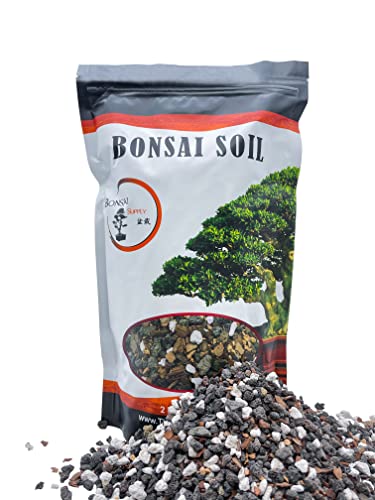
The Bonsai Supply All-Purpose Mix blends pumice, lava, calcined clay, and pine bark. It’s a classic mix that drains well and supports root hair growth. I like how the components stay distinct over time. The mix works for repotting and as a base for species-specific tweaks.
The pre-blend keeps potting consistent across multiple trees. It reduces guesswork when you mix your own. I used it on deciduous and coniferous bonsai and saw improved root fibering compared to garden soil mixes.
Pros:
- Classic, well-balanced bonsai mix
- Pumice and lava add long-term porosity
- Calcined clay holds some moisture without compaction
- Works with a variety of bonsai species
- Pre-mixed for convenience and consistency
Cons:
- Only 2qt—frequent buyers need multiple bags
- Pine bark can break down faster in wet climates
- May need fines added for very fine-rooted species
My Recommendation
This all-purpose mix suits growers who want a proven, no-fuss substrate. It ticks the main boxes for the best soil for bonsai trees: drainage, aeration, and a stable matrix. If you prefer to fine-tune moisture later, start with this blend and adjust with organic or fine components.
| Best for | Why |
|---|---|
| Mixed species collections | Versatile blend works for both conifers and deciduous |
| Consistent repots | Pre-mixed quality reduces soil variation |
| Growers who tweak | Great base to add moisture or fines as needed |
Perfect Plants Bonsai Soil – 8qt

The 8qt Perfect Plants bag is a step up for collectors. It has the same blend as the 2qt but in larger quantity. I found it economical for multiple pots and larger repots. The particle mix stays stable and helps roots spread evenly.
Buying bulk saves time and keeps your soil uniform across trees. I use large bags to avoid mixing differences from batch to batch. For anyone who cares about consistent quality, this 8qt bag is a smart choice for the best soil for bonsai trees.
Pros:
- Large 8qt bag—cost-effective for several trees
- Consistent mix across repots
- Saves storage and packaging waste
- Good for larger root-ball work
- Stable particle size for long-term structure
Cons:
- Bulk weight can be awkward to lift
- May be too coarse for ultra-fine root systems
- Storage space required
My Recommendation
If you manage a moderate to large bonsai collection, this 8qt is a great buy. I favor it when I repot many trees in a season. It delivers the essential characteristics of the best soil for bonsai trees: drainage, root aeration, and consistency. Buying in bulk also saves money over multiple small bags.
| Best for | Why |
|---|---|
| Large collections | Bulk bag covers many repots at once |
| Consistent soil users | Keeps texture and drainage uniform across pots |
| Cost-conscious growers | Economies of scale lower price per quart |
Agra Life Premium Bonsai Soil – 4qt

Agra Life’s 4qt mix markets itself as an organic, premium option. It blends organic components with inorganic particles to balance moisture and air. I appreciated the softer mix for indoor species like ficus. It offers a bit more humus while leaving drainage intact.
This mix suits growers who want some organic matter but still need drainage. I recommend it for indoor bonsai that prefer slightly more moisture. The quality and particle mix make it a solid, middle-ground choice for the best soil for bonsai trees.
Pros:
- Organic-friendly blend for indoor varieties
- Maintains moisture without becoming soggy
- Good particle balance for root health
- 4qt size fits small to medium collections
- Works well for ficus, schefflera, and other indoor bonsai
Cons:
- Organic components can break down over time
- May need more frequent repotting in wet climates
- Not ideal for species that require very dry roots
My Recommendation
I like Agra Life for indoor bonsai that enjoy a touch more organic content. I found it especially helpful for tropical and subtropical species. It still meets the core needs I require from the best soil for bonsai trees: drainage and aeration, with added organic support for leaf-heavy indoor trees.
| Best for | Why |
|---|---|
| Indoor tropical bonsai | More organic matter suits moisture-loving species |
| Moderate collections | 4qt size handles multiple repots without waste |
| Owners wanting organic mix | Balanced organic/inorganic blend aids root health |
Doter Premium Bonsai Soil – 1qt

Doter’s 1qt premium soil focuses on aeration and enhanced drainage. The small size makes it great for test batches or tiny pots. I used it to trial a new species and liked the quick response in root vigor. It’s a fine option when you need precise control over potting medium.
The formula stays loose and doesn’t compact easily. It’s ideal for pre-bonsai and very small bonsai. Keep in mind the bag is compact, so plan multiple purchases for larger projects. Still, it’s a great sample pack for finding your go-to mix for the best soil for bonsai trees.
Pros:
- Excellent aeration for tiny root systems
- Small size is perfect for trying mixes
- Loose texture that resists compaction
- Good for pre-bonsai and nursery stock
- Helps encourage quick root development
Cons:
- Only 1qt—insufficient for many repots
- Frequent purchases needed for collections
- Higher cost per quart versus bulk
My Recommendation
I recommend Doter’s 1qt for growers who pot small trees or experiment with soil blends. It’s handy for testing which ratios work best before committing to bulk. If you want a precise, controlled substrate to find your ideal best soil for bonsai trees, this sample-sized mix is a smart move.
| Best for | Why |
|---|---|
| Trial runs | Small bag lets you test soil without waste |
| Tiny bonsai | Particle size suits shallow, small-root pots |
| Pre-bonsai care | Encourages fibrous root growth during training |
Professional Bonsai Soil – 8.2qt
The extra-large 8.2qt Professional mix gives a big supply for many trees. It mirrors the 2.2qt formula but in bulk. I used this for a spring repot push and it saved trips to the store. The mix resists compaction and supports sustained root health.
For those who repot in batches, this bag cuts cost and time. It fits growers who want a consistent, ready-to-use substrate across all trees. This is a practical pick if you want reliable ingredients for the best soil for bonsai trees in large quantities.
Pros:
- Large 8.2qt bag for bulk repots
- Same professional formula as smaller sizes
- Resists compaction for longer
- Reduces frequency of purchases
- Good value per quart for regular repots
Cons:
- Heavy to handle and store
- May be too coarse for small-rooted species without amendment
- Requires space for bulk storage
My Recommendation
Choose the 8.2qt Professional mix if you repot many trees or manage a nursery. It provides the practical features I expect in the best soil for bonsai trees: consistency, drainage, and long-term structure. Bulk buying saves time and keeps all pots on the same maintenance schedule.
| Best for | Why |
|---|---|
| Nurseries and clubs | Bulk supply saves time and money |
| Large repot seasons | Enough volume for many trees at once |
| Consistency seekers | Same mix used across all pots reduces variability |
FAQs Of best soil for bonsai trees
What components make the best soil for bonsai trees?
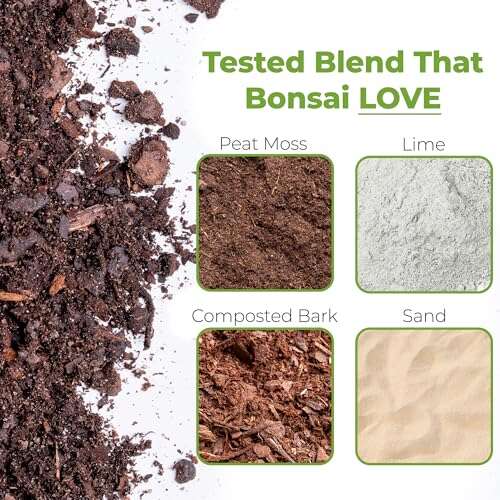
The best soil mixes use inorganic particles—like pumice, lava, and calcined clay—plus a small organic fraction such as pine bark. Inorganics give drainage and air. Organics add water retention and nutrients. Balance depends on species and climate.
How often should I repot using the best soil for bonsai trees?
Young trees need repotting every 1–2 years. Mature trees may go 3–5 years. If roots circle or soil compacts, repot. Use fresh bonsai soil to refresh aeration and nutrient status.
Can I mix my own bonsai soil at home?
Yes. A common recipe is 50% inorganic (pumice or lava) and 50% organic (pine bark or akadama) by volume, adjusted for species. I often test small batches to find what works in my area. Testing helps find the best soil for bonsai trees in local conditions.
Is garden soil ever acceptable for bonsai?
No. Garden soil compacts and holds too much water in shallow pots. It chokes roots and invites rot. Always use a bonsai-specific mix or a homemade blend of coarse materials.
How do I choose the right mix for indoor bonsai?
Indoor species often prefer slightly more organic content to hold moisture. Choose a balanced mix that still drains well. Agra Life and similar blends are good examples that combine organic support with strong drainage.
Final Verdict: Which Should You Buy?
For most growers, a well-balanced mix with pumice, lava, and a bit of bark is the best soil for bonsai trees. Choose size and organic content based on your species and collection size.
If you want convenience, start with a pre-mixed product. For control, test small bags and scale up to bulk once you find your ideal blend. The best soil for bonsai trees is the one that keeps roots healthy season after season.

Laura Bennett is a gardening writer at MyGardenLabs who creates beginner-friendly guides focused on solving common plant care and gardening problems.