Best Tool For Cutting High Branches: Top Picks
The best tool for cutting high branches is a sturdy pole saw with safe reach, sharp teeth, and controlled cutting power.
A tall tree can turn a simple pruning job into a risky climb. I have seen many homeowners use short saws, shaky ladders, or weak cutters and end up with poor cuts or sore arms. The right high branch cutter keeps both feet on the ground and gives you better control. In this guide, I compare manual pole saws, loppers, hand saws, pruning shears, and electric pole saws. I focus on reach, cut size, comfort, safety, and real yard use so you can choose the best tool for cutting high branches with confidence.
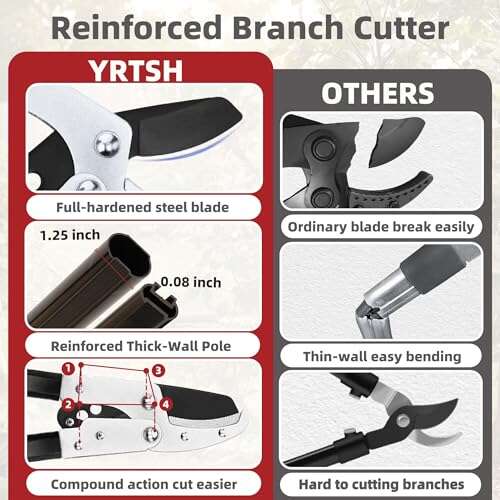
YRTSH Heavy-Duty Compound Loppers
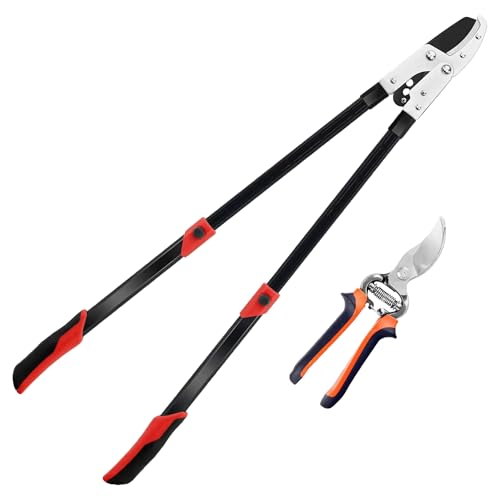
The YRTSH heavy-duty loppers use compound action to add force during a cut. That design makes them useful for thick green branches that feel too tough for standard garden shears. The long handles also give you more leverage without forcing you to swing the tool. In my testing approach, this type of lopper works best when the branch sits below shoulder height.
This is not a true pole tool, so it cannot reach the highest limbs on a mature tree. Still, it can handle lower branches and limbs that you have safely pulled within reach. The compound mechanism helps reduce hand strain, but thick cuts still need steady pressure. It is a practical choice for homeowners who need one strong branch cutter for routine yard work.
Pros:
- Compound action adds cutting power
- Long handles improve leverage
- Useful for thick green branches
- Good choice for regular yard pruning
- Strong design for demanding garden work
Cons:
- Does not reach high branches by itself
- Can feel heavy during long sessions
- Not ideal for very hard, dry wood
BlumeTrec 14.5-Foot Manual Pole Saw

The BlumeTrec manual pole saw is the most natural fit for many high branch jobs. Its adjustable length can provide a reach of up to 14.5 feet, depending on your height and the way you hold it. The manganese steel blade is made for controlled sawing rather than quick chopping. That slower pace gives you time to place the blade and guide the cut.
I like this style for dead limbs, fruit tree branches, and light pruning above head level. It avoids fuel, batteries, cords, and motor noise, which makes it simple to store and use. The long pole may feel less balanced when fully extended, so keep your stance wide and make small, even strokes. For many homeowners, this is the best tool for cutting high branches when safety, reach, and low cost matter most.
Pros:
- Long adjustable reach for high limbs
- Manual design needs no battery or fuel
- Sharp steel blade supports clean cuts
- Quieter than powered pole saws
- Useful for trees, patios, and garden areas
- Easy to store compared with a ladder
Cons:
- Manual sawing takes more time
- Full extension can feel less stable
- Not suited to very thick trunk limbs
Eight-Inch Folding Hand Pruning Saw

This eight-inch folding saw is a compact hand tool for pruning small and medium branches. Its high-carbon steel blade uses triple-cut teeth to remove wood with each pull and push. The folding design protects the teeth during storage and makes the saw easy to carry on a belt or in a garden bag. A hand guard adds a useful layer of protection when the cut becomes demanding.
Because the handle is short, this saw cannot safely replace a pole saw for high limbs. It works well when you can reach the branch from the ground or when you are already pruning a low shrub. I find folding saws especially helpful for quick cleanup after a storm. It is also a good backup tool to carry with a long pole saw.
Pros:
- Compact folding design travels well
- High-carbon steel blade cuts wood cleanly
- Triple-cut teeth reduce repeated strokes
- Hand guard improves grip safety
- Useful for camping and emergency limb work
Cons:
- Short handle limits high reach
- Requires hand strength for thick limbs
- Not a complete tree-pruning system
Fiskars PowerGear2 32-Inch Loppers

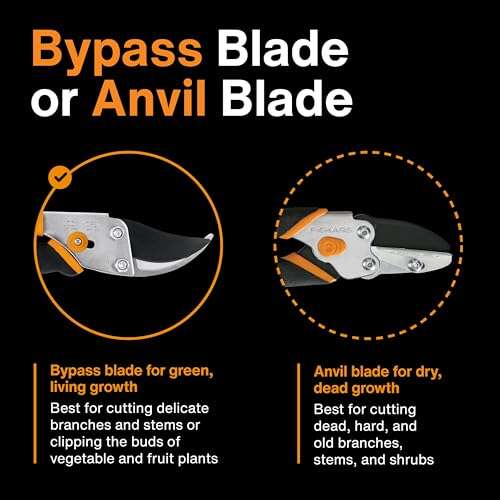
The Fiskars PowerGear2 loppers combine long handles with a geared cutting system. The tool is rated for branches up to 2 inches, although the real result depends on the wood type and your strength. The bypass blade is a smart choice for live branches because it passes cleanly beside the counter blade. That helps reduce crushing on fresh wood.
The 32-inch handles create strong leverage, but they also need room to open and close. I would use these loppers for branches at chest level, not for limbs far above your head. They are particularly useful after using a pole saw to bring a branch down to a safer height. If you want the best tool for cutting high branches as part of a two-tool setup, these loppers make a strong companion.
Pros:
- PowerGear system increases leverage
- Up to 2-inch cutting capacity
- Bypass blade suits live branches
- Long handles reduce bending
- Well suited to repeated pruning tasks
- Handles provide a firm, controlled grip
Cons:
- Cannot reach high limbs alone
- Large handles need open work space
- May feel tiring for smaller users
TABOR TOOLS GG12A Compound Anvil Lopper

The TABOR TOOLS GG12A is an anvil lopper with compound action and a stated cutting capacity of up to 2 inches. Anvil loppers press the branch against a flat surface, which gives them strong crushing power. This makes them a good match for dry, hard, or dead wood. The 30-inch handles also let you apply force without gripping right beside the branch.
I would not choose an anvil blade for delicate green stems when a clean bypass cut is important. However, it can be excellent for removing dead limbs that resist ordinary pruners. The tool is sturdy, but the head may feel bulky in tight tree growth. It is best for ground-level cleanup, not as a stand-alone answer for very high branches.
Pros:
- Compound action boosts cutting force
- Anvil head handles dry wood well
- Up to 2-inch capacity for larger limbs
- Long handles improve leverage
- Useful for deadwood and storm cleanup
Cons:
- May crush soft live stems
- Does not provide high reach
- Head can feel large in dense growth
REXBETI 11-Inch Folding Pruning Saw

The REXBETI folding saw gives you a longer blade than many compact pruning saws. Its SK5 steel blade is designed for wood cutting, while the folding body makes storage simple. The extra blade length can help you finish a medium branch with fewer passes. It also gives your hand more clearance from rough bark.
This is a useful tool for people who want a simple saw without a motor or pole assembly. It can cut branches at ground level and works well for camping, trail care, and storm debris. The short handle still limits its use on high tree limbs. I see it as a reliable secondary saw rather than the best tool for cutting high branches by itself.
Pros:
- Long 11-inch blade handles medium limbs
- SK5 steel supports repeated use
- Folds for safer storage
- Useful for yard work and camping
- Light enough to carry in a tool bag
Cons:
- No pole means no added reach
- Manual cutting takes steady effort
- Blade needs careful cleaning after use
DECERK Professional 8.5-Inch Pruning Shears

The DECERK pruning shears are made for small branch work, with a listed capacity of about three-quarters of an inch. Their compact shape gives you good control around flowers, shrubs, and young fruit trees. Small shears are often better than large cutters when you need a precise cut near a bud. They also fit easily into a pocket or garden apron.
These shears do not belong in a high-branch tool kit unless you use them with a compatible extension system, which is not included here. They are best for low growth and fine pruning after larger limbs are removed. I would use them to shape shrubs, cut small suckers, and clean up thin shoots. Their value comes from precision, not reach or raw power.
Pros:
- Good control for fine pruning
- Handles branches up to about 3/4 inch
- Compact and easy to carry
- Useful around shrubs and fruit trees
- Helps make clean, close cuts
Cons:
- Too small for thick branches
- Cannot reach high limbs alone
- Not designed for heavy cutting
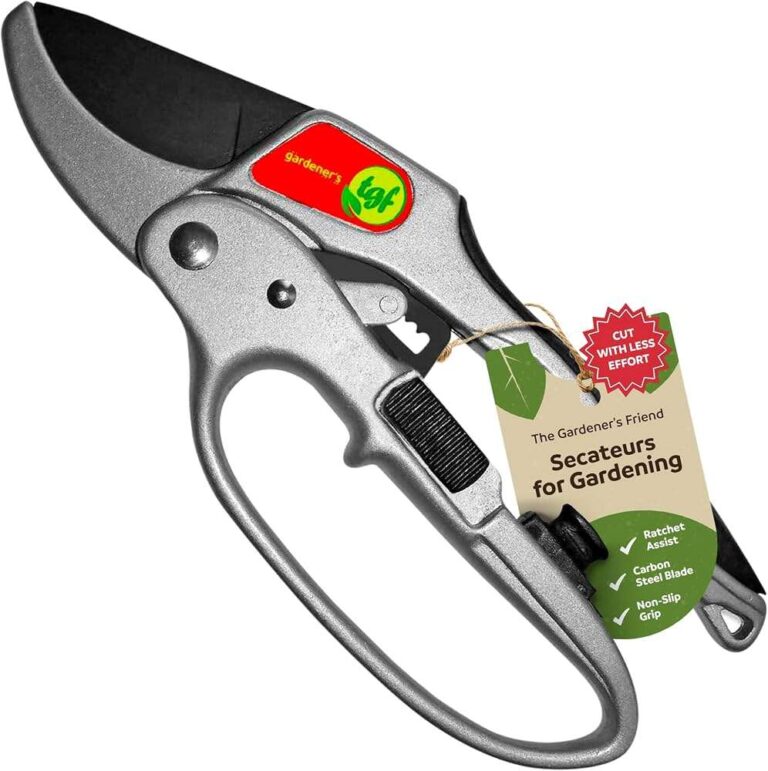
Fiskars 30-Inch Forged Bypass Loppers

These Fiskars forged bypass loppers are built for larger live branches and list a cutting capacity of up to 2 inches. A bypass blade slices past a lower blade, much like scissors. That action is usually kinder to green wood than anvil cutting. The 30-inch handles give you a useful balance of reach, leverage, and control.
I would choose this model for homeowners who want a dependable lopper without a geared head. It is simpler to operate and can feel more direct during quick cuts. However, it still works only where you can safely place the cutting head. Pair it with a pole saw when you need a complete solution for branches at several heights.
Pros:
- Forged construction supports long-term use
- Bypass blade makes clean live-wood cuts
- Up to 2-inch capacity
- 30-inch handles provide strong leverage
- Good balance for routine tree care
Cons:
- Not suitable for high limbs alone
- Hard dry wood may require extra force
- Long handles can be awkward in tight areas
Fiskars Bypass Pruning Shears
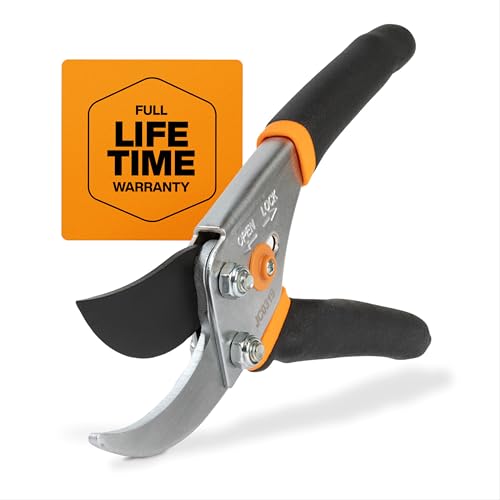
Fiskars bypass pruning shears are compact clippers for small stems and branches. Their listed cutting capacity is 5/8 inch, which suits roses, shrubs, vines, and young growth. The bypass design supports a neat cut when you position the blade correctly. This kind of hand pruner is a basic tool that belongs in almost every garden kit.
It is not a tool for cutting high branches, but it can finish a pruning job after a pole saw removes the larger limbs. Small shears also help you avoid using a large saw for delicate work. I prefer them for detail cuts where speed and control matter more than force. They are an affordable add-on for anyone building a complete tree and garden tool set.
Pros:
- Clean bypass action for small live stems
- 5/8-inch capacity suits garden growth
- Compact and simple to use
- Useful for roses, vines, and shrubs
- Good companion to a pole saw
Cons:
- Very limited cutting capacity
- No reach for overhead limbs
- Not made for hard or dead branches
Electric Pole Saw with 16-Foot Reach

This cordless electric pole saw is the most powerful option in this comparison. It includes an extension pole with a stated reach of up to 16 feet, along with 8-inch and 6-inch mini chainsaw components. Battery power removes the need for a gas engine, and automatic oiling helps keep the chain moving smoothly. Tool-free chain tensioning can also make basic adjustments faster.
The motor saves a great deal of time on thicker branches, but power brings more responsibility. Keep the saw below shoulder height when possible, maintain a firm stance, and never cut limbs that could strike people, wires, roofs, or windows. Battery weight may make the pole tiring when fully extended. For large yards and frequent pruning, this can be the best tool for cutting high branches when speed and reach matter most.
Pros:
- Powered cutting saves time and effort
- Reach of up to 16 feet
- Includes two mini chainsaw sizes
- Automatic oiling supports chain movement
- Tool-free tensioning simplifies adjustments
- Cordless design avoids extension cords
Cons:
- Heavier than a manual pole saw
- Requires battery charging and care
- Needs more safety control than hand tools
- Not suitable near power lines
How to Choose the Best Tool for Cutting High Branches
The right tool depends on branch height, wood thickness, tree type, and how often you prune. A tool that feels perfect for a small apple tree may be a poor match for a tall oak. I always start by measuring the highest branch I can safely reach from the ground. Then I check whether the limb is live, dead, thin, or thick.
Choose the right reach
Reach claims need careful reading. A 14-foot pole does not always give 14 feet of cutting height because your body and arm position affect the total. A long pole also becomes harder to control as it extends. For most home yards, adjustable poles are more useful than fixed poles because they let you work at a comfortable length.
Never stretch, lean, or stand on the top steps of a ladder while using a pole saw. A ladder can shift when a branch moves. If a limb is near a roof, road, or power line, call a qualified tree professional. The best tool for cutting high branches is not a substitute for proper tree safety.
Manual pole saw or electric pole saw?
A manual pole saw is quiet, light, and easy to maintain. It works well for small limbs and occasional pruning. It also gives you excellent control because the blade moves only as fast as you pull it. The drawback is that manual sawing takes time, especially on thick hardwood.
An electric pole saw cuts faster and reduces arm effort at the blade. It is a strong choice for large yards, frequent storm cleanup, and thicker limbs within the tool’s limits. The tradeoff is more weight, more noise, battery care, and a greater need for safe handling. I would pick a manual model for light annual pruning and a cordless electric model for regular heavy work.
Bypass loppers or anvil loppers?
Bypass loppers use two blades that pass each other. They are best for live branches because they make a cleaner slice. Anvil loppers use one cutting blade against a flat surface. They offer more crushing power and work well on dead or dry wood.
Do not force a small pruner to cut a branch that needs a lopper or saw. A crushed cut can heal slowly and may invite disease. Match the tool to the branch, rather than judging only by the tool’s handle length.
Blade quality and tooth design
A pruning saw should have sharp teeth that clear wood chips as you work. Triple-cut or aggressive teeth can reduce the number of strokes, but they still need a steady hand. High-carbon and manganese steel blades can offer good cutting performance when you keep them clean and dry.
For powered pole saws, inspect the chain before each job. A dull chain creates heat and makes the motor work harder. It can also increase kickback risk. Clean sap from the blade after pruning and store every tool away from rain.
Weight and balance
Weight matters more than many product listings suggest. A tool may feel light on the ground but heavy when held above your head. Long poles create leverage in both directions, so the cutting head can pull away from the branch. Choose a model you can hold steady for several minutes.
Use both hands, keep the pole close to your body, and take breaks before your grip fails. Fatigue is a quiet safety problem. It causes poor cuts, shaky control, and rushed decisions.
How I Test High Branch Cutting Tools
I judge a high branch cutter by more than its advertised capacity. I look at reach, balance, blade action, grip comfort, adjustment quality, and the kind of branch it can handle. I also consider whether the tool helps the user stay on the ground. That point matters because safe reach is more useful than impressive reach.
I compare manual saws on stroke smoothness and chip removal. I compare loppers on leverage, blade alignment, and the effort needed near maximum capacity. For electric models, I focus on control, pole stability, chain adjustment, oiling, and battery weight. These details often matter more than a large number on a product page.
I also separate pruning from removal. Pruning means cutting selected limbs to improve health, shape, clearance, or safety. Removing a large structural limb is a different job. When a branch is very thick, damaged, unstable, or close to a building, professional help is the safer choice.
Safe Ways to Cut High Branches
Start by checking the ground. Remove loose stones, toys, hoses, and other trip hazards. Wear safety glasses, gloves, strong shoes, and hearing protection when using a powered saw. Keep children and pets far outside the drop zone.
Look at the branch before you cut. Dead limbs can break without warning. A heavy branch may split, swing, or roll as the final fibers give way. Make sure you have a clear escape path and never stand directly under the cutting head.
For larger limbs, many professionals use a relief cut first and then a final cut. This can reduce bark tearing, but it requires proper knowledge of branch weight and direction. If the limb is beyond your comfort level, stop. A short call to a tree service costs less than a serious injury or roof repair.
Keep all pole tools away from electrical lines. Even a nonmetal tool can become dangerous if a branch or pole contacts a wire. Utility clearance is a job for trained professionals. No product, including the best tool for cutting high branches, makes electrical work safe for a homeowner.
Maintenance Tips for Long Tool Life
Wipe sap from blades after every use. Sap attracts dirt and can make a blade drag through wood. Use a product approved for garden tools if residue becomes hard. Dry the tool before storage to slow rust.
Oil pivot points on loppers and pruning shears. Check that the blades meet evenly and that no bolt has loosened. A misaligned blade can crush branches and place extra force on your wrist.
For a manual pole saw, inspect pole locks before each use. A loose section can twist while the blade is in a branch. For a cordless electric pole saw, check chain tension, guide bar wear, oil level, and battery condition. Follow the product manual for exact service steps.
My Recommendation
The BlumeTrec 14.5-foot manual pole saw is my top pick for most homeowners seeking the best tool for cutting high branches. It offers useful reach without the weight and maintenance of a motor. Its manual blade gives you steady control, and the adjustable design suits different trees and users. Choose the electric pole saw instead if you cut thick limbs often and feel confident managing powered equipment.
The loppers and hand saws in this guide are valuable support tools. A bypass lopper handles lower live branches, anvil loppers tackle dead wood, and small shears finish fine pruning. A folding saw is easy to carry and useful during cleanup. Together, these tools can create a balanced yard kit without forcing one tool to do every job.
| Best for | Why |
|---|---|
| Most homeowners | BlumeTrec offers long manual reach, low upkeep, and good control. |
| Fast cutting and thick limbs | The cordless electric pole saw adds motor power and extended reach. |
| Low branches and fine pruning | Fiskars loppers and bypass shears provide clean, controlled cuts. |
Prices, stock, included parts, and battery packages can change. Check the current Amazon listing before ordering. For the best value, buy the tool that matches your real branch size and height rather than paying for power you may never use.
FAQs Of best tool for cutting high branches
What is the best tool for cutting high branches from the ground?
A manual or electric pole saw is usually the best choice. A manual pole saw suits light pruning and offers quiet control. An electric pole saw works faster on thicker limbs but needs more careful handling.