How To Prune Shrubs And Bushes: Easy Pruning Guide
Prune shrubs and bushes by removing dead, damaged, crossing, and overgrown branches at the right time.
Learning how to prune shrubs and bushes is less about cutting more and more about making the right cuts. With the proper season, tools, and method, you can improve plant health, shape growth, increase flowers, and prevent weak branches from becoming larger problems. This guide explains proven pruning methods in simple steps, with practical tips drawn from years of hands-on garden care.
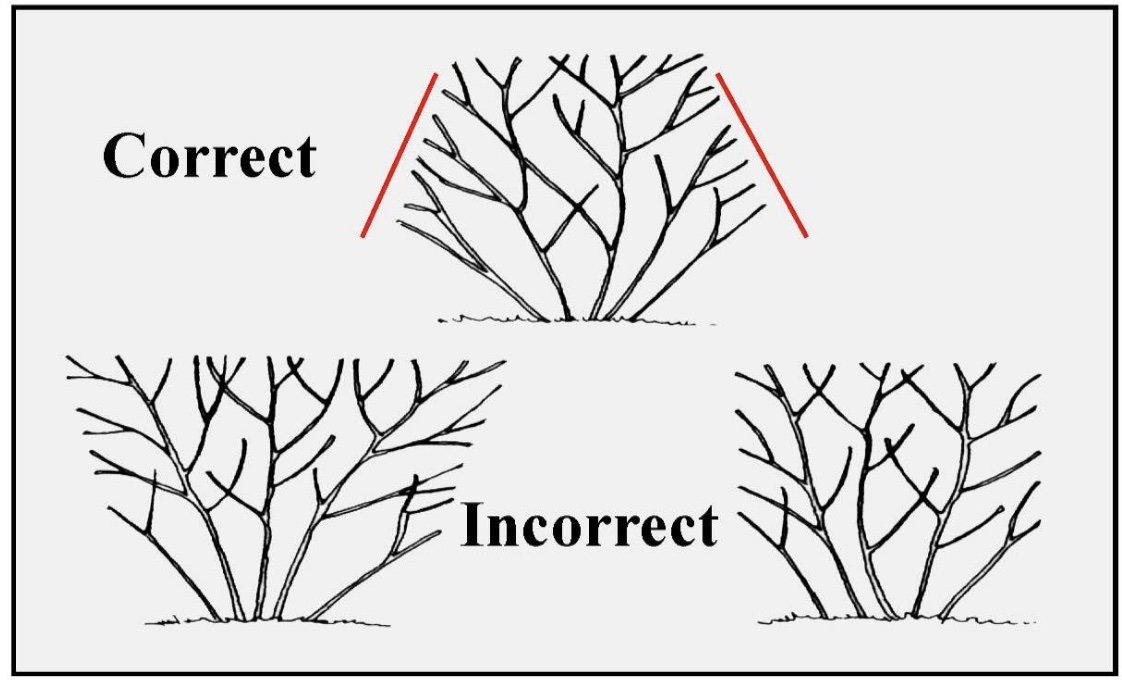
Why Pruning Shrubs and Bushes Matters
Pruning removes growth that no longer helps the plant. Dead wood can invite pests and disease, while crowded branches block sunlight and air. A well-pruned shrub often looks healthier because its energy is directed toward strong stems, leaves, flowers, and fruit.
Knowing how to prune shrubs and bushes also helps you control size without harming the plant. However, pruning cannot fix every problem. A shrub planted in the wrong place, suffering from poor soil, or exposed to severe stress may need more than a trim.
Regular pruning can provide several benefits:
- Removes dead, diseased, or damaged branches
- Improves air movement through the plant
- Lets more sunlight reach inner leaves
- Encourages flowers on many shrubs
- Keeps paths, windows, and walkways clear
- Reduces the risk of falling branches
- Maintains a natural and attractive shape
- Helps rejuvenate some older shrubs
Think of pruning like editing a sentence. You remove what weakens the whole, but you keep enough structure for the plant to grow well.
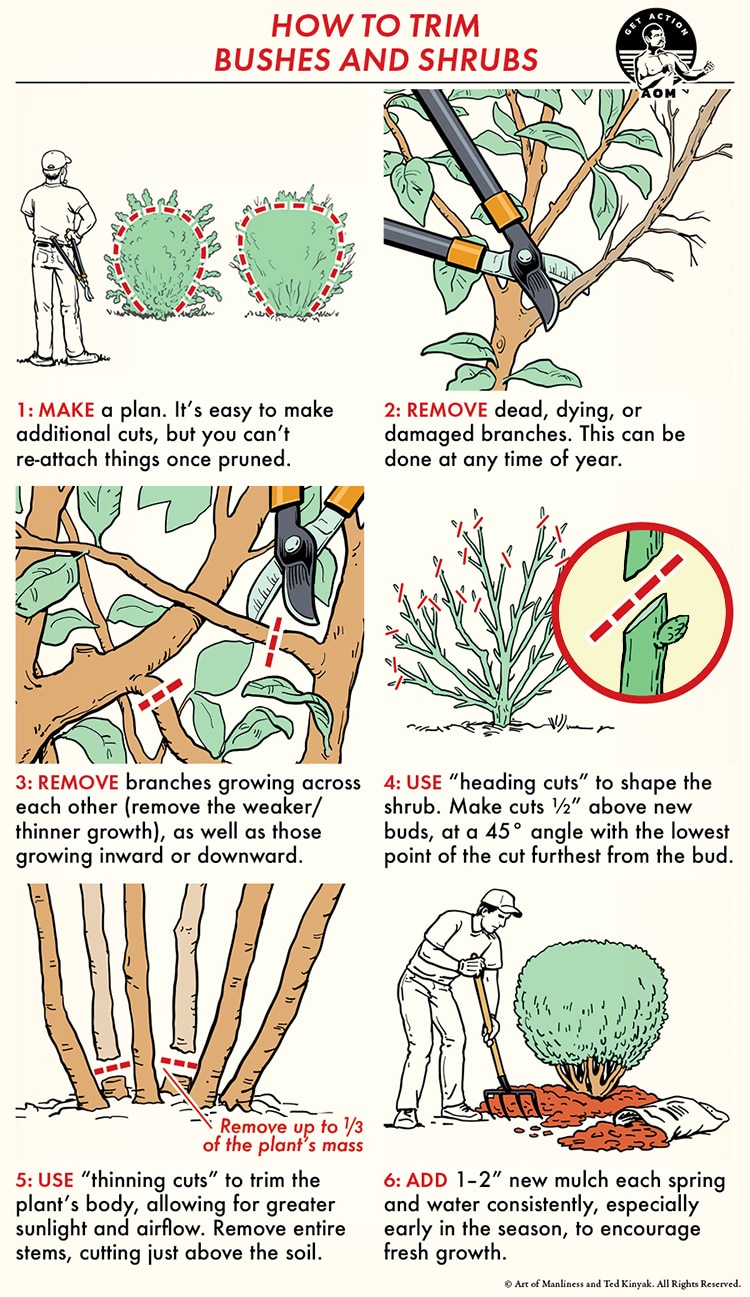
When to Prune Shrubs and Bushes
The best time to prune depends on the plant. The key question is whether it flowers on old wood or new wood.
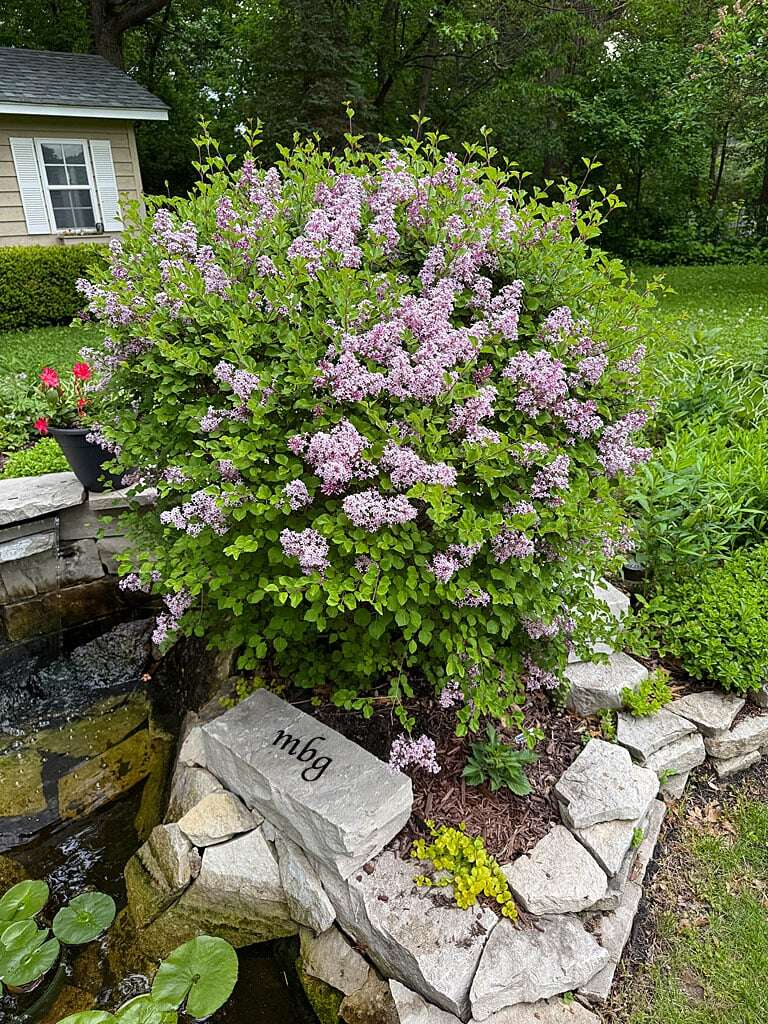
Spring-flowering shrubs often form flower buds during the previous growing season. Examples include lilac, forsythia, azalea, rhododendron, and many viburnums. Prune these soon after they finish blooming. If you prune them in late winter, you may remove the buds that would have produced flowers.
Summer-flowering shrubs usually bloom on new growth made during the current season. Examples include butterfly bush, beautyberry, and some spirea varieties. These plants are often pruned in late winter or early spring before new growth begins.
Evergreen shrubs need a lighter touch. Remove dead or damaged branches when you notice them, but avoid heavy cuts unless you know the plant can produce new growth from older wood. Many conifers do not regrow well from bare, brown branches.
A simple seasonal guide can help:
- Late winter: Prune many deciduous shrubs that bloom on new wood.
- After spring bloom: Prune shrubs that bloom on old wood.
- Summer: Remove broken branches and light, unwanted growth.
- Fall: Limit heavy pruning because new growth may not harden before cold weather.
- Any season: Remove dead, diseased, or dangerous branches when needed.
Local weather also matters. In cold regions, severe pruning just before a hard freeze can expose fresh cuts to injury. In warm regions, plants may keep growing later into the year, so timing can vary.
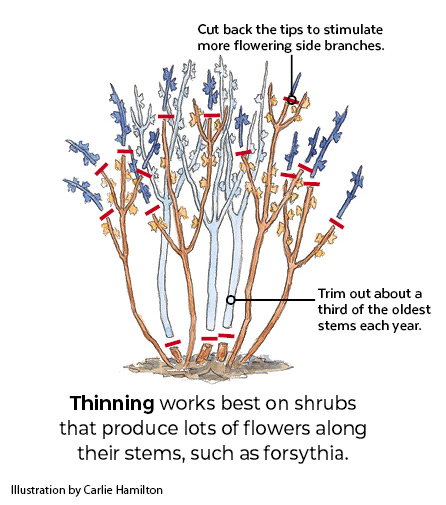
How to Prune Shrubs and Bushes: Step-by-Step
The safest way to learn how to prune shrubs and bushes is to follow a clear process. Do not begin by cutting the outside of the plant into a round ball. Start by studying the plant’s natural form.
1. Identify the shrub
Find out what species or cultivar you have. Look for a plant tag, use a trusted gardening reference, or ask a local extension office. Different shrubs respond to pruning in different ways.
Ask these questions:
- Does the shrub flower in spring or summer?
- Does it keep leaves all year?
- Does it produce flowers or fruit on old wood?
- Can it regrow from older branches?
- Is it naturally rounded, upright, spreading, or arching?
If you cannot identify the plant, use light corrective pruning first. Remove only dead, broken, or clearly crossing branches until you know more.
2. Inspect the whole plant
Walk around the shrub before making a cut. Look for branches that rub together, grow toward the center, lie on the ground, or extend into a walkway.
Also check for signs of trouble, such as:
- Discolored or peeling bark
- Mushy wood
- Cankers or sunken areas
- Insect holes
- Powdery growth
- Sudden dieback
A shrub with serious disease may need professional advice. Pruning can reduce problems, but it does not always cure them.
3. Remove dead and damaged wood
Cut dead branches back to healthy wood or remove them at the branch collar. The branch collar is the slightly swollen area where a branch joins a larger stem.
To check a questionable branch, lightly scrape the bark with a clean blade. Green tissue may indicate living wood, while brown, dry tissue may indicate dead wood. Make a small test rather than cutting away large sections without a plan.
4. Remove crossing and rubbing branches
Branches that rub can lose bark and create wounds. Remove one of the two branches, usually the weaker or less well-placed one.
Keep the branch with the better direction and stronger connection. The goal is to create space, not to empty the center of the plant.
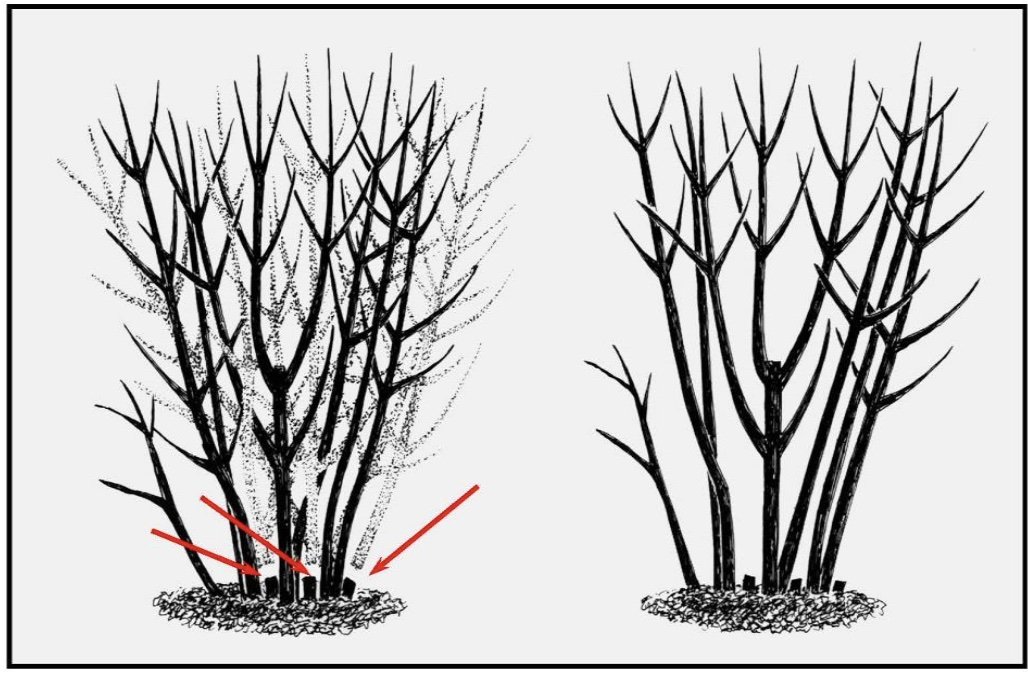
5. Thin crowded growth
When too many stems rise from the base, remove a few older or weaker stems at ground level. This method is called thinning.
Thinning is often better than shortening every branch. It allows light into the plant while preserving a natural shape. Never remove so much at once that the shrub looks stripped. As a general safety rule, avoid removing more than about one-quarter of a healthy shrub’s live growth in one year unless a trained professional recommends it.
6. Shorten long branches when needed
If a branch is too long, cut it back to a healthy side branch or a bud that points in the direction you want new growth to take. Make the cut slightly above the bud, not directly on top of it.
A bud facing outward can help keep new growth away from the center. A bud facing inward may encourage a crowded shape, so choose carefully.
7. Step back often
After every few cuts, step away and view the shrub from several sides. This small habit prevents over-pruning.
In my own garden work, the most common mistake was not making a bad cut. It was making five more cuts after the shrub already looked balanced. Pruning is easier when you pause before the plant tells you to stop.
The Right Tools for Pruning
Clean, sharp tools make better cuts and reduce damage. Dull blades crush stems, which can slow healing and create rough surfaces where pests and disease may enter.
Useful pruning tools include:
- Hand pruners for small branches up to about three-quarters of an inch
- Loppers for thicker branches and extra reach
- A pruning saw for large or tough branches
- Thick gloves to protect your hands
- Safety glasses when cutting overhead
- Disinfectant for cleaning blades
- A bucket or tarp for collecting cut branches
Bypass pruners work like scissors and usually make the cleanest cuts on live wood. Anvil pruners crush the branch against a flat surface and can work well on dead wood.
Clean tools before and after pruning. If you cut diseased wood, disinfect the blades between plants. A household disinfectant or a solution labeled for garden tools can help, but follow the product directions and allow the tool to dry before storage.
Do not use a chainsaw for routine shrub pruning. Large limbs near power lines, roofs, or buildings require a qualified professional.

Proper Pruning Cuts
A good cut is clean, controlled, and placed in the right location. How to prune shrubs and bushes safely depends on understanding where branches naturally join.
Cut at the branch collar
When removing a branch, leave the branch collar intact. Do not cut flush against the trunk or main stem. The collar contains tissue that helps the plant seal the wound.
A flush cut removes this protective area and creates a larger wound. A long stub can die back and attract insects. Find the collar and cut just outside it.
Use the three-cut method for thick branches
Large branches can tear bark as they fall. The three-cut method reduces this risk.
- Make a shallow undercut several inches from the branch collar.
- Make a top cut farther out to remove most of the branch.
- Make the final cut just outside the branch collar.
This method keeps the branch from ripping down the stem. It is useful for large shrubs, but branches beyond your safe reach should be handled by an arborist.
Cut above a healthy bud
For heading cuts, make a slightly angled cut about one-quarter inch above a healthy bud. Avoid steep cuts that leave a long stub or expose too much surface.
The angle should shed water without making the cut unnecessarily large. Small branches usually heal more quickly than large ones.

Pruning Different Types of Shrubs
The best method changes with the shrub’s growth habit. Treating every plant the same is one of the fastest ways to cause poor growth.