
Is Bonsai Chinese Or Japanese: Origins And Facts
Bonsai originated in China and was refined into its classic form in Japan.
Bonsai is a living art with roots in Chinese penjing and a long, rich history in Japan. I’ve studied and practiced bonsai for over a decade, and this article explains clearly whether bonsai is Chinese or Japanese. You’ll learn the historical origin, stylistic differences, how to identify a tree’s tradition, care implications, cultural meanings, and practical tips I’ve learned from hands-on experience. Read on for a thorough, friendly, and expert view on whether is bonsai chinese or japanese and what that means for collectors and beginners alike.
Historical origins: from penjing to bonsai
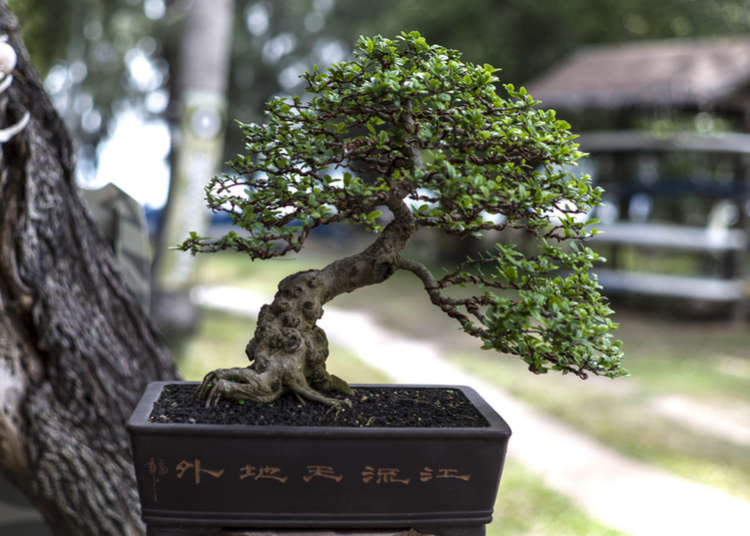
The short answer to is bonsai chinese or japanese starts in China. Chinese artists began shaping miniature landscapes called penjing more than a thousand years ago. These early works used small trees, rocks, and trays to capture whole scenes.
Japanese growers adopted and refined this practice. In Japan, the art evolved into bonsai with a stronger focus on single trees, refined aesthetics, and specific training methods. Historical records show trade, travel, and cultural exchange carried techniques and ideas from China to Japan. Is bonsai chinese or japanese? Both — Chinese penjing is the ancestor, and Japanese bonsai is the distinct descendant and global face of the art.
Stylistic differences between Chinese and Japanese bonsai
People often ask: is bonsai chinese or japanese when they notice style differences. The two traditions share roots but express different tastes.
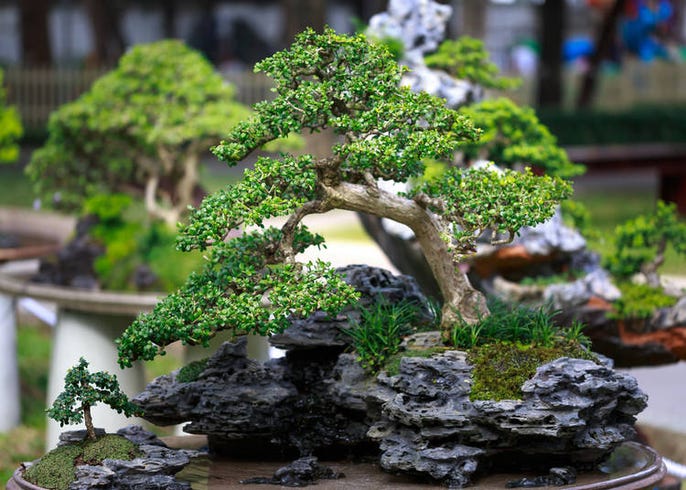
- Chinese penjing often highlights natural drama and miniature landscapes with rocks and multiple plants.
- Japanese bonsai favors simplicity, clean lines, and a single tree shaped to a refined silhouette.
- Chinese styling can be more expressive and less constrained by rigid rules.
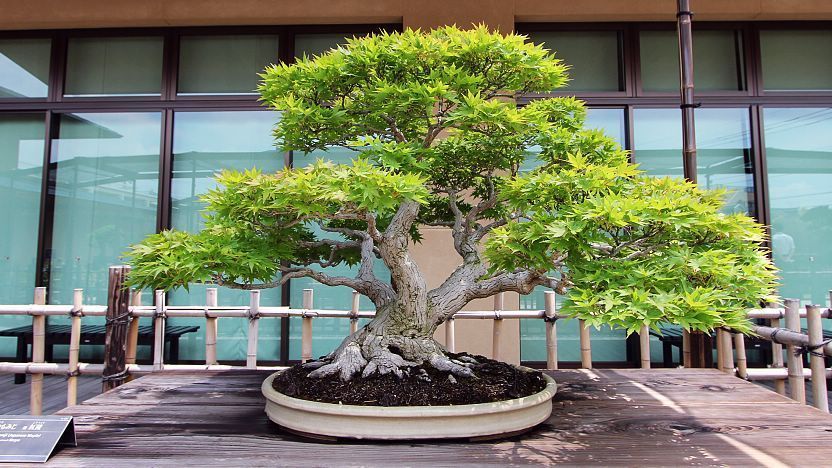
- Japanese styling uses defined styles such as formal upright, literati, slanting, and broom.
Is bonsai chinese or japanese in appearance? If you see a complex scene with many elements, it likely leans toward Chinese tradition. If the tree shows careful pruning, precise ramification, and a balanced silhouette, it’s likely Japanese bonsai.
Which came first: penjing or bonsai?
Penjing in China predates Japanese bonsai. The practice traveled to Japan and adapted to local aesthetics over centuries.
Do techniques differ between the two traditions?
Yes. Tools and goals vary. Chinese work often emphasizes landscape composition, while Japanese work stresses refined branch structure and long-term training.
Cultural meanings and symbolism
Asking is bonsai chinese or japanese also means asking about cultural purpose. In China, penjing often reflects philosophical ideas, poetic scenes, and landscape appreciation. The compositions echo Daoist and Confucian themes.
In Japan, bonsai ties to Zen, wabi-sabi, and the idea of beauty in simplicity. Bonsai practice became a meditative craft. Both cultures value patience, respect for nature, and careful observation. The symbolism shifts from scenic storytelling in Chinese penjing to refined silence and balance in Japanese bonsai.
How to tell if a bonsai is Chinese or Japanese
Collectors frequently wonder is bonsai chinese or japanese when shopping or viewing shows. Look for these signs.
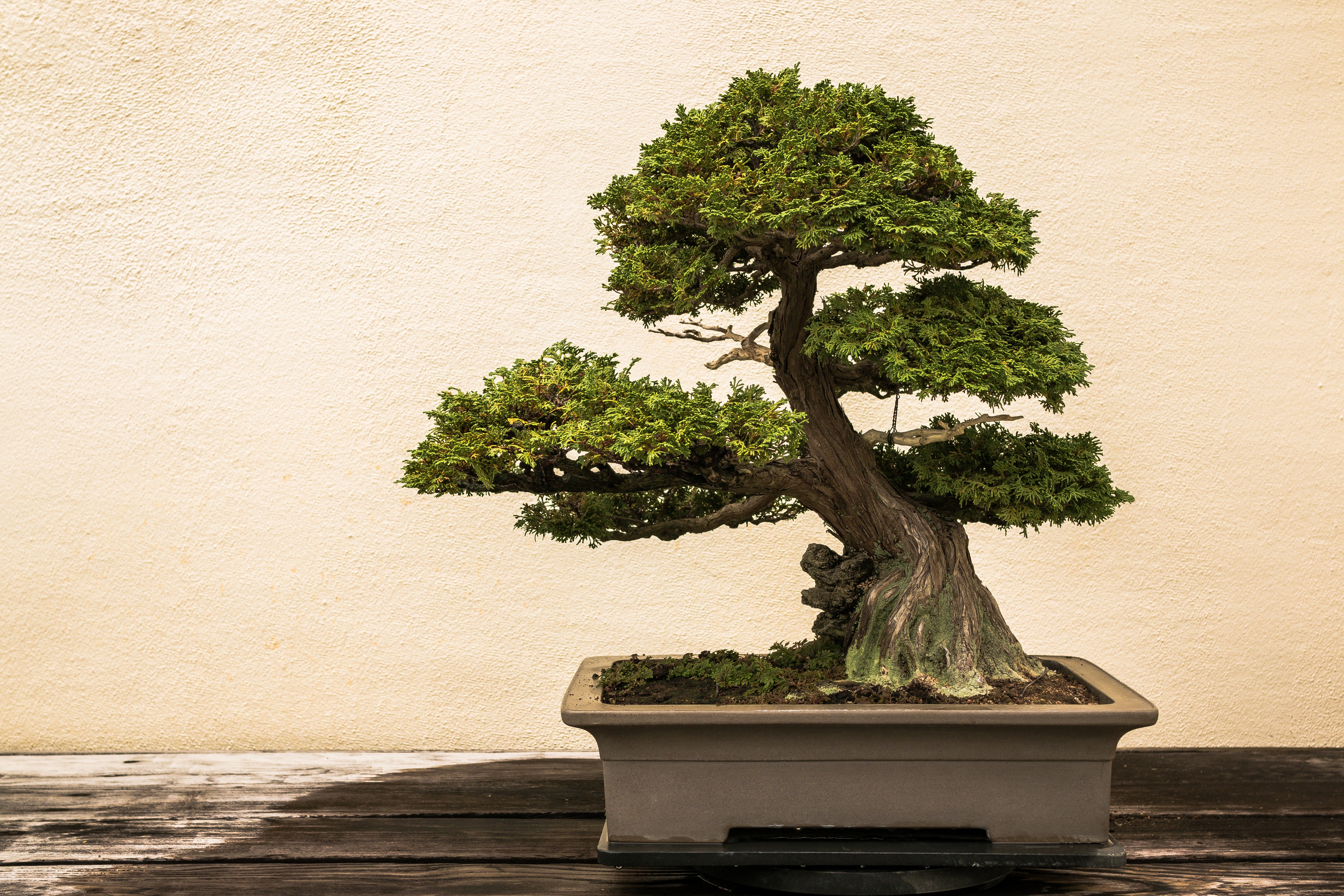
- Composition: single, highly refined tree suggests Japanese bonsai.
- Multiple plants, rocks, or a scenic tray suggest Chinese penjing.
- Container style: shallow, plain pots often indicate Japanese bonsai.
- Styling rules: clearly defined styles and tightly wired branches point to Japanese work.
- Natural drama and less strict pruning often indicate Chinese penjing.
Also consider provenance and labeling. Bonsai from a Japanese lineage or school will usually follow Japanese rules. If provenance is unknown, these visual clues help answer is bonsai chinese or japanese.

Care and training techniques influenced by origin
Whether a tree is Chinese or Japanese affects how you train and care for it. Both traditions share core horticulture: watering, pruning, soil, and light. Differences appear in approach and goals.
- Wiring and branch placement: Japanese bonsai uses careful wiring to refine branch lines.
- Layering and scenery: Chinese penjing may favor planting multiple specimens together.
- Pruning rhythm: Japanese practice often follows strict pruning cycles for ramification.
- Aesthetic maintenance: Japanese caretakers remove deadwood and refine silhouette meticulously.
- Display and setting: Japanese bonsai are shown on stands and with scrolls; Chinese pieces may be staged as mini landscapes.
In my experience, knowing whether is bonsai chinese or japanese helps set realistic care goals. A penjing-style piece needs more focus on the whole scene, while a bonsai-style tree benefits from disciplined branch training.

My experience and practical tips
I’ve trained trees in both Chinese and Japanese styles. Early on, I tried to force a scenic penjing into a formal bonsai shape. That was a mistake. Lessons learned:
- Match the tree’s natural form to the style you choose.
- For is bonsai chinese or japanese identification, study leaf size, trunk movement, and pot choice.
- Avoid over-wiring young trees; they need room to thicken.
- Keep a work log. Notes help track pruning cycles and growth responses.
Practical tip: if you want quick character, a penjing-style planting can give drama fast. If you want a refined heirloom, commit to Japanese-style training and decades of care.

Frequently Asked Questions of is bonsai chinese or japanese
Is bonsai originally Chinese or Japanese?
Bonsai traces its origin to Chinese penjing. Japan adapted and refined the practice into what most people call bonsai today.
Can a tree be both Chinese penjing and Japanese bonsai?
Yes. A tree can blend elements. Some artists merge scenic and refined approaches, creating hybrid works.
How do museums label penjing versus bonsai?
Museums use provenance, style, and historical context to label pieces. They look at composition, materials, and documented origin.
Does care differ between penjing and bonsai?
Basic care is the same. Differences appear in pruning goals, wiring, and display, which reflect each tradition’s aesthetics.
Is one style better for beginners?
Penjing can be forgiving for creative beginners. Japanese bonsai teaches discipline and long-term planning, which is great for committed learners.
Conclusion
Both China and Japan shaped the living art we call bonsai. Chinese penjing planted the seed, and Japanese bonsai refined the form into a widely recognized craft. Knowing whether is bonsai chinese or japanese helps you choose the right style, care routine, and long-term goals. Try both approaches to learn what resonates with you, and keep a steady habit of observation and gentle practice. Share this article, leave a comment with your bonsai questions, or start a small project today to see which tradition fits your style.

Laura Bennett is a gardening writer at MyGardenLabs who creates beginner-friendly guides focused on solving common plant care and gardening problems.