When Can You Trim Trees In The Fall: Best Pruning Guide
The best time to trim trees in the fall is after leaves drop, during dry weather, before severe winter cold arrives.
Knowing when can you trim trees in the fall helps protect tree health, improve safety, and prepare your landscape for winter. The right timing depends on the tree species, your local climate, and the type of pruning needed. This guide explains safe fall pruning dates, which trees to trim, what to avoid, and when to call a certified arborist.
When can you trim trees in the fall?
In most parts of the United States, you can trim trees in the fall after the leaves have dropped and the tree has entered dormancy. This often means late October through December, but the exact window varies by region.
The best time to trim trees in the fall is usually during a dry period when temperatures remain above freezing. Dry weather helps pruning cuts heal with less risk of fungal infection. It also makes branches safer to handle.
When can you trim trees in the fall if you live in a cold region? Aim for early to mid-fall, before the ground freezes and before heavy snow or ice arrives. In warmer areas, pruning may remain suitable into early winter.
Use these general timing guidelines:
• Northern states: Late October through November is often suitable.
• Midwestern states: November through early December may work well.
• Southern states: Late November through January can be suitable for many dormant trees.
• Pacific Northwest: Prune during a dry spell after leaf drop, while avoiding long periods of rain.
• Desert and warm climates: Timing depends more on tree species than leaf drop, since some trees keep leaves all year.
The phrase “when can you trim trees in the fall” does not have one answer for every tree. A dormant maple may respond well to late fall pruning, while an evergreen or spring flowering tree may need a different plan.

Why fall is often a good time to prune trees
Fall pruning can offer several benefits. As trees become dormant, their growth slows, sap flow decreases, and the tree no longer needs to support a full canopy of leaves.
This can make the work easier and less stressful for the tree. You can also see the branch structure more clearly after leaves drop. That makes it easier to find dead limbs, crossing branches, weak forks, and areas of poor growth.
Here are the main benefits of fall tree trimming:
• Better visibility: Bare branches reveal the tree’s structure.
• Less stress: Dormant trees use less energy for active growth.
• Improved safety: Removing weak limbs can reduce winter storm damage.
• Easier cleanup: Fallen leaves make it simpler to spot branches and debris.
• Reduced insect activity: Many insect pests are less active in cool weather.
• Better spring growth: Corrective pruning can direct new growth in a healthier way.
However, fall is not automatically the best season for every pruning job. A tree with a disease, storm damage, or a dangerous limb may need attention right away, regardless of the season.
When can you trim trees in the fall for simple maintenance? Wait until the tree has mostly or fully lost its leaves. This timing gives the tree a chance to slow down naturally before you make cuts.

Which trees can you trim in the fall?
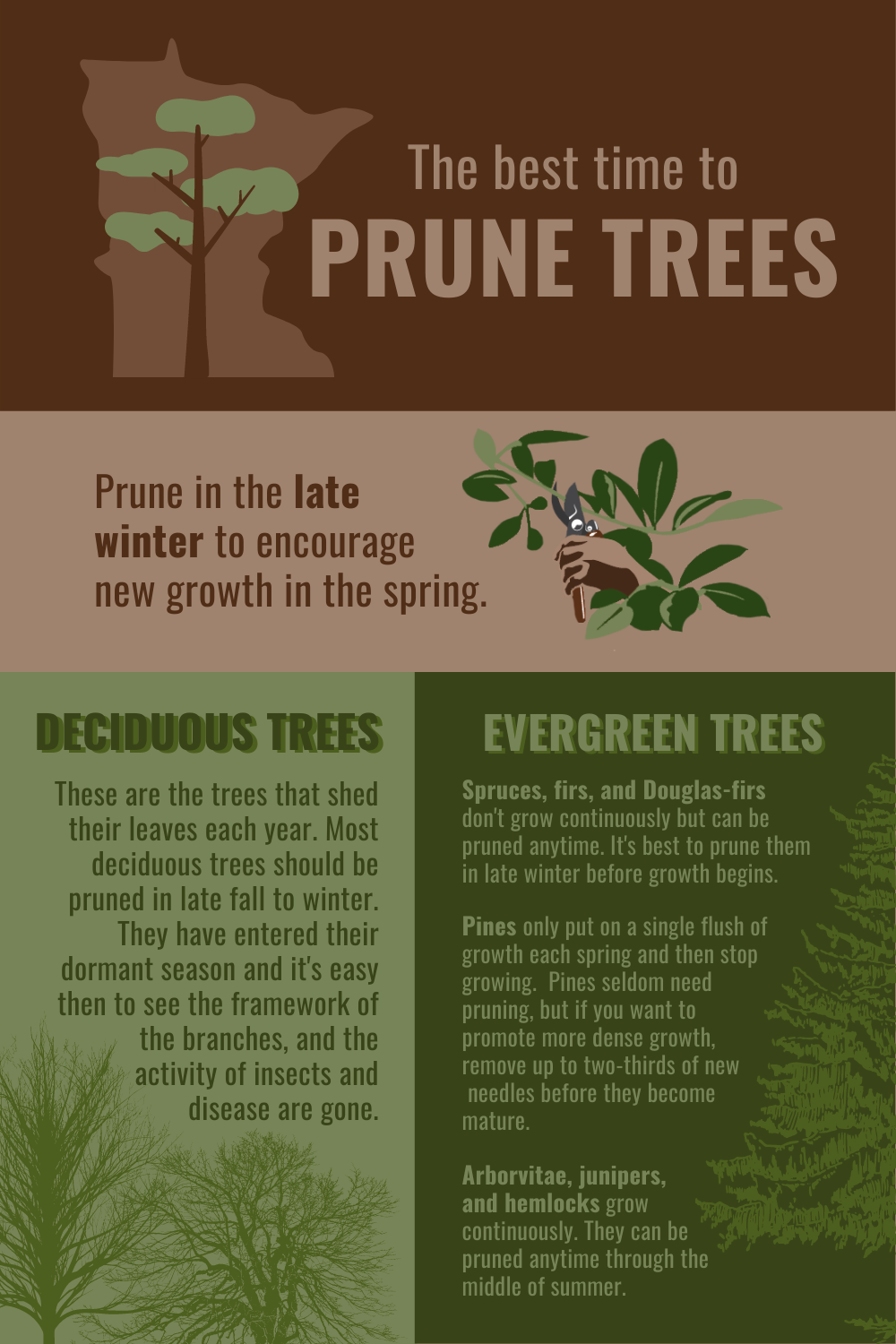
Many deciduous trees can be pruned in late fall or winter. These include maple, oak, ash, birch, elm, honey locust, and many fruit trees. Still, each species has its own risks and preferred pruning window.
Oak trees deserve special care. In areas where oak wilt occurs, pruning oaks during warmer months can increase disease risk because beetles may carry fungal spores to fresh cuts. Local extension services often recommend pruning oak trees during the dormant season, commonly from late fall through winter.
Maples may produce sap from pruning cuts in late winter or early spring. This sap loss usually does not seriously harm a healthy maple, but late fall pruning can reduce the visible sap flow.
Fruit trees often benefit from dormant pruning. Apple and pear trees, for example, are commonly pruned in late winter. Fall trimming may be useful for removing dead, damaged, or diseased wood, but heavy shaping is often better done closer to the end of winter.
Evergreen trees need a more careful approach. Pines, spruces, firs, and arborvitae do not respond like deciduous trees. Remove dead or broken branches, but avoid cutting deeply into old wood that has no green needles. Many evergreens do not produce new growth from bare interior branches.
When can you trim trees in the fall if the tree blooms in spring? Usually, limit pruning to dead or hazardous branches. Trees such as:
• Dogwood
• Redbud
• Magnolia
• Crabapple
• Lilac
• Flowering cherry
often form flower buds on older wood. Heavy fall pruning can remove the buds that would have opened the following spring.
When should you avoid fall tree trimming?
There are times when fall pruning can cause more harm than good. Avoid trimming during wet weather, extreme cold, or a sudden warm spell that encourages insect activity.
Wet bark and damp tools can spread some plant diseases. Rain can also slow the drying of pruning cuts. If branches are covered in ice, snow, or frost, wait until they are clear and the weather is stable.
Do not prune just before a major freeze. Fresh cuts can be more vulnerable when temperatures drop sharply. A tree may not seal a wound like an animal heals a cut, but it can compartmentalize damage by growing new wood around the injured area. Cold stress can slow that process.
Avoid these situations:
• Cutting during heavy rain or high humidity.
• Pruning when branches are frozen.
• Removing large limbs before a major storm.
• Trimming trees that show signs of severe disease without advice.
• Shearing broadleaf trees into unnatural shapes.
• Removing more than about 25 percent of live growth in one season.
One common mistake is pruning because the calendar says it is fall. The better approach is to check the tree and the weather first. If the tree has no urgent problems, waiting for a dry, calm period is usually wise.
When can you trim trees in the fall after a storm? Remove broken limbs that create an immediate hazard, but leave large or high branches to a trained professional. Storm-damaged trees can shift without warning.

How to tell whether a tree needs trimming
Not every tree needs annual pruning. A healthy tree with strong branch spacing may need little work. Trimming should solve a clear problem rather than change the tree simply for appearance.
Inspect the tree from the ground. Look for branches that are dead, broken, rubbing, or growing toward a building. Also check for limbs that block roads, sidewalks, signs, or outdoor lighting.
Signs that a tree may need fall pruning include:
• Dead branches with no buds or living bark.
• Broken limbs after wind or storms.
• Branches rubbing against each other.
• Limbs touching a roof, chimney, or power line.
• Suckers growing from the trunk or roots.