What To Use To Dig Holes For Plants: Best Tools
Use a hand trowel for small plants, a shovel for larger plants, and an auger for many repeated holes.
Knowing what to use to dig holes for plants helps you work faster while protecting roots, soil structure, and your back. After testing garden tools in firm clay, loose soil, rocky beds, and containers, I’ve found that the best choice depends on plant size, hole depth, soil type, and the number of holes you need.
Choose the Right Tool for the Plant
The first step in deciding what to use to dig holes for plants is to match the tool to the plant’s root ball. A small annual does not need the same tool as a tree or shrub.
Use the following guide:
• Small flowers, herbs, and vegetable seedlings: Use a hand trowel.
• Bulbs: Use a bulb planter or narrow trowel.
• Small perennials: Use a garden trowel or hori hori knife.
• Shrubs and young trees: Use a digging shovel or garden spade.
• Fence-line shrubs or many plants: Use a post hole digger or power auger.
• Shallow seeds: Use a dibber, stick, or the back of a pencil.
• Hard, rocky soil: Use a mattock, digging bar, or pick.
A good tool should cut through the soil without forcing you to bend, twist, or strike too hard. If your wrist, lower back, or shoulders hurt after a few holes, the tool may be too small, dull, or poorly suited to the job.
What to Use to Dig Holes for Small Plants
A hand trowel is usually the best answer for small plants. It has a narrow blade that lets you make a hole with little soil disturbance.
Choose a trowel with a strong metal blade and a comfortable handle. Stainless steel resists rust, while carbon steel often offers greater strength. A depth mark on the blade is helpful when planting bulbs, seedlings, and nursery plants.
A hori hori knife is another useful choice. Its pointed blade cuts through roots, opens bags of potting mix, and creates narrow planting holes. Some models have measurement marks, which can help you plant bulbs at the correct depth.
For very small seeds, you may not need a tool at all. A dibber creates a neat hole without compacting the soil around it. You can also use a pencil, bamboo stick, or the handle of a small garden tool.
In my own planting work, I once used a wide trowel for tiny herb seedlings. The holes became too large, and loose soil fell back around the roots. A narrow trowel gave me much more control and helped the seedlings stand upright.
What to Use to Dig Holes for Bulbs
A bulb planter is designed to remove a small plug of soil. It works well for tulips, daffodils, crocuses, garlic, and other bulbs.
There are three common types:
• Hand bulb planter: Best for a few bulbs in soft or moderate soil.
• Long-handled bulb planter: Useful when you want to avoid kneeling.
• Drill-powered bulb auger: Helpful when planting dozens of bulbs.
A bulb planter saves time because it creates a hole close to the bulb’s width. However, it may struggle in dry clay, gravel, or soil filled with roots. In these conditions, a narrow trowel or hori hori knife may work better.
Always check the planting depth for the specific bulb. Many bulbs are planted at a depth of about two to three times their height, but instructions vary by species and climate. Planting too shallow can expose bulbs to temperature changes, while planting too deep may delay growth.

What to Use to Dig Holes for Flowers and Vegetables
For bedding plants and vegetable starts, use a hand trowel or small garden spade. These tools allow you to create a hole slightly wider than the root ball.
The hole should usually be deep enough to hold the plant at the same level as it grew in its container. Some tomatoes are an exception because they can form roots along buried stems. Most other plants can suffer if the crown or stem base is buried too deeply.
Follow these simple steps:
-
Water the plant before planting if the root ball is dry.
-
Dig a hole slightly wider than the root ball.
-
Make the hole deep enough to keep the crown at the correct level.
-
Loosen circling roots gently with your fingers.
-
Place the plant in the hole.
-
Fill the space with the soil you removed.
-
Press the soil lightly and water well.
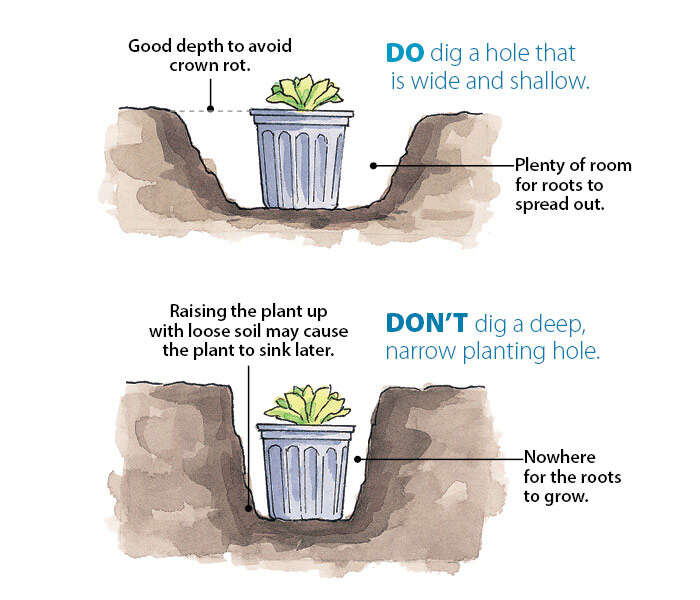
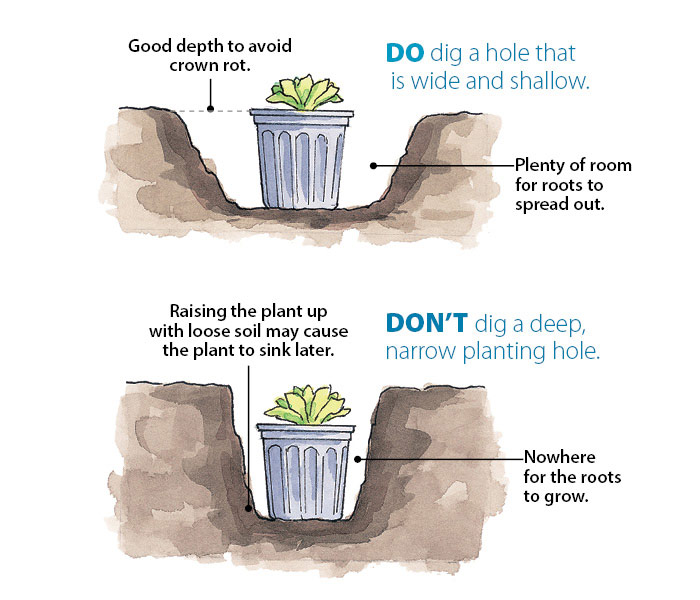
Do not make a deep, narrow hole in heavy clay. Water can collect at the bottom and create a saturated pocket. A broad, well-shaped hole gives roots room to spread into the surrounding soil.

What to Use to Dig Holes for Shrubs and Trees
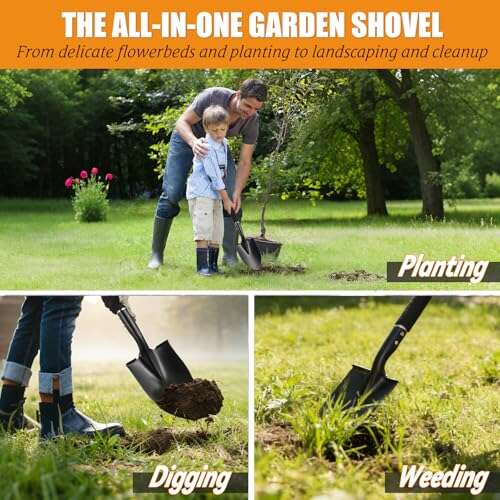
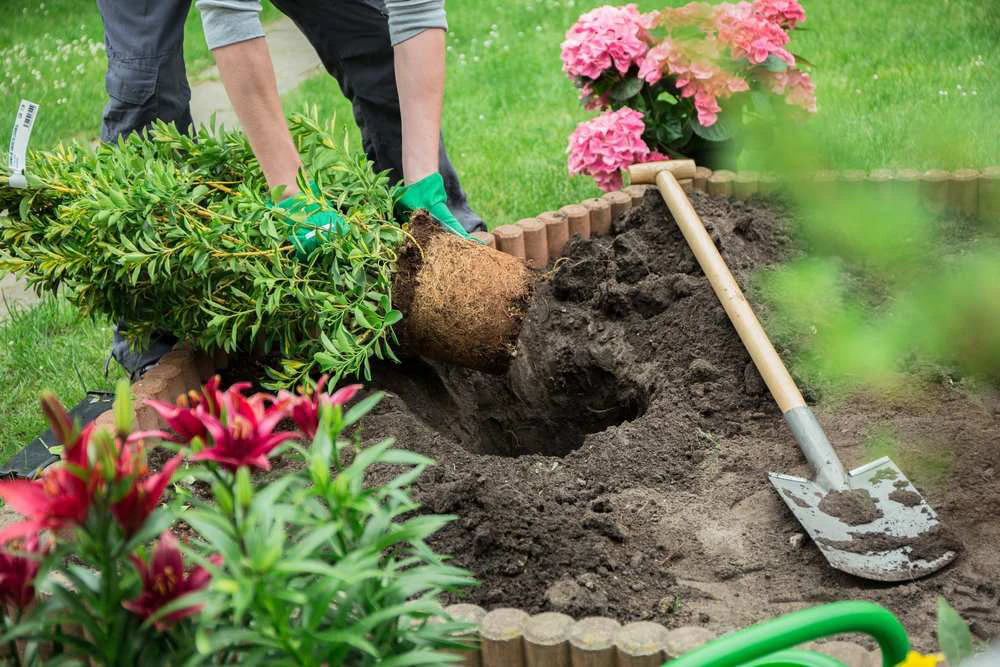
A digging shovel is the main tool for shrubs and small trees. Look for a pointed blade, a strong shaft, and a step on the top edge. The step lets you push the blade into hard soil with your foot.
A garden spade has a flatter, sharper blade. It is useful for cutting clean edges, dividing perennials, and working in prepared beds. A round-point shovel is better for breaking into firm ground and moving loose soil.
When planting a shrub or tree, dig a hole that is wider than the root ball but not much deeper. Many planting experts recommend a hole about two to three times wider than the root ball. The extra width helps roots move into the surrounding soil.
Before planting a tree, locate the root flare. The root flare is the point where the trunk begins to spread into major roots. It should sit at or slightly above the finished soil level, not several inches below it.
A common mistake is digging too deep because the soil at the bottom looks loose and easy to remove. I have seen trees decline after being planted in deep holes that filled with water. Width is usually more helpful than extra depth.

What to Use to Dig Holes in Hard or Rocky Soil
Hard soil needs a tool that can break, lift, or cut the ground. A small trowel may bend or leave you exhausted.
Useful tools include:
• Mattock: Cuts roots and breaks hard soil with a chopping blade.
• Pickaxe: Breaks compacted ground and loose rock.
• Digging bar: Loosens stones and hard layers in deep holes.
• Hori hori knife: Cuts small roots and works in tight spaces.
• Heavy-duty spade: Slices through firm soil when kept sharp.
Work when the soil is slightly moist. Dry clay can feel like brick, while wet clay may stick to the tool and smear into dense layers. The ideal time is often one or two days after moderate rain, when the soil crumbles rather than clumps.
Do not repeatedly stomp on a shovel if the blade is not designed for foot pressure. You can damage the shaft or lose balance. Instead, use short cuts, remove small amounts of soil, and clear rocks as you go.
If the ground contains buried construction waste, large stones, or thick roots, do not force the tool. Move the planting spot when possible. Protecting your hands and back is more important than keeping a perfect layout.

What to Use to Dig Many Planting Holes
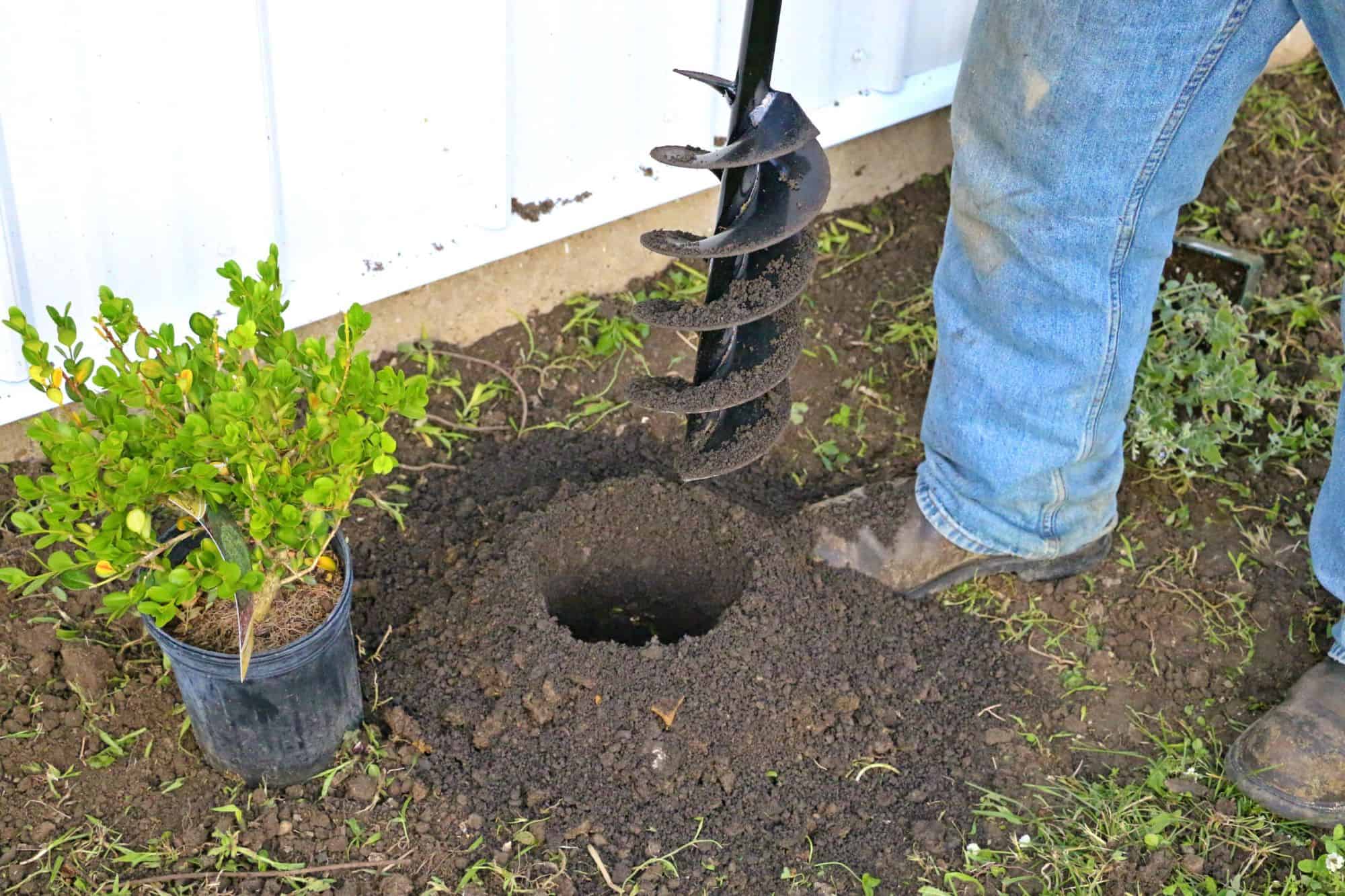
A garden auger is often the fastest choice when you need many holes. A manual auger works well for a modest number of holes in soft soil. A drill-powered auger can create holes quickly for annuals, bulbs, plugs, and small seedlings.
Use a post hole digger for deeper, wider holes. It has two hinged blades that remove soil as you lift. A manual post hole digger requires more effort but gives you good control.
For large planting projects, a motorized auger may save time. It also creates a risk of twisting injuries if the bit catches a root or stone. Follow the tool instructions, wear secure footwear, and keep both hands on the equipment.