Best Shovel For Cutting Through Roots: Top Picks
The best shovel for cutting through roots has a sharp serrated blade, strong shaft, and enough leverage for hard soil.
You know the job: a young tree root blocks a planting hole, an old shrub has woven roots through the bed, or compact soil turns a simple dig into a full workout. A smooth spade often slides over these roots instead of cutting them. I tested the key features that matter most, including blade shape, handle strength, balance, and digging control. The options below suit different tasks, from light garden work to thick roots and deep trenches.
Root Slayer 22011 Garden Shovel

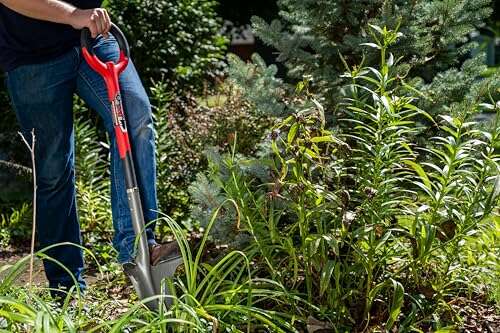
The Root Slayer 22011 is a strong pick for gardeners who need one tool for roots, sod, and tough beds. Its pointed blade helps it enter firm ground, while the serrated sides act like a hand saw. I found this design more useful than a plain round-point shovel when roots crossed the hole from the side.
The red finish also makes the shovel easy to spot in tall grass or a crowded shed. Its compact form gives good control around shrubs, fence posts, and tree beds. This is the best shovel for cutting through roots for many home gardeners because it balances cutting power with everyday comfort.
Pros:
- Serrated edges cut roots instead of only pushing against them
- Pointed blade enters hard or dry soil with less effort
- Compact shape works well around plants and tight beds
- Useful for digging, edging, sod removal, and transplanting
- Bright red color is easy to find outdoors
- Good all-around choice for routine yard work
Cons:
- May require repeated strokes on very thick woody roots
- Shorter working area may not suit deep excavation
- Serrated edges need careful storage and handling
My Recommendation
I recommend the Root Slayer 22011 for homeowners, new gardeners, and anyone clearing roots from normal planting holes. It gives you a useful mix of bite, balance, and control without feeling like a heavy landscape tool. If you want the best shovel for cutting through roots for regular garden work, this model is a safe place to start. It offers strong value and is commonly available through major online retailers.
Root Slayer RS220 Heavy-Duty Shovel

The Root Slayer RS220 is built for people who expect more from a garden shovel. Its serrated blade can scrape, pierce, and saw through roots as you work around a plant or trench. The heavy-duty design feels suited to hard clay, packed beds, and neglected corners that regular spades struggle to enter.
I like this model for larger roots because it encourages a firm, controlled cutting motion. You can press the point into the ground, then use the side teeth to widen the cut. It is a serious choice when the best shovel for cutting through roots must handle repeated use rather than one small repair.
Pros:
- Strong serrated blade handles demanding garden tasks
- Good leverage for dense soil and stubborn roots
- Black finish hides normal soil marks between cleanings
- Works for trenching, planting, edging, and root removal
- Wide cutting profile helps open a root-bound area
- Designed for users who prefer a firm, durable tool
Cons:
- Heavier feel may tire users during long sessions
- More shovel than many small flower beds require
- Sharp teeth call for gloves and careful transport
My Recommendation
I would choose the RS220 for large yards, tough soil, and repeated root clearing. It suits experienced gardeners who want a powerful tool that can take steady pressure. For anyone seeking the best shovel for cutting through roots in hard ground, this is one of the strongest full-size choices here. Its value is highest when you use it often and need more power than a basic spade provides.
Root Slayer 23311 Perennial Shovel

The Root Slayer 23311 Perennial Shovel focuses on control in narrow garden spaces. Its slim profile helps you dig between established plants without lifting a large amount of soil. The fiberglass shaft adds useful resilience, especially when the blade meets a hidden root or a hard pocket under the mulch.
This shovel makes sense for perennial beds, borders, and transplant work. I can guide the blade close to a plant crown while still using the serrated edge to cut small roots. It may be the best shovel for cutting through roots when precision matters as much as force.
Pros:
- Narrow blade fits between plants and close planting rows
- Fiberglass shaft offers a durable, low-maintenance build
- Serrated edge helps cut roots during transplant work
- Good control for dividing perennials and clearing beds
- Red color improves visibility in leafy gardens
- Useful for gardeners who value accuracy over bulk
Cons:
- Narrow blade moves less soil per scoop
- Not the fastest choice for broad digging jobs
- Small profile may feel limited against very large roots
My Recommendation
I recommend the 23311 to flower gardeners, landscapers, and anyone who works around valuable plants. It gives you a careful hand rather than brute force, so you can remove roots with less disturbance to nearby growth. Choose it as the best shovel for cutting through roots in crowded perennial beds. It delivers strong practical value when neat cuts and close work matter most.
Root Slayer RS233 Perennial Shovel
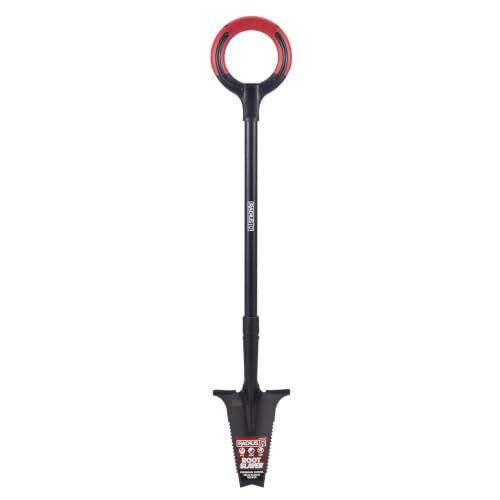
The RS233 offers the same type of narrow, root-focused approach as a perennial shovel, with a dark finish and a fiberglass shaft. I see it as a careful digging tool for beds where a wide blade would damage nearby roots. The serrated working edge helps you make short cuts instead of forcing the whole blade through a tangled mass.
This shovel is easy to guide beside hostas, roses, shrubs, and young trees. It also helps with small trenches for edging or irrigation lines. If your search for the best shovel for cutting through roots centers on plant-safe control, the RS233 deserves close attention.
Pros:
- Slender design reaches tight spots with less plant damage
- Fiberglass handle supports long-term garden use
- Serrated edge helps sever thin and medium roots
- Good choice for transplanting and border maintenance
- Black body looks clean and understated
- Light, focused design improves hand control
Cons:
- Limited soil capacity slows large digging projects
- Not ideal for thick roots or heavy clay alone
- Users who prefer a broad shovel may want more blade
My Recommendation
The RS233 is best for careful gardeners who often work in planted beds. It helps remove unwanted roots without making a wide hole or disturbing the whole area. I would pick it as the best shovel for cutting through roots around established plants, especially when control and reach matter. Its overall value is strong for detailed garden work and routine maintenance.
Root Slayer 22311 Nomad Garden Spade

The Root Slayer 22311 Nomad is a compact spade for gardeners who want a tool that travels well. Its serrated edge gives the spade extra bite when you meet thin roots, sod, or packed soil. The smaller shape feels nimble around raised beds, campsites, garden borders, and small landscape projects.
I would not treat it as a replacement for a full-size shovel on major excavation. However, it is easy to carry and quick to use when a root appears in an otherwise simple job. For portable digging, the Nomad can be the best shovel for cutting through roots because it keeps useful cutting power in a smaller package.
Pros:
- Compact size is easy to store and transport
- Serrated edge improves cutting on roots and sod
- Good control for raised beds and narrow borders
- Useful for camping, allotments, and small yards
- Red finish makes the tool easy to locate
- Spade shape supports clean edging and planting
Cons:
- Smaller blade does not move much soil at once
- Requires more strokes on thick roots
- May feel short for tall users during deep digging
My Recommendation
I recommend the Nomad for apartment gardeners, allotment users, campers, and people with limited storage. It is a smart backup tool for the car or shed, and it handles small root problems without fuss. Choose it as the best shovel for cutting through roots when portability matters more than maximum digging depth. Its value comes from convenience, control, and easy storage.
Root Slayer 16011 Heavy-Duty Trowel

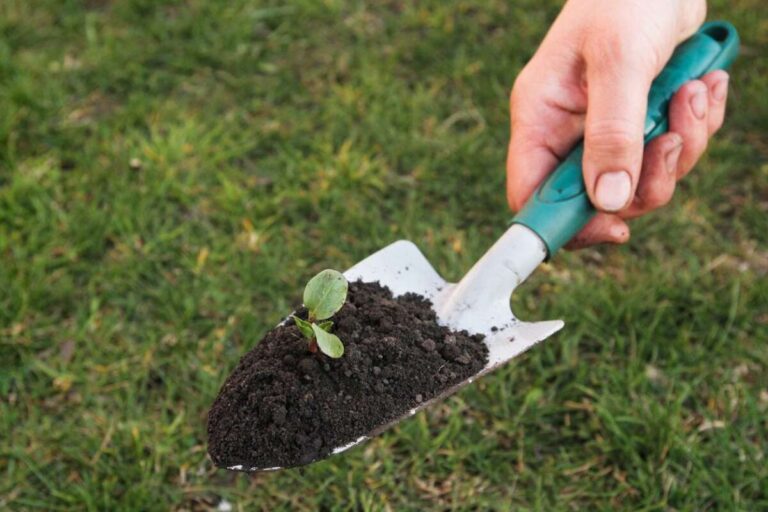
The Root Slayer 16011 is a hand trowel for close work, not a full-size digging shovel. Its heavy-duty build gives it more strength than a thin planting trowel, while the pointed profile helps it work through firm potting soil and small roots. I find this type of tool useful when a large shovel would be clumsy or risky.
It can help divide small plants, open a hole near a root ball, and loosen root-bound containers. The blade does not offer the reach or leverage of a long-handled model, so you must work in short cuts. Still, it may be the best shovel for cutting through roots in pots, planters, and tight balcony beds.
Pros:
- Excellent control for pots and small planting spaces
- Heavy-duty form handles firm soil better than light trowels
- Compact size fits tool bags and small storage areas
- Useful for transplanting, dividing, and loosening roots
- Red finish is easy to see on dark soil
- Allows precise work close to stems and root balls
Cons:
- Hand tool offers limited leverage on large roots
- Not suitable for deep holes or broad beds
- Can strain the hand during long sessions
My Recommendation
The 16011 is best for container gardeners, houseplant fans, and anyone doing precise planting work. It is a useful companion to a full-size root shovel rather than a direct replacement. If you need the best shovel for cutting through roots in a planter or small bed, this trowel gives you excellent control. Its low storage needs and focused design make it a good value for small jobs.
Jardineer 45-Inch Serrated Root Shovel
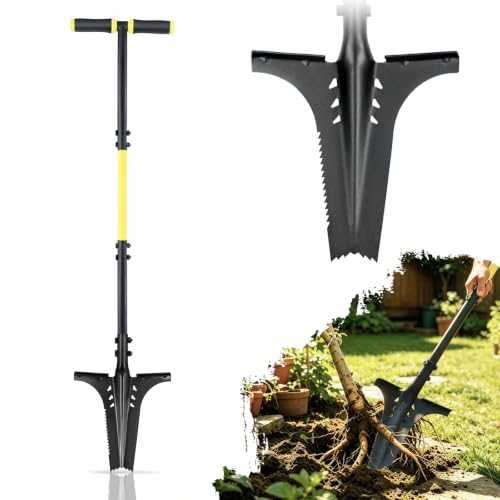
The Jardineer root shovel brings a long handle and serrated spade design to jobs that demand reach. Its 45-inch length lets many users dig without bending as far, which can make a real difference when clearing a long trench or deep bed. The thickened design is aimed at hard garden work, including roots, compact soil, and heavy plant removal.
The serrated sides give you two ways to work: push the point down, then saw through the root with the edge. A long handle also creates more leverage than a hand tool or short spade. For users who want an upright stance, this is a strong contender for the best shovel for cutting through roots.
Pros:
- 45-inch shaft reduces bending during deep digging
- Serrated blade helps cut roots from the side
- Long handle provides useful leverage in firm soil
- Suitable for trenches, shrubs, sod, and root removal
- Full-size format works well for larger yards
- Good option for users who need more reach
Cons:
- Long handle may feel awkward in tight beds
- Requires more storage space than a compact shovel
- Heavy roots may still need a saw or lopper
My Recommendation
I recommend the Jardineer to taller users and anyone clearing roots over a larger area. Its length helps protect your back, while the serrated edge adds a useful cutting action. It is a practical pick for the best shovel for cutting through roots when reach and leverage rank high on your list. Check current availability and included features before ordering, since listings can change.
Root Slayer 23211 XL Digging Shovel
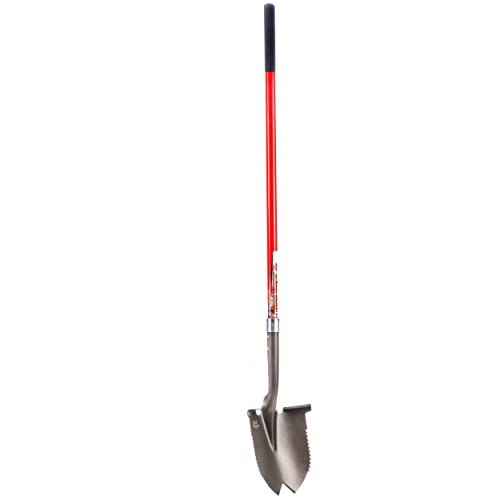
The Root Slayer 23211 XL is made for gardeners who want a larger digging tool. Its round-point profile helps it break into soil, lift loosened material, and work around broad root systems. The XL size gives more reach and capacity, so it is better suited to shrubs, tree planting, and larger beds than a small garden spade.
This model works best when you combine a downward push with a controlled rocking motion. The blade can open the soil around roots before you use its edge to finish the cut. It is the best shovel for cutting through roots for users who want full-size digging power and do not mind a larger tool.
Pros:
- Large blade handles bigger holes and wider root zones
- Round point enters soil during demanding digging work
- Good reach for shrubs, trees, and landscape projects
- Moves more soil per scoop than narrow spades
- Useful for planting, trenching, and removing old growth
- Strong choice for people who prefer full-size tools
Cons:
- Large size can be too much for small planting beds
- May feel heavy after repeated lifting
- Less precise around delicate plants than a narrow spade
My Recommendation
The 23211 XL is best for large gardens, shrub removal, and new planting projects. I would choose it when the root problem covers a wide area and I also need to move plenty of soil. As the best shovel for cutting through roots, it offers power and capacity rather than delicate control. It is worth considering if you have the storage room and regularly tackle demanding outdoor work.
Root Assassin 32-Inch Mini Garden Shovel

The Root Assassin Mini Garden Shovel combines a short shovel format with a saw-like cutting edge. The 32-inch length gives more reach than a hand tool while staying easier to control than a full-size spade. Its carbon steel construction is suited to gardeners who want a compact tool for roots, weeds, sod, and small trenches.
I like this design for quick jobs where a long shovel feels excessive. You can use the point to pierce soil, then draw the edge across a root in a short sawing motion. For small yards, camping kits, and raised beds, it may be the best shovel for cutting through roots when size and cutting action must work together.
Pros:
- Short length offers control in crowded garden spaces
- Saw-style edge helps attack roots from the side
- Carbon steel construction suits demanding hand use
- Easy to carry for camping and outdoor projects
- More reach than a trowel without full shovel bulk
- Useful for weeds, sod, roots, and light trenching
Cons:
- Short handle provides less leverage than a long shovel
- Not designed for very deep holes
- May need frequent cleaning after damp soil work
My Recommendation
The Root Assassin Mini suits gardeners who want a compact tool with an aggressive cutting edge. It is especially useful for raised beds, small yards, trails, and portable kits. I would call it the best shovel for cutting through roots when you want more bite than a trowel but less bulk than a full-size model. It gives good value for quick, close-range jobs.
ZIKUPOL Double-Serrated Root Shovel

The ZIKUPOL root shovel uses serrated edges on both sides of its digging blade. That layout can help when roots run across either side of the hole, since you do not need to turn the tool as often. Its 46-inch length also gives useful reach for trenching, planting, and digging in beds that have become tightly packed.
This is a versatile choice for users who want one long-handled tool for several outdoor tasks. The double-edge design is especially helpful when you use a push, pull, and saw motion to work through roots. It could be the best shovel for cutting through roots for people who value reach, edge access, and broad task coverage.
Pros:
- Double serrated edges support cutting from both sides
- 46-inch length helps reduce bending while digging
- Useful for trenching, planting, and root removal
- Long shaft creates leverage in firm ground
- Good choice for larger beds and landscape work
- Versatile design can replace several basic tools
Cons:
- Long length may be hard to control in tight areas
- Double edges require careful handling and storage
- Large root systems may still need a dedicated saw
My Recommendation
I recommend the ZIKUPOL for users who want a long, multi-purpose root shovel. It works well for trenching, planting, and cutting roots from either side of a hole. If the best shovel for cutting through roots must also reduce bending, this 46-inch design is a useful option. Its value is strongest for larger yards and people who want a flexible landscape tool.
Best Features at a Glance
| Best for | Why |
|---|---|
| Best overall root cutting | The Root Slayer 22011 balances a pointed blade, serrated edges, control, and everyday garden use. |
| Best for heavy work | The Root Slayer RS220 and 23211 XL offer more force and capacity for hard soil and large root zones. |
| Best for tight spaces | The 23311, RS233, 16011, and Root Assassin Mini give better control around plants, pots, and narrow beds. |
How I Choose a Shovel for Cutting Roots
A root-cutting shovel should do more than look sharp. I first check the blade point because a blunt tip tends to bounce off hard soil. A pointed or narrow tip enters the ground with less pressure and gives the user a clean starting cut.
Next, I look at the edge. Serrations work like small saw teeth, so they can grip roots that a smooth blade may slide over. They do not make every root easy, but they improve control and reduce the need to chop blindly.
The shaft matters just as much. A long handle gives reach and leverage, while a shorter handle improves control in tight areas. Fiberglass shafts can resist weather and flex, but the best choice still depends on how much force and time your job demands.
Balance also affects comfort. A shovel that feels too blade-heavy can tire your arms before the work is done. I prefer a tool that lets me press with my foot, guide the cut with both hands, and lift soil without twisting my back.
How to Cut Roots Safely With a Shovel
Before digging, clear away mulch and loose soil so you can see the root path. Check for irrigation lines, cables, and buried pipes. A shovel can damage hidden services, so call the proper utility locating service before digging near a home or public easement.
Start several inches away from the root. Push the pointed blade down, then rock it gently to open the soil. Once you expose the root, use the serrated edge with short, controlled strokes rather than swinging the shovel like an axe.
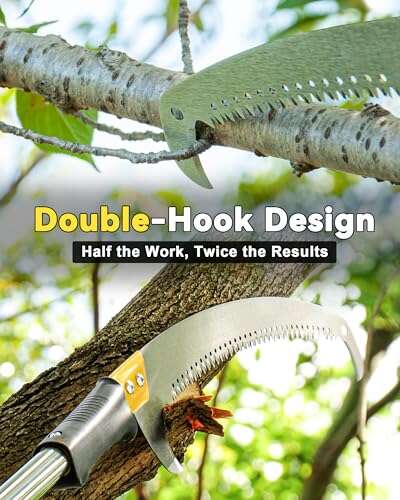
Do not cut large structural roots near a living tree without expert advice. A major root can affect tree stability and health. For thin roots, a sharp shovel may be enough, but thick woody roots often call for a pruning saw or loppers made for that job.
Wear sturdy gloves and closed shoes. Keep both hands on the handle when the blade is in the ground, and keep other people clear of the cutting path. After use, remove soil, dry the blade, and store it where children cannot reach the serrated edge.
What Makes Serrated Shovels Better for Roots?
A smooth blade often splits soil but slides along a tough root. A serrated blade creates small points of contact. Those points grip the root and let you use a back-and-forth motion to weaken the wood fibers.
This does not mean serrations replace every cutting tool. They work best on thin and medium roots that appear during digging. Very thick roots may stop the shovel, and forcing the handle can damage the tool or cause a sudden slip.
I also find serrated edges useful for sod and dense weed mats. They help separate plant crowns and cut through fibrous growth. That wider use makes a serrated shovel more useful than a root-only tool for many home gardens.
Should You Choose a Long or Short Root Shovel?
Choose a long shovel when you need reach, leverage, and less bending. Long models suit open beds, trenches, shrubs, and large planting holes. They also help taller users maintain a more comfortable posture.
Choose a short shovel when you need control. Short models fit raised beds, containers, narrow borders, and spaces between established plants. They are also easier to carry and store.
If you face many types of work, keep both sizes. A full-size shovel can open the ground, while a compact spade can finish the root cut with greater accuracy. This two-tool method often saves time and protects nearby plants.
FAQs Of best shovel for cutting through roots
What is the best shovel for cutting through roots?
The Root Slayer 22011 is the best overall choice for many home gardeners. Its pointed blade and serrated edges provide a useful balance of cutting power, control, and everyday versatility.
Can a shovel cut through thick tree roots?
A serrated shovel can cut small and medium roots, but thick tree roots may need a pruning saw or loppers. Do not remove major roots from a living tree without professional guidance.
Is a serrated shovel better than a smooth shovel for roots?
Yes, in most root-cutting tasks. Serrations grip and saw through roots, while a smooth blade may slide over them. A smooth spade can still work well for loose soil and general planting.
What handle length should I choose?
Choose a long handle for deep holes, open ground, and less bending. Choose a short handle for pots, raised beds, and close work around plants. Your height and storage space also matter.
How do I maintain a root-cutting shovel?
Rinse off soil, dry the blade, and inspect the shaft after each hard job. Store it in a dry place. If the edge becomes dull or damaged, follow the maker’s care instructions instead of grinding serrations without guidance.
Final Verdict: Which Should You Buy?
The Root Slayer 22011 is my top pick for the best shovel for cutting through roots. It offers strong serrated cutting power, useful control, and broad garden value without excessive bulk.
Choose a long model for deep work and a compact one for tight beds. The right root shovel makes hard soil feel less like a wall and more like a door.

Laura Bennett is a gardening writer at MyGardenLabs who creates beginner-friendly guides focused on solving common plant care and gardening problems.