What Can You Use To Dig A Hole: Best Tools Guide
For most jobs, you can use a shovel, post hole digger, auger, mattock, or powered excavator.
Choosing what can you use to dig a hole depends on the soil, hole size, depth, and purpose. A small garden hole needs a very different tool than a fence post hole, tree pit, drainage trench, or construction excavation. This guide explains which digging tools work best, how to use them safely, and how to avoid common mistakes.

What Can You Use to Dig a Hole?
The best digging tool depends on the ground and the size of the hole. Soft garden soil may need only a hand trowel or shovel. Hard clay, rocky soil, or frozen ground may require a digging bar, mattock, auger, or machine.
Common tools include:
• Garden trowel for small planting holes
• Round point shovel for general digging
• Spade for clean edges and shallow holes
• Post hole digger for narrow fence post holes
• Drain spade for deep, slim holes
• Mattock for roots and hard soil
• Pickaxe for compact soil and rocks
• Manual auger for repeated post holes
• Earth auger for fast drilling
• Backhoe or excavator for large holes
A useful rule is simple: use a hand tool for small holes, a digging tool with leverage for tough soil, and powered equipment for large or repeated jobs.

Choosing the Right Digging Tool
Before choosing a tool, think about the hole itself. A hole for a flower may be 6 inches wide and 8 inches deep. A hole for a fence post may be 8 to 12 inches wide and several feet deep. A tree pit may be wide rather than deep.
Consider these factors:
• Hole width: Narrow holes need a post hole digger or auger. Wide holes need a shovel or excavator.
• Hole depth: A drain spade or long handled tool helps with deep holes.
• Soil type: Loose soil is easy to dig. Clay, gravel, and roots need stronger tools.
• Number of holes: One or two holes may be easy by hand. Dozens of holes may justify an auger.
• Access: Tight yards may not allow a skid steer or excavator.
• Safety risks: Buried wires, pipes, and cables can make digging dangerous.
The right tool saves time and reduces strain. A poor choice can turn a simple task into a slow and tiring job.

Hand Tools for Digging Small Holes
Hand tools are affordable, easy to control, and useful for most home projects. They also let you work carefully around plants, roots, and existing structures.
Garden trowel
A garden trowel is a small hand tool with a narrow metal blade. It works well for planting flowers, herbs, seedlings, and small bulbs.
Use a trowel when the soil is loose and the hole is shallow. It is not a good choice for hard clay, thick roots, or rocky ground.
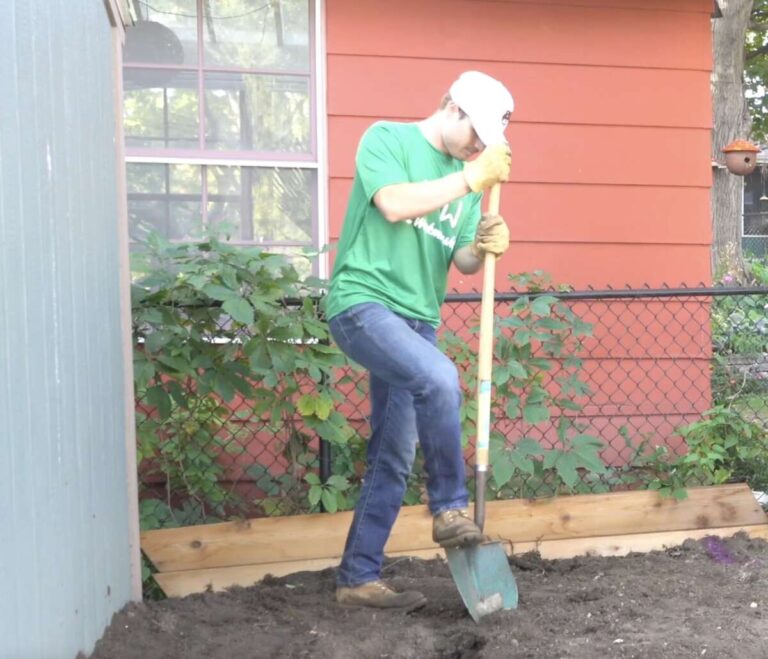
Round point shovel
A round point shovel has a curved blade that cuts into soil. It is one of the best general tools for digging a hole in a yard.
Use it for:
• Planting shrubs
• Digging small garden beds
• Removing soil from a wide hole
• Digging around soft roots
The pointed tip helps break the surface. The broad blade then lifts the soil out.
Flat spade
A flat spade has a straight edge. It is better for cutting neat lines than for breaking hard ground.
Use a spade to:
• Shape the sides of a hole
• Cut sod
• Edge garden beds
• Remove thin layers of soil
A spade works like a knife, while a round shovel works more like a scoop.
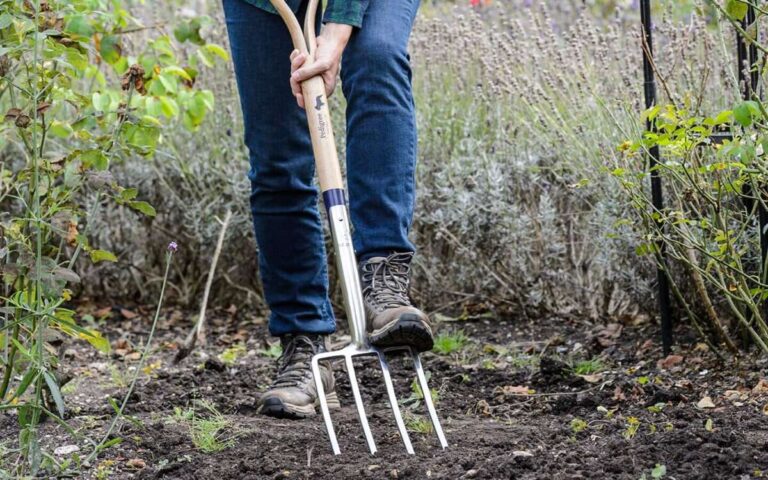
Drain spade
A drain spade has a long, narrow blade. It is useful when you need a deep, narrow hole.
Common uses include:
• Planting small trees
• Installing drainage lines
• Digging around utility areas by hand
• Making narrow post holes
It removes less soil per scoop, but its narrow shape gives you better control.

Tools for Hard Soil, Clay, and Roots
Hard ground needs more than a standard shovel. Trying to force a shovel into dry clay can bend the blade or hurt your back.
Mattock
A mattock combines a chopping blade with an adze or pick-like end. It is excellent for hard soil, roots, packed clay, and rocky ground.
Swing the mattock with control. Let the tool do the work instead of using wild force. After loosening the soil, remove it with a shovel.
Pickaxe
A pickaxe has a pointed end and a flat or chisel-like end. The pointed end breaks compact soil and small rocks. The flat end can pry and cut.
A pickaxe is useful when a shovel cannot enter the ground. It is less useful in loose soil because it moves little material.
Digging bar
A digging bar is a long, heavy steel bar. It helps break rocks, loosen compact soil, and create leverage.
Use a digging bar for:
• Breaking hard clay