What Tools Are Required To Do Horticulture: Essential Tools
For most home gardens in the United States, you need only a small set of tools to grow, prune, water, weed, and monitor plants. Start with gloves, a hand trowel, a shovel, a garden fork, pruners, a rake, a hose or watering can, and a way to test soil. Add larger or specialized tools only when your garden size, plant type, or climate calls for them.
Horticulture means growing and caring for plants. It includes vegetable gardening, flower growing, fruit production, nursery work, landscape care, and indoor plant care. The right tools make these jobs easier, but good tools do not replace healthy soil, suitable plants, correct watering, or safe work habits.
In the United States, tool needs can change by region. A small container garden in an apartment may need only hand tools. A backyard garden in USDA Plant Hardiness Zone 5 may need digging tools for cold-season planting. A dry Western garden may benefit more from drip irrigation tools and a soil moisture meter than from a large hose.

Essential horticulture tools for most gardens
The essential tools are the ones that help you prepare soil, plant, water, prune, remove weeds, and move materials. You do not need every tool at the start. Buy tools for the work you actually plan to do.
| Tool | Main job | Best use |
|---|---|---|
| Gardening gloves | Protect hands and improve grip | Planting, weeding, pruning |
| Hand trowel | Makes small holes and moves soil | Containers, beds, seedlings |
| Garden shovel or spade | Digs, moves, and cuts soil | Beds, shrubs, edging |
| Garden fork | Loosens soil and lifts roots | Heavy soil, compost, bulbs |
| Hand pruners | Cuts small stems and branches | Flowers, herbs, shrubs |
| Loppers | Cuts thicker branches | Shrubs and small trees |
| Garden saw | Cuts branches too large for pruners | Tree and shrub pruning |
| Garden rake | Levels soil and gathers leaves | Bed preparation and cleanup |
| Hoe or stirrup hoe | Cuts young weeds at the soil line | Vegetable rows and open beds |
| Hose and spray wand | Delivers water with control | Beds, containers, and shrubs |
| Watering can | Waters small areas gently | Seedlings and indoor plants |
| Wheelbarrow or garden cart | Moves soil, compost, mulch, and plants | Medium and large gardens |
| Soil test kit or lab test | Measures soil conditions | Planting and soil improvement |
Gloves
Choose gloves that match the job. Thin gloves work well for planting and light weeding. Tough leather or synthetic gloves help protect against thorns, rough bark, and sharp tools. Waterproof-coated gloves can help when working with wet soil, but they may feel warm in hot weather.
Gloves do not replace hand washing. Wash your hands after gardening, especially before eating. Use separate gloves for handling chemicals, and follow the product label if you use any pesticide or fertilizer.
Hand trowel
A hand trowel is one of the most useful tools for home horticulture. Use it to plant annual flowers, herbs, bulbs, and small vegetable starts. It also helps remove small weeds and mix potting media in containers.
Look for a strong blade that does not flex easily. A handle with a comfortable grip can reduce hand strain. A depth mark on the blade can help you plant bulbs and seedlings at a more even depth.
Shovel and spade
A shovel usually has a curved blade that helps move loose soil, compost, and mulch. A spade often has a flatter, sharper blade that works well for cutting edges, dividing plants, and opening planting holes.
For most home gardens, a long-handled digging tool gives better leverage. A short-handled tool may work better in raised beds or tight spaces. Choose a handle length that lets you work without bending too far.
Garden fork
A garden fork has strong tines that loosen compact soil and lift plants. It can also mix compost into a bed and divide clumps of perennials.
Do not use a garden fork as a pry bar. The tines can bend, and the handle may break. For very hard ground, moisten the soil first and work in small sections rather than forcing the tool.
Rake
A leaf rake has flexible tines for leaves and light debris. A bow rake has short, firm tines for leveling soil, spreading gravel, and breaking small clods.
A rake is useful after digging, but do not rake wet soil when it is sticky. Working wet soil can damage its structure and create hard clumps when it dries.
Hoe and hand weeder
A hoe cuts weeds near the soil surface and can make shallow planting furrows. A stirrup hoe moves back and forth and works well when weeds are small. A hand weeder helps remove weeds with a long taproot.
Weed when the soil is slightly moist and the weeds are young. Do not dig deeply around shallow-rooted plants. Deep digging can cut plant roots and bring new weed seeds to the surface.

Cutting and pruning tools
Pruning tools help shape plants, remove damaged growth, and manage size. The correct tool depends on the branch thickness and the type of cut.
Hand pruners
Hand pruners, also called secateurs, are made for small stems and branches. Bypass pruners use two blades that pass each other like scissors. They usually make a clean cut on live green stems.
Anvil pruners use one cutting blade that closes against a flat surface. They can work well on dry, dead wood, but they may crush soft live stems if used incorrectly.
Use pruners that fit your hand. If you need great force to close them, the tool may be too large, dull, or unsuitable for the branch.
Loppers
Loppers have long handles that provide more leverage than hand pruners. They are useful for larger branches on shrubs and young trees.
Do not use loppers on branches that require a saw. Forcing them can damage the branch, bend the blades, or cause a sudden slip. The tool should cut smoothly without excessive twisting.
Pruning saw
A pruning saw cuts branches that are too thick for pruners or loppers. Many pruning saws have narrow, curved blades that fit into tight spaces.
Use a three-cut method for large or heavy branches when appropriate: make a small undercut, make a top cut farther out, and then remove the remaining stub near the branch collar. This helps reduce bark tearing. Large tree work can involve falling limbs and ladder hazards, so hire a qualified arborist when branches are high, heavy, near power lines, or close to buildings.
Tool-cleaning supplies
Keep a stiff brush, clean cloth, and household tool oil with your pruning tools. Clean soil and plant residue from blades after use. Dry metal parts before storage to slow rust.
When disease may spread between plants, disinfect pruning blades between cuts or plants. The correct disinfectant and contact time depend on the product label. Cleaning removes debris; disinfection is a separate step.

Watering and irrigation tools
Watering tools should deliver water slowly enough for the soil to absorb it. Fast water can run off, especially on slopes, compacted soil, or raised beds with dry media.
Hose and spray wand
A garden hose with an adjustable spray wand covers most small landscapes. A wand with a gentle shower setting is useful for seedlings and containers. A shutoff valve near the handle can reduce wasted water.
Keep hose connections tight, but do not overtighten them. Store the hose out of direct sun when possible, and drain it before freezing weather if the manufacturer recommends doing so.
Watering can
A watering can gives good control in containers, greenhouses, and small beds. A rose or sprinkler head spreads water gently and helps prevent soil from washing away.
Use a narrow spout when watering at the base of established plants. Avoid wetting foliage late in the day when conditions are cool and damp, because wet leaves can remain wet for longer.
Soaker hose and drip irrigation
Soaker hoses release water along their length. Drip systems use emitters or small tubing to place water near plant roots. These systems can reduce wetting between rows, but performance depends on layout, pressure, clogging, and maintenance.
Use a pressure regulator and filter when required by the system. Check the soil rather than assuming that a running system has watered every plant equally. Slopes, long runs, and clogged emitters can create dry spots.
Rain gauge and soil moisture tools
A rain gauge shows how much rain fell in one location. A soil moisture meter can help beginners compare wet and dry areas, but inexpensive meters may not provide precise readings in every soil type.
The best basic test is often simple: check the soil near the root zone with your finger or a hand trowel. Water when the plant and soil type require it, not only when the surface looks dry.

Soil preparation and planting tools
Plants need a suitable root zone. Tools can help you inspect and improve that zone, but no tool can correct poor plant selection or drainage by itself.
Soil test kit or laboratory soil test
A soil test can measure pH and available nutrients. A laboratory test is usually more useful than a low-cost color test when you need a reliable starting point for a garden bed or lawn.
The USDA Natural Resources Conservation Service and many state university Extension services provide soil information and testing guidance. Follow the sampling instructions carefully. A poor sample can produce a misleading result.
Do not add lime, sulfur, or large amounts of fertilizer based only on guesswork. Soil needs vary by crop, region, and existing nutrient levels.
Soil scoop and bucket
A soil scoop helps move potting mix into containers without spilling. A clean bucket can carry soil samples, mix amendments, or hold weeds.
Use clean containers for soil samples. Do not collect samples from freshly fertilized spots, compost piles, or unusual areas unless the test instructions ask you to do so.
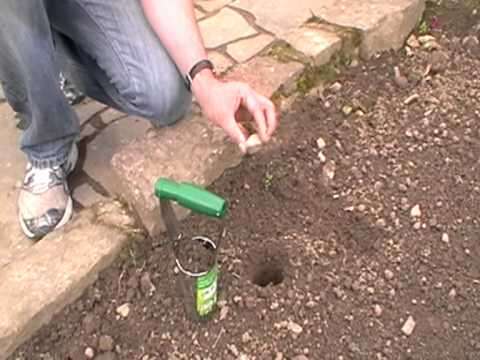
Dibber or planting tool
A dibber makes holes for seeds, plugs, and small bulbs. You can use a pencil, finger, or trowel instead. A separate dibber becomes useful when planting many seedlings at the same depth.
Planting depth depends on the plant. Follow the seed packet, nursery tag, or university Extension guidance. Planting too deep is a common cause of poor emergence and stem rot.
Measuring tape and plant labels
A measuring tape helps space plants and plan rows. Labels help you track plant names, varieties, planting dates, and notes about germination.
Use labels that resist rain and sunlight. A simple garden map can also show where crops were planted, which helps with crop rotation and future planning.
Wheelbarrow or garden cart
A wheelbarrow works well for moving soil, compost, mulch, and plants. A two-wheel cart can feel more stable on flat ground, while a one-wheel wheelbarrow can turn more easily in tight spaces.
Do not overload either tool. Keep heavy loads low and balanced. Lift with your legs, avoid sharp turns on slopes, and use help for loads that feel unsafe.

Tools for containers, greenhouses, and indoor horticulture
Container and indoor gardens need fewer large tools but more control over water, light, and growing media.
Useful tools include:
- Hand trowel
- Small pruning scissors
- Watering can with a narrow spout
- Plant saucers or trays
- Moisture meter, used as a guide
- Measuring cup for controlled watering
- Plant labels
- Small brush for cleaning soil from surfaces
- Light meter or phone-based light app, used as an estimate
- Thermometer and humidity monitor when conditions are difficult to judge
Make sure containers have drainage holes unless the plant is grown in a system designed for standing water. Empty saucers when needed so roots do not remain in stagnant water.
Indoor plants also need clean tools. Soil, water, and plant residue can carry pests or disease between pots. Clean pruning scissors before moving from a sick plant to a healthy one.
A grow light may help when natural light is weak, especially for seedlings. Select a light based on the plant’s needs, the growing area, and the manufacturer’s instructions. Keep electrical equipment away from spilled water.

How to choose horticulture tools by garden size
Tool needs depend more on the work than on the number of plants. A small garden can still need a shovel if the soil is hard. A large container collection may need more watering and pruning tools than a small outdoor bed.
| Garden type | Basic tool set | Useful additions |
|---|---|---|
| Indoor plants | Watering can, small scissors, labels, saucers | Moisture meter, light monitor |
| Balcony or patio containers | Trowel, gloves, watering can, pruners | Cart, soil scoop, drip kit |
| Small raised bed | Gloves, trowel, shovel, rake, pruners, hose | Soil test, hoe, kneeling pad |
| Vegetable garden | Full hand-tool set, hoe, rake, hose, wheelbarrow | Row cover supports, seed dibber |
| Shrub and perennial garden | Spade, fork, pruners, loppers, rake, hose | Pruning saw, garden cart |
| Small orchard | Loppers, pruning saw, hand pruners, ladder suited to the work | Arborist consultation, pole tools |
| Nursery or production garden | Durable hand tools, irrigation equipment, carts, labels | Specialized propagation and monitoring tools |
For a first purchase, buy one reliable tool for each repeated task. A strong trowel is more useful than several decorative hand tools. Replace tools when the handle, blade, or grip creates a safety problem.

Horticulture safety and tool care
Safe tool use begins with the task and the conditions. Wear closed-toe shoes, eye protection when cutting or using powered equipment, and hearing protection around loud machinery.
Inspect tools before use. Look for loose handles, cracked parts, dull blades, damaged cords, leaking hoses, and missing guards. Stop using a tool if it cannot work safely.
Keep cutting tools sharp and use them only for their intended material. A dull blade often needs more force, which increases the chance of slipping. Carry pruners closed and store them where children cannot reach them.
Use extra care around chemicals. Read and follow the product label, wear the listed protective equipment, keep products in their original containers, and do not mix products unless the label allows it. The U.S. Environmental Protection Agency provides pesticide safety information for workers and home users.
Powered tools require added precautions. Keep hands away from moving parts, unplug equipment before clearing jams, and use outdoor-rated extension cords only when the equipment instructions permit them. Do not use a ladder near overhead power lines.
At the end of the season, remove soil, dry tools, sharpen blades, oil moving parts, and store equipment in a dry place. Good care extends tool life and helps prevent the next job from starting with a broken handle or rusty blade.
Common mistakes when buying or using garden tools
Buying a large set before planning the work
A large tool set may include items you never use. Start with the basic tasks in your garden. Add tools after you identify a real need.
Using one tool for every cutting job
Hand pruners are not made for thick branches. Loppers are not made for heavy tree limbs. A pruning saw is safer and more effective when the branch exceeds the tool’s working range.
Ignoring tool fit
A tool that is too heavy, too long, or too large for your hands can cause fatigue. Try the grip and motion before buying when possible. People with joint pain may prefer lightweight tools, ratchet pruners, or ergonomic handles.
Working wet soil at the wrong time
Wet soil can smear and compact under pressure. Test it by squeezing a small amount. If it forms a sticky ball, wait before digging or tilling.
Watering by the calendar alone
Weather, soil, plant size, mulch, and container material all affect water needs. Check the root zone and look for plant stress. A fixed schedule may overwater during rain or underwater during heat.
Forgetting sanitation
Dirty tools can move soil and plant residue from one plant to another. Clean tools after use and disinfect them when disease transmission is a concern.
Using powered tools for small jobs
A powered tool can save time, but it also adds noise, moving parts, fuel or battery needs, and maintenance. Use the smallest tool that completes the job safely.
Frequently asked questions
What is the most important horticulture tool?
For most home gardeners, a hand trowel, pruner, shovel, and watering tool are the most useful starting tools. The best first tool depends on the garden. Container growers may need a trowel and watering can, while shrub growers may need pruners and a spade.
Do I need a rototiller for a vegetable garden?
No. Many small gardens can be prepared with a garden fork, shovel, and rake. A tiller may help with a large, compacted area, but repeated deep tilling can disturb soil structure and living organisms. Use one only when the site and soil condition justify it.
Which pruning tool is best for beginners?
Bypass hand pruners are a practical first choice for small live stems. Learn the tool’s cutting limit and keep the blades clean and sharp. Use loppers or a pruning saw for larger branches rather than forcing the hand pruners.
Should I buy a soil pH meter?
A pH meter can offer a rough indication, but a laboratory soil test is usually a better choice when pH or nutrients will guide amendments. Use local university Extension guidance to collect and interpret the sample.
How often should garden tools be cleaned?
Clean tools after each major use, especially after working with diseased plants or wet soil. At minimum, remove soil before storage and clean cutting blades between plants when disease may spread.
What tools are needed for professional horticulture?
Professional horticulture may require commercial irrigation equipment, propagation tools, carts, pruning systems, sprayers, measuring devices, and powered machinery. The exact list depends on the crop, site, production method, and local safety rules. A small home garden does not need this full equipment list.
Conclusion
The core tools for horticulture are simple: gloves, a trowel, a shovel or spade, a garden fork, pruners, a rake, a hoe, a watering tool, and a soil-testing method. Add loppers, a pruning saw, a cart, irrigation equipment, or indoor growing tools when your plants and site require them.
Choose tools that fit your body and match the task. Keep them clean, sharp, dry, and stored safely. Your next step is to list the jobs your garden needs this month, then buy only the tool that makes each job safer or easier.

Laura Bennett is a gardening writer at MyGardenLabs who creates beginner-friendly guides focused on solving common plant care and gardening problems.