How To Transplant A Bonsai Tree: Step-By-Step Guide
Transplant by carefully removing soil, pruning roots, and repotting into fresh bonsai soil.
I have spent years growing and transplanting bonsai trees professionally. In this guide I will walk you through how to transplant a bonsai tree with clear, step-by-step instructions, practical tips, and mistakes to avoid. You will learn when to transplant, what tools and soil to use, how to prune roots safely, and how to care for the tree after repotting. Read on to gain confidence and protect your bonsai during its next transplant.

Why and when to transplant a bonsai tree
Transplanting refreshes soil, prevents root binding, and promotes healthy growth. Knowing how to transplant a bonsai tree helps you avoid shock and keeps the tree stable for styling and health.
Reasons to transplant
- Roots have filled the pot and the tree is root-bound.
- Soil has broken down and drains poorly.
- You want to change pot size or style.
- You need to inspect and prune roots for health.
Best timing
- Most temperate bonsai transplanting is done in early spring, just before bud break.
- For tropical species, repot during active growth season when roots recover faster.
- Avoid transplanting in extreme heat, cold, or when the tree is dormant.
Quick note
- Smaller, younger bonsai usually need repotting every 1–2 years.
- Larger, older bonsai may need repotting every 3–5 years.

Tools and materials you’ll need
Gathering the right tools makes how to transplant a bonsai tree easier and safer.
Essentials
- Sharp root scissors or concave cutters.
- Wire cutters, tweezers, and a root rake.
- New bonsai soil mix suited to the species.
- A clean new pot or the original pot after cleaning.
- Mesh for drainage holes and chopsticks for settling soil.
- A tarp or tray to catch soil and waste.
- Clean water and a spray bottle.
Optional items
- Fungicide or beneficial root inoculant.
- Root hormone for sensitive species.
- Gloves and eye protection.

Preparing the tree and workspace
Preparation reduces stress on the tree and speeds recovery. Preparation is a key part of how to transplant a bonsai tree correctly.
Workspace setup
- Work on a table in a shaded area.
- Lay down a tarp for easy cleanup.
- Keep tools sanitized to prevent disease transfer.
Tree prep
- Water the tree thoroughly 12–24 hours before transplanting. Moist soil holds roots together and is easier to work with.
- Remove loose surface mulch and dead debris.
- Take photos of the tree and root structure for reference.
Soil prep
- Prepare your bonsai soil mix ahead of time.
- Pre-soak porous ingredients for better water absorption.
- Arrange the new pot with mesh over drainage holes.
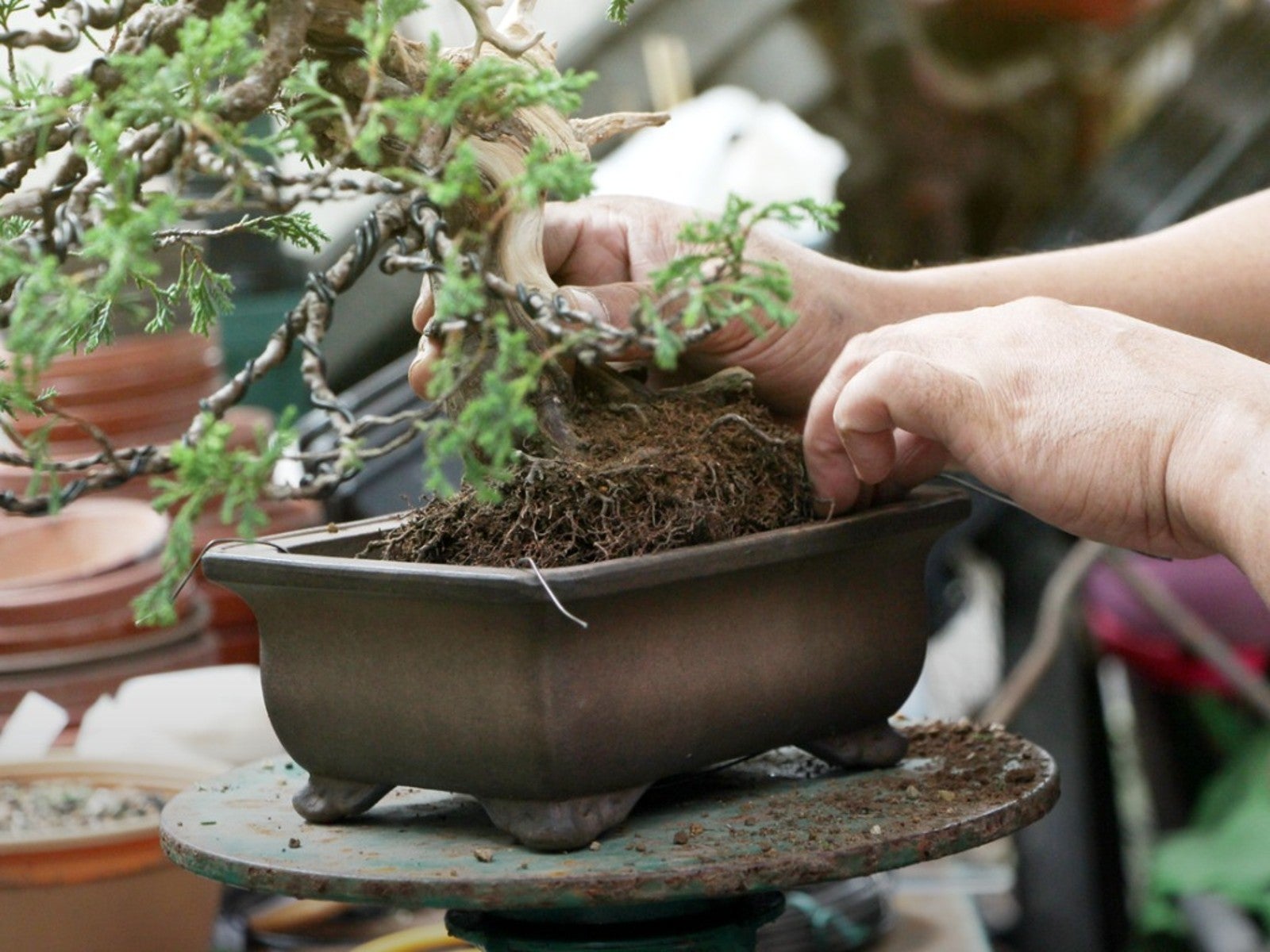
Step-by-step: how to transplant a bonsai tree
Follow these clear steps to transplant a bonsai tree with confidence. Each step is short and practical.
- Remove the tree from its pot
- Gently loosen the soil around the pot rim.
- Turn the pot on its side and ease the tree out using a root rake or chopstick.
- Inspect the roots
- Brush away old soil carefully.
- Look for healthy white roots and diseased dark roots.
- Prune the roots
- Trim up to one-third of the root mass for most species.
- Remove thick, circling roots and dead tissue.
- Prepare the new pot and soil
- Place a layer of coarse drainage material and soil.
- Position the tree so it sits naturally and shows well.
- Backfill and secure
- Add soil in stages, using chopsticks to remove air pockets.
- Press soil gently; do not compact tightly.
- Water and rest
- Water thoroughly until water drains freely.
- Place the tree in a shaded, protected spot for recovery.
People often ask whether to prune leaves at the same time. For most species, heavy leaf pruning is best delayed until the tree shows new root activity.

Aftercare: helping the bonsai recover
Aftercare determines the success of how to transplant a bonsai tree. Short, careful care keeps stress low.
First week
- Keep the tree in bright shade or filtered light.
- Maintain even moisture; do not let the soil dry out or become waterlogged.
- Avoid fertilizing for 4–6 weeks.
First month
- Gradually reintroduce morning sun.
- Monitor for leaf drop or pests.
- Light watering is better than heavy soaking.
Ongoing care
- Resume a gentle fertilizing schedule after two months.
- Wait at least one growth cycle before major styling or wiring.
- Check roots during the next repotting schedule.

Common problems and troubleshooting
Knowing common problems helps you fix issues fast when you transplant a bonsai tree.
Root shock
- Symptoms: wilting, yellow leaves, slowed growth.
- Fix: keep humidity high, reduce sun, and maintain steady moisture.
Root rot
- Symptoms: black, mushy roots and foul smell.
- Fix: remove rotten roots, use fresh soil, and improve drainage.
Leaf drop after transplant
- This can be normal. It often resolves as new roots grow.
- Reduce stress by moderating light and water.
Pests and disease
- Inspect roots and leaves regularly.
- Treat pests early with appropriate controls.

Personal experience: lessons from the potting table
I have repotted dozens of bonsai. One of my early mistakes was over-compacting soil. The tree looked stable but roots suffocated. After that I learned to use chopsticks and coarse mixes. On a maple, I pruned too many roots at once and the tree shed half its leaves. Since then I prune more conservatively and stage trims over seasons.
Practical tips I use
- Take photos before you start.
- Keep a repotting log with dates, soil mix, and root cuts.
- Use a gentle root pruning plan: remove crossing roots first, then thick roots that change the root flare.

Frequently Asked Questions of how to transplant a bonsai tree
How often should I transplant a bonsai tree?
Young bonsai often need repotting every 1–2 years. Mature bonsai may need repotting every 3–5 years, depending on root health and soil condition.
Can I transplant a bonsai tree in summer?
Transplanting in summer is risky due to heat stress. If needed, do it in early morning, keep the tree shaded, and ensure constant moisture.
How much root should I prune when transplanting a bonsai tree?
Aim to remove up to one-third of the root mass for most species. Remove circling and dead roots first and keep the root flare intact.
Should I change the pot when I transplant a bonsai tree?
You can keep the same pot if it’s undamaged and fits the tree. Choose a new pot only if you need better drainage, more room, or a styling change.
When will my bonsai recover after transplanting?
Most trees show recovery signs in 4–8 weeks. Full recovery can take a season or more, depending on species and care.
Do I need to fertilize after transplanting a bonsai tree?
Avoid fertilizing for 4–6 weeks after transplanting to let roots re-establish. Start with a weak fertilizer and increase slowly.
Conclusion
Transplanting a bonsai tree is a vital skill. You learned when to transplant, what tools to use, how to prune roots safely, and how to provide aftercare. Take your time, plan carefully, and treat the tree gently to reduce shock. Try one transplant with a young, resilient tree to build confidence. If you found this helpful, try these techniques on your next repot and share your results or questions in the comments.

Laura Bennett is a gardening writer at MyGardenLabs who creates beginner-friendly guides focused on solving common plant care and gardening problems.