What Is The Best Tool For Digging: Top Picks For Every Job
For most jobs, a round-point digging shovel is the best tool because it cuts soil, lifts dirt, and handles many tasks.
Choosing what is the best tool for digging depends on the soil, hole size, depth, and job ahead. A pointed shovel is the best all-purpose choice for most homeowners, but hard clay, rocky ground, roots, and narrow post holes may call for a digging bar, mattock, or post hole digger. This guide explains each option so you can work faster, stay safe, and avoid buying the wrong tool.

What Is the Best Tool for Digging?
For general digging, the best tool is a round-point shovel with a strong handle and a sharp, slightly curved blade. Its pointed tip enters firm soil more easily than a flat blade. The curved face then scoops and moves the loosened dirt.
A good digging shovel works well for:
- Planting trees, shrubs, and flowers
- Digging garden beds
- Moving soil, compost, and mulch
- Creating shallow trenches
- Removing loose clay or sandy soil
- Digging small drainage paths
Still, no single tool wins every digging job. Soil can change from soft garden loam to packed clay within a few feet. The best tool for digging should match the ground, not just the task name.
Think of digging tools like kitchen knives. A chef’s knife handles most food prep, but a bread knife or paring knife works better for certain cuts. In the same way, a round-point shovel is the general-purpose tool, while specialty tools solve harder problems.
The Best Digging Tools for Different Jobs
The right tool can turn a tiring task into a simple one. Here are the main tools to consider.
Round-point digging shovel
A round-point shovel is the best tool for digging in most yards. Its pointed blade breaks into soil, while its broad surface lifts and carries it.
Look for a blade made from hardened steel. A fiberglass or hardwood handle can provide good strength. A comfortable grip also matters because poor hand placement can cause blisters and wrist strain.
Choose a round-point shovel for:
- General garden work
- Tree and shrub planting
- Soil removal
- Small trenches
- Digging in loose or moderately firm ground
Spade shovel
A spade has a flatter, straighter blade than a round-point shovel. It is useful for clean edges, shallow digging, and cutting through turf.
A spade is often the best tool for digging when you need neat lines. Gardeners use it to divide plants, shape beds, and cut along sidewalks. However, its flat edge may struggle in hard, dry soil.
Garden trowel
A hand trowel is best for small holes. It works well for flowers, herbs, bulbs, and small vegetable seedlings.
A trowel is not designed for deep or heavy digging. Trying to use one in hard ground can bend the blade or strain your hand. Pick a trowel with a firm neck and a blade marked with depth lines.
Post hole digger
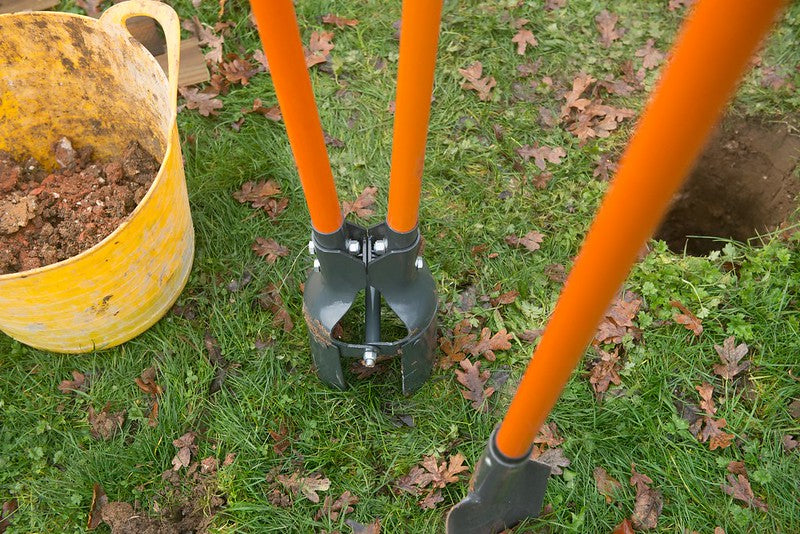
A post hole digger creates narrow, deep holes for fence posts, mailboxes, and signs. Manual models have two long handles with blades that close around soil.
This tool removes soil with less surface disruption than a shovel. It works best in soft or moderately firm soil. In rocky ground, the blades may hit stones and become difficult to operate.
Drain spade
A drain spade has a narrow blade and a long shaft. It is made for trenches, drainage lines, edging, and tight spaces.
It is often the best tool for digging narrow channels. The slim blade removes less soil with each cut, but it gives you excellent control. This makes it useful around pipes, plants, and established roots.
Mattock
A mattock combines a cutting blade with a pick or digging point. It is designed for hard soil, roots, packed clay, and rough ground.
The pick side breaks firm earth. The cutting side slices roots and removes compacted material. A mattock needs room to swing, so use it carefully near pipes, cables, and plants.
Digging bar
A digging bar is a long, heavy steel bar with a pointed or chisel-shaped end. It is one of the best tools for digging through hard soil, stones, and compacted gravel.
It does not remove large amounts of dirt quickly. Instead, it breaks the ground into smaller pieces that a shovel can lift. Pairing a digging bar with a round-point shovel is often more effective than using either tool alone.
Auger
A manual or powered auger drills a round hole into soil. It can be useful for fence posts, planting bulbs, and repeated holes.
An auger saves time when you need many holes of the same size. It can struggle with thick roots, large rocks, and very dry clay. Always check for underground utilities before drilling.

How Soil Type Changes the Best Tool for Digging
Soil type is one of the biggest factors in tool choice. The same shovel may glide through one yard and stop cold in another.
Soft garden soil
Loose loam is easy to enter and lift. A round-point shovel, spade, or garden trowel usually works well.
Use a clean, controlled motion. Avoid jumping on the shovel, since this can damage the blade or twist your ankle.
Clay soil
Clay is dense and sticky. When wet, it clings to the blade. When dry, it can become almost brick-like.
A mattock or digging bar may be the best tool for digging in dry clay. Break the soil into small pieces first, then use a shovel to remove it. Digging clay when it is slightly damp is often easier than digging it when it is soaked or bone dry.
Rocky soil
Rocks can stop a shovel blade and place heavy stress on the handle. A digging bar is usually the best tool for digging around stones.
Use the bar to loosen the rock. Then remove smaller pieces by hand or with a shovel. Wear gloves and eye protection because sharp stones can move without warning.
Sandy soil
Sand is easy to enter but difficult to hold. A shovel with a broad blade can move more sand with each scoop.
For deep holes, brace the sides if needed. Loose sand can collapse quickly, especially after rain or near a slope.
Root-filled soil
Thick roots need a tool that can cut rather than simply push. A mattock or sharp spade is often the best tool for digging through small roots.
Do not cut large roots from mature trees without professional advice. Major roots can affect tree stability. Before digging near a tree, consider the root zone and the plant’s health.
Frozen soil
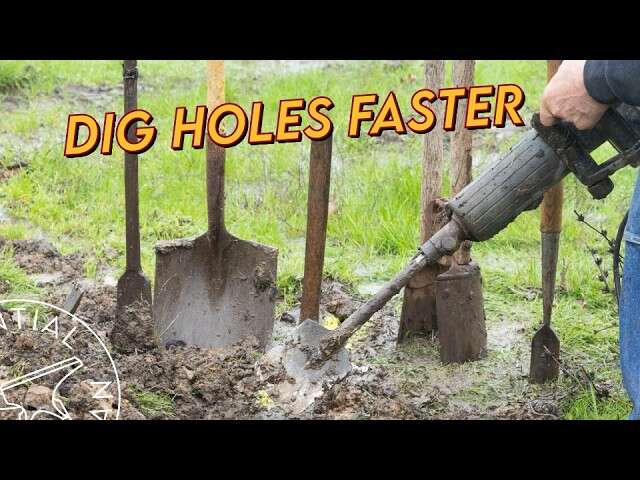
Frozen ground is extremely hard and can damage common tools. A digging bar, mattock, or specialized electric breaker may be needed.
Never force a shovel into frozen earth with your full body weight. The tool may slip, and the handle can break.
How to Choose a High-Quality Digging Tool
The best tool for digging is not always the cheapest one. A strong tool can last for years, while a weak blade or loose handle can fail during the first difficult job.
Check these features before buying:
- Blade material: Hardened steel resists bending and wear.
- Blade shape: A pointed blade enters firm soil; a flat blade makes clean edges.
- Handle material: Fiberglass resists moisture and impact. Wood feels comfortable and can be replaced.
- Handle length: A long handle gives leverage. A short handle offers better control in tight spaces.
- Grip: A padded or textured grip reduces slipping and hand fatigue.
- Foot step: A broad step on the blade lets you press down safely.
- Weight: A heavier tool may break hard soil, but a lighter tool is easier to control.
- Connection: The blade socket should fit tightly around the handle.
- Warranty: A useful warranty can show that the maker trusts the tool.
Hold the tool in a store if possible. The shaft should feel balanced, not front-heavy. Your hands should remain in a natural position when you lift the blade.
A tool that is too heavy may look powerful but create fatigue. Once your muscles tire, your form gets worse. That is when slips, strains, and mistakes become more likely.

The Safest Way to Use a Digging Tool
Digging looks simple, but it can place stress on your back, shoulders, hands, and knees. Safe technique matters as much as tool quality.
Before you begin:
- Mark the digging area clearly.
- Check for underground utility lines.
- Remove loose stones and trip hazards.
- Wear work gloves, sturdy shoes, and eye protection.
- Check the tool for cracks, bends, rust, or a loose handle.
- Plan where the removed soil will go.
Call the appropriate utility marking service before digging near a home, fence, tree, or driveway. Underground electric, gas, water, and communication lines may be closer to the surface than expected.
While digging, keep your back as straight as possible. Bend your knees, keep the load close to your body, and turn your feet instead of twisting your spine.
Do not throw heavy soil over your shoulder. Lift smaller amounts and place them beside the hole. If the soil is very hard, take short breaks rather than trying to overpower it.
When using a mattock or digging bar, make sure people and pets stay outside the swing area. Stop if you find a pipe, cable, unusual material, or unstable soil.

A Practical Method for Digging a Hole
Using the best tool for digging still requires good technique. Follow this simple process for most garden and landscaping jobs.
Step 1: Mark the hole
Use a string, spray paint, or a garden hose to outline the area. For a planting hole, make the width wider than the root ball when the plant needs room to grow.
Step 2: Cut the surface
Use a spade to cut through grass, roots, or compacted topsoil. Make several cuts around the outline.
Step 3: Break the soil
Push a round-point shovel into the ground. For hard soil, use a digging bar or mattock first. Work in small sections instead of forcing one deep cut.
Step 4: Lift and remove soil
Place your foot on the shovel step if the ground allows it. Push down with your leg, tilt the blade back, and lift a manageable amount.
Step 5: Check the depth
Use a tape measure or the tool’s blade as a guide. An uneven hole can make planting, post setting, or drainage work less effective.
Step 6: Inspect the hole
Look for roots, rocks, standing water, and signs of buried material. Smooth the sides with a spade if you need a clean finish.