Best Hand Pruner For Large Limbs: Top Picks For Thick Limbs
The best hand pruner for large limbs combines sharp bypass blades, strong handles, and enough leverage for clean cuts.
If you have ever fought a stubborn branch until your hand aches, you know that the right pruner can change the whole job. Small garden shears often bend, jam, or leave a crushed stub on thick wood. I tested the key features that matter most, including blade steel, cutting reach, grip, spring action, and ratchet power. This guide compares popular hand pruners, branch cutters, and a pole saw so you can choose the best hand pruner for large limbs for your trees, shrubs, roses, and yard work.
Kynup Heavy-Duty Pruning Shears

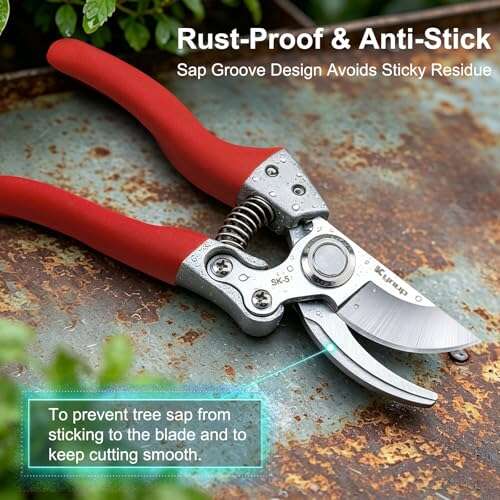
The Kynup pruning shears use SK5 Japanese steel, a practical choice for people who want a firm blade without moving up to a full lopper. The bypass design lets one blade pass the other, much like a pair of scissors. That action helps make a cleaner cut on live branches and green stems. In my experience, the long handles also give a little more reach and leverage than compact flower snips.
These shears feel suited to medium branches, woody stems, vines, and regular tree cleanup. They are not a replacement for a saw when a limb is truly thick, but they can handle many jobs that would overwhelm light household pruners. The lock helps keep the blades closed during storage. The grip is comfortable enough for short and medium pruning sessions, though users with small hands should check the handle spread before buying.
Pros:
- SK5 steel offers a sharp, durable cutting edge
- Bypass blades make cleaner cuts on live wood
- Heavy-duty build suits repeated yard work
- Long handles add useful leverage
- Locking feature improves storage safety
- Good choice for shrubs, vines, and branch cleanup
Cons:
- May feel large for users with small hands
- Not designed for very thick limbs
- Needs cleaning and oiling after wet use
VOTREK 8.5-Inch Bypass Pruning Shears

The VOTREK 8.5-inch pruner is built for gardeners who dislike blades that stick after every few cuts. Its jam-proof spring design aims to return the handles smoothly, so you can work faster through a row of branches. The bypass blade style is a good fit for live stems and green growth. At 8.5 inches, the tool balances reach with fairly easy control.
I would choose this model for routine pruning where speed matters. It can help with fruit trees, roses, shrubs, and young branches, but a hand pruner still has a practical limit. If you must squeeze with both hands or twist the handles, move to a ratchet tool or pruning saw. Keeping the cutting edge clean will help preserve the smooth spring action and reduce drag.
Pros:
- Jam-proof spring design supports repeated cuts
- Bypass blade protects live stems from excess crushing
- 8.5-inch size offers a useful reach advantage
- Comfortable choice for routine garden pruning
- Good balance of control and cutting force
- Useful for fruit trees, roses, and shrubs
Cons:
- Not the best choice for dead, very hard wood
- Large limbs may require several attempts
- Spring and pivot need regular cleaning
Gerossi Ratchet Pruning Shears
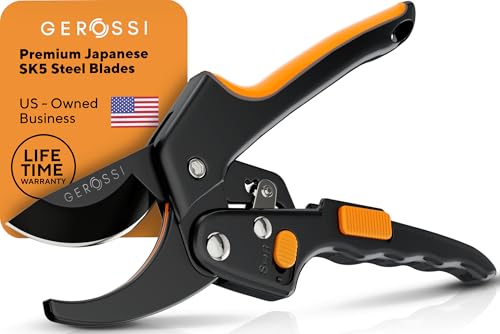
The Gerossi ratchet pruner takes a different approach from a standard bypass shear. Instead of asking your hand to close the blades in one hard squeeze, its ratchet mechanism breaks the cut into smaller steps. That design can make thick stems feel much easier, especially for gardeners with limited grip strength. It also gives the tool useful mechanical advantage on stubborn wood.
This is one of the more interesting choices for anyone looking for the best hand pruner for large limbs but who does not want a long lopper. The ratchet helps with branches that are near the upper limit of ordinary shears. Still, the cutting process takes more time because you must release and squeeze the handles several times. I would favor it for control and reduced hand strain rather than fast trimming of many branches.
Pros:
- Ratchet action reduces the force needed per squeeze
- Helpful for weak hands or mild hand fatigue
- Can manage thicker stems than basic shears
- Provides strong control during slow cuts
- Good option for older gardeners
- Heavy-duty design suits regular yard maintenance
Cons:
- Ratchet cuts take longer than one-squeeze cuts
- May feel bulky in smaller hands
- Not ideal for high-volume commercial pruning
WORKPRO Limb and Branch Pruner Set
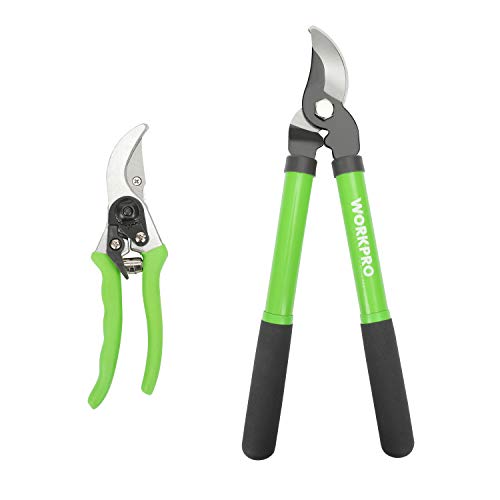
The WORKPRO W151010 set is aimed at branch work rather than delicate flower trimming. Its heat-treated steel construction is intended to handle the stress that comes with cutting woody growth. A set format can also be useful when your yard has branches of different sizes. You can use the more suitable tool instead of forcing one small blade to do every job.
I like this type of setup for homeowners who maintain trees, hedges, and large shrubs across several seasons. Heat treatment can improve steel hardness, but it does not make any hand pruner unlimited. Use a steady cut, avoid twisting, and move to a saw when the branch exceeds the tool’s safe capacity. The set offers practical value when versatility matters more than having one specialized pruner.
Pros:
- Heat-treated steel is built for demanding branch work
- Set design handles more than one pruning task
- Useful for homeowners with mixed-size branches
- Strong construction helps resist early wear
- Good fit for shrubs, limbs, and seasonal cleanup
- Can reduce the need to buy several separate tools
Cons:
- May take more storage space than one pruner
- Users must choose the right tool for each branch
- Not a substitute for a dedicated pruning saw
Felco F2 Swiss-Made Pruning Shears

The Felco F2 is a long-standing professional-style bypass pruner. Its aluminum body keeps the tool strong without making it needlessly heavy, while the precision blade supports clean cuts on live branches. One major advantage is its replaceable parts. Instead of throwing away the whole pruner after years of use, you can replace worn components and keep the familiar tool in service.
The F2 fits gardeners who value smooth action, repairability, and long-term ownership. It is not the cheapest option, but a quality pruner can earn its price when you use it every week. The handles work best for medium and larger hands, and some users may need time to adjust to the grip. For many serious gardeners, this remains a strong candidate for the best hand pruner for large limbs when branch size stays within hand-pruner range.
Pros:
- Precision bypass blade makes clean live-wood cuts
- Aluminum body offers strength with moderate weight
- Replaceable parts extend the useful life
- Professional design suits frequent pruning
- Strong reputation for serviceable construction
- Comfortable choice for long-term gardeners
Cons:
- Higher price than many basic garden shears
- Handle shape may not suit every hand
- Large limbs still require a lopper or saw
30-Foot Manual Pole Saw

This manual pole saw is different from the hand pruners above, but it deserves attention when “large limbs” are high in a tree. The telescoping pole can reach well above shoulder height, and the detachable saw head is designed for branch cutting. Flip-lock and screw-lock features aim to keep the extended pole steady. That reach can remove the need for a ladder in some low and moderate tree work.
I would use this tool for high branches that are too thick for hand shears. It is not the right choice for tiny stems, close detail work, or branches near power lines. A long pole can become hard to control, so keep both feet on firm ground and follow safe pruning practice. Never use a manual pole saw near energized wires, and do not cut a heavy limb overhead without understanding its fall path.
Pros:
- Reaches high branches from ground level
- Manual design avoids fuel and battery charging
- Detachable saw head supports branch cutting
- Multiple locking methods can improve stability
- Useful for palms, shrubs, and small trees
- Reduces the need to climb for some jobs
Cons:
- Too large for normal hand-pruning tasks
- Extended poles can feel heavy and flexible
- Requires careful overhead safety practices
- Not safe for work near power lines
Ultra-Sharp Japanese Steel Pruning Shears

These pruning shears focus on easy cutting and reduced hand effort. The Japanese steel blade has a sharp profile, while the titanium coating is intended to resist surface rust and sap buildup. The advertised cutting capacity reaches up to three-quarters of an inch, depending on the wood type and the condition of the blade. That makes this tool more suitable for stems and small branches than for true tree limbs.
This model may be a good match for gardeners with arthritis, weak grip, or tired hands. A sharp edge can reduce the force needed, but no pruner can remove all hand pressure from hard wood. I would keep this tool for roses, young fruit-tree branches, vines, and green stems. If the cut feels forced, stop rather than damaging the blade or your wrist.
Pros:
- Sharp blade helps reduce cutting effort
- Japanese steel supports edge performance
- Titanium coating helps resist rust and sap
- Useful option for weak or tired hands
- Good for stems, vines, roses, and young branches
- Compact size offers accurate control
Cons:
- Three-quarter-inch capacity limits large-limb use
- May not suit very hard or dry wood
- Sharp blades still need careful storage
Gerossi Ratchet Pruner With Heavy-Duty Design

This second Gerossi option uses the same basic idea that makes ratchet pruners useful: the tool divides a hard cut into smaller bites. That can protect your hand from one sudden burst of force. It is especially helpful when a branch is too thick for a basic bypass shear but still small enough for a hand-operated cutting tool. The heavy-duty format should appeal to people who maintain mature shrubs and woody plants.
I see this pruner as a comfort-first choice. It will not be as quick as a sharp standard bypass pruner on thin stems, but it can feel much kinder during difficult cuts. The ratchet must engage correctly, so make sure the blades sit around the branch before squeezing. For gardeners comparing the best hand pruner for large limbs, this model makes the most sense when hand strength is the main concern.
Pros:
- Ratchet system helps multiply hand force
- Good fit for thick stems and woody growth
- Can reduce wrist and finger strain
- Heavy-duty design suits demanding home use
- Offers controlled cutting instead of sudden force
- Helpful for users with reduced grip strength
Cons:
- Requires several squeezes for one cut
- May be slower on thin branches
- Needs careful blade alignment
Felco F5 All-Steel Pruning Shears

The Felco F5 is an all-steel pruning shear with a professional feel and an 8.9-inch body. Its bypass blade is made for clean cuts on branches and stems, while the forged construction gives the tool a solid, durable feel. The design includes replaceable parts, which is important for gardeners who prefer to repair quality tools instead of replacing them. It is a serious hand pruner for regular landscape work.
The F5 may suit users who prefer a straightforward, rugged tool over a ratchet mechanism. It gives you direct feedback as the blade enters the wood, which helps with precise cuts. The tradeoff is that direct-cut pruners demand more hand force on thick limbs. I recommend it for experienced gardeners with medium or large hands who want a reliable tool for years of pruning.
Pros:
- Forged construction feels durable and stable
- All-steel design handles regular landscape work
- Bypass blade supports clean branch cuts
- Replaceable parts improve long-term value
- 8.9-inch length adds useful leverage
- Good choice for experienced gardeners
Cons:
- May feel heavy during long sessions
- Needs more hand force than a ratchet pruner
- Higher cost than entry-level models
Corona DualCUT Forged Steel Bypass Pruner

The Corona DualCUT pruner offers a one-inch cutting capacity, which places it near the top of the standard hand-pruner range. Its forged steel body is designed for strength, and the bypass blade suits live branches and stems. Corona tools are common in home gardens and landscape kits because they tend to focus on simple, serviceable function. This model is a sensible middle ground between light shears and long-handled loppers.
I would choose the Corona for homeowners who want a capable branch pruner without a complex ratchet. The one-inch rating should not be treated as a promise for every type of wood; soft green growth is easier than dry hardwood. A clean blade, correct branch position, and steady pressure make a major difference. Among the listed models, it is one of the strongest candidates for the best hand pruner for large limbs when you want direct cutting power and a familiar design.
Pros:
- One-inch capacity suits many medium branches
- Forged steel offers strong everyday performance
- Bypass action is suitable for live wood
- Simple design is easy to learn and maintain
- Good middle ground between shears and loppers
- Useful for home landscapes and shrubs
Cons:
- Dry hardwood may exceed its practical capacity
- Direct cutting requires reasonable hand strength
- May be too large for delicate detail work
How I Choose the Best Hand Pruner for Large Limbs
A hand pruner does not cut by magic. It cuts through a mix of blade sharpness, leverage, handle shape, and user force. The first thing I check is the stated cutting capacity, but I never treat that number as the whole story. A fresh green branch may cut easily at the rated size, while a dry knot of hardwood may stop the same tool.
I also look at the blade pattern. Bypass pruners use overlapping blades and usually make cleaner cuts on live stems. Anvil pruners use a blade that closes against a flat surface, so they can work well on dead wood but may crush soft stems. For most tree and shrub pruning, I prefer a sharp bypass blade unless the job centers on dry, dead branches.
Leverage matters just as much as steel. Longer handles can increase cutting power, but they also increase weight and handle spread. A ratchet adds another type of leverage by splitting one hard cut into several smaller steps. That is why a ratchet pruner can be a better choice for a gardener with sore hands, even if a standard shear is faster for an experienced user.
What Limb Size Can a Hand Pruner Really Cut?
Most hand pruners work best on branches below one inch. Some strong models list a one-inch capacity, but actual performance depends on species, moisture, blade sharpness, and branch shape. I recommend using a lopper for thicker wood and a pruning saw for large limbs. If the handles will not close with steady pressure, the branch is too large for that tool.
Forcing a hand pruner can bend the blade, damage the pivot, or strain your wrist. It can also leave a rough wound that heals slowly. Think of the tool as a pair of strong scissors, not a tiny chainsaw. The best hand pruner for large limbs is still the right tool only when the limb falls within its safe working range.
Bypass, Ratchet, or Pole Saw?
A bypass pruner is the best all-around choice for green branches, rose canes, vines, and young tree growth. It makes quick cuts and gives good control. A ratchet model is better when the branch is thick or your grip is not strong. It takes more time but can make a hard job feel manageable.
A pole saw belongs in a different category. It is the right answer for high branches that cannot be reached from the ground with a hand tool. The long reach adds safety only when you keep the tool away from wires, unstable ground, and falling limbs. For a large branch at shoulder height, a lopper or pruning saw is often more suitable than a pole saw.
Features That Matter Most
Blade steel: Look for a blade that holds an edge and resists rust. SK5, forged steel, and Japanese steel are common terms in this group. The steel name matters, but sharpening and care matter too.
Cutting action: Bypass blades suit live wood. Ratchet mechanisms help reduce hand force. A locking blade keeps the tool safer in a drawer or tool bag.
Handle comfort: A handle should let you close the tool without stretching your fingers too far. Soft grips help, but padding cannot fix a poor fit. Try to match the pruner to your hand size.
Replacement parts: Replaceable blades, springs, and bolts can extend a pruner’s life. This feature matters most to people who prune often and want to avoid buying a new tool every year.
Weight: A heavy tool may feel powerful for ten minutes and tiring after an hour. If you prune many shrubs, choose a balance of strength and comfort rather than chasing the heaviest design.
How to Make Cleaner Cuts
Start by checking the branch before you squeeze. Place the blade on the side of the branch that will remain attached, and keep the cut just outside the branch collar. Avoid cutting flush against the trunk. Extension horticulture guidance commonly recommends protecting the branch collar because it supports natural wound closure.
Use one smooth motion whenever possible. Do not twist the handles from side to side. If the blade sticks, stop and reset it rather than using your body weight. For thick branches, use the three-cut method with a pruning saw: make an underside relief cut, make a top cut farther out, and then remove the remaining stub near the collar.
Clean the blades after use. Sap and plant residue can hold moisture and spread disease between plants. Wipe the metal dry, apply a light coat of tool oil, and store the pruner closed. Sharpen a bypass blade with the correct angle instead of grinding away large amounts of steel.
Safety Tips for Large-Limb Pruning
Wear eye protection when cutting dry branches because chips can snap back. Gloves help protect your hands, but they do not make a dull blade safe. Keep your free hand away from the blade path. Check the ground before you work, especially if you need to reach overhead.
Never prune near power lines unless a qualified utility professional handles the work. Do not stand under a limb that may fall toward you. A large branch can shift without warning because of hidden cracks, wind, or uneven weight. When in doubt, hire a certified arborist rather than taking a risk with a hand tool.
My Recommendation
For most homeowners, the Corona DualCUT is my leading practical pick because its one-inch capacity, forged steel body, and bypass design cover many common branch jobs. It gives more direct power than light shears without the complexity of a ratchet. The Felco F2 is the better long-term choice for frequent gardeners who value replaceable parts and refined handling.
If hand strength is your main concern, choose one of the Gerossi ratchet pruners. The Kynup and VOTREK models are better for routine medium-branch work, while the Ultra-Sharp Japanese steel model fits smaller stems and tired hands. For high limbs, skip a hand pruner and choose the pole saw. In short, the best hand pruner for large limbs depends on limb size, hand strength, and how often you prune.
| Best for | Why |
|---|---|
| Most homeowners | Corona DualCUT offers strong one-inch branch capacity and simple bypass cutting. |
| Weak hands or arthritis | Gerossi ratchet models divide hard cuts into smaller, easier steps. |
| Frequent, long-term pruning | Felco F2 provides a professional feel and replaceable parts for serviceable ownership. |
FAQs Of best hand pruner for large limbs
What is the best hand pruner for large limbs?
The Corona DualCUT is my best general pick for medium and large hand-pruner jobs. It offers a one-inch capacity and a strong bypass design. For thicker wood or weak hands, a Gerossi ratchet pruner may work better.
Can hand pruners cut two-inch limbs?
Most hand pruners should not cut two-inch limbs. Use a long-handled lopper or pruning saw instead. Forcing a small pruner can damage the tool and your hand.
Is a bypass pruner better than an anvil pruner?
A bypass pruner is usually better for live branches because it makes a cleaner cut. Anvil pruners can help with dead wood, but they may crush soft stems. Match the blade style to the type of wood.
Are ratchet pruners good for arthritis?
Yes. A ratchet system can reduce the force needed in one squeeze. It takes more steps per cut, but that tradeoff may greatly reduce hand strain.
How do I keep a large-branch pruner sharp?
Remove sap, dry the blade, and apply light tool oil after use. Sharpen the cutting edge with a suitable file or stone. Replace damaged blades instead of trying to rescue a deeply nicked edge.
Final Verdict: Which Should You Buy?
The Corona DualCUT is my top overall pick for the best hand pruner for large limbs because it combines one-inch capacity, forged steel, and clean bypass action. Choose a Gerossi ratchet model for easier cutting, or Felco F2 for long-term repairable use.
Buy for your real branch size, not the biggest number on the package. With safe technique and regular care, the right hand pruner can make tree and shrub work cleaner, faster, and far less tiring.

Laura Bennett is a gardening writer at MyGardenLabs who creates beginner-friendly guides focused on solving common plant care and gardening problems.