Best Garden Shears For Cutting Grass: Top Lawn Picks
The best garden shears for cutting grass combine sharp blades, easy control, comfort, and clean edge work.
A neat lawn can still look rough around flower beds, steps, fences, and tree trunks. A mower cannot reach those tight spots without risking damage to plants or hard surfaces. That is where the best garden shears for cutting grass earn their place. I tested the key features that matter most, including blade action, handle comfort, swivel control, cutting reach, and upkeep. The models below suit small touch-ups, careful edging, and regular garden work.
How I Chose the Best Garden Shears for Cutting Grass
Hand grass shears look simple, but small design details make a big difference. A poor pair can pinch your fingers, drag through damp blades, or leave an uneven edge. A good pair feels like an extension of your hand. It cuts with little force and lets you guide the blade near plants, stones, and borders.
I focused on several points when comparing these grass clippers:
- Blade sharpness: Sharp blades make clean cuts without tearing grass.
- Blade length: Short blades offer better control around plants and borders.
- Swivel action: A rotating head can reduce wrist strain when cutting sideways.
- Handle comfort: Soft grips and balanced handles help during longer jobs.
- Cutting power: Lever systems can make thick patches easier to trim.
- Durability: Strong steel and solid joints should handle repeat garden use.
- Maintenance: Easy cleaning and light oiling help blades stay smooth.
- Value: A useful garden tool should perform well without needless extras.
Hand shears work best for edging and detail work. They are not a replacement for a mower on a large lawn. They are more like a fine paintbrush after the broad strokes are complete. With that in mind, here are the models worth considering.
Byhagern Upgraded Grass Shears

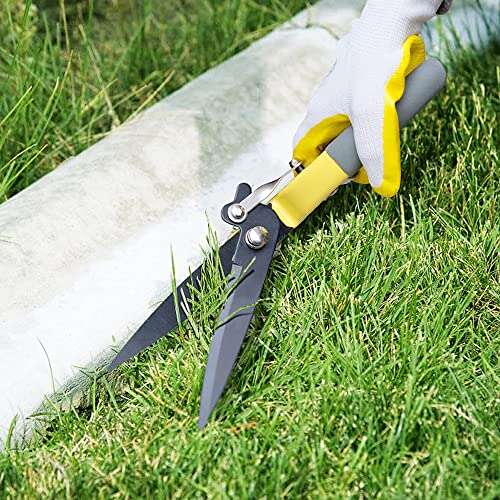
The Byhagern Upgraded Grass Shears are made for close lawn edging and small patches of grass. Their compact shape gives me good control near flower beds, walkways, and garden borders. The handheld design also makes them easy to carry from one part of the yard to another. They are a practical choice for gardeners who want direct control instead of a powered tool.
The cutting head is suited to detail work rather than heavy brush. I would use these shears to tidy grass that a mower leaves behind. They can also help clean narrow areas around posts, stones, and raised beds. As with any hand shear, the cleanest results come from short, steady cuts instead of forcing the blades through thick growth.
Pros:
- Compact design gives precise control near borders
- Useful for lawn edges and small missed patches
- Simple manual action needs no battery or charging
- Light form is easy to carry around the yard
- Good choice for detail work in tight spaces
- Handheld design allows careful cuts near plants
Cons:
- Manual cutting takes longer on a large lawn
- Short blades are not ideal for thick weeds
- Users may need to sharpen the blades over time
My Recommendation
I recommend the Byhagern for homeowners who need a basic tool for lawn edging and small touch-ups. It suits gardeners who prefer a direct, simple tool with no motor noise or charging time. It is especially useful around beds where a mower cannot safely reach. If you want affordable best garden shears for cutting grass for light work, this model is a sensible starting point.
JARDINEER Sharp Grass Shears

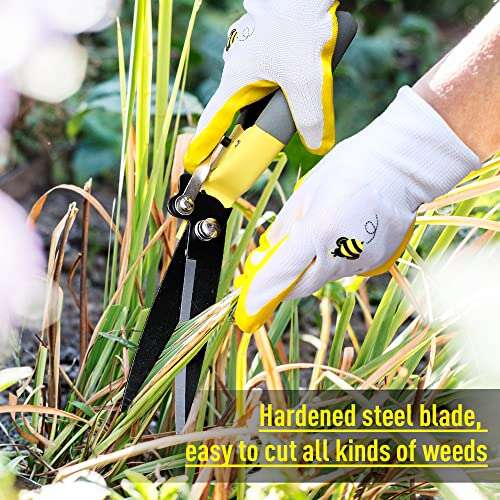
JARDINEER Sharp Grass Shears target the gardener who wants a traditional handheld grass cutter. The design is easy to understand, so there is little learning time before the first cut. I like this style for shaping lawn edges where accuracy matters more than speed. It gives the user a close view of the blade and the grass line.
These shears are most useful when the grass is dry and not overly tall. Dry blades usually pass through a sharp edge more easily than wet, matted growth. I would work in small sections and wipe the blades often if sap or moisture builds up. That routine helps preserve smooth action and prevents residue from affecting the cut.
Pros:
- Sharp cutting design supports clean lawn edging
- Easy manual operation suits new gardeners
- Good visibility around flowers and landscape borders
- Portable tool needs no electrical outlet
- Useful for narrow strips that mowers miss
- Traditional form makes control feel natural
Cons:
- Can cause hand fatigue during long sessions
- Not designed for wide areas of tall grass
- Cutting performance depends on regular blade care
My Recommendation
JARDINEER is best for gardeners who want sharp, straightforward grass clippers for occasional edging. It works well for small yards, borders, and quick cleanup after mowing. I would not choose it as the only tool for a large property, but it can be a useful part of a simple lawn kit. It offers good value when precise hand trimming matters most.
Fiskars 5-Inch Shear Ease Grass Shears
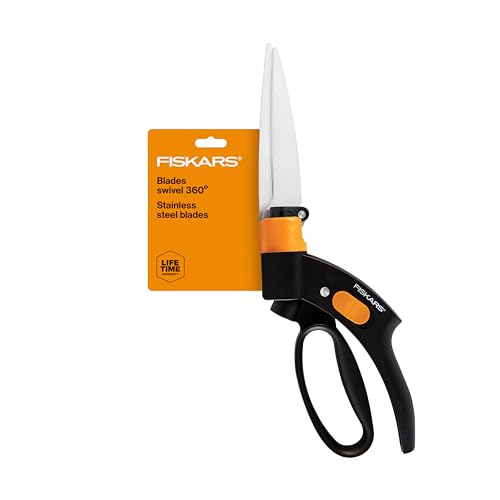
The Fiskars 5-Inch Shear Ease Grass Shears stand out for gardeners who want a more comfortable cutting experience. Their design aims to reduce blade friction as the tool closes. In practical use, that feature can make repeated snips feel smoother than a basic pair. The five-inch blade size also balances reach with control.
I see this model as a strong choice for lawn edges, small garden paths, and grass around ornamental plants. It is compact enough for careful work but not so tiny that every cut feels slow. The shears still work best on grass rather than woody stems or thick brush. Keeping the blades clean will help the low-friction action stay consistent.
Pros:
- Shear Ease design helps reduce cutting drag
- Five-inch blades offer a useful control-to-reach balance
- Well suited to edging and garden detail work
- Fiskars design has broad name recognition
- Manual tool works without batteries or fuel
- Compact size stores easily in a garden shed
Cons:
- May struggle with thick, woody growth
- Handheld use is slow for large lawn areas
- Comfort depends on how well the grip fits each hand
My Recommendation
I recommend the Fiskars Shear Ease to homeowners who trim grass often and want smoother blade action. It is a good match for gardeners who value control but dislike the drag found in basic shears. The tool fits routine lawn maintenance, flower bed edging, and quick touch-ups. For many users, it is among the best garden shears for cutting grass because it combines useful reach with easy handling.
Fiskars 5-Inch Power-Lever Grass Shears

The Fiskars Power-Lever Grass Shears use a leverage-focused design to make cutting feel easier. That matters when grass becomes dense or when your hands tire quickly. The five-inch blades offer enough length for a clean sweep while keeping the cutting head manageable. I find this style useful for gardeners who want more force without moving to a powered trimmer.
These shears are a good fit for small to medium detail jobs. The lever action can help with stubborn grass, but it does not turn hand shears into a brush cutter. You still need to avoid branches, thick vines, and hard debris. Clear the work area first, then use smooth strokes rather than sudden pressure.
Pros:
- Power-Lever design increases cutting leverage
- Helpful for dense grass and tougher lawn edges
- Five-inch blades provide useful cutting coverage
- Manual operation avoids batteries and cords
- Good option for users with limited hand strength
- Fiskars design supports repeat garden maintenance
Cons:
- May feel bulkier than simple grass scissors
- Still requires bending or kneeling near the lawn
- Not suitable for thick woody stems or brush
My Recommendation
The Power-Lever model is best for users who want extra cutting help without buying a powered edger. It suits mature lawns, dense patches, and gardeners who notice hand strain with ordinary shears. I would choose it for regular edge cleanup rather than huge areas. Among the best garden shears for cutting grass, this one makes the most sense when leverage is your top need.
Fiskars Extendable Power-Lever Hedge Shears

The Fiskars Extendable Power-Lever Hedge Shears are different from short handheld grass clippers. Their longer handles and ten-inch blades provide more reach and leverage. That makes them useful for low hedges, soft growth, and standing work along broad edges. They can also trim grass in places where bending down feels uncomfortable.
Because these are hedge shears, they are not the first choice for tiny patches beside delicate flowers. The longer blades cover more ground but give less close control than five-inch grass shears. I would use them for broad, soft grass clumps and low border growth. Their extendable handles also let you adjust reach for different tasks.
Pros:
- Extendable handles reduce the need to bend
- Long ten-inch blades cover more area per stroke
- Power-Lever design adds useful cutting force
- Helpful for low hedges and broad soft growth
- Good reach for gardeners with back or knee concerns
- Versatile tool for grass and light hedge shaping
Cons:
- Too large for very fine grass edging
- Heavier and less precise than handheld shears
- Not intended for thick branches or woody stems
My Recommendation
I recommend these shears for gardeners who need reach and leverage more than pinpoint control. They are well suited to broad borders, low shrubs, and grass clumps that sit just beyond comfortable arm reach. They can help users who find kneeling or bending difficult. For narrow lawn lines, choose a smaller model, but for standing work, these may be the best garden shears for cutting grass in this group.
Fiskars 5-Inch Swivel Grass Shears

The Fiskars Swivel Grass Shears use a rotating blade head to support different cutting angles. This feature is useful when you move from vertical edging to horizontal trimming. Instead of twisting your wrist to match the grass line, you can adjust the head. That small change can make a long trimming session feel much more natural.
The five-inch blades provide a good mix of reach and control. I would use the swivel setting near paths, walls, and curved borders where the cutting direction changes often. The rotating head may take a few minutes to feel familiar, but most users can adapt quickly. Lock the head into the angle you need before starting each section.
Pros:
- Swivel head supports several cutting positions
- Can reduce wrist twisting during edge work
- Five-inch blades suit detailed lawn trimming
- Useful around curved borders and garden paths
- Handheld size offers close control
- Manual design remains quiet and easy to store
Cons:
- Moving parts need occasional cleaning
- Swivel adjustment may feel less simple at first
- Not intended for large lawns or woody growth
My Recommendation
The Fiskars Swivel Grass Shears are best for people who trim at many angles or feel wrist strain with fixed blades. They are especially useful around curved beds, steps, walls, and raised planters. I would select them over a standard model when comfort during angled cuts matters. They are a strong contender for the best garden shears for cutting grass for detail work and wrist-friendly control.
Corona ClassicCUT Grass Shear
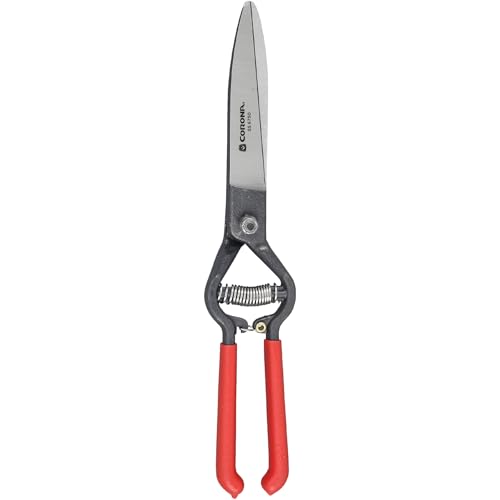
The Corona ClassicCUT Grass Shear has a compact four-and-a-half-inch blade. That shorter length makes it easy to guide around plants and tight lawn lines. It is the type of tool I would reach for when a mower leaves a narrow fringe beside a border. The classic shape feels familiar and does not add extra mechanisms to manage.
A short blade can also improve precision for small tasks. It will not cover as much grass per stroke as a longer shear, but it helps prevent accidental cuts to nearby flowers. I suggest using it for careful edging, small garden corners, and quick cleanup. As always, remove grit and grass after use so the pivot stays smooth.
Pros:
- Compact four-and-a-half-inch blade offers close control
- Good for narrow borders and small garden corners
- Simple classic design is easy to use
- Lightweight form works well for quick jobs
- Useful near delicate plants and hard surfaces
- Easy to clean and store after trimming
Cons:
- Short blade covers less grass per stroke
- May require more hand movement on long edges
- Limited for tall, dense, or woody growth
My Recommendation
Corona ClassicCUT is best for gardeners who value precision over speed. It is a smart pick for flower beds, small lawns, and detailed landscape work. I would also suggest it to anyone who prefers a simple tool with no swivel or lever system. If your main goal is careful edging, this compact model offers dependable value.
GARDEN GURU Hand Grass Clipper

The GARDEN GURU Hand Grass Clipper uses a classic forged-steel style with comfort-focused handles. It is designed for lawn edging, shrubs, flowers, and general garden cleanup. The broad use case makes it useful for gardeners who want one small tool for several light tasks. I like this type of clipper for routine work where a clean cut and comfortable grip matter.
Forged steel can provide a solid feel in the hand, though no shear should be treated as a branch cutter unless its instructions allow it. This clipper is best for grass, soft stems, and light shaping. Use a steady grip and let the blade do the work. Wipe the cutting surfaces after use, especially after trimming wet plants.
Pros:
- Forged-steel style gives the tool a solid feel
- Comfort grip supports longer detail sessions
- Useful for grass, flowers, shrubs, and edging
- Classic design is easy for most users to learn
- Good choice for mixed garden maintenance
- Handheld shape allows careful work near plants
Cons:
- Manual design is slower than powered trimmers
- May not suit users who need very long reach
- Thick stems can exceed its intended use
My Recommendation
I recommend GARDEN GURU for gardeners who want a comfortable, multipurpose hand clipper. It fits small lawns, flower beds, shrubs, and general landscape touch-ups. The grip is a strong reason to consider it if you spend time doing detail work. It offers good overall value for users who want more than a single-purpose grass shear.
WORKPRO 360-Degree Swivel Grass Shears

The WORKPRO Grass Shears feature blades that swivel through 360 degrees. This wide range lets you set the cutting direction to match the job. It can be useful for vertical sides, flat lawn edges, and awkward corners. Gardeners who often change position may appreciate not having to turn the whole tool in their hand.
A full swivel range offers flexibility, but it also means the user should learn the adjustment system before working near plants. Set the blade securely and check that it feels stable. These shears are suited to grass and light edging, not thick branches. Their main strength is positioning, especially in gardens with many shapes and levels.
Pros:
- 360-degree swivel supports highly flexible positioning
- Useful for vertical, horizontal, and angled cuts
- Can help reduce awkward wrist movement
- Good for complex borders and tight corners
- Manual operation is quiet and low maintenance
- Offers useful control for detailed lawn work
Cons:
- Adjustment may take practice for new users
- Moving parts need care to prevent stiffness
- Not a replacement for a powered lawn trimmer
My Recommendation
WORKPRO is best for users who want the widest choice of cutting angles. It suits yards with curved beds, raised borders, walls, and uneven access points. I would choose it when a fixed blade forces too much wrist movement. For flexible positioning, it deserves consideration among the best garden shears for cutting grass available in 2026.
Fiskars 5-Inch Forged Grass Shears

The Fiskars Forged Grass Shears are built for gardeners who prefer a sturdy, traditional tool. The forged construction gives them a durable feel that suits regular lawn and garden use. Their five-inch blades provide more reach than very short detail shears. That makes them a balanced option for edging, cleanup, and small patches of grass.
These shears do not rely on a complex adjustment system. That simplicity can be a benefit for users who want to open the tool and start working. They are best used on grass and soft growth, with the blade kept free of sand and grit. A drop of tool oil at the pivot can help preserve smooth movement over time.
Pros:
- Forged construction provides a sturdy hand feel
- Five-inch blades offer useful reach and control
- Simple design has fewer mechanisms to adjust
- Suitable for regular grass edging and cleanup
- Good option for gardeners who favor durable tools
- Easy to maintain with cleaning and light oil
Cons:
- May feel heavier than lightweight grass scissors
- Fixed blade angle offers less positioning flexibility
- Hand cutting remains slow for broad lawn areas
My Recommendation
The Fiskars Forged Grass Shears are best for users who want a solid, no-fuss tool for repeated garden work. They fit homeowners who prefer durable hand tools over feature-heavy designs. The five-inch blade is useful for lawn edges and small grass patches. If sturdy construction is your priority, this model is one of the best garden shears for cutting grass to consider.
Best For Comparison
| Best for | Why |
|---|---|
| Precise flower bed edging | Corona ClassicCUT and the Byhagern offer compact control in tight spaces. |
| Reduced wrist strain | Fiskars Swivel and WORKPRO 360-Degree models let you adjust the cutting angle. |
| Extra leverage and reach | Fiskars Power-Lever and Extendable Power-Lever models help with dense growth or standing work. |
How to Use Grass Shears Correctly
Even the best garden shears for cutting grass will perform poorly if used with the wrong motion. Start by clearing stones, sticks, wire, and other hard objects from the area. Debris can nick the blade or create a sudden kick. Wear gloves and closed shoes when working near rough borders.
Hold the shears so the blade follows the line you want to create. Use short cuts for corners and longer strokes for straight edges. Do not twist the handles sharply while the blades are closed. If the tool begins to crush rather than cut, stop and inspect the blades.
For a clean lawn edge, trim a little at a time. It is easier to remove more grass than to repair an edge cut too far into the lawn. Keep the blade level for a flat top or angle it slightly when shaping a border. Your goal is a smooth line, not a deep trench.
Avoid cutting wet grass when possible. Wet blades can cling to the metal and make the work feel harder. They can also spread soil and plant residue onto the cutting head. If you must trim damp grass, clean the shears soon after finishing.
Grass Shears Versus Hedge Shears
Grass shears usually have short blades and compact handles. They help with lawn edges, small patches, and tight spots near plants. Some models have swivel heads that support vertical or horizontal cuts. Their main advantage is precision.
Hedge shears have longer blades and longer handles. They cover more area and can provide greater leverage. However, their size makes them less precise around delicate flowers and narrow edges. The Fiskars Extendable Power-Lever model fits this category.
Choose grass shears for detail work. Choose hedge shears for broad, soft growth and low shrubs. Many serious gardeners keep both because each tool solves a different problem. A mower handles the main lawn, grass shears handle the fine line, and hedge shears handle wider soft growth.
Care and Maintenance Tips
Good care can extend the working life of any grass shear. First, brush away loose grass after every use. A dry cloth can remove moisture and plant sap. If residue has hardened, use a suitable tool cleaner rather than scraping the blade with another metal object.
Dry the tool before storage. Moisture can lead to rust, especially on exposed steel. Store the shears in a dry shed, garage, or tool box. Avoid leaving them on damp soil or grass overnight.
Apply a small amount of light oil to the pivot from time to time. Open and close the handles several times to spread the oil. Wipe away excess oil before cutting near plants. Too much oil attracts dust and grit.
Check the blade edge before each major job. A dull blade needs more hand force and can crush grass instead of slicing it. Follow the maker’s sharpening guidance. If you do not feel comfortable sharpening the tool, use a garden tool service.
Swivel models need extra attention around the rotating joint. Grass and dirt can collect in moving parts. Clean the joint and confirm that the head locks into position before cutting. This simple check improves control and safety.
Safety Tips for Hand Grass Clippers
Keep fingers away from the blade path. Do not carry open shears with the blades facing your body. Close or lock the tool before placing it in a bucket or tool bag. Keep children and pets away while you trim.
Inspect the handles and pivot before use. Loose hardware can change the cutting action. A damaged blade may break or send a small metal chip outward. Replace a tool that has a cracked handle, bent blade, or loose head.
Use eye protection when cutting near gravel, dry sticks, or hard edging. A small piece of debris can move when the blades close. Gloves can improve grip and protect hands from sharp grass, thorns, and rough stones.
Take breaks during long jobs. Repeated squeezing can tire the hand and reduce control. If your wrist or fingers begin to ache, stop for a few minutes. A comfortable tool helps, but good work habits matter just as much.
What Size Grass Shears Should You Buy?
Short blades, such as four-and-a-half-inch models, are best for detail work. They allow careful cuts around flowers and narrow borders. They may take more strokes on longer edges, but they reduce the chance of cutting into nearby plants.
Five-inch blades offer a useful middle ground. They provide extra reach while staying easy to guide. Many of the models in this review use a five-inch blade because that size suits common lawn and garden tasks.
Longer blades cover more grass with each stroke. They work better for broad patches and soft hedge growth. They can feel less precise in small corners, so consider the shape of your yard before choosing one.
Are Swivel Grass Shears Worth It?
Swivel grass shears can be worth the cost if you often trim at different angles. A rotating head lets you match the blade to a wall, path, slope, or border. This may reduce wrist twisting and make the cut feel more natural.
A swivel design is not essential for every gardener. If you only trim a flat edge once a month, a fixed blade may be simpler. Swivel models also have more moving parts, so they need proper cleaning.
I prefer swivel shears for yards with many curves and levels. The Fiskars Swivel and WORKPRO models offer this flexibility. For a straight, simple lawn, a fixed model may provide all the control you need.
Can Garden Shears Cut Tall Grass?
Garden shears can cut tall grass, but they work best in small amounts. Tall grass may bend away from the blade or gather in thick clumps. Cut in stages instead of forcing a large bundle between the blades.
For broad areas of tall grass, use a string trimmer or mower first. Then use hand shears to refine the edge. This two-step method saves time and puts less strain on the shears.
Do not use grass shears on woody stems unless the maker clearly states that they can handle them. Grass blades and branches require different tool designs. Cutting material that is too hard can damage the edge or pivot.
What Makes a Good Lawn Edge?
A good lawn edge has a clear line between grass and the next surface. It does not need to be deep. It needs to look even and stay clear of flowers, mulch, stones, or paving.
Start by following the existing border. If the line is uneven, correct it slowly over several sessions. A string line can help create a straight edge, while a curved bed needs a steady visual line.
Trim after mowing so you can see what the machine missed. This makes the shears a finishing tool rather than the main cutting tool. The result looks cleaner and the hand work takes less time.
Common Buying Mistakes to Avoid
One common mistake is buying the largest shears for every job. Larger blades can save time on broad growth, but they may damage plants in small beds. Match the blade size to the spaces you trim most often.
Another mistake is ignoring hand comfort. A sharp blade cannot compensate for a handle that pinches or slips. If you have small hands, arthritis, or reduced grip strength, look for leverage or swivel features.
Some shoppers also expect hand shears to replace a trimmer. They do not. These tools are best for control and detail. A mower or string trimmer handles the main volume, while shears provide the final clean-up.
Finally, do not forget maintenance. Even the best garden shears for cutting grass need cleaning, drying, and occasional oil. A little care keeps the action smooth and helps the blade stay sharp.
FAQs Of best garden shears for cutting grass
What are the best garden shears for cutting grass?
The best choice depends on your task. Fiskars Shear Ease is a strong all-around option, while Fiskars Swivel and WORKPRO suit angled cuts. Corona ClassicCUT is useful for precise edging, and Power-Lever models help with extra force.
Can I use grass shears to cut weeds?
You can use them for soft, thin weeds and small patches. Avoid thick stems, woody weeds, and vines unless the product instructions approve that use. Hard growth can dull or damage the blade.
Are swivel grass shears better than fixed shears?
Swivel shears are better when you trim at many angles or want less wrist twisting. Fixed shears are simpler and may feel more direct for straight edges. The better choice depends on your yard and hand comfort.
How often should I sharpen grass shears?
Sharpening needs depend on use and the material you cut. Inspect the edge when the shears begin crushing grass or require more force. Clean and oil the tool often, and follow the manufacturer’s sharpening instructions.
Can grass shears replace a string trimmer?
No. Grass shears work best for small areas, borders, and finishing work. A string trimmer is faster for large patches, tall grass, and areas that need frequent cutting.
Final Verdict: Which Should You Buy?
The Fiskars 5-Inch Shear Ease is my top all-around pick for the best garden shears for cutting grass. Choose Fiskars Swivel for angled work, Corona for precise edges, and Power-Lever models for extra force or reach.
Match the blade to your yard, keep it clean, and use short cuts near plants. The right grass shears make lawn finishing simpler, quieter, and more precise.

Laura Bennett is a gardening writer at MyGardenLabs who creates beginner-friendly guides focused on solving common plant care and gardening problems.