Best Hand Tool For Cutting Long Grass: Top Picks
The best hand tool for cutting long grass is a sharp, long-handled scythe or grass whip.
Tall grass can turn a neat yard edge into a tangled green wall in just a few weeks. A powered trimmer works fast, but it can be noisy, costly, and hard to use near flowers, fences, or soft soil. I tested the main types of manual grass cutters, from small shears to full-size scythes, to find the best hand tool for cutting long grass. The right choice depends on grass height, reach, cutting width, and how much effort your back can handle.
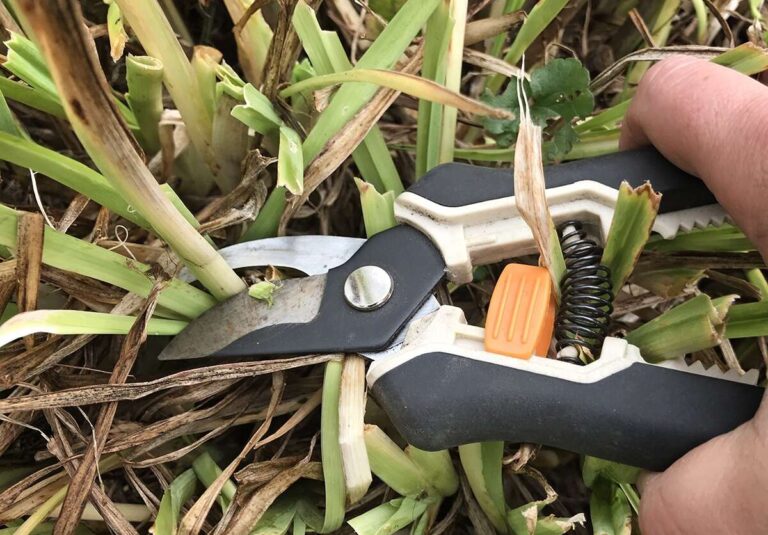
Byhagern Grass Shears

The Byhagern Upgraded Grass Shears are made for close trimming around lawn edges, flower beds, trees, and walkways. Their compact design gives me good control when I need to cut one small patch at a time. The blades suit soft grass and thin weeds better than thick, woody stems. For detailed work, these shears feel more like a pair of garden scissors than a rough brush cutter.
The main benefit is accuracy. I can guide the cutting head beside a stone border without digging into the soil or harming nearby plants. They also work well for gardeners who do not want to start a gas or electric tool for a five-minute job. Still, this is not the best hand tool for cutting long grass across a large field because the short handles require bending and repeated hand movement.
Pros:
- Very precise around beds, paths, and tree trunks
- Lightweight and easy to carry
- Useful for quick touch-up work
- Simple manual design needs no fuel or charging
- Good control in tight spaces
Cons:
- Short reach can strain the back
- Slow for tall grass over a large area
- Not suited to thick stems or brush
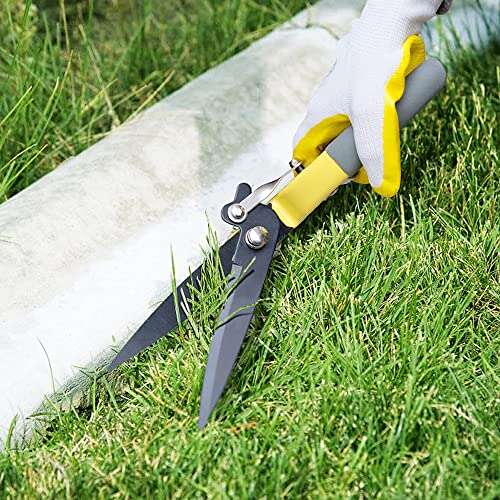
Long-Handled Adjustable Grass Shears
 adjustable grass shears”>
These long-handled grass shears bring the cutting head up to a more comfortable working height. That small change matters when you trim lawn edges for more than a few minutes. The adjustable handle can help users of different heights find a better stance. I like this style for grass that grows along paving, flower beds, and low garden walls.
The tool is not a field scythe, but it offers a useful middle ground between hand clippers and powered equipment. It lets me make clean, controlled cuts without kneeling or leaning so far forward. The rolling or wheeled action can also help guide the shears in a straight line. For very long, wet, or tangled grass, though, the blades may need several passes.
Pros:
- Reduces bending and kneeling
- Adjustable reach suits many users
- Good for neat lawn borders
- Quiet and simple to use
- Offers better control than a full-size blade in tight areas
Cons:
- Not ideal for cutting a whole overgrown lawn
- May need repeated passes through dense grass
- Moving parts need occasional cleaning
YEELOR 51-Inch Adjustable Weeding Sickle
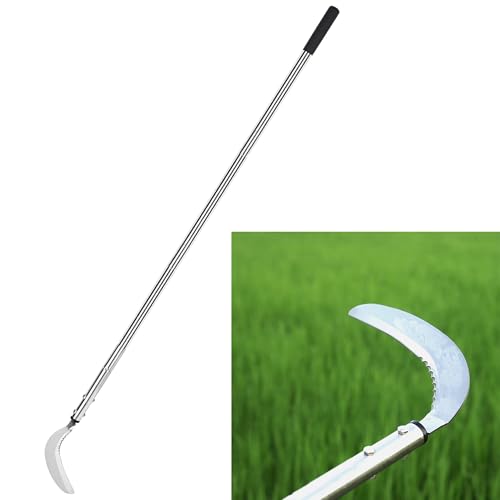
The YEELOR adjustable weeding sickle gives a long reach without the full size of a traditional scythe. Its 51-inch handle lets me work while standing, which helps protect my knees and lower back. The curved sickle shape is useful for cutting weeds, tall grass, and light growth near fences. It is also easier to store than many wider grass whips.
A sickle works best with a controlled pull or sweep rather than a fast chopping motion. Once I find the right angle, the curved blade catches several stems and cuts them close to the ground. The adjustable handle is helpful when the work area changes. I would choose this model for a small to medium patch of tall grass, especially where a wide blade would feel awkward.
Pros:
- Long handle supports upright work
- Useful for tall grass and weeds
- Adjustable length adds flexibility
- Curved blade gathers stems during a pull
- Easier to store than a full scythe
Cons:
- Needs safe handling around people and pets
- Less efficient on very wide areas
- Blade care is important for clean cuts
Walensee 48-Inch Double-Edged Grass Whip

The Walensee 48-inch double-edged grass whip is one of the strongest manual choices for tall grass. It has a long handle and a wide cutting head, so each swing can clear more growth than small shears. The double-edged design lets me work with a back-and-forth motion. That makes it useful for rough grass, weeds, and light brush on open ground.
This tool rewards good rhythm rather than brute force. I keep my feet steady, hold the handle with both hands, and use a low sweeping motion. The long shaft reduces bending and gives useful reach along ditches or fence lines. Among manual tools, this is a strong candidate for the best hand tool for cutting long grass when the area is too large for ordinary clippers but too small to justify a powered mower.
Pros:
- Wide head clears more grass per swing
- Double edges support forward and backward cuts
- Long handle reduces back strain
- Works without fuel, batteries, or cords
- Good for rough grass and weeds
Cons:
- Requires room for a safe swing
- Can tire the shoulders during long sessions
- Needs careful blade storage
Walensee 48.4-Inch Double-Edged Scythe

This Walensee double-edged scythe offers nearly the same useful reach as the 48-inch grass whip, with a design aimed at broad cutting strokes. The longer handle helps me keep the blade near ground level while standing. It can handle tall lawn grass, weeds, and growth that has escaped regular mowing. The two-sided edge makes it practical for both directions of a sweep.
I find a scythe most useful when the grass is dry or only lightly damp. Wet grass can cling to the blade and slow the cut. The best results come from short, smooth strokes that let the blade do the work. This model is a good option for people who want the best hand tool for cutting long grass without engine noise, fumes, or extension cords.
Pros:
- Strong reach for standing work
- Handles broad patches better than garden shears
- Double-edged design improves cutting speed
- Useful for weeds and tall lawn growth
- Quiet and low-cost to operate
Cons:
- Needs practice for efficient strokes
- Not the right choice for cramped borders
- Blade may need sharpening after heavy use
CKLT 41-Inch Spring Steel Lawn Edger

The CKLT lawn edger is built for cutting the tough strip where grass meets a sidewalk, driveway, or garden border. Its tempered spring steel blade is made for firm contact with soil and roots. The 41-inch handle allows me to press down with my foot while keeping my hands at a comfortable height. This is a border tool first, not a broad grass-harvesting tool.
For neglected edges, a half-moon edger can make a sharp line with less fuss than a string trimmer. I place the blade on the old edge, step down, and rock it slightly if the soil is hard. It can also slice through runners that creep into paths. If your main problem is a large area of tall grass, choose a grass whip instead; if the problem is messy borders, this may be the best hand tool for cutting long grass at the edge.
Pros:
- Creates clean lawn borders
- Strong steel blade handles firm soil
- Long handle supports standing work
- Foot pressure adds cutting power
- No fuel, cord, or battery is needed
Cons:
- Designed for edges, not open lawn mowing
- Hard ground may require extra force
- Can disturb soil beside delicate plants
Fiskars Ergo Garden Hand Weeder

The Fiskars Ergo Garden Hand Weeder is a small tool for removing weeds at the root. Its ergonomic grip gives the hand a firm hold during close garden work. I use this kind of tool where long grass grows between plants or around the base of shrubs. It is especially useful when I want to remove a few unwanted clumps rather than cut a whole patch.
This tool does not replace a sickle or grass whip. It works below the surface, where a blade may only trim the top and leave the root alive. The compact size makes it easy to carry and store, and the focused tip helps protect nearby flowers. Choose it as a supporting tool for long-grass control, not as the best hand tool for cutting long grass across an open yard.
Pros:
- Removes weeds from the root area
- Comfortable grip supports firm pulling
- Excellent control near flowers
- Compact and easy to store
- Useful for follow-up work after cutting
Cons:
- Not designed to cut long grass quickly
- Requires kneeling or bending
- Limited to small plants and clumps
Walensee 41-Inch Double-Edged Scythe

The 41-inch Walensee double-edged scythe is a shorter alternative to the longer grass whips in this guide. That shorter reach can feel easier to control in a small yard or narrow side passage. Its double-edged head supports sweeping cuts through tall grass and weeds. I would consider it a practical manual cutter for homeowners who need reach but do not want a very long shaft.
The shorter handle also makes transport and storage simple. It may suit users who find a 48-inch tool unwieldy or who need to work around shrubs and posts. I keep my strokes low and steady, rather than lifting the blade high. For small overgrown spaces, this tool can be the best hand tool for cutting long grass when balance and control matter more than maximum coverage.
Pros:
- Easier to control in tight areas
- Double edge supports two-way cutting
- Long enough for mostly upright work
- Useful for grass and common weeds
- Stores more easily than a full-size scythe
Cons:
- Less coverage than a longer grass whip
- Can still tire the arms over large areas
- Not intended for heavy woody brush
Zenport 30.5-Inch Curved Sickle

The Zenport curved sickle has a 30.5-inch length that sits between a hand sickle and a long grass cutter. Its curved blade can grab tall stems and cut them with a pulling action. The compact size is useful around sheds, garden beds, and fence corners. It gives more reach than short shears without needing the wide swing of a grass whip.
This type of sickle is best for spot cutting. I can reach into a clump, pull the blade toward me, and remove unwanted growth without disturbing a broad section of lawn. It is also easier to carry on a property with many obstacles. For large areas, however, the shorter handle means more bending and more strokes, so it is not the best hand tool for cutting long grass over an entire field.
Pros:
- Good balance of reach and control
- Curved blade holds grass during a pull
- Useful in narrow or crowded spaces
- Light and easy to transport
- Works well for spot trimming
Cons:
- Limited coverage on broad lawns
- May require bending for low growth
- Needs careful handling and storage
Colwelt 38-Inch Saw-Tooth Lawn Edger

The Colwelt saw-tooth lawn edger is designed for hard lawn borders and sidewalk lines. Its half-moon blade uses a toothed edge to bite into soil, roots, and dense runners. The 38-inch shaft helps me work while standing, while the T-grip offers extra leverage. It is a useful choice when ordinary shears slide over a thick mat of grass.
I would use this edger to reclaim a path or reset a flower-bed line. It makes a clear cut, but it does not mow tall grass in the center of a yard. The saw teeth may also leave a rougher edge than a smooth blade until the soil is cleared away. As a border tool, it is a strong companion to the best hand tool for cutting long grass.
Pros:
- Saw teeth grip dense roots and runners
- T-grip gives useful pushing leverage
- Long shaft reduces bending
- Creates a clear border line
- Works without noise or fuel
Cons:
- Not suitable for broad grass cutting
- Can be tiring in dry, hard soil
- May leave loose soil along the edge
How to Choose the Best Hand Tool for Cutting Long Grass
The best hand tool for cutting long grass depends first on the size of the area. For a small garden edge, compact shears offer the best control. For a large patch of tall grass, a double-edged grass whip or scythe saves time because it cuts a wider path with each stroke. A sickle sits between these choices and works well in tight spaces.
Grass condition also matters. Dry, upright grass is easier to cut than wet grass that folds over and sticks to the blade. Thick weeds need a strong edge and a stable handle. Thin lawn grass may only need light shears. Before buying, look at the height of the handle, the blade width, and the space you have for a safe swing.
Handle length
A long handle helps you stand upright and reach low grass. This can reduce back strain during repeated cuts. A shorter handle gives better control near shrubs, fences, and garden beds. If you are tall, an adjustable or longer model may feel more natural.
Blade style
Double-edged grass whips cut on more than one part of the swing. Curved sickles gather stems during a pulling motion. Half-moon edgers cut downward into borders, while hand weeders pull roots from the soil. Matching the blade style to the task is more important than choosing the heaviest tool.
Weight and balance
A heavy tool may feel strong at first but can tire your shoulders. I prefer a balanced tool that lets the blade do the work. Keep both hands on a long cutter and use smooth strokes. Do not swing above your waist or work near hidden stones.
Safety and care
Wear closed shoes, eye protection, and sturdy gloves when cutting long grass. Check the area for wire, glass, stones, and hidden branches before you start. Keep children and pets away from the work zone. After use, wipe the blade dry, remove plant sap, and store the tool where the edge cannot hurt anyone.
Cutting technique
Start with a small test stroke. Hold the blade low and move from the hips instead of snapping your arms. Cut dry grass in short sections so the stems do not wrap around the blade. Take breaks before your grip becomes weak. A calm, steady rhythm is safer and often faster than force.
My Recommendation
For most homeowners, the Walensee 48-inch double-edged grass whip is the best hand tool for cutting long grass. It offers useful reach, a broad cutting path, and enough power for tall grass and common weeds. Choose the 41-inch version if your yard is tight or you want easier control. Choose the Byhagern or long-handled shears for fine edging, and choose an edger for hard borders.
| Best for | Why |
|---|---|
| Large patches of tall grass | The Walensee 48-inch grass whip clears a wider path with each smooth swing. |
| Small yards and narrow spaces | The 41-inch scythe and Zenport sickle offer reach with easier control. |
| Lawn edges and hard borders | The CKLT and Colwelt edgers cut runners and soil lines with firm pressure. |
Each tool has a clear role. A grass whip is the closest match to a manual mower for rough growth. A sickle is more like a careful knife for clumps and corners. Shears and weeders finish the small details that a wide blade cannot reach.
FAQs Of best hand tool for cutting long grass
What is the best hand tool for cutting long grass?
For most large patches, choose a long-handled double-edged grass whip or scythe. It cuts more grass per stroke than small shears and lets you work while standing. For tight borders, long-handled shears may be the better choice.
Can a hand tool cut wet long grass?
Yes, but wet grass is harder to cut and may stick to the blade. Work slowly, clean the blade often, and avoid using a manual tool in very slippery conditions. Dry grass usually gives faster and cleaner results.
Is a sickle better than a grass whip?
A sickle is better for small clumps, narrow spaces, and controlled pulling cuts. A grass whip is better for open areas because its wider head covers more ground. The right choice depends on the size and shape of your work area.
How do I cut tall grass without a lawn mower?
Clear stones and wire first, then use a sharp sickle or grass whip with low, smooth strokes. Cut in small sections and take breaks. Gather the cut grass with a rake after the stems dry.
How do I keep a manual grass cutter sharp?
Clean and dry the blade after every use. Store it in a dry place and sharpen it with the correct file or stone when it begins to drag. Follow the product instructions and wear gloves during blade care.
Final Verdict: Which Should You Buy?
The Walensee 48-inch double-edged grass whip is my top pick and the best hand tool for cutting long grass over open ground. It offers reach, speed, and good cutting width without fuel or noise.
Choose shears for edges, a sickle for tight clumps, and an edger for borders. With the right tool and safe strokes, manual grass cutting stays simple, quiet, and affordable.

Laura Bennett is a gardening writer at MyGardenLabs who creates beginner-friendly guides focused on solving common plant care and gardening problems.