Best Bulb Planter For Clay Soil: Top Picks
For tough clay, the best bulb planter is a strong auger or serrated long-handle model.
Clay soil can turn bulb planting into hard work. It sticks to tools, resists narrow blades, and often forms a dense wall inside each hole. I looked at auger bits, long-handle planters, depth-marked tools, and compact hand planters to see which designs make the job easier. The right choice depends on soil moisture, planting depth, bulb size, and how much bending you can manage. Below, I explain which tools suit firm clay, soft clay, mixed beds, and large planting jobs.
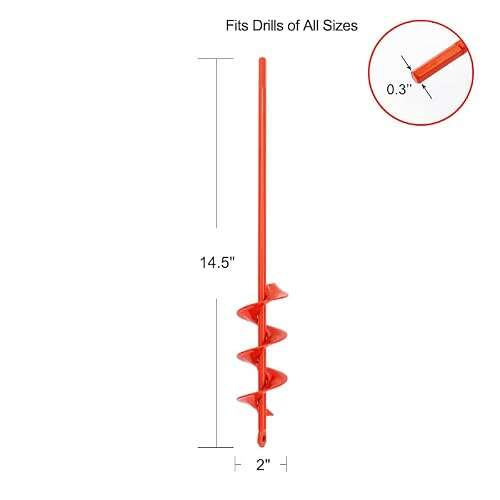
MAXCCINO Auger Bit for Clay Soil

The MAXCCINO auger bit takes a different approach from a standard bulb planter. Instead of forcing a cup into hard soil by hand, it uses a 3/8-inch hex drive so a compatible drill can spin the spiral bit. Its roughly 2-inch diameter suits many tulips, daffodils, crocuses, and small ornamental bulbs. The 14.5-inch length also gives the bit useful reach for common planting depths.
This is the strongest option here for a large bed or soil that becomes stubborn after drying. I recommend using a variable-speed drill and starting slowly, especially in rocky ground. Wet clay slightly before drilling, but avoid planting when the soil is sticky mud because the auger may smear the hole walls. Used with care, this tool can make the best bulb planter for clay soil when speed matters.
Pros:
- Drill-powered design reduces hand and arm strain
- Spiral shape helps pull soil from the hole
- Useful 2-inch diameter for many garden bulbs
- Long shaft supports deeper planting
- Good choice for planting many bulbs at once
- Works for some post, bedding, and soil tasks
Cons:
- Requires a compatible power drill
- May struggle with large stones or heavy roots
- Can smear wet clay if used in poor conditions
My Recommendation
I recommend the MAXCCINO for gardeners planting dozens or hundreds of bulbs in firm clay. It suits users who already own a drill and want the fastest way to open repeated holes. It is less suitable for tiny beds, delicate borders, or anyone who prefers a quiet hand tool. For speed and reduced bending, it offers excellent value when available.
Long-Handle Bulb Planter and Sod Plugger

This 33.5-inch long-handle planter is made for gardeners who do not want to kneel for every bulb. Its tall form lets you press down with body weight, which is helpful when clay feels more like a brick than garden soil. The metal plugger design also makes it useful for soil testing, weeding, and small sod plugs. It is a practical tool for open beds and lawn edges.
The long handle gives this model an important advantage in compacted clay. I would first loosen the surface with a fork, then use the plugger to make clean planting holes. The tool may not remove a perfect plug in bone-dry soil, but steady pressure works well after light watering. For older gardeners or anyone with back pain, this can be the best bulb planter for clay soil because it limits bending.
Pros:
- Long handle reduces kneeling and bending
- Body weight helps press into firm soil
- Useful for bulbs, weeds, and sod plugs
- Good working height for most adults
- Suitable for large lawns and flower beds
- Can create consistent holes with practice
Cons:
- Needs room to use a full downward motion
- May require pre-loosening in very hard clay
- Less precise for tiny containers or tight borders
My Recommendation
This is a strong pick for users who want a simple, drill-free tool with good leverage. It fits large beds, lawn planting, and gardeners who find hand digging painful. Choose it over a short planter if comfort and reach matter most. Its broad use makes it a good value for routine garden work.
FLORA GUARD Bulb Planter with Depth Markers

The FLORA GUARD bulb planter focuses on control and repeatable depth. Its marked body helps you place bulbs at a more even level, which matters for a bed that should bloom in a clean, balanced pattern. A cup-style planter is easy to understand and does not need batteries, cords, or special parts. It is a sensible choice for normal garden soil and moderately firm clay.
In hard clay, technique matters more than speed with this style. I suggest watering the bed the day before, not just minutes before planting. Press the cutting edge down, twist the tool, and lift it rather than forcing one straight push. The depth markers make it easier to avoid shallow planting, so this tool can serve as the best bulb planter for clay soil when neat spacing matters.
Pros:
- Depth markers support even planting
- Simple hand-operated design
- Good for tulips, daffodils, and similar bulbs
- Helps create a uniform flower bed
- Easy to carry and store
- No drill, battery, or cord required
Cons:
- Hard clay can demand extra hand pressure
- Small cup may not suit large bulbs
- Less efficient for planting very large areas
My Recommendation
I recommend the FLORA GUARD for careful gardeners who value depth control over raw speed. It works best after you improve the soil with moisture and compost. This is a good match for a small or medium border where each hole should look tidy. It offers strong everyday value for seasonal bulb planting.
Toresano Bulb Transplanter

The Toresano bulb transplanter is a compact tool for making focused planting holes. Its small format gives you more control near existing plants, roots, and edging. That control helps when clay beds contain shrubs or perennials that you need to work around. It is better suited to detail work than broad field planting.
Clay can grip a narrow planter, so I would use a rocking motion instead of a hard jab. A light layer of mulch should stay out of the hole because loose mulch can change the final depth. This tool is a reasonable choice for gardeners who plant a few bulbs at a time and want a lightweight tool. It may become the best bulb planter for clay soil in a small, carefully managed border.
Pros:
- Compact shape offers good planting control
- Useful around established plants
- Lightweight for short planting sessions
- Easy to store in a small shed or box
- Works well for small bulbs and seedlings
- Good choice for detail work
Cons:
- Less leverage than a long-handle model
- Not ideal for large beds or mass planting
- Clay may cling to the narrow planting cup
My Recommendation
The Toresano suits apartment gardeners, raised beds, and small borders. I would choose it for precision near roots rather than for breaking deep, dry clay. It is easy to handle and does not take much storage space. If your planting area is modest, its simple design can offer good value.
ProPlugger 5-in-1 Garden Tool
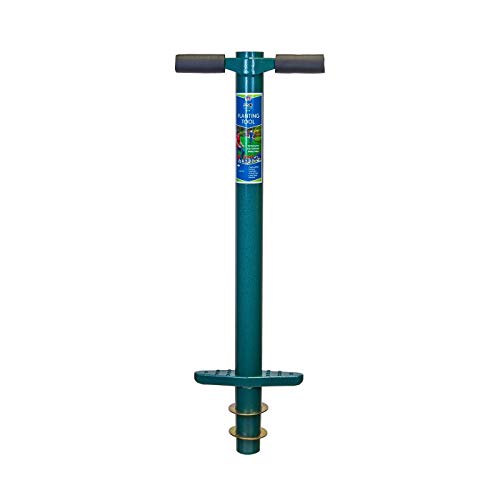
The ProPlugger is designed as more than a bulb planter. It combines several lawn and garden tasks, including planting, weeding, sod plugging, and soil testing. That multi-use design makes sense for gardeners who want one tool instead of a crowded shed. Its long format also lets you work while standing.
For clay soil, the main benefit is leverage. You can use your weight to cut into the surface, then lift a plug before placing the bulb. The tool will still perform better when clay has the right moisture level, and very dry ground may need a fork first. If you need one tool for several jobs, this is a strong candidate for the best bulb planter for clay soil.
Pros:
- Combines five common garden tasks
- Long design reduces bending
- Useful for bulbs and lawn repair
- Can help remove plugs from planting holes
- Good choice for limited storage space
- Practical for year-round garden work
Cons:
- Multi-use design may feel less specialized
- Hard, rocky clay can slow progress
- May be more tool than casual gardeners need
My Recommendation
I recommend the ProPlugger for homeowners who care about versatility. It is especially useful if you also repair grass, remove weeds, or test soil. Choose a dedicated auger for maximum speed, but choose this tool for broader value. It can replace several basic tools in a small garden shed.
XVBITOR Bend-Free Bulb Planter

The XVBITOR planter targets one of the biggest problems with bulb work: repeated bending. Its bend-free format lets you plant from a standing position, which can make a long autumn session much easier. The design is useful for rows, borders, and lawn areas where you need many holes at a similar level. It also keeps your hands farther from wet soil.
In clay, standing height helps, but leverage still depends on the cutting edge and soil moisture. I would use this tool after a light soak and work in short sections. Press down with both hands, twist, and clear the plug before moving on. For users with limited mobility, it may be the best bulb planter for clay soil because comfort can matter as much as cutting power.
Pros:
- Standing design reduces back strain
- Good for repeated bulb planting
- Keeps hands cleaner than short tools
- Useful across beds and lawn areas
- Simple manual operation
- Helps maintain a steady planting rhythm
Cons:
- May need extra force in dry clay
- Less convenient in very tight spaces
- Users may need practice to control depth
My Recommendation
The XVBITOR is best for gardeners who want to protect their back and knees. I would pick it for medium planting jobs where standing comfort matters. It is not the first choice for rock-hard ground, but it performs better when you prepare the soil. Overall, it is a useful comfort-first option.
Jardineer Small Stainless Steel Planter

This compact Jardineer tool is made for close, controlled planting. The stainless steel body resists common garden moisture, while the depth markings help you place bulbs at a consistent level. Its small size feels natural in raised beds, containers, and narrow flower borders. It is also easy to rinse and store after use.
A short hand planter cannot match a drill auger in hard clay, but it can still work well in improved soil. I prefer this style when clay has been mixed with compost and broken into a crumbly texture. Use the pointed end to open the surface, then twist rather than forcing the handle. For small jobs, this may be the best bulb planter for clay soil when precision and low cost matter.
Pros:
- Compact size gives precise control
- Stainless steel resists garden moisture
- Depth markings support even planting
- Fits raised beds and containers
- Easy to clean after use
- Comfortable for short planting jobs
Cons:
- Requires kneeling or bending
- Not suited to large-scale planting
- Needs softened soil for best results
My Recommendation
Choose this Jardineer model for containers, raised beds, and small flower patches. It is a good fit for gardeners who want a light tool with clear depth control. I would not use it as the only tool for untreated, dry clay. In prepared soil, it offers clean handling and dependable everyday value.
Eadwiella Planter with Automatic Soil Release

The Eadwiella planter includes depth markers and an automatic soil-release feature. That release action helps push soil out of the cup, so you spend less time poking at stuck plugs with your fingers. The depth guide is useful when you plant a group of bulbs that should finish at a similar level. This design sits between a simple hand dibber and a larger long-handle plugger.
Clay soil can test the release mechanism, since wet clay often clings more than loose loam. For the cleanest results, let the soil become damp but not wet and sticky. Twist the planter as you push, then lift it in one smooth motion. This feature-rich design can be the best bulb planter for clay soil for gardeners who want easier cleanup and repeatable depth.
Pros:
- Automatic release helps clear soil from the cup
- Depth markers support uniform planting
- Reduces direct contact with muddy soil
- Useful for repeated planting patterns
- Easy to use in beds and borders
- Helpful for gardeners who dislike stuck plugs
Cons:
- Sticky clay may still need manual clearing
- Moving parts need occasional cleaning
- Not as fast as a powered auger
My Recommendation
I recommend the Eadwiella for gardeners who want convenience in a compact planter. It is a smart middle ground for small and medium beds. Choose it when automatic soil release and depth control matter more than maximum drilling power. Its practical features justify considering it for seasonal bulb work.
Jardineer Long-Handle Serrated Planter
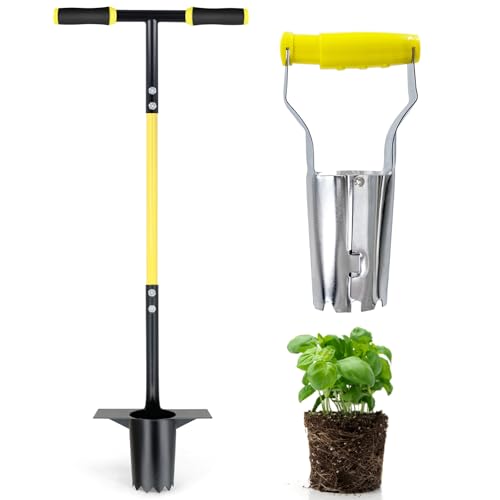
This Jardineer long-handle planter uses a serrated base to help cut through grass, roots, and firm surface soil. Its automatic soil release can make hole clearing easier after you lift the plug. The long handle lets you work while standing, which is a clear advantage during a full afternoon of planting. It suits tulips, daffodils, lilies, and many other common garden bulbs.
The serrated edge is especially useful where clay has formed a hard crust. I would still avoid forcing it into completely dry ground because that can strain the tool and your shoulders. A short soak followed by a twisting motion gives the cutting edge a better chance to work. Among manual designs, this is a strong contender for the best bulb planter for clay soil.
Pros:
- Serrated base helps cut firm surface soil
- Long handle reduces bending and kneeling
- Automatic release speeds hole clearing
- Good for grass and flower beds
- Useful for common spring bulbs
- Suitable for repeated standing work
Cons:
- May need pre-watering in very dry clay
- Long handle is awkward in narrow containers
- Heavier than a small hand planter
My Recommendation
This is my favorite manual option for firm clay and lawn edges. The serrated base gives it more bite than a smooth cup, while the long handle saves your back. I would choose it for medium or large beds when you do not want to use a drill. It provides a good balance of power, comfort, and price.
SiliFine Three-Size Bulb Planter Set

The SiliFine set includes three planter sizes, listed at about 4.5, 3.7, and 2.8 inches. That range gives you more room to match the hole to the bulb instead of using one cup for every task. The stainless steel construction should handle normal garden moisture with simple cleaning. This set is useful when your planting list includes small bulbs, medium bulbs, and larger specimens.
Multiple sizes are helpful in clay because an oversized hole can collapse, while a narrow hole may crush the soil around the bulb. Select the smallest size that gives the bulb room to sit without force. These are hand tools, so damp, prepared clay remains the best working condition. The set can be the best bulb planter for clay soil for gardeners who want flexibility more than speed.
Pros:
- Three sizes fit a broad range of bulbs
- Helps match hole size to bulb size
- Stainless steel is easy to rinse
- Useful for mixed flower collections
- Good for beds, pots, and raised planters
- Offers more flexibility than one fixed cup
Cons:
- Hand pressure is still needed in clay
- Multiple pieces need organized storage
- Not the best choice for mass planting
My Recommendation
I recommend the SiliFine set for collectors and gardeners who grow many bulb types. It is also useful for households that plant both small containers and larger outdoor beds. Pick a powered auger for speed, but choose this set for size flexibility. It gives good value when one planter cannot meet every planting need.
How to Choose the Best Bulb Planter for Clay Soil
Clay soil needs the right timing as much as the right tool. Work when the soil is damp enough to cut but not so wet that it sticks like paste. A simple test is to squeeze a handful. If it forms a shiny, sticky ball, wait. If it crumbles with light pressure, the soil is closer to the right condition.
Tool shape also matters. A serrated edge can cut through a firm crust and fine roots. An auger removes soil quickly and works well for many repeated holes. A long handle gives leverage and reduces bending. A small hand planter gives better control around existing plants, but it needs more effort in hard clay.
Look for a strong shaft, a secure handle, and a cutting edge that will not bend under normal pressure. Depth marks help you plant bulbs at the proper level. A release feature can save time when clay sticks inside the cup. Also check the planter diameter, since a tulip bulb and a large lily bulb do not need the same hole size.
How I Compare Bulb Planters for Clay
I focus on four points: cutting power, comfort, control, and cleanup. Cutting power shows whether the tool can enter firm soil without excessive force. Comfort matters because bulb planting often means making dozens of holes. Control includes depth, hole size, and placement near other plants. Cleanup matters because clay can turn a simple job into a sticky mess.
I also consider the scale of the job. A drill auger makes sense for a large border, while a hand tool is better for a few bulbs. Long-handle planters help people who cannot kneel easily. Small stainless tools fit containers and raised beds. No single design wins every task, so the best bulb planter for clay soil depends on your garden and your body.
Best Features at a Glance
| Best for | Why |
|---|---|
| Large beds and many bulbs | The MAXCCINO auger opens repeated holes with drill power. |
| Back-friendly manual planting | The Jardineer serrated long-handle model works from a standing position. |
| Mixed bulb sizes | The SiliFine set offers three planter sizes for better fit. |
FAQs Of best bulb planter for clay soil
What is the best bulb planter for clay soil?
The MAXCCINO auger is the best choice for large jobs and very firm soil when you have a compatible drill. For a manual option, the Jardineer long-handle serrated planter offers strong leverage and good comfort.
Should I wet clay soil before planting bulbs?
Yes, but use light moisture. Damp clay cuts more easily than dry clay, while soaking wet clay becomes sticky and can seal the hole walls. Wait until the soil crumbles instead of smearing.
Can a hand bulb planter work in hard clay?
It can, but preparation helps. Loosen the top layer with a garden fork, work after light watering, and twist the planter as you press. A long handle or auger will reduce effort.
How deep should bulb holes be?
Depth depends on the bulb type. As a general guide, many bulbs go in at about two to three times their height, but always check the planting instructions for that specific bulb.
Is a bulb auger safe for existing plants?
Use care. An auger can damage nearby roots, irrigation lines, or buried cables. Keep space around established plants and stop if the bit meets a hard object.
Final Verdict: Which Should You Buy?
The MAXCCINO auger is the best bulb planter for clay soil when you need speed and have a drill. For manual work, I prefer the Jardineer long-handle serrated planter for its leverage and comfort.
Choose your tool by soil hardness, planting volume, and mobility. With the right moisture and depth, planting bulbs in clay becomes much easier.

Laura Bennett is a gardening writer at MyGardenLabs who creates beginner-friendly guides focused on solving common plant care and gardening problems.