Best Tools For Cutting Grass And Weeds: Top Picks
The best tools for cutting grass and weeds combine sharp blades, easy control, safe use, and the right power for your yard.
A yard can change fast. One week, grass looks neat; the next, weeds crowd the fence, ditch, or garden edge. I have found that the right cutter saves time, strain, and repeat work. This guide compares hand scythes, grass whips, weed pullers, and cordless trimmers. I also explain where each tool works best, what it cannot do, and which option offers the best value for common home tasks.
Walensee 41-Inch Double-Edged Scythe

The Walensee 41-inch double-edged scythe gives you a simple way to clear tall grass and soft weeds without fuel, cords, or battery charging. Its long handle lets you work while standing, which helps reduce the bending that makes hand weeding tiring. The two-sided blade supports a steady swing from either direction. I see it as a strong fit for paths, field edges, ditch banks, and rough parts of a larger yard.
A manual scythe works best when the blade stays sharp and the user keeps a smooth rhythm. It is quieter than a powered weed eater, so it suits early morning work and areas near neighbors. It also produces no exhaust and needs little care beyond cleaning and safe storage. For buyers seeking the best tools for cutting grass and weeds without running costs, this design is practical and easy to understand.
Pros:
- Double-edged blade supports cuts in both directions
- Long handle helps limit bending
- No gas, cords, or battery required
- Quiet operation for residential areas
- Useful for tall grass and soft weeds
- Simple design needs little maintenance
Cons:
- Requires physical effort and proper swing technique
- Not the best choice for thick woody stems
- Blade needs regular cleaning and sharpening
My Recommendation
I recommend this scythe for homeowners with uneven ground, long grass, or large edges that do not need a perfect lawn finish. It is especially useful for people who want a quiet hand tool and do not want to manage fuel or chargers. The long handle makes it more comfortable than a short sickle, though it still demands safe spacing and controlled movement. Among the best tools for cutting grass and weeds, it stands out for low upkeep and dependable manual power.
| Best for | Why |
|---|---|
| Tall grass | The long handle and wide blade cover ground with each swing. |
| Quiet yard work | It makes no motor noise or exhaust. |
| Large rough edges | It works without fuel or battery limits. |
YEELOR 51-Inch Adjustable Weeding Sickle
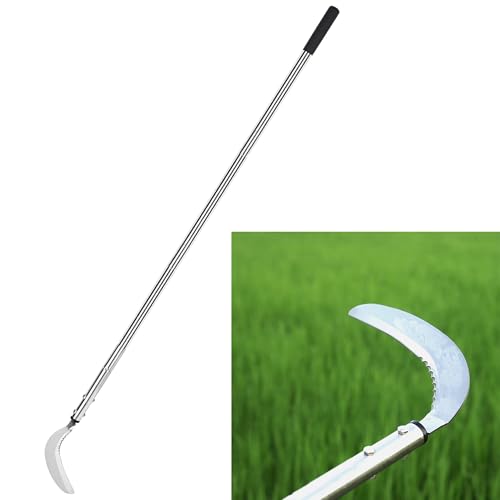
The YEELOR weeding sickle uses a long, adjustable handle to give you more reach over weeds and grass. That extra reach can help when you work along a fence, behind shrubs, or beside a shallow ditch. Its sickle-style blade is made for cutting rather than pulling, so it can clear a patch faster than a small hand weeder. The adjustable setup also gives users more control over working height.
I would use this tool for light clearing, garden borders, and weeds that have grown beyond easy hand reach. It does not replace a mower for a broad lawn, but it can reach places a mower cannot safely enter. As with any sharp manual cutter, a slow stroke is safer and more effective than a hard chop. It is one of the best tools for cutting grass and weeds when reach matters more than motor speed.
Pros:
- Long handle improves reach
- Adjustable design can suit different users
- Helpful around fences, beds, and ditches
- No battery or fuel costs
- Lightweight manual operation
- Useful for spot clearing and light growth
Cons:
- Manual swinging can tire the arms
- May struggle with thick, woody weeds
- Needs careful blade storage
My Recommendation
The YEELOR is best for gardeners who need a long-reach cutter for weeds in awkward places. I like it for users who want to stay upright and avoid carrying a powered trimmer for a small job. It offers good value when the work is scattered and light, rather than dense and extensive. If you want the best tools for cutting grass and weeds around beds, paths, and fence lines, this sickle is worth considering.
| Best for | Why |
|---|---|
| Fence lines | The long handle reaches under and beside narrow spaces. |
| Different user heights | The adjustable shaft can improve working comfort. |
| Small weed patches | It starts at once and needs no setup time. |
Walensee 48.4-Inch Double-Edged Scythe

This 48.4-inch Walensee scythe adds more handle length for users who prefer a wider, more upright stance. The double-edged blade is designed to cut grass and weeds during a controlled side-to-side motion. A longer shaft can also help you cover a larger arc without stepping into every patch. I find that this style is most useful on open ground where you have room to swing safely.
The extra length is helpful, but it also means the tool may feel less nimble in tight garden beds. Keep the blade away from stones, wire, and hidden objects, since hard contact can damage the edge. The scythe has no motor to tune and no power pack to charge, which keeps operating costs low. For a quiet property owner, it remains one of the best tools for cutting grass and weeds on rough ground.
Pros:
- Long shaft supports an upright working position
- Double-edged blade covers both swing directions
- Good reach for open areas
- Quiet and emissions-free operation
- No cord limits movement
- Suitable for tall grass and light weeds
Cons:
- Longer design needs more swing space
- Can feel tiring during long sessions
- Hard debris may nick the blade
My Recommendation
I recommend this version for taller users and anyone clearing open strips of grass, field edges, or neglected corners. It suits a buyer who values reach and simple care over push-button speed. Wear sturdy shoes, eye protection, and gloves, and check the area before each pass. As best tools for cutting grass and weeds go, this scythe offers a useful balance of reach, quiet work, and low operating cost.
| Best for | Why |
|---|---|
| Tall users | The longer shaft can reduce excessive bending. |
| Open field edges | Its swing has room to work safely. |
| Low-cost maintenance | It needs no fuel, cable, or battery. |
BlumWay 60-Inch Serrated Grass Cutter

The BlumWay 60-inch grass cutter is built for reach and broad manual clearing. Its serrated steel blade can grip and cut through grass and softer weeds as you draw it through growth. The long handle helps keep your body farther from the vegetation, which is useful around rough ditches and brushy borders. I would choose it for open, overgrown spaces rather than delicate garden work.
This is a simple tool, but technique matters. Use smooth strokes and let the serrated edge do the work instead of forcing the handle. The large size may feel awkward for short users or in crowded beds, so measure your work area before buying. It belongs on a shortlist of the best tools for cutting grass and weeds when you need long reach without a gasoline engine.
Pros:
- 60-inch handle offers strong reach
- Serrated edge helps catch grass and weeds
- Double-edged design supports repeated strokes
- No fuel, cord, or charger required
- Useful for ditches and field margins
- Simple construction is easy to understand
Cons:
- May be too long for small yards
- Requires room for safe movement
- Manual work can become tiring
My Recommendation
The BlumWay is best for property owners who clear tall growth on open ground and want maximum reach. It can be a good choice for ditches, rural edges, and areas where a powered tool feels excessive. I would not pick it for close trimming around flowers or for cutting thick brush. For the right space, it offers strong value and belongs among the best tools for cutting grass and weeds in large, rough areas.
| Best for | Why |
|---|---|
| Ditches | The long handle keeps the user farther from the edge. |
| Rural properties | It clears growth without fuel or electricity. |
| High weeds | The serrated blade helps hold material during a stroke. |
20V Cordless Weed Wacker and Edger

This 20V cordless weed wacker brings powered cutting to lawn edges, small patches, and garden borders. Its 12-inch cutting area can help finish a yard after mowing, especially where a mower cannot reach. The cordless design removes the drag of an extension cable and makes quick jobs easier to start. A battery and charger are included, which is useful for buyers building a small yard-care kit.
A string trimmer is fast, but it also needs sensible handling. Keep the head away from windows, pets, people, and loose stones, because line can throw small debris. Battery run time depends on grass height, line use, temperature, and cutting pressure. In my view, this is one of the best tools for cutting grass and weeds for homeowners who want speed without a gas engine.
Pros:
- Cordless design improves movement
- 12-inch cutting width suits common edging jobs
- 20V power handles routine grass trimming
- Battery and charger add starter value
- Faster than a manual scythe for small lawns
- Useful for borders and hard-to-reach spots
Cons:
- Battery run time limits long sessions
- String line needs replacement
- May not suit very thick brush
My Recommendation
I recommend this weed wacker for suburban homeowners who want a quick finish after mowing. It is a practical pick for sidewalks, beds, posts, and lawn edges. It suits users who prefer less physical effort but do not want the noise, fuel, and storage needs of a gas trimmer. Among the best tools for cutting grass and weeds, this model offers a useful mix of portability and speed.
| Best for | Why |
|---|---|
| Lawn edging | The compact cutting area gives better control near borders. |
| Small and medium yards | Cordless power handles routine cleanup with easy movement. |
| Quick touch-ups | A battery tool starts faster than a gas machine. |
True Temper Grass Whip with 22-Inch Handle

The True Temper grass whip takes a compact approach to cutting tall grass and weeds. Its 22-inch hardwood handle gives you close control, while the double-edged serrated blade helps cut in either direction. This format works well where a long scythe feels too large, such as narrow walkways, small slopes, and fence borders. It is also easy to store in a shed or garage.
The shorter handle means you may need to bend more than with a long-handled cutter. Still, the compact size can make each stroke more precise and easier to guide. I would use it for small areas rather than an entire overgrown lot. It is among the best tools for cutting grass and weeds when you want quiet manual control in tight spaces.
Pros:
- Compact size suits narrow areas
- Double-edged serrated blade supports both directions
- Hardwood handle offers a traditional feel
- Easy to store in a small shed
- No fuel, cord, or battery needed
- Good control for border work
Cons:
- Short handle may require bending
- Not ideal for large fields
- Manual strokes take more time than powered trimming
My Recommendation
The True Temper grass whip is best for small yards, narrow strips, and users who value a sturdy manual tool. It makes sense when a full-size scythe would be hard to control or store. I would choose it for occasional clearing near fences, sheds, and garden edges. It offers dependable value for buyers seeking the best tools for cutting grass and weeds without adding another powered machine.
| Best for | Why |
|---|---|
| Narrow borders | The short handle is easier to guide in tight spaces. |
| Small storage areas | Its compact shape takes little room. |
| Quiet cleanup | Manual cutting creates no engine noise. |
Fiskars Ergo Garden Hand Weeder

The Fiskars Ergo hand weeder serves a different purpose from a grass cutter. It removes individual weeds, including roots, from garden beds and loose soil. Its ergonomic shape helps you apply pulling force with less twisting than a basic narrow tool. I find it most useful when the goal is clean beds, not fast clearing across a large lawn.
Root removal can reduce the chance of a weed returning, although no hand tool can prevent every new seed. Work when the soil is slightly damp, since roots often release more easily after light rain. The tool is small, easy to carry, and useful beside flowers where a string trimmer could cause damage. It belongs in a complete collection of the best tools for cutting grass and weeds because careful weed control often needs more than one tool.
Pros:
- Targets weeds at the root
- Good control near flowers and vegetables
- Ergonomic shape supports a firm grip
- Small size is easy to store
- No noise, fuel, or charging needed
- Useful for precise garden work
Cons:
- Not designed for cutting tall grass
- Slow for broad weed-covered areas
- Hard, dry soil can make pulling difficult
My Recommendation
I recommend the Fiskars hand weeder for gardeners who want to remove weeds instead of simply cutting their tops. It pairs well with a scythe or trimmer: use the larger tool for clearing, then use this one around plants. This is a smart choice for flower beds, vegetable gardens, and small cracks where accuracy matters. In a list of the best tools for cutting grass and weeds, it is the precision specialist.
| Best for | Why |
|---|---|
| Garden beds | Its small shape helps protect nearby plants. |
| Root removal | It lets you work below the soil line. |
| Spot weeds | It avoids the mess and drift of powered cutting. |
DACK 36-Inch Grass Whip

The DACK 36-inch grass whip sits between a short hand cutter and a full-size scythe. Its double-edged serrated blade is made for swinging through tall grass and overgrown weeds. The medium handle offers more reach than a compact whip while remaining easier to control than a very long tool. This makes it a flexible option for yards, ditches, and woodland edges.
I like this size for users who want manual power but do not have a large open field. It can clear growth near a property line without the storage demands of a long shaft. The work remains physical, so take breaks and keep your swing smooth. For people comparing the best tools for cutting grass and weeds, this model offers a useful middle ground.
Pros:
- Medium handle balances reach and control
- Double-edged blade supports two-way cutting
- Serrated edge helps grip tall growth
- Works without fuel or electricity
- Suitable for yards, ditches, and field edges
- More compact than a full-size scythe
Cons:
- Still requires regular physical effort
- Not suited to thick woody brush
- Sharp blade requires careful storage
My Recommendation
The DACK grass whip is best for homeowners who need more reach than a short cutter but less bulk than a 60-inch model. It suits medium-size overgrowth and users who want a quiet tool for occasional clearing. I would select it for ditch edges, long driveway borders, and rough sections of lawn. It is a balanced entry in the best tools for cutting grass and weeds category and offers solid versatility for the price.
| Best for | Why |
|---|---|
| Medium-size yards | The handle gives useful reach without excessive bulk. |
| Ditch edges | It can cut growth without a fuel engine. |
| New manual-tool users | The middle size is easier to manage than a very long scythe. |
RAXONE 24V Cordless Weed Wacker

The RAXONE 24V cordless weed wacker is designed for small trimming and edging tasks. Its 8-inch cutting area can provide close control around sidewalks, flower beds, and lawn borders. The 3-in-1 design gives it more flexibility than a basic grass trimmer, especially for users who want one compact tool for several light jobs. Cordless operation also makes it easy to move around trees and posts.
This type of trimmer is best when you value convenience over heavy-duty clearing. It can handle routine grass and light weeds, but thick growth may reduce cutting speed and battery life. Keep the head level for trimming and use care near hard surfaces. I consider it one of the best tools for cutting grass and weeds for small yards, apartment gardens, and quick weekly touch-ups.
Pros:
- 24V cordless operation improves portability
- Compact 8-inch head gives close control
- 3-in-1 design supports several light tasks
- Useful around trees and garden borders
- Easy to carry and store
- Good for quick maintenance work
Cons:
- Small cutting width covers ground slowly
- Not intended for dense brush
- Battery capacity limits long jobs
My Recommendation
I recommend the RAXONE for small yards and users who need a light, simple trimmer for routine upkeep. It is especially useful around beds and hard edges where a large trimmer may feel clumsy. Buyers with tall, dense weeds should choose a stronger tool or a manual grass whip instead. For light maintenance, it earns a place among the best tools for cutting grass and weeds because it is easy to carry and quick to use.
| Best for | Why |
|---|---|
| Small yards | The compact head handles short trimming tasks well. |
| Garden borders | Its small size improves control near plants. |
| Weekly touch-ups | Cordless use makes short jobs convenient. |
Grampa’s Weeder Stand-Up Weed Puller

Grampa’s Weeder uses a long bamboo handle and a stand-up design to pull weeds from the ground. It lets you work without kneeling, which can make a real difference for users with sore knees or limited mobility. The claw-style end grips a weed near its base, and a lever action helps lift the roots. This is a weed removal tool, not a grass cutter, but that distinction is useful when planning complete yard care.
For best results, place the claw over the weed, push it into softer soil, and pull with steady pressure. Damp soil often makes deep-rooted weeds easier to remove. It works best on individual weeds in lawns and beds, not on a solid carpet of growth. I include it among the best tools for cutting grass and weeds because removing roots can reduce repeat growth after you clear a larger area.
Pros:
- Allows standing weed removal
- Reduces kneeling and bending
- Pulls many weeds with their roots
- No chemicals, fuel, or charging needed
- Useful for lawns and garden beds
- Long handle improves reach
Cons:
- Not designed to cut tall grass
- Works poorly in very hard, dry soil
- Leaves a small hole after root removal
My Recommendation
Grampa’s Weeder is best for people who want root removal without kneeling. It is a smart companion to a scythe or trimmer and can help finish the job after you cut a weedy area down. I especially recommend it for older gardeners and anyone managing knee or back discomfort. Among the best tools for cutting grass and weeds, it fills the important role of targeted, low-strain weed control.
| Best for | Why |
|---|---|
| Older gardeners | The stand-up design reduces kneeling. |
| Deep-rooted weeds | The claw can lift the root instead of only cutting the top. |
| Chemical-free care | It removes weeds through hand leverage. |
How to Choose the Best Tools for Cutting Grass and Weeds
The right tool depends on the job, not just the product rating. A cordless trimmer works well for lawn edges and quick cleanup, while a scythe covers tall grass on open ground without a battery. A hand weeder makes more sense near flowers, where a spinning line could damage stems. I always start by asking how thick the growth is, how large the area is, and whether the ground contains rocks or wire.
Handle length also matters. Long handles improve reach and reduce bending, but they need more swing space. Short tools give better control in tight areas, though they may increase arm or back strain. For regular use, choose a grip that feels stable and keep both hands in a position that supports a smooth motion.
Manual Tools Versus Cordless Trimmers
Manual cutters are quiet, simple, and inexpensive to operate. They never run out of battery, but they do require more effort from your arms, shoulders, and core. Cordless trimmers save time and physical energy, but they need charging, line replacement, and safe battery storage. For many yards, the best tools for cutting grass and weeds are a combination of both types.
Blade and Line Safety
Before cutting, walk the area and remove stones, toys, wire, and fallen branches. Wear safety glasses, closed shoes, long pants, and gloves. The Consumer Product Safety Commission and workplace safety guidance both stress the risk of flying debris from powered lawn tools. Keep children and pets away, and never point a running trimmer toward another person.
Care and Storage Tips
Clean soil and plant sap from blades after use. Dry metal parts before storage to slow rust. Check bolts, guards, handles, and battery contacts before the next job. Keep sharp tools in a dry place where children cannot reach them. A sharp blade usually cuts more cleanly, while a dull blade encourages force and poor control.
FAQs Of best tools for cutting grass and weeds
What is the best tool for cutting tall grass?
A long-handled scythe or grass whip works well for tall grass on open ground. Choose a cordless trimmer when you need faster cutting or a cleaner finish around lawn edges.
Can a weed puller cut grass?
No. A weed puller removes individual weeds and roots. It cannot replace a mower, scythe, or string trimmer for broad grass cutting.
Are manual grass cutters better than gas trimmers?
Manual cutters are quieter, simpler, and cheaper to operate. Gas trimmers usually work faster over large or dense areas but create more noise, exhaust, and maintenance work.
What safety gear should I wear?
Wear eye protection, gloves, closed-toe shoes, and long pants. For powered trimmers, add hearing protection and use the guard supplied with the tool.
How do I choose between a scythe and a cordless trimmer?
Choose a scythe for quiet work on open ground and a cordless trimmer for speed, edging, and light-to-medium lawn cleanup. Consider the area size, growth thickness, and your comfort with physical effort.
Final Verdict: Which Should You Buy?
For most homeowners, the 20V cordless weed wacker is the best all-around choice for quick edging and grass cleanup. Choose the Walensee scythe for quiet work across tall grass, and the Fiskars or Grampa’s Weeder for root-level weed control.
The best tools for cutting grass and weeds match the task, terrain, and user. A small set with a trimmer, manual cutter, and root weeder can keep a yard neat through the 2026 growing season.

Laura Bennett is a gardening writer at MyGardenLabs who creates beginner-friendly guides focused on solving common plant care and gardening problems.