What Is The Use Of Transplanter: Benefits And Uses Explained
A transplanter places young seedlings into soil quickly, evenly, and at the correct depth and spacing.
If you have ever planted hundreds of seedlings by hand, you know how slow, tiring, and uneven the work can become. This guide explains what is the use of transplanter, how the machine works, which crops need it, and how farmers can choose and operate one wisely.
What Is a Transplanter?
A transplanter is a farm machine that moves young plants from trays or seedbeds into prepared soil. It creates a planting hole, places a seedling, covers its roots, and firms the soil around it.
Some machines need a person to feed each seedling by hand. Others use automatic systems to pick and place plants. The basic goal stays the same: put each plant in the right place with less labor.
The use of transplanter is common in vegetable farming, rice production, tobacco growing, and nursery work. It helps farmers plant many seedlings in straight rows and at a steady distance.

Unlike a seeder, a transplanter handles living plants rather than dry seeds. This difference matters because seedlings need careful handling, enough soil around their roots, and good contact with moist soil.
A transplanter may be pulled by a tractor, mounted on a tractor, or powered by its own engine. Small walk-behind models suit gardens and small farms. Large riding models suit commercial farms with many acres.
What Is the Use of Transplanter in Farming?
The main use of transplanter is to move seedlings from trays or nursery beds into open fields. It performs several tasks during one pass.
These tasks often include:
- Opening a small furrow or planting hole
- Picking up or receiving a seedling
- Placing the seedling at a set depth
- Covering the roots with soil
- Pressing soil around the plant
- Keeping rows straight
- Setting plant spacing
This process saves time when compared with manual planting. It also reduces the bending and lifting that can cause fatigue during long workdays.
For example, a vegetable grower may raise tomato plants in trays. Once the plants reach the right size, a transplanter can place them in the field at regular intervals. The grower can then focus on irrigation, weed control, and crop care.
The use of transplanter also supports better field planning. Even spacing gives each plant a fair share of sunlight, water, air, and nutrients.
Still, a transplanter does not replace good farm preparation. The soil must be ready, seedlings must be healthy, and workers must set the machine correctly.
How Does a Transplanter Work?
A transplanter uses a set of linked parts that work together as the machine moves. Each part has a simple job, but timing is important.
Main parts of a transplanter
Most machines include:
- A frame that holds the working parts
- A seedling tray or planting platform
- A metering unit that controls plant placement
- A furrow opener or planting shoe
- A seedling guide or gripper
- Press wheels that close soil around the roots
- A drive wheel or power system
- A seat for the operator on many models
In a hand-fed model, a worker sits on the machine and places one seedling into a rotating cup, finger, or clamp. The device carries the seedling down to the planting point.
The furrow opener makes a narrow opening in the soil. The seedling drops into that opening. Press wheels then push soil toward the roots.
The use of transplanter depends on accurate timing between ground speed and the planting unit. If the machine moves too fast, seedlings may fall late or land at uneven distances.
Many modern machines allow the operator to adjust:
- Row spacing
- Plant spacing
- Planting depth
- Machine speed
- Number of planting rows
- Tray or cup settings
A short test run is important. It can reveal missed plants, deep planting, shallow planting, or damaged seedlings before the full field is planted.
Types of Transplanters
Transplanters differ by size, power source, planting method, and crop type. Choosing the right design can improve both speed and plant survival.
Manual transplanters
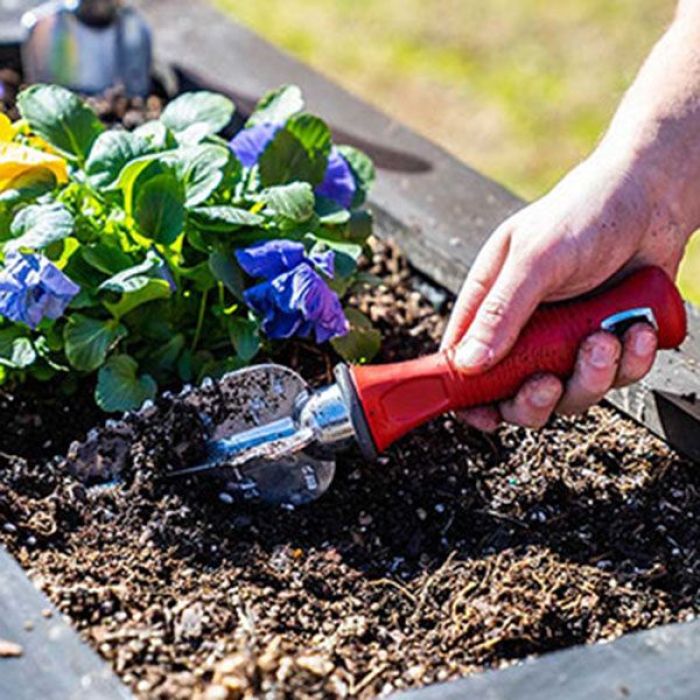
A manual transplanter is a simple tool used by one person. It may open a hole and release a seedling with a hand lever.
This type suits gardens, small plots, and growers with limited budgets. It costs less, but it still requires frequent bending or walking.
Walk-behind transplanters
A walk-behind transplanter has an engine or motor and moves under the operator’s control. It can plant one or more rows.
This model is useful for small and mid-sized farms. It offers more speed than hand planting without the cost of a large tractor-mounted unit.
Tractor-mounted transplanters
A tractor-mounted transplanter attaches to a tractor’s three-point hitch. It may use tractor power or a ground-driven system.
This machine can cover larger areas and often carries several workers. It is a good choice for farms that already own a suitable tractor.
Riding transplanters
A riding transplanter lets workers sit while feeding seedlings. It reduces walking and can cover many rows in one pass.
Commercial vegetable farms often use this design. It can plant quickly, but it needs more space, maintenance, and capital.
Automatic transplanters
An automatic transplanter uses mechanical or robotic systems to pick seedlings from trays and place them in the soil. Some models use cameras, grippers, or specialized cups.
Automatic machines can reduce labor needs. However, they often require uniform trays, similar seedling sizes, and careful setup.
The use of transplanter is most effective when the machine matches the farm size, crop, soil, and available labor.

Which Crops Use a Transplanter?
A transplanter works best with crops that begin life in trays, nursery beds, or protected growing areas. Common examples include:
- Tomatoes
- Peppers
- Cabbage
- Broccoli
- Cauliflower
- Lettuce
- Onions
- Tobacco
- Sweet potatoes
- Rice seedlings
- Eggplant
- Melons in some systems
Vegetable growers often transplant because early growth is easier to manage in a nursery. Seedlings can receive close care, protection from pests, and controlled water before they enter the field.
Rice transplanters are designed for wet fields. They place young rice seedlings into flooded or saturated soil in organized rows. Their design differs from vegetable transplanters.
The use of transplanter for each crop depends on the seedling’s root ball, stem strength, size, and planting method. A machine designed for rice may not work well for tomato plugs.
Some crops are better direct-seeded. Carrots, wheat, corn, and many beans often grow well when seeds go straight into the field. A transplanter is not automatically the best tool for every crop.
Benefits of Using a Transplanter
The use of transplanter offers several practical benefits when the field and seedlings are ready.
Saves labor
Planting by hand can require many workers. A transplanter lets a small crew plant more land in less time.
This benefit is especially important when a farm has a narrow planting window. Delayed planting can reduce yield or cause crops to mature during poor weather.
Improves spacing
Even spacing helps plants use field resources more evenly. It also makes cultivation, spraying, irrigation, and harvesting easier.
Straight rows can support mechanical weed control. They may also reduce crop damage during later field work.
Reduces physical strain
Manual transplanting often involves repeated bending, carrying, and kneeling. A riding or tractor-mounted machine can reduce some of this strain.
Workers still need to handle seedlings, but their posture and work rate may improve.
Supports fast field coverage
A machine can plant many rows during one workday. The exact speed depends on the model, crop, soil, operator, and number of workers.
Faster planting can help farms use fresh seedlings at the right growth stage.
Promotes uniform crop growth
Plants set at a similar depth and spacing often have more uniform access to water and light. This can simplify crop management.
Uniformity does not guarantee a high yield. Weather, soil fertility, disease, and irrigation still have major effects.
Helps manage nursery-grown plants
A transplanter makes it easier to use protected nurseries. Farmers can start plants early and move them outdoors when field conditions improve.
This approach may extend the growing season in regions with short springs.

Limitations and Challenges
A transplanter is useful, but it is not a perfect solution. Understanding its limits helps prevent poor results.
It needs prepared soil
Hard, wet, rocky, or cloddy soil can block the planting shoe. It may also prevent roots from making good contact with the soil.
The field should have suitable moisture and a reasonably smooth surface before planting begins.
Seedlings must be uniform
Automatic and semi-automatic models work best when seedlings have similar height, root ball size, and stem strength. Weak or overgrown plants may fall, break, or fail to feed correctly.