What Tool To Dig Split Hostas With: Best Tool Guide
A sharp garden spade and sturdy digging fork are the best tools to dig and split hostas safely.
Choosing what tool to dig split hostas with depends on the plant’s size, soil type, and root density. After years of dividing perennials, I have found that the right combination of tools makes the job faster, cleaner, and far less stressful for both the gardener and the plant.
What tool to dig split hostas with?
The best basic setup is a sharp spade paired with a strong garden fork. Each tool has a different job.
A garden fork loosens the soil around the hosta without slicing through as many roots. A sharp spade then cuts through the crown when the plant is too large to pull apart by hand.
For most home gardens, gather these tools:
• A sharp digging spade for cutting into the soil and crown
• A sturdy garden fork for lifting the root ball
• A hori hori knife for small plants or fine root work
• Clean pruning shears for damaged roots and leaves
• A bucket of water for rinsing soil from the crown
• Work gloves to protect your hands
The best answer to what tool to dig split hostas with is usually not one tool. A fork loosens the plant, while a spade or hori hori knife divides it. Using the tools together gives you better control.
A dull spade can crush roots instead of making a clean cut. A weak fork may bend when it meets compacted clay or a mature hosta crown. Strong, clean tools are worth the small investment.
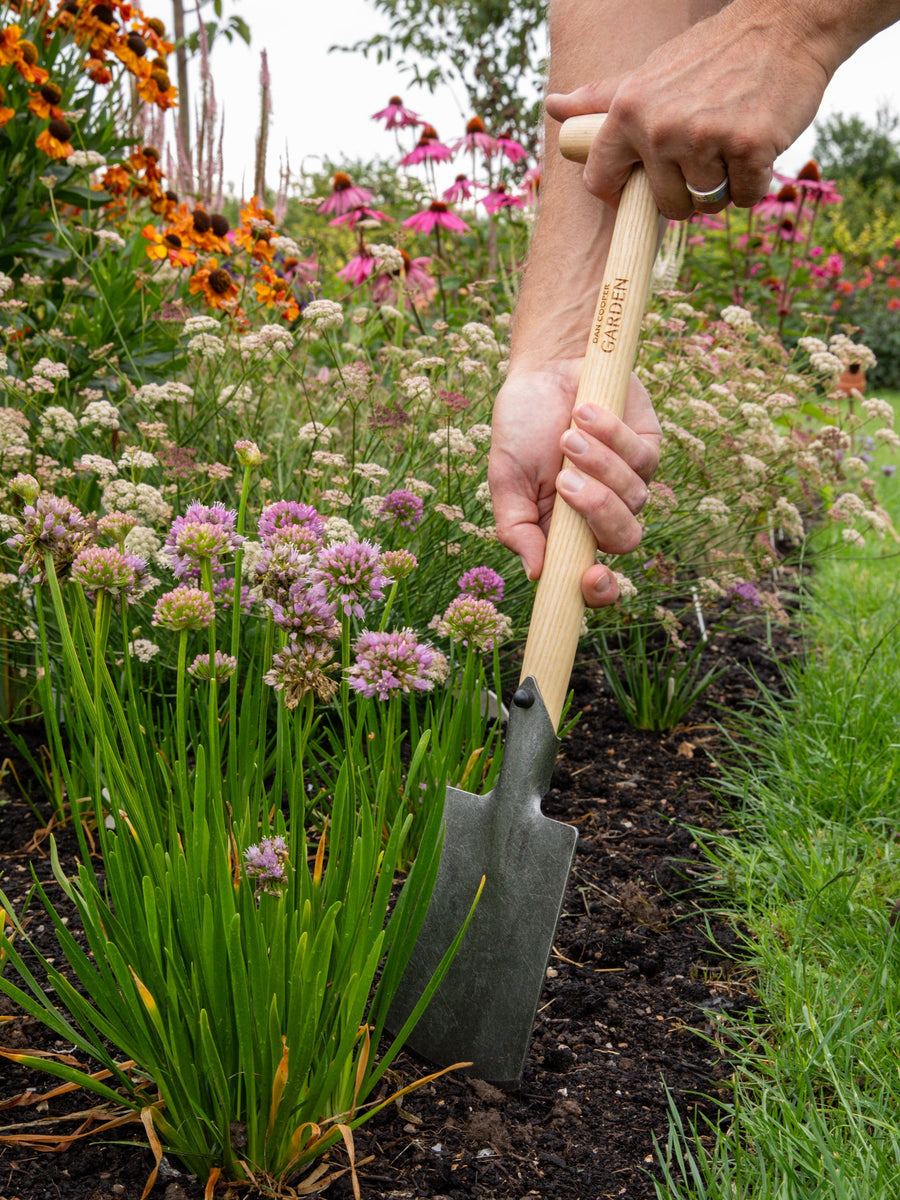
The best tools for different hosta sizes
Hostas vary greatly in size. A small plant may lift with a hand trowel, while a mature hosta can have a large, woody crown that needs serious leverage.
Small hostas
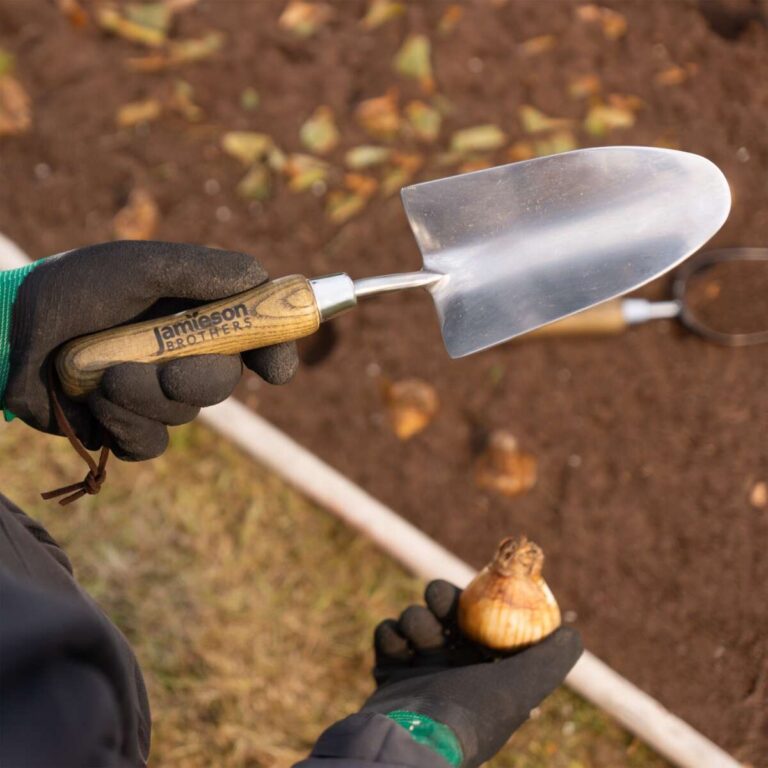
Use a hand trowel or hori hori knife for young hostas. These plants often have a small root system and a soft crown.
Insert the tool several inches from the plant’s center. Work around the plant in a circle before lifting it. This method helps protect the outer roots.
A hori hori knife is useful because it has a narrow blade and a pointed tip. It can cut through light soil and small roots without disturbing a wide area.
Medium hostas
A border spade or digging fork works well for medium hostas. Push the fork into the soil at least 6 inches from the crown.
Rock the handle gently to loosen the soil. Move around the plant until the root ball begins to rise. Then lift the hosta with both hands under the root mass.
Large hostas
Large hostas need a full-size spade and a strong garden fork. Their crowns may be dense, heavy, and difficult to separate.
A square-edged spade is often best for cutting the crown. Its straight blade gives you more control than a rounded shovel.
When deciding what tool to dig split hostas with, choose a tool that matches the plant’s size. A small hand tool may work well on a young plant but can bend or break against a mature crown.
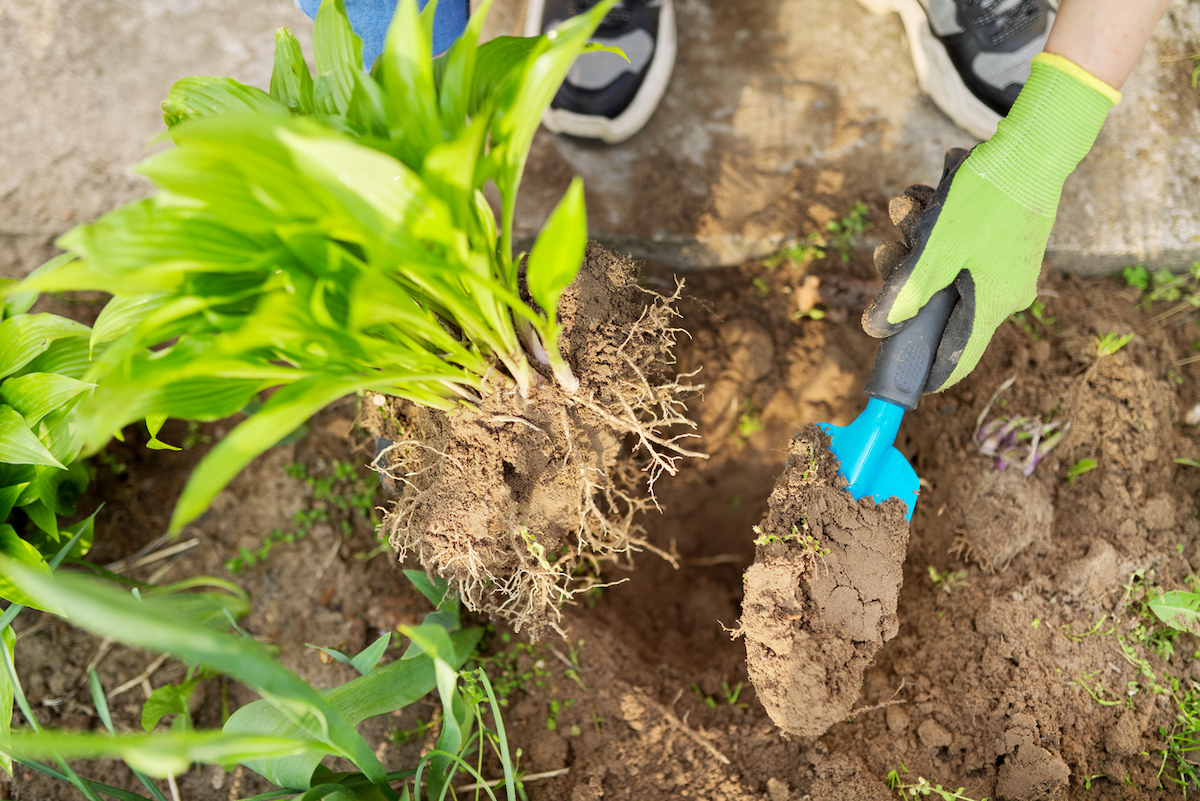
Why a garden fork is often better than a shovel
A digging fork has narrow tines that enter the soil with less resistance. It can loosen soil around the hosta while reducing the chance of cutting through the entire root system.
A shovel removes soil quickly, but its wide blade can slice roots as you dig. That is not always harmful, since hostas tolerate division well, but unnecessary root damage can increase transplant stress.
Use a fork when:
• The soil is loose or moderately compact
• You want to lift the root ball with fewer cuts
• The hosta is near other plants
• You are dividing a small or medium clump
Use a spade when:
• The soil is heavy clay
• The plant has a dense, mature crown
• You need to cut the crown into sections
• The root ball will not separate by hand
In my own garden, I once used only a shovel on a large hosta in dry clay. The blade stopped halfway through the root ball, and I had to force it down with my foot. The crown split unevenly, and several outer roots tore. Since then, I loosen the soil with a fork first and use the spade only when I need a clean cut.

How to dig up a hosta without damaging it
Knowing what tool to dig split hostas with is only part of the process. The way you use the tool matters just as much.
Start by watering the hosta deeply one day before you divide it. Moist soil is easier to dig, but it should not be muddy. Wet clay can cling to tools and make the root ball heavy.
Follow these steps:
-
Cut back damaged or floppy leaves if needed.
-
Mark a circle around the hosta, about 6 to 12 inches from the crown.
-
Push a garden fork straight down along the marked circle.
-
Work around the plant and loosen the soil from several sides.
-
Slide the fork under the root ball.
-
Lift the hosta slowly instead of pulling on the leaves.
-
Brush or rinse away enough soil to see the crown.
-
Divide the crown with a sharp spade or clean knife.
Do not lift a hosta by its leaf stems. The stems can tear away from the crown, especially when the plant is wet or heavy.
If the hosta will not lift, do not keep pulling. Push the fork deeper and loosen more soil beneath the root ball. Patience is often more useful than force.
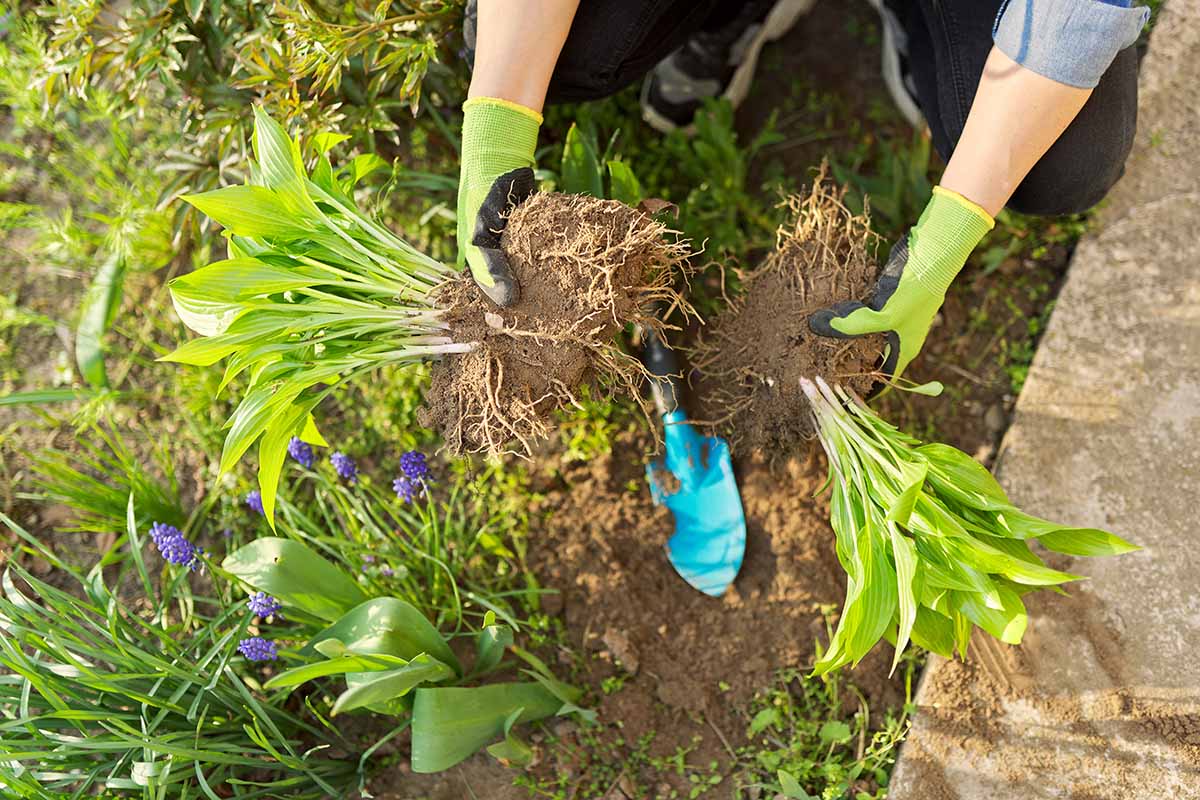
How to split a hosta crown
Once the hosta is out of the ground, inspect the crown. Look for natural sections where shoots connect to separate pieces of crown and roots.
A small hosta may pull apart with your hands. For a larger plant, place the spade blade over the crown and press down with steady pressure.
Each division should have:
• At least one healthy growing point
• Several strong roots
• A firm piece of crown
• No soft, rotten, or badly damaged tissue
A division with one eye may grow, but two to four eyes usually establish more quickly. The term “eye” refers to a visible growing point that will produce leaves.