What Tools To Dig A Hole: Best Guide For Every Job
The best tools to dig a hole are a shovel, digging bar, post hole digger, mattock, and powered auger.
Knowing what tools to dig a hole depends on the soil, hole size, depth, and job. A small flower bed needs a different tool than a fence post, tree, drainage trench, or deck footing. This guide explains how each tool works, when to use it, and how to dig safely with less effort and fewer mistakes.
What tools to dig a hole: Start with the job
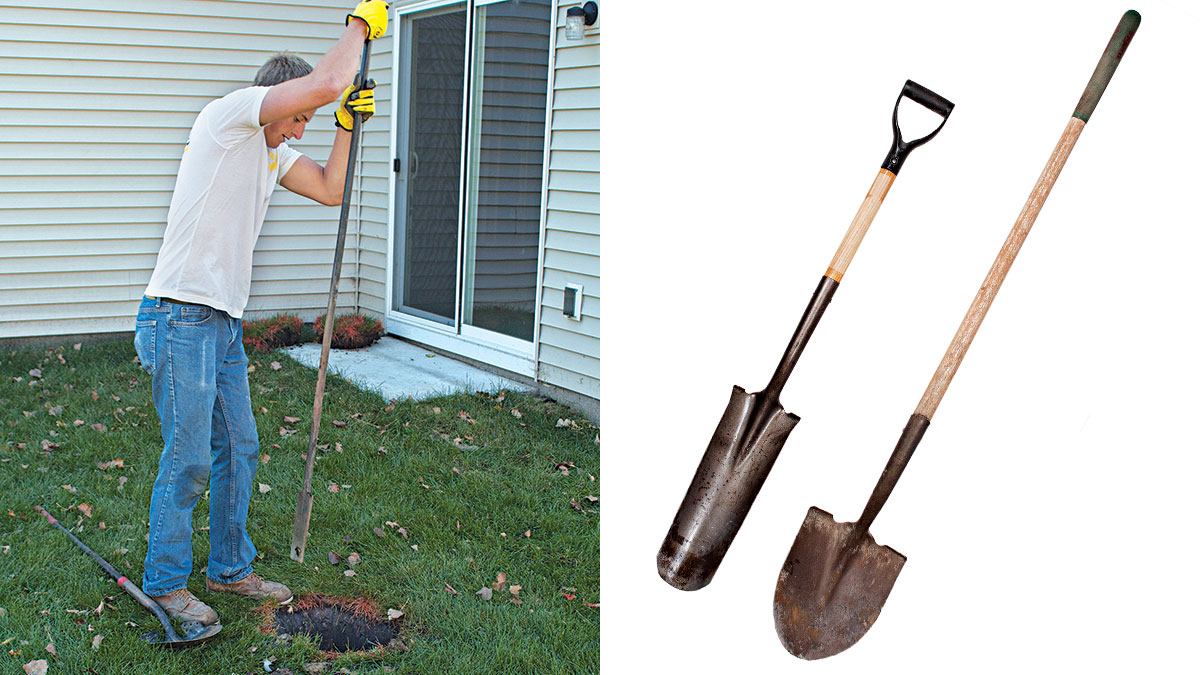
The right digging tool is like the right key for a lock. A narrow tool works well for a post hole, while a broad shovel is better for planting or moving loose soil. Before choosing what tools to dig a hole, look at the ground and define the final size.
Ask yourself three simple questions:
• How wide and deep must the hole be?
• Is the soil loose, clay-heavy, rocky, sandy, or filled with roots?
• Will you dig one hole or many holes?
For one shallow hole, hand tools are often faster and easier to control. For many deep holes, a powered auger may save hours of work. However, machines need more care because they can damage buried utilities or cause injury if they catch on roots and rocks.
Check the area before you dig. In the United States, contact 811 several business days before digging to learn where public underground utility lines may be located. Private lines, such as irrigation pipes and cables to outdoor buildings, may need a separate inspection.
The essential hand tools for digging
Most homeowners can handle common digging work with a small set of strong hand tools. The following tools cover many garden, fence, and landscaping tasks.
Round-point shovel
A round-point shovel has a curved blade with a pointed tip. It is one of the best general tools to dig a hole because the tip can enter firm soil with less force than a flat blade.
Use it for:
• Planting shrubs and small trees
• Digging in garden beds
• Removing soil from medium-size holes
• Cutting through light roots
A shovel with a steel blade and a strong handle will last longer than a thin, low-quality model. A fiberglass handle resists weather and will not splinter like wood, though some users prefer the feel of a hardwood handle.
Garden spade
A garden spade has a flat, square blade. It makes clean cuts and is useful for edging, transplanting, and lifting compact soil. It is not usually the first choice for hard, rocky ground because its flat edge does not penetrate as easily as a pointed shovel.
A spade works well when you need straight sides. For example, it can shape a planting hole or cut a neat trench beside a walkway.
Spading fork
A spading fork has several strong tines. It is useful for loosening soil, lifting gravel, and breaking apart compacted clumps. It can also help remove roots from a hole after a shovel has opened the soil.
Do not confuse a spading fork with a lightweight garden fork. A digging fork needs thick tines that can handle pressure without bending.
Hand trowel
A hand trowel is a small tool with a narrow blade. It works best for bulbs, annual flowers, herbs, and small potted plants. It is not designed for deep or wide holes, but it gives excellent control in tight spaces.
A trowel with depth marks can help you plant bulbs at the correct level. This small feature is useful because planting too shallow or too deep can affect growth.
Specialized hand tools for hard soil
Some ground conditions make a standard shovel feel almost useless. Hard clay, dry soil, gravel, and roots call for tools that concentrate force in a smaller area.
Digging bar
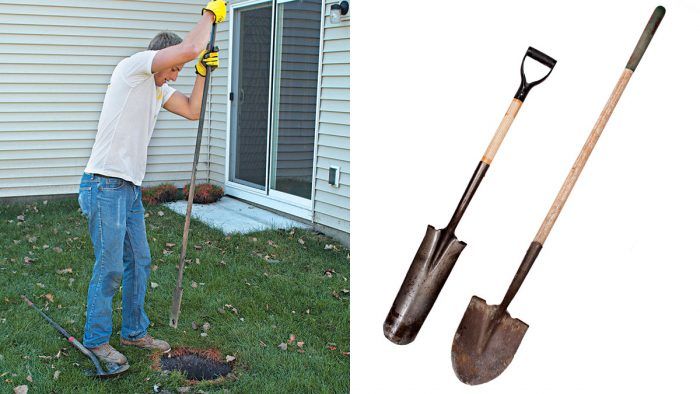
A digging bar is a long, heavy steel bar with a pointed end and sometimes a chisel end. It breaks hard soil, pries out rocks, and cuts through stubborn roots. It is one of the most useful tools to dig a hole in compacted ground.
Use the pointed end to make narrow openings. Turn the bar and use the chisel end to widen the hole or cut roots. Let the tool’s weight do much of the work instead of swinging it wildly.
A digging bar can damage buried pipes, so use it only after checking the area. Keep your feet clear of the bar in case it slips from the soil.
Mattock
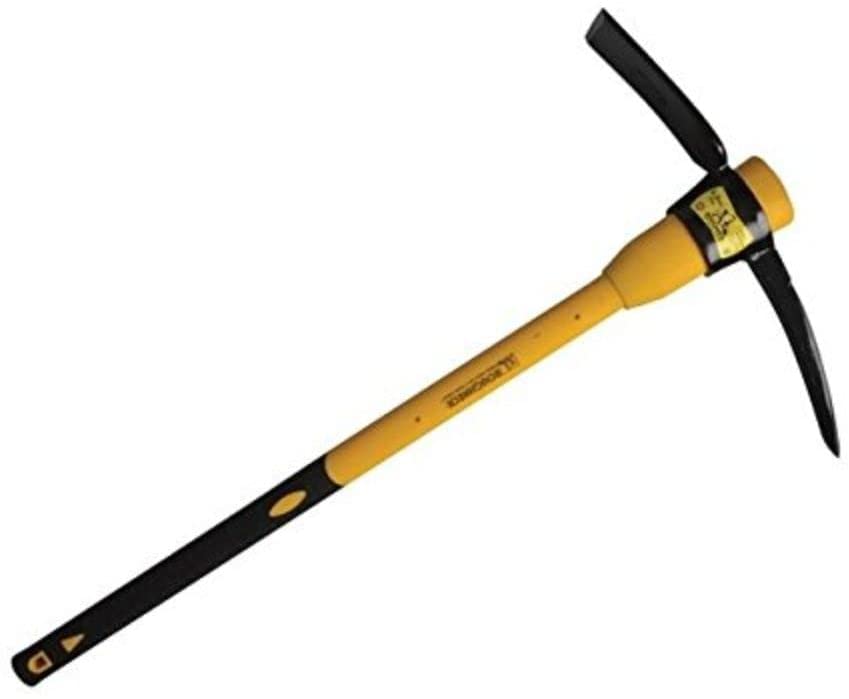
A mattock combines a cutting blade with a pick or adze. It is useful for hard clay, rocky ground, thick roots, and old landscaping soil. The pick side breaks the surface, while the cutting side slices roots and loosened earth.
A mattock needs room to swing. Wear safety glasses, gloves, and sturdy boots, and keep other people away from the swing path. Stop often if your hands become tired because fatigue makes missed swings more likely.
Pickaxe
A pickaxe has a pointed end and a broad blade. It can break hard, dry soil and help loosen rock. It is more aggressive than a shovel, so it is best for difficult ground rather than soft garden soil.
A pickaxe can also create a narrow pilot hole before you use a shovel or post hole digger. This method reduces strain and helps you control the final shape.
Hand cultivator
A hand cultivator has short, claw-like tines. It helps loosen soil around small plants and clean out loose material. It is not a primary tool to dig a hole, but it is useful for finishing small planting work.
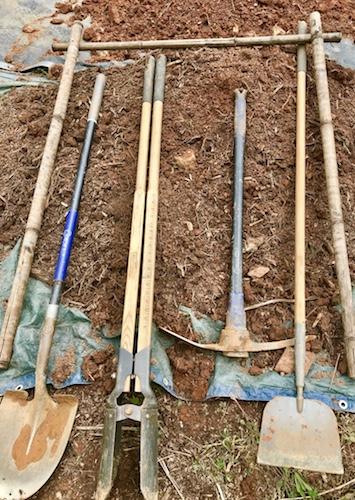
Post hole diggers for deep, narrow holes
A manual post hole digger is made for fence posts, mailbox posts, signposts, and similar projects. It usually has two long handles with curved blades that close around the soil.
To use one, press the blades into loosened earth, pull the handles apart or together according to the model, and lift the soil out. Repeat the process until the hole reaches the required depth.
A post hole digger works best in soil that is firm but not full of large rocks. In hard clay, first loosen the ground with a digging bar or mattock. In rocky soil, the blades may become stuck or fail to close around the material.
Drain spade
A drain spade has a long, narrow blade. It creates narrow holes and trenches with less disturbance to nearby soil. It is useful for planting narrow-rooted plants, installing drainage lines, and opening spaces for small posts.
This tool is a good choice when a standard shovel is too wide. It also helps protect nearby plants because it removes less soil from the sides.
Bulb planter
A bulb planter removes a small plug of soil. It is fast for planting tulips, daffodils, garlic, and other bulbs in loose soil. It is not suitable for rocky ground or deep holes.
Use the planter when you need many shallow holes of the same size. Press it into prepared soil, twist, lift the plug, place the bulb, and replace the soil.

Powered tools to dig a hole
Powered tools can make large jobs much easier. They are helpful when you need several holes or must work in dense soil. Still, power does not remove the need for planning and safety.
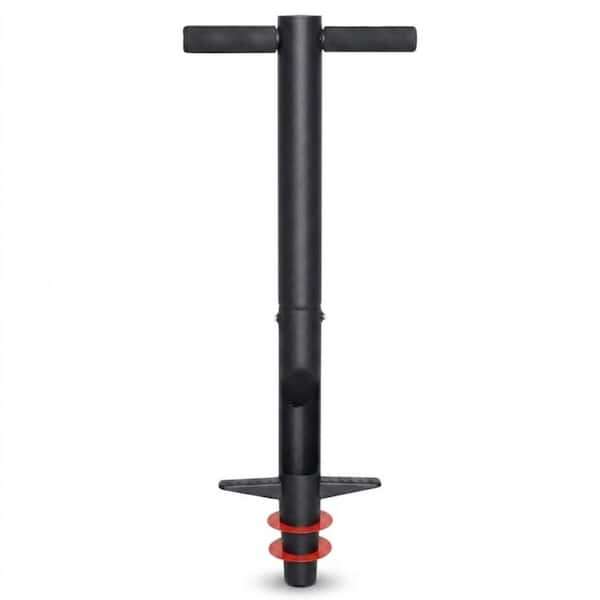
One-person earth auger
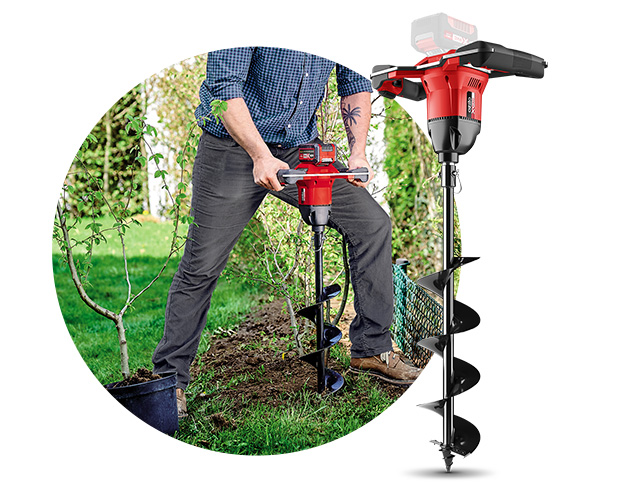
A one-person auger uses a rotating bit to remove soil. It can dig holes for fence posts, small footings, shrubs, and signs. Auger sizes vary, so select a bit that matches the required hole diameter.
These machines can twist sharply when the bit hits a rock or root. Hold the handles firmly, keep a balanced stance, and follow the manufacturer’s instructions. Never place hands or tools near a moving bit.
Two-person auger
A two-person auger offers more control for larger bits and harder soil. One operator may control the throttle while both users guide the machine. Clear communication is essential.
Agree on simple commands before starting. Stop the machine if the bit binds, the frame jumps, or either person loses balance.
Tractor-mounted auger
A tractor-mounted auger is useful for farms, large fence lines, and repeated post holes. It can work quickly, but it also has enough power to cause serious damage. Keep people away from the machine and never approach the rotating shaft while it runs.
This option is usually best for trained operators or professional crews. Renting a smaller machine may be safer for a homeowner with only a few holes to dig.
Electric or cordless auger
Battery-powered augers are quieter and simpler than gas models. They can work well for small landscaping jobs and light soil. Their limits include battery life, bit size, and reduced performance in heavy clay or rocky ground.
Keep spare batteries charged if the project includes many holes. Do not assume a quiet machine is harmless; rotating equipment still creates pinch and entanglement hazards.
Choosing what tools to dig a hole by soil type
Soil often determines the tool more than the hole itself. Test a small area before committing to a method.
Loose garden soil
Use a round-point shovel, garden spade, or post hole digger. A hand trowel is enough for flowers and small bulbs. Loose soil usually needs little force, so focus on making the hole the correct width and depth.
Clay soil
Clay can become very hard when dry and sticky when wet. Use a digging bar, mattock, or sharp shovel to open the surface. Work in thin layers rather than trying to remove a large heavy section at once.
Avoid digging clay when it is soaked. Wet clay can smear into a dense wall, which may restrict drainage and make the hole harder to fill.
Rocky soil
A digging bar and mattock are often the best tools to dig a hole in rocky ground. Remove small stones by hand or with a narrow shovel. If you meet a large rock, decide whether to move the hole, remove the rock, or change the project design.
Do not use a powered auger without checking its manual. Large rocks can stop the bit suddenly and cause a strong kickback.